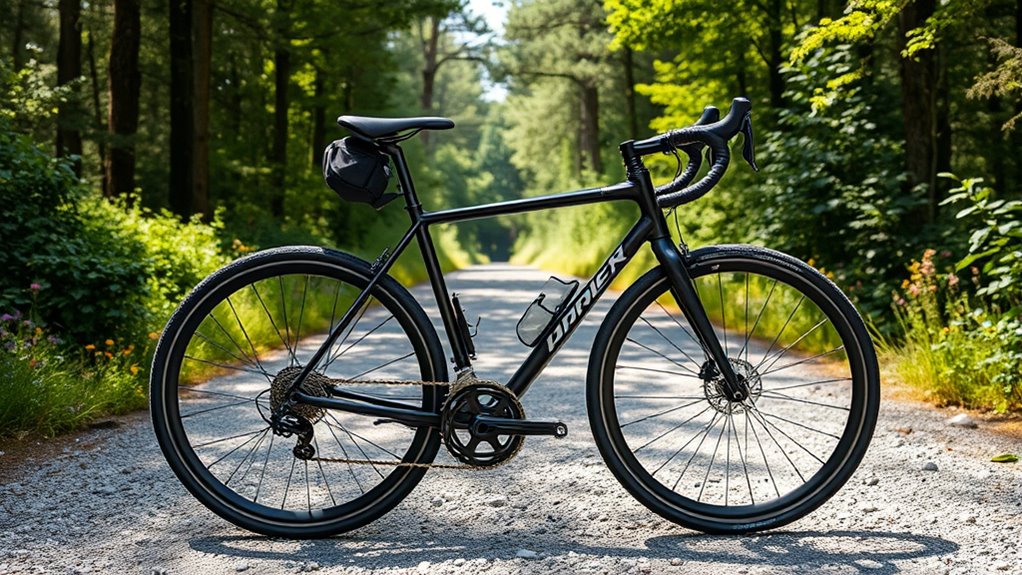

To convert your road bike to gravel, start by upgrading to wider tires, ideally 40mm or more, and check for sufficient rim and brake clearance. Adjust the frame geometry to a more relaxed, endurance style with a taller head tube and longer wheelbase for stability. Consider compatible disc brakes or rim brakes that handle larger tires. Upgrade your drivetrain for a wider gear range to tackle varied terrains. If you continue exploring, you’ll discover how each step enhances your gravel riding experience.
Key Takeaways
- Upgrade to wider tires (35mm+), ensuring rim and brake clearance for improved traction and comfort.
- Adjust frame geometry with a taller head tube and longer wheelbase for a more relaxed, gravel-friendly riding position.
- Verify brake compatibility; disc brakes often offer better clearance for larger tires than rim brakes.
- Enhance gear range with drivetrain upgrades to handle steep climbs and varied terrain effectively.
- Ensure proper tire pressure and handling adjustments for stability and control on mixed surfaces.
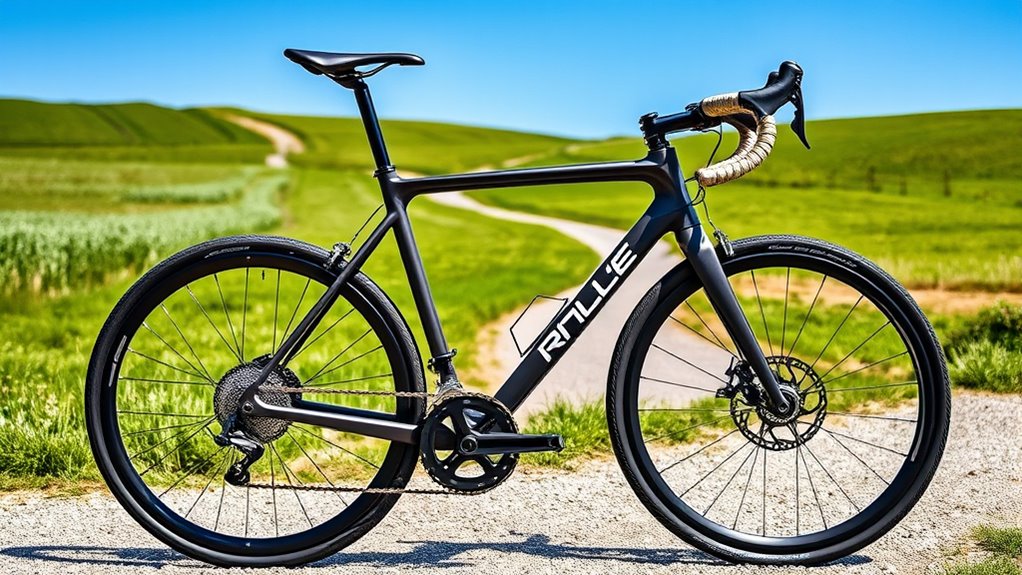
If you’re looking to expand your riding adventures without buying a new bike, converting your existing road bike into a gravel-ready machine is a smart choice. The key lies in understanding how to adapt your bike’s setup to handle the diverse terrains gravel riding demands. One of the most significant changes involves tire width. Road bikes typically have narrow tires optimized for paved surfaces, but to conquer gravel, you’ll want to upgrade to wider tires. These provide better traction, stability, and comfort on loose or uneven terrain. Look for tires with a width of at least 35mm, though 40mm or more can offer even greater control. Wider tires also allow for lower pressures, which absorb shocks and improve grip, making your rides smoother and safer over rough surfaces.
Beyond tires, your bike’s frame geometry plays a pivotal role in its versatility. Road bikes often have a more aggressive, race-oriented geometry designed for speed on pavement. To convert your bike for gravel, you’ll need to contemplate a more relaxed, endurance-oriented geometry. This means opting for a slightly taller head tube to provide a more upright riding position, which enhances comfort and visibility on long gravel rides. A longer wheelbase adds stability, especially when navigating loose surfaces or descents. Adjustments to the chainstays and bottom bracket height can also improve handling, making your bike more forgiving on uneven terrain. If your current frame isn’t ideally suited, you might explore a gravel-specific frame with geometry tailored for off-road stability.
Switching to wider tires often requires compatible rims and brake clearance. Check if your wheels can accommodate larger tires without rubbing or requiring extensive modifications. If your bike uses rim brakes, ensure there’s enough space for the wider tires and the brake calipers to function properly. If you have disc brakes, you generally have more flexibility, but verifying clearance remains essential. Additionally, consider the gear setup. Gravel riding benefits from a wider gear range to tackle steep climbs and varied terrain, so you might need to swap out your drivetrain components for a more versatile setup.
Converting your road bike into a capable gravel machine isn’t just about swapping parts; it’s about understanding how tire width and frame geometry influence your ride. With wider tires and a more relaxed geometry, you’ll enjoy greater comfort, control, and confidence on gravel roads. This transformation allows you to leverage your existing bike, making it a practical, cost-effective way to explore new terrains without the need for a brand-new purchase. Properly tailored, your bike will become a dependable companion on gravel adventures, ready to handle whatever the trail throws your way. Additionally, considering tire pressure adjustments can further optimize your ride quality on different surfaces.
As an affiliate, we earn on qualifying purchases.
Frequently Asked Questions
What Tools Are Needed for Converting a Road Bike to Gravel?
To convert your road bike to gravel, you’ll need basic tools like tire levers, a bike pump, and Allen wrenches. Check your bike frame compatibility to make sure it can handle wider tires and consider wheel size considerations for off-road terrain. You might also need a new cassette or gears suited for gravel riding. With the right tools and adjustments, you’ll create a versatile gravel-ready bike.
How Much Does Converting a Road Bike to Gravel Typically Cost?
Converting your bike is like adding a fresh coat of paint—cost-effective and rewarding. Typically, it costs between $200 and $600, depending on your choices. You should consider your budget and compatibility issues, as high-end components can bump up costs. Keep in mind, some parts may not fit perfectly, so it’s wise to plan ahead and prioritize upgrades that enhance performance without breaking the bank.
Can I Revert My Gravel Bike Back to a Road Bike Easily?
Yes, you can revert your gravel bike back to a road bike, but it depends on bike frame compatibility and component compatibility. You’ll need to swap out wider tires and gravel-specific components for narrower tires, drop bars, and road-specific parts. Check if your frame can accommodate the new components and if your existing parts are compatible with road riding. It’s often easier with a versatile frame designed for multiple setups.
What Are the Best Tire Options for Gravel Riding?
Did you know that 70% of gravel riders prefer wider tires for stability? For gravel riding, you should choose tires with good tire compatibility and a tubeless setup for fewer flats and better traction. Look for tires between 35-45mm wide, with a versatile tread pattern that balances grip and speed. Brands like WTB, Panaracer, and Maxxis offer excellent options that fit most gravel bikes and enhance your ride.
How Does Gear Shifting Change After Conversion?
After converting your bike to gravel, gear shifting may feel different due to altered gear compatibility. You might notice smoother shifting with wider gear ranges, but some adjustments could be needed to optimize shifting performance. Make certain your derailleur and shifters are compatible with the new gear setup, and consider tuning the derailleur for precise shifts. This will improve overall performance and make riding on varied terrain more comfortable.
Conclusion
Transforming your road bike into a gravel machine is like unveiling a new adventure on every dirt trail and rugged path. With a few tweaks, you’ll find yourself riding through uncharted territory, feeling the thrill of exploration in every turn. Embrace the change, let your bike carry you over rough patches and winding roads alike. Soon, your wheels will dance across gravel, turning every ride into a symphony of freedom and discovery.