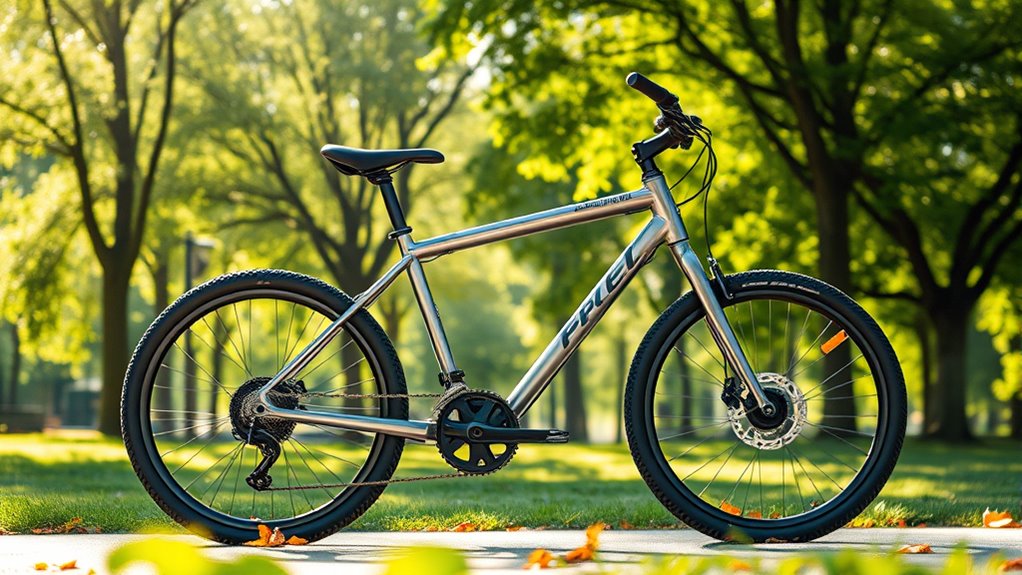

Switching from a cruiser to a fitness bike boosts your riding performance by offering a more aggressive position and features designed for efficiency and challenge. You’ll find your workouts more engaging and tailored to improve your fitness levels. Make sure to add accessories like a cycling computer or heart rate monitor, and keep your bike well-maintained. With the right adjustments and gear, you’ll enjoy a more dynamic cycling experience—stay tuned to discover how to make the switch smoothly.
Key Takeaways
- Choose a performance-oriented fitness bike with an aggressive riding position for better training efficiency.
- Upgrade accessories like clipless pedals, cycling computers, and heart rate monitors to enhance your workouts.
- Regularly maintain your bike by checking tire pressure, cleaning the chain, and inspecting bolts for safety and performance.
- Adjust saddle height and handlebar position to achieve proper fit and improve riding comfort on your fitness bike.
- Adopt a mindset focused on continuous improvement, consistency, and proper maintenance to maximize long-term fitness gains.

Switching from a cruiser to a fitness bike can transform your cycling experience, making workouts more efficient and engaging. Unlike cruisers, fitness bikes are designed for performance, offering a more aggressive riding position and features that help you push your limits. To get the most out of your new ride, consider investing in the right bike accessories. A quality water bottle holder keeps you hydrated during intense sessions, while a set of clipless pedals can improve your pedaling efficiency. A heart rate monitor or cycling computer can help track your progress and motivate you to reach new goals. Remember, these accessories aren’t just add-ons—they’re tools that enhance your ride and keep you focused.
As you *shift* gears, it’s essential to familiarize yourself with maintenance tips to keep your fitness bike in top shape. Regularly check tire pressure; under-inflated tires increase rolling resistance and can cause flats, while over-inflated tires reduce grip. Keep your chain clean and lubricated to prevent rust and ensure smooth shifting. A quick inspection for any loose bolts or worn brake pads will save you from unexpected breakdowns and improve safety. Since fitness bikes often have a more aggressive geometry, adjusting the saddle height and handlebar position to fit your body helps prevent discomfort and injury. Proper bike fit isn’t just about comfort; it directly impacts your efficiency and performance. Additionally, understanding the importance of proper bike fit can significantly enhance your riding experience and reduce the risk of injury.
Getting into the habit of routine maintenance doesn’t have to be complicated. Wipe down your bike after rides to remove dirt and sweat, which can cause corrosion over time. Use a degreaser on the drivetrain every few weeks to keep the chain and gears running smoothly. When replacing parts, opt for high-quality components to maximize durability and performance. Keep a small repair kit with essentials like spare tubes, a pump, and multi-tools to handle minor fixes on the go. Regularly inspecting your bike and making small adjustments can extend its lifespan and ensure safe rides, especially as you increase your training intensity.
Switching to a fitness bike isn’t just about the new gear or accessories; it’s about adopting a mindset aimed at improvement. The right maintenance tips will help you stay consistent and safe, while bike accessories will make your rides more enjoyable and efficient. As you get comfortable on your new bike, you’ll discover how better positioning, upgraded parts, and proper care can elevate your cycling experience. With each ride, you’ll gain confidence and strength, turning your workouts into a motivating and rewarding journey. Remember, the key to success is staying engaged, prepared, and attentive to your bike’s needs.
Frequently Asked Questions
What Are the Key Differences in Bike Frame Geometry?
You’ll notice that fitness bike frames have steeper frame angles, which make your riding more responsive and efficient. They also feature a shorter wheelbase length, enhancing maneuverability and quick handling. Cruisers, on the other hand, have relaxed angles and a longer wheelbase, offering a smooth, stable ride ideal for casual cruising. These differences in frame geometry directly impact your riding style, comfort, and bike control.
How Do Gear Systems Vary Between Cruisers and Fitness Bikes?
You’ll notice gear systems differ between cruisers and fitness bikes to suit your riding styles. Cruisers often have simpler, fewer gears, perfect for relaxed rides and comfort, while fitness bikes feature multiple gears to handle varied terrains and intense workouts. When choosing bike accessories, consider these differences to optimize your ride—whether you need gear shifters, derailleurs, or other components that match your riding style and bike type.
What Maintenance Is Required When Converting a Cruiser to a Fitness Bike?
Did you know that proper maintenance can extend your bike’s lifespan by up to 30%? When converting a cruiser to a fitness bike, you should focus on frame reinforcement and brake adjustment. Reinforce the frame if needed to handle increased stress, and guarantee brakes are properly adjusted for safety and efficiency. Regularly check tire pressure and chain tension to keep your new setup smooth and reliable.
Can a Cruiser Be Easily Adapted for High-Intensity Workouts?
Yes, you can adapt a cruiser for high-intensity workouts, but you’ll need to add bike accessories like adjustable handlebars and a more comfortable saddle to improve riding posture. These changes help you stay agile and maintain proper form during intense sessions. Upgrading the resistance system and ensuring the bike’s frame supports vigorous activity also make high-intensity training easier and safer, turning your cruiser into a more versatile fitness machine.
What Safety Considerations Should I Keep in Mind During the Conversion?
When converting your cruiser, prioritize safety by checking helmet safety to guarantee proper fit and protection during workouts. You should also verify brake functionality, making sure brakes respond quickly and are well-maintained for high-intensity rides. Always test the bike after modifications before riding aggressively. Keep your gear in good condition, and stay alert to avoid accidents. Proper safety measures help you enjoy your fitness bike without unnecessary risks.
Conclusion
So, you started out cruising in style, thinking a relaxed ride was enough. Now, here you are, sweating it out on a fitness bike, probably wondering how you traded comfort for cardio. Who would’ve guessed that what once seemed like a leisure activity would turn into your new obsession? Ironically, that laid-back cruiser has become your motivation to push harder. Guess sometimes, you’ve gotta pedal through the irony to find your true fitness stride.