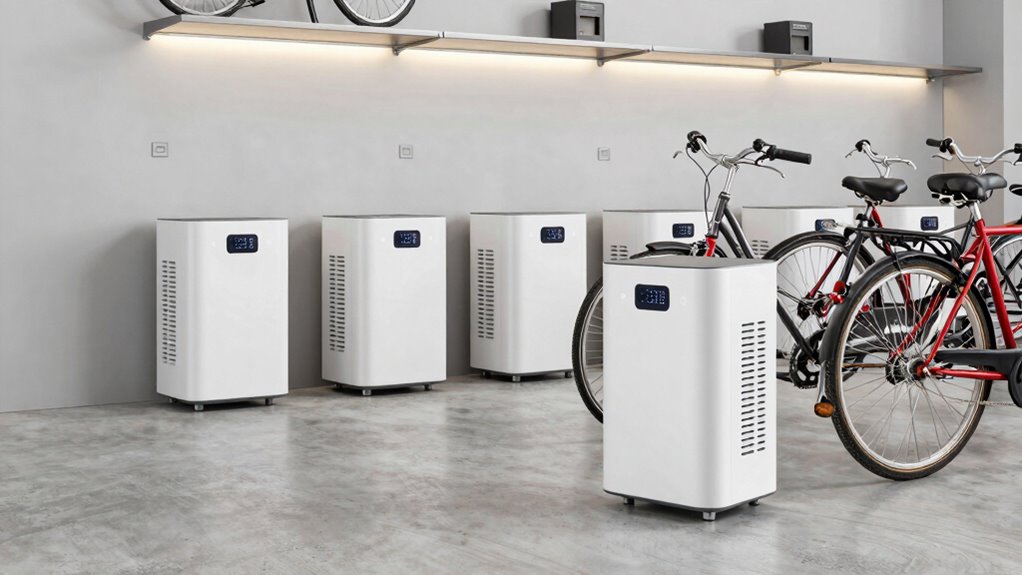

To prevent rust in bike storage, set your dehumidifier to keep humidity levels between 40-50%. Use a digital hygrometer to monitor moisture and modify your settings accordingly. Keep the unit centrally located, and choose continuous or auto modes for steady moisture removal. Regular maintenance like cleaning filters and calibrating your hygrometer guarantees effective control. Careful adjustment and monitoring help protect your bike from rust—continue to optimize your setup for the best results.
Key Takeaways
- Set the dehumidifier to maintain humidity levels between 40-50% to prevent rust and corrosion.
- Regularly monitor humidity with a hygrometer and adjust settings accordingly for optimal moisture control.
- Use auto or continuous modes to keep humidity stable and avoid fluctuations that cause condensation.
- Place the dehumidifier centrally and away from walls for even air circulation and effective drying.
- Perform routine maintenance, like cleaning filters and calibrating sensors, to ensure consistent dehumidifier performance.
Why Humidity Levels Are Critical for Bike Storage

Maintaining proper humidity levels is vital because excessive moisture can cause your bike to rust and degrade over time. Without the right storage solutions, moisture buildup accelerates corrosion, damaging your bike’s frame and components. Controlling humidity is a key part of effective bike maintenance, helping to extend your bike’s lifespan. When humidity is too high, condensation forms on metal surfaces, inviting rust that’s difficult to remove. Conversely, overly dry environments can cause rubber and plastic parts to crack. Using a dehumidifier creates a stable environment, protecting your bike from these risks. Proper humidity management ensures your bike stays in top condition, reducing the need for repairs and preserving its value. Additionally, managing humidity levels can help prevent metal corrosion, prolonging the functional integrity of your bike’s frame and components. Understanding humidity control techniques can further optimize your storage environment and keep your bike in prime condition. Incorporating proper ventilation also helps regulate moisture and maintain consistent humidity levels, which is essential for long-term bike care.
How to Measure Humidity in Your Storage Space

To keep your bike in top shape, you need to know the humidity levels where it’s stored. The easiest way is by using a digital hygrometer, which provides quick and accurate humidity readings. Place the hygrometer inside your storage area, ensuring it’s away from direct sunlight or heat sources that could skew results. For more detailed measurements, a moisture meter can be used to assess moisture levels in walls, floors, or other surfaces. Regularly checking these devices helps you monitor humidity fluctuations and take action if levels become too high or too low. Accurate measurement is essential for setting your dehumidifier correctly and preventing rust. Proper humidity control is crucial for maintaining your bike’s condition and preventing corrosion. Keep the hygrometer and moisture meter in good condition for reliable readings over time, and consider humidity monitoring techniques to optimize your storage environment. Additionally, understanding off-road top speeds can help enthusiasts choose the right equipment for their riding needs.
What Is the Ideal Humidity Level to Prevent Rust?
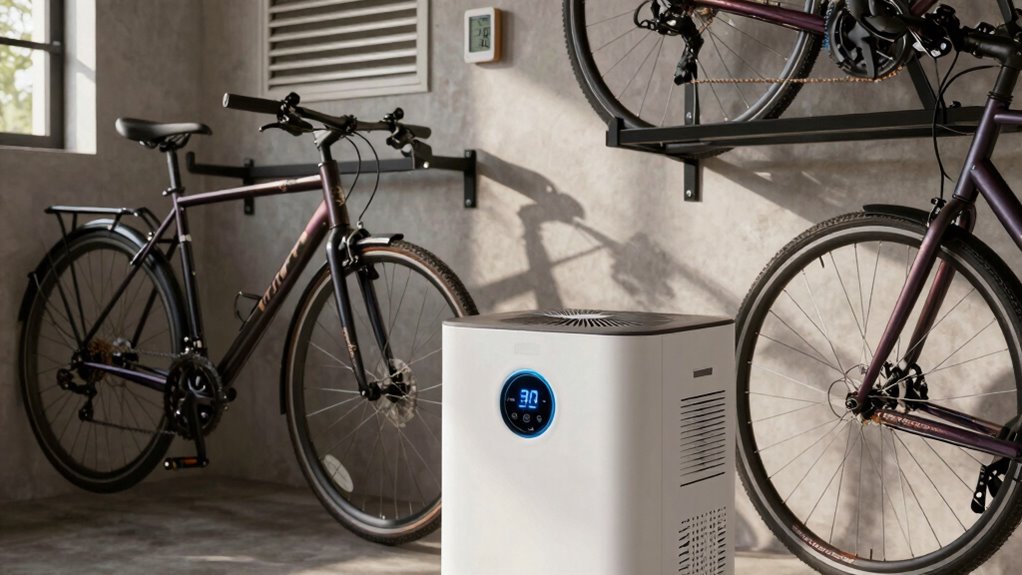
Maintaining the right humidity level is key to preventing rust on your bike. The ideal range is between 40% and 50%, where moisture is low enough to avoid corrosion but not so dry that it causes damage. Too much moisture accelerates rust formation, so keeping humidity in check protects your bike’s condition. Implementing proper dehumidifier settings ensures consistent control over moisture, reducing the risk of rust and prolonging your bike’s lifespan. Additionally, understanding glycolic acid benefits can help you develop personalized methods to maintain optimal humidity levels in your storage space, as its exfoliating properties promote healthier, more resilient skin which parallels maintaining resilient bike components. Proper humidity management also involves monitoring environmental conditions regularly to adapt to seasonal changes and ensure ongoing protection.
Optimal Humidity Range
Achieving the right humidity level is essential for preventing rust and corrosion on your bike. Ideally, you want to keep the humidity between 40% and 50%. This range balances moisture control without over-drying, which can harm other materials. Use humidity sensors to monitor levels accurately, ensuring your storage environment stays within the excellent range. Regular dehumidifier maintenance is vital to keep the device functioning properly and avoid malfunctions that could lead to excess moisture. Staying within this range minimizes rust risk and preserves your bike’s condition. Proper dehumidifier selection and operation are also crucial for maintaining optimal humidity levels. Additionally, selecting energy-efficient and European cloud-powered dehumidifiers can contribute to a more sustainable storage environment. Remember, consistent monitoring and proper device upkeep are key to maintaining a safe storage environment. With these practices, you’ll protect your bike from rust while simplifying your storage management.
Effects of Excess Moisture
Excess moisture in your bike storage creates a perfect environment for rust and corrosion to develop. High humidity levels compromise indoor air quality, accelerating metal deterioration. When moisture lingers, it promotes rust formation on your bike’s frame, chain, and components. Without proper humidity control, condensation can form on surfaces, leading to hidden damage that’s hard to detect. This not only weakens your bike’s structural integrity but also shortens its lifespan. Maintaining ideal humidity levels—around 50%—helps prevent excess moisture buildup. Using a dehumidifier ensures consistent humidity control, reducing the risk of rust and protecting your investment. Additionally, understanding air-based cooking principles can help you better manage indoor environments for optimal humidity levels. By monitoring indoor air quality and controlling humidity, you create a safer, cleaner environment that preserves your bike’s condition over time. Proper humidity regulation is essential for preventing corrosion and maintaining the longevity of your bike. Implementing humidity sensors can provide real-time data, allowing for more precise control of moisture levels.
How to Set Your Dehumidifier for the Best Results

To get the best results, you need to set your dehumidifier to maintain the right humidity level. Find the ideal range for your bikes and adjust the settings accordingly. Keep an eye on the humidity and tweak the dehumidifier as needed to prevent rust and moisture buildup. Understanding the “why” behind moisture control can help you make more informed decisions about your storage environment. Regularly monitoring environmental conditions ensures your bikes remain protected over time. Properly managing humidity levels minimizes the risk of corrosion and prolongs the lifespan of your bikes, especially when combined with reliable safety practices like proper storage setup. Incorporating smart technology into your dehumidifier can further optimize humidity regulation and safeguard your bikes effectively.
Ideal Humidity Levels
Setting the right humidity level is essential for protecting your bike from rust and corrosion. Many people have humidity misconceptions, believing that higher humidity keeps things safer, but this is a dehumidifier myth. The ideal range for bike storage is between 30-50% relative humidity. Keeping it within this range minimizes rust risk without over-drying your bike’s components. To avoid common mistakes, remember:
- Lowering humidity below 30% isn’t necessary and can cause damage.
- Ignoring humidity levels can lead to rust buildup.
- Relying solely on a hygrometer without adjusting your dehumidifier is a mistake.
- Believing that all dehumidifiers are the same; choose one suited for your space.
- Understanding humidity control is key to maintaining optimal bike storage conditions. Proper humidity regulation ensures your bike remains protected without falling for myths or misconceptions. Staying within the proper humidity range ensures your bike remains protected without falling for myths or misconceptions. Additionally, being aware of your environment’s air circulation can help improve overall humidity management.
Optimal Dehumidifier Settings
Adjusting your dehumidifier correctly is key to maintaining the ideal humidity levels for bike storage. To achieve this, start by selecting a reliable dehumidifier brand known for consistency and durability. Set the humidity level to around 50% to prevent rust while avoiding excessive dryness. If your storage unit has poor ventilation, you might need to set the dehumidifier slightly lower to compensate for moisture buildup. Ensure the unit is placed in a central location, away from walls or obstructions, to promote even air circulation. Regularly check the humidity indicator and modify the settings as needed, especially during seasonal changes. Properly calibrated dehumidifier settings, combined with good storage unit ventilation, keep your bikes safe from rust and moisture damage. Additionally, understanding how humidity levels impact metal corrosion can help you fine-tune your dehumidifier settings for optimal protection. Recognizing the importance of consistent maintenance can also extend the lifespan of your dehumidifier and ensure it functions effectively.
Monitoring and Adjustments
Monitoring your dehumidifier regularly guarantees it maintains ideal humidity levels for bike storage. To guarantee optimal performance, check your dehumidifier at least once a week and adjust settings as needed. Keep an eye on the humidity levels with a reliable hygrometer and note the performance of different dehumidifier brands you’ve chosen. Follow a consistent maintenance schedule, such as cleaning filters and draining water reservoirs, to prevent malfunctions. Adjust the dehumidifier’s settings if humidity rises above 50% or drops below 40%, depending on your storage needs. Remember, consistent monitoring helps catch issues early. Proper adjustments and maintenance keep your bikes rust-free and ensure your dehumidifier functions efficiently over time.
How to Adjust Fan Speed and Mode for Optimal Drying

To achieve the best drying results, you need to know how to effectively change your dehumidifier’s fan speed and mode. Start with fan speed adjustment: set it higher if your bike storage area is large or very humid, to circulate air more quickly. For smaller spaces or moderate humidity, a lower fan speed conserves energy without sacrificing drying efficiency. Mode selection is equally important; choose the dehumidifier’s drying or continuous mode to maintain a steady moisture level, especially when humidity is high. If your model offers a laundry or auto mode, use these for more adaptive drying. Adjustting these settings correctly guarantees maximum moisture removal, preventing rust while keeping energy use efficient. Always monitor humidity levels and tweak the fan speed and mode as needed.
Tips for Keeping Humidity Stable and Preventing Fluctuations
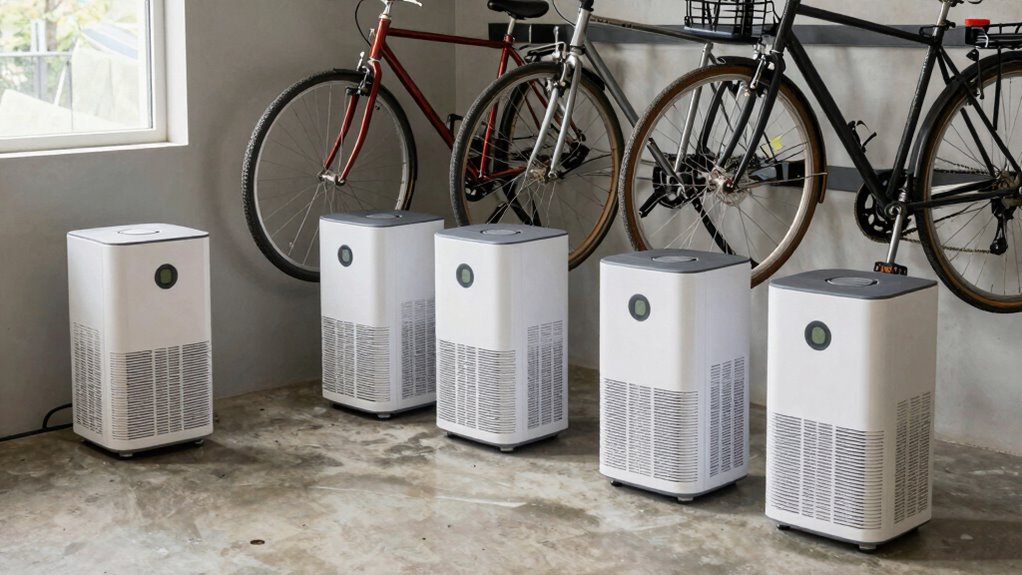
Maintaining consistent humidity levels in your bike storage area is essential to prevent rust and damage. To avoid humidity fluctuations that can lead to moisture control issues, you should monitor and manage the environment carefully. Keep the dehumidifier running at a steady setting, and avoid frequent adjustments that can cause fluctuations. Use a hygrometer to track humidity levels regularly, ensuring they stay between 45-55%. Seal any gaps or leaks in the storage space to prevent outside moisture from entering. Additionally, keep the area well-ventilated to help stabilize humidity.
- Regularly check and calibrate your hygrometer
- Avoid opening storage doors unnecessarily
- Use airtight containers for bike parts and accessories
- Maintain consistent dehumidifier operation
Common Mistakes When Using a Dehumidifier for Bike Storage

One common mistake is setting your dehumidifier to an overly low or high level without adjusting it as needed. This can lead to excessive dryness or persistent humidity, which isn’t ideal for bike storage. Just like in indoor gardening, maintaining a balanced humidity level is key, so avoid extremes that can cause rust or damage. Additionally, neglecting regular bicycle maintenance while relying solely on the dehumidifier can be problematic; moisture might still linger in hidden spots. Make sure to monitor and adjust the settings based on seasonal changes and storage conditions. Failing to do so might create a false sense of security, leaving your bike vulnerable to rust. Properly managing the dehumidifier guarantees a stable environment, protecting your bike just as carefully as you’d tend to delicate indoor plants.
Additional Tips to Keep Your Bike Rust-Free in Storage

Keeping your bike rust-free in storage requires more than just controlling humidity; regular inspections and proactive measures are essential. Periodically check for signs of rust or corrosion, and address issues immediately. Proper storage organization helps prevent damage and makes bike maintenance easier. Clean your bike thoroughly before storage, removing dirt and moisture that can cause rust. Use protective covers or bags to shield your bike from dust and humidity fluctuations. Keep moving parts lubricated to prevent corrosion. Arrange your storage space so air circulates freely around your bike, avoiding tight or cluttered areas.
- Regularly inspect for rust or corrosion
- Clean and lubricate your bike before storing
- Use protective covers or bags
- Organize your storage space for airflow
Frequently Asked Questions
Can Dehumidifiers Harm My Bike’s Paint or Components?
No, dehumidifiers won’t harm your bike’s paint safety or cause component damage if you use them correctly. They work by reducing moisture, which prevents rust, without exposing your bike to extreme dryness that could crack paint or damage sensitive parts. Just keep the dehumidifier at a moderate setting and avoid direct contact with your bike. Properly maintaining humidity levels guarantees your bike remains protected without risking paint safety or component damage.
How Often Should I Empty or Maintain the Dehumidifier?
You should empty or maintain your dehumidifier when the water level reaches the designated maximum, usually indicated by a float or a window. Check the water level regularly—at least once a week—to prevent overflow and guarantee efficient operation. Follow your dehumidifier’s maintenance schedule, which includes cleaning filters and emptying the water reservoir. Doing this keeps your bike storage dry and rust-free, protecting your bike effectively.
Are There Specific Dehumidifier Models Best for Bike Storage?
Think of your bike’s protection as a delicate dance, and the right dehumidifier models as your trusted dance partner. Specialized models like the Eva-Dry Edv-1100 or Frigidaire FFAD7033R stand out, but if you’re on a budget, options like the Tihoo Mini Dehumidifier keep rust at bay without breaking the bank. Choose wisely, and your bike will stay pristine, dancing safely in a moisture-free environment.
Can Dehumidifiers Be Used Alongside Other Rust Prevention Methods?
Yes, you can definitely use dehumidifiers alongside other rust prevention methods. Combining strategies like applying rust inhibitors, maintaining proper ventilation, and regular cleaning with dehumidifiers creates a thorough approach. Incorporate these into your maintenance routines to keep your bike storage dry and rust-free. This synergy maximizes protection, ensuring your bikes stay in top condition by reducing moisture and preventing corrosion effectively.
How Noisy Are Dehumidifiers During Continuous Operation?
You might wonder about the noise levels of continuous dehumidifier operation, and the answer depends on the model. Some operate quietly with a gentle hum, while others produce a noticeable operating sound that can be louder. Generally, modern dehumidifiers are designed to run efficiently without disturbing your space. If noise is a concern, look for units with low operating sound ratings—many are surprisingly discreet, making them perfect for bike storage areas.
Conclusion
By mastering the right dehumidifier settings, you’ll turn your bike storage into a fortress against rust—more effective than an army of tiny, invisible rust-fighting warriors. Keep humidity stable, avoid common mistakes, and regularly monitor your space. With these tips, you’ll protect your bike like it’s a priceless treasure, ensuring it stays pristine and ready to ride whenever you are. Your bike’s future of rust-free glory depends on the choices you make today!