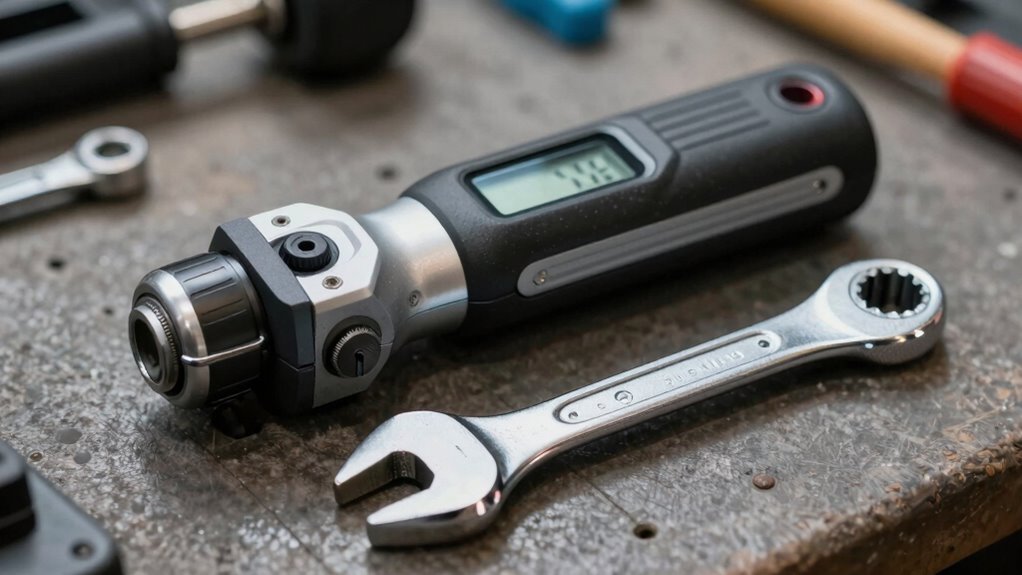

Digital torque wrenches are generally safer for bikes because they provide precise, easy-to-read measurements and built-in alerts or safety features that prevent over-tightening. They reduce user error and offer more consistent accuracy over time, making bike repairs more reliable. Click-type wrenches are simple and durable but rely on mechanical clicks, which can be less precise if not calibrated properly. Keep in mind, proper calibration and usage are vital for safety—so explore further to find the best tool for your bike.
Key Takeaways
- Digital torque wrenches offer real-time torque feedback and alerts, reducing the risk of over- or under-tightening bike components.
- Click-type wrenches depend on mechanical clicks, which may be less precise but are durable and less sensitive to environmental factors.
- Proper calibration and maintenance are essential for both types to ensure safe, accurate torque application on bikes.
- Digital models facilitate easier setting adjustments and consistent readings, enhancing safety during bike repairs.
- Durability and build quality impact safety; click-type wrenches are generally more rugged, but digital tools provide advanced safety features.
What Are Digital and Click-Type Torque Wrenches, and How Do They Work?
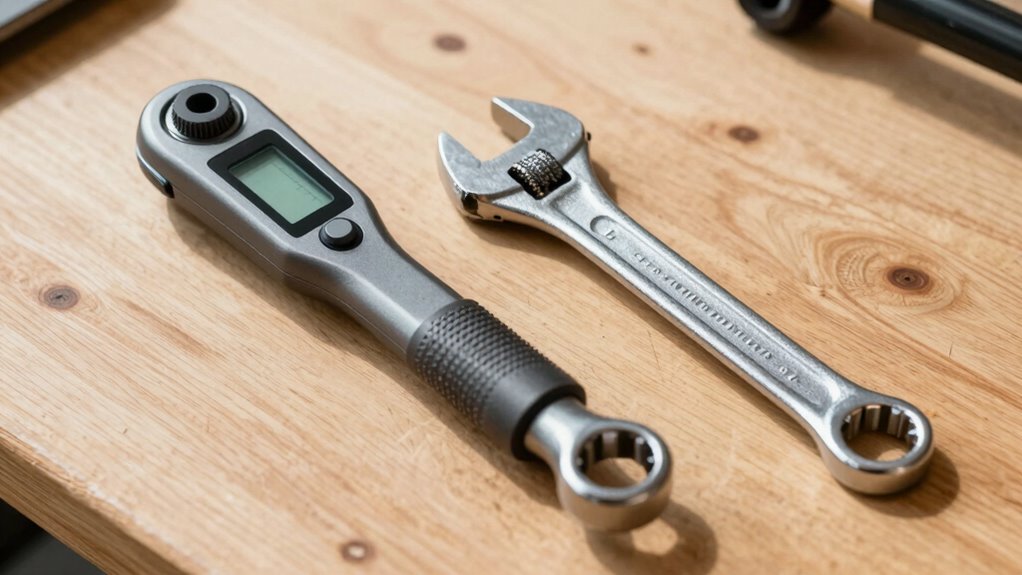
Digital and click-type torque wrenches are essential tools for applying precise torque to fasteners. They help you ensure proper torque measurement, which is crucial for bike safety and performance. Digital torque wrenches feature electronic sensors that display torque readings on a screen, allowing you to monitor torque in real-time. They often include adjustable settings and alerts to prevent over-tightening. Click-type torque wrenches, on the other hand, use a mechanical mechanism that produces a click when the preset torque is reached, signaling you to stop tightening. Wrench ergonomics play a vital role in both types; a comfortable grip reduces fatigue and improves control, helping you apply consistent torque. Both tools are designed to make precise torque application easier, but they differ in operation and user experience. Innovative design in modern torque wrenches enhances accuracy and user comfort, making them even more reliable for precise work. Additionally, user-friendly features in digital models can streamline the process, especially for those new to torque wrench use. A good understanding of torque measurement methods can further improve your accuracy and safety when working on bikes.
Which Tool Offers Better Accuracy and Reliability for Bike Maintenance?
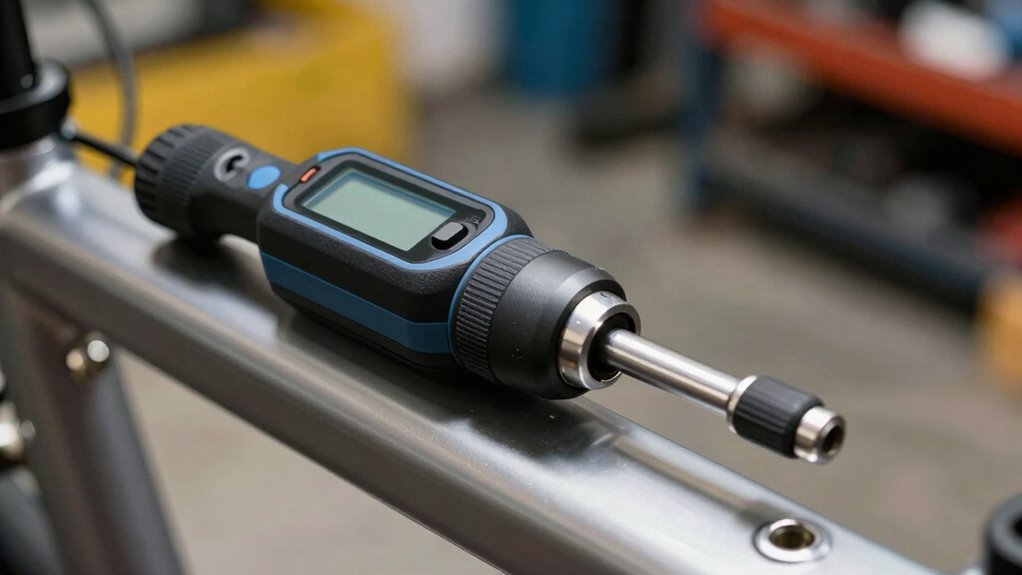
When it comes to bike maintenance, choosing the most accurate and reliable torque tool is essential to avoiding damage and ensuring safety. Digital torque wrenches generally offer superior torque precision, allowing you to set and read exact values easily. They often meet higher reliability standards due to digital calibration and advanced sensors, reducing the chance of errors. digital calibration and precise sensor technology contribute significantly to their consistent performance. Regular maintenance of digital tools can further enhance their accuracy and lifespan. Digital torque wrenches also often feature digital displays, which provide clear and immediate torque readings, minimizing user error. Additionally, digital models typically incorporate error detection, helping users identify potential issues before they affect performance. Click-type torque wrenches are known for their durability and consistent performance, but their accuracy can drift over time if not properly maintained or calibrated. Both tools can meet industry reliability standards, but digital models tend to provide more consistent readings, especially when used regularly. Additionally, proper calibration is vital for maintaining the accuracy of click-type torque wrenches over time. Ultimately, your choice depends on your need for precise measurements and long-term reliability in maintaining your bike safely.
Is a Digital or Click Torque Wrench Easier to Use?
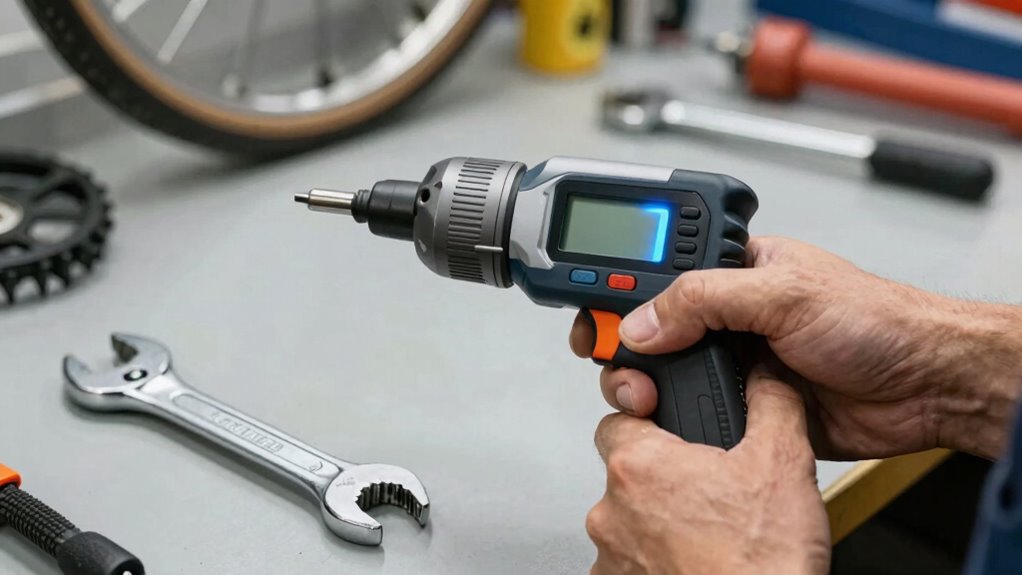
Choosing the right torque wrench can considerably impact how easy it is to maintain your bike, especially if you’re new to bike repairs. Digital torque wrenches offer digital convenience, such as easy-to-read displays and precise adjustments, making them straightforward to use. You simply set your desired torque, and the tool alerts you when you reach it, reducing guesswork. On the other hand, click-type torque wrenches excel in click simplicity; they use a mechanical click sound to signal the correct torque, which many find intuitive. While digital models can seem more user-friendly due to their modern features, click-type wrenches are often more straightforward, requiring no batteries or complex settings. Both tools are manageable, but your preference depends on whether you value high-tech ease or mechanical simplicity. Additionally, understanding the different types of coaching available can help you choose the most effective tool for personal growth. To ensure safety and precision, it’s also important to consider quality construction when selecting a torque wrench, as this affects durability and accuracy over time. Proper calibration of your torque wrench is essential to maintain its accuracy and reliability over its lifespan, especially since instrument accuracy can drift with use.
What Safety Features Make a Torque Wrench Safer to Use on Your Bike?
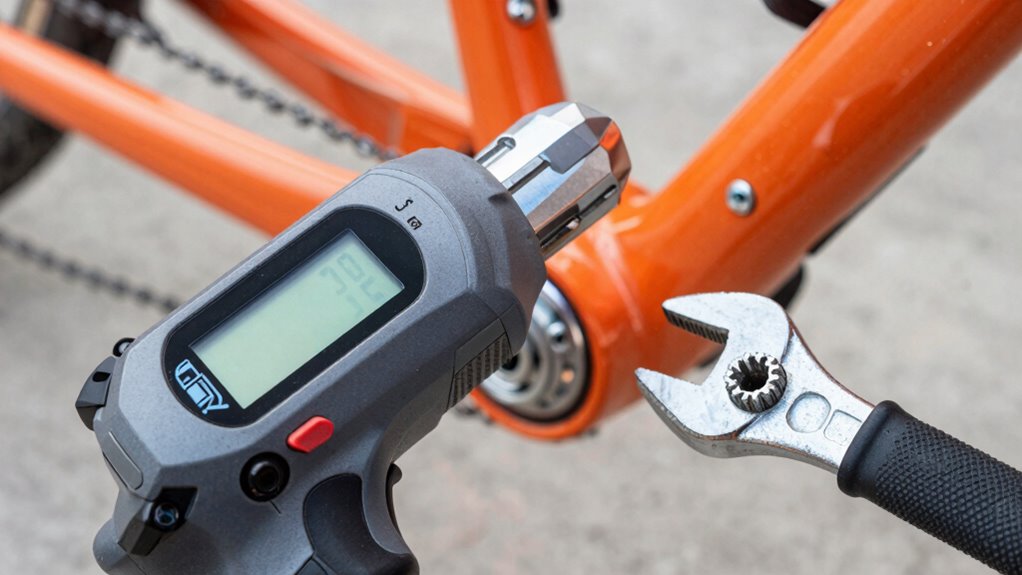
Safety features like audible and visual alerts help you know when you’ve reached the right torque, preventing over-tightening. Built-in torque limits guarantee the wrench stops at a safe level, reducing the risk of damage or injury. Regular calibration checks keep your wrench accurate, so you can trust it to perform reliably every time. Additionally, project management support ensures your maintenance process stays organized and efficient, further enhancing safety. Incorporating protective styling features in your torque wrench can also help safeguard sensitive bike components during maintenance. Using a user-friendly interface can make it easier to operate the wrench correctly, even for beginners. Moreover, understanding water-resistant features in torque wrenches can be beneficial when working in humid or wet conditions. Considering smart home integration can also help you monitor and manage your tools more effectively, ensuring safety protocols are maintained.
Audible and Visual Alerts
Audible and visual alerts are essential safety features that enhance the usability of torque wrenches on your bike. Visual cues, such as LED lights or digital displays, immediately inform you when you’ve reached the desired torque setting, reducing guesswork. Auditory signals, like beeps or alerts, provide clear, instant feedback without needing to look away from your work. These signals help prevent over-tightening or under-tightening bolts, which can compromise safety. With such alerts, you can focus on your task confidently, knowing you’ll be promptly notified when the correct torque is achieved. This combination of visual cues and auditory signals ensures a safer, more precise tightening process, minimizing risks caused by human error. Additionally, understanding the impact of cookies can help you manage your privacy preferences while researching tools online. Incorporating safety features like these makes your bike maintenance more accurate and secure, especially when considering torque specifications for different bike components. Proper use of load calculations and safety alerts contributes to a safer and more reliable maintenance routine. For added confidence, many models also include battery indicators to alert you when power is low, ensuring continuous safety during use.
Built-in Torque Limits
Built-in torque limits are a crucial safety feature that prevents over-tightening bolts on your bike. These limits automatically stop applying force once the preset torque is reached, reducing the risk of damage or failure. With built-in torque limits, you don’t have to guess or rely solely on your feel, making the process safer and more accurate. They act as a safeguard against overtightening, which can compromise bike integrity.
- Prevents damage to delicate components
- Ensures consistent, precise tightening
- Reduces the risk of stripping threads
- Enhances overall safety during maintenance
These safety features make a torque wrench more reliable and user-friendly, giving you peace of mind that every bolt is secured correctly without risking over-tightening.
Consistent Calibration Checks
Regular calibration checks are essential for ensuring your torque wrench remains accurate over time, which directly impacts your bike maintenance safety. Consistent calibration checks help verify that your tool’s torque readings stay reliable, preventing under- or over-tightening critical components. Proper calibration by routinely testing your torque wrench maintains its tool reliability, reducing the risk of mechanical failure or damage caused by inaccurate torque application. Whether you’re using a digital or click-type wrench, maintaining calibration ensures each torque measurement is precise. This safety feature gives you confidence that your bike parts are properly secured, avoiding potentially dangerous issues. Regular calibration checks are a simple yet vital step to keep your torque wrench performing at its best and to safeguard your bike during maintenance. Additionally, understanding the differences between wrench types can help you select the most appropriate tool for your specific needs. Moreover, being aware of yarn weight and stitch type can improve your overall accuracy when working on your projects, ensuring consistent results. Incorporating industry best practices can further enhance your maintenance routine and safety.
How Do You Keep Your Torque Wrench Accurate Over Time?

To keep your torque wrench accurate over time, it’s essential to calibrate it regularly and handle it properly. Maintaining proper calibration frequency guarantees your torque accuracy remains reliable, preventing under-tightening or over-tightening. Store your wrench in a clean, dry place, and avoid dropping or mishandling it. Always follow the manufacturer’s instructions for calibration and maintenance. Regular checks help identify any drift in torque accuracy early. Use a calibration service if needed, especially after heavy use or if you suspect inaccuracies. Consistent care keeps your wrench performing at its best, making your bike repairs safer and more precise. Remember, a well-maintained torque wrench is your best tool for safe, effective cycling maintenance.
- Store in a protective case
- Avoid dropping or impacts
- Follow manufacturer calibration guidelines
- Use a professional calibration service when needed
Are Digital Torque Wrenches Worth the Investment for Cyclists?

Digital torque wrenches offer greater precision and accuracy, helping you tighten components to exact specifications. However, they tend to be more expensive and may require careful handling to stay durable over time. Consider whether the benefits outweigh the costs for your cycling needs.
Precision and Accuracy
While digital torque wrenches often boast higher precision, their accuracy can vary depending on quality and calibration. If you rely on precise torque settings, you need a tool that maintains consistent performance. Digital models typically offer fine adjustments and clear digital readouts, making it easier to set exact torque values. However, their accuracy depends heavily on regular calibration and quality. Wrench ergonomics also play a role in achieving precise torque, as comfortable handling reduces user error. Keep these factors in mind:
- Proper calibration ensures consistent torque accuracy
- Digital displays minimize reading errors
- Wrench ergonomics impact handling and precision
- High-quality materials preserve accuracy over time
Ultimately, digital wrenches can be worth it if they’re well-made and properly maintained.
Cost and Durability
Although digital torque wrenches often offer superior precision, their higher cost and varying durability can influence whether they’re a practical choice for cyclists. The cost comparison shows digital models tend to be more expensive upfront but may save money long-term through accuracy. Durability factors vary based on build quality and usage. Digital wrenches are sensitive to dust and moisture, impacting longevity, while click-type wrenches are generally more robust. Here’s a quick comparison:
| Aspect | Digital Torque Wrench | Click-Type Wrench |
|---|---|---|
| Cost | Higher initial cost | Lower initial cost |
| Durability Factors | Sensitive to environment | More rugged, longer-lasting |
What Do Cyclists Say About Using Digital Versus Click Torque Wrenches?
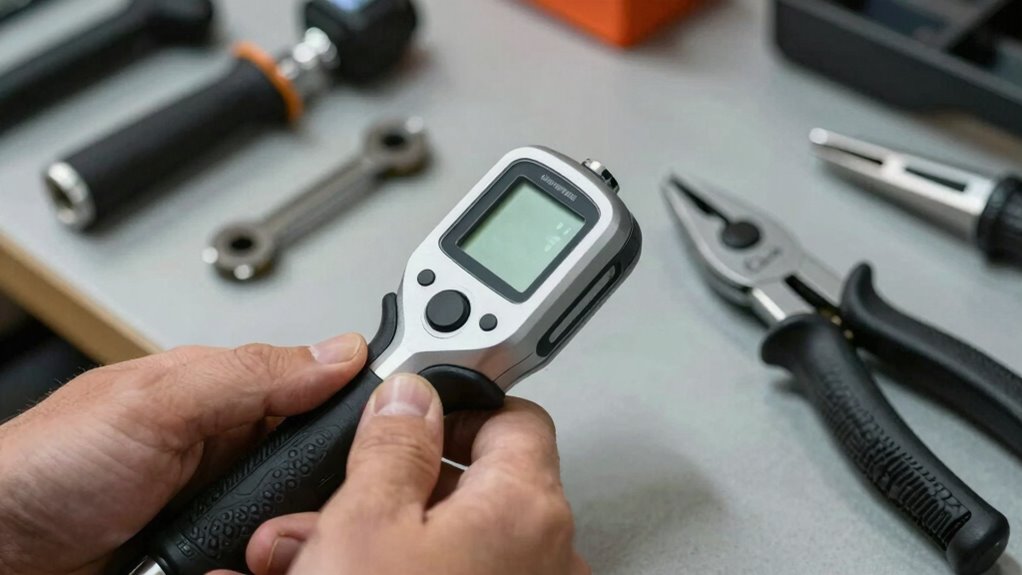
Cyclists often have strong opinions about which type of torque wrench helps them achieve the perfect fit. Many prefer digital models for their accuracy and ease of use, believing they improve cycling safety by reducing the risk of over-tightening. Others swear by click-type wrenches, valuing their simplicity and reliability for tool maintenance. Digital wrenches are praised for precise torque readings and quick adjustments, but some feel they can be more prone to malfunction. Click-type wrenches are appreciated for durability and consistency over time. Here are some key cyclist opinions:
Cyclists favor digital torque wrenches for accuracy and safety, while trusting click-type models for durability and reliability.
- Digital tools enhance safety with precise torque control
- Click-type wrenches are more dependable long-term
- Digital models are easier for quick adjustments
- Some cyclists worry about electronic failures affecting tool reliability
Common Mistakes to Avoid When Using Torque Wrenches on Your Bike
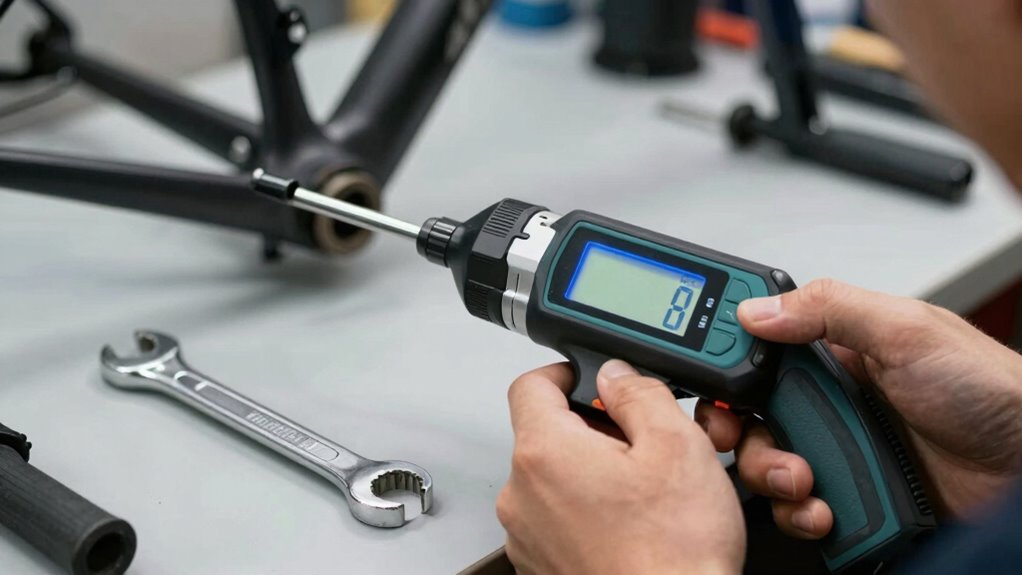
Using a torque wrench correctly is key to maintaining your bike’s performance and safety, but even small mistakes can lead to issues like over-tightening or damage. One common mistake is neglecting safety precautions, such as not wearing gloves or eye protection, which can cause injury. Another error is ignoring your bike’s specific maintenance routines; using incorrect torque settings can strip threads or weaken components. Always calibrate your torque wrench before use to ensure accuracy. Avoid rushing the process—taking your time helps prevent mistakes. Keep track of torque specifications for each part, and double-check your work. Properly storing your torque wrench after use also prolongs its precision. By following these tips, you reduce risks and keep your bike safe and well-maintained.
How to Choose the Right Torque Wrench for Different Bike Parts
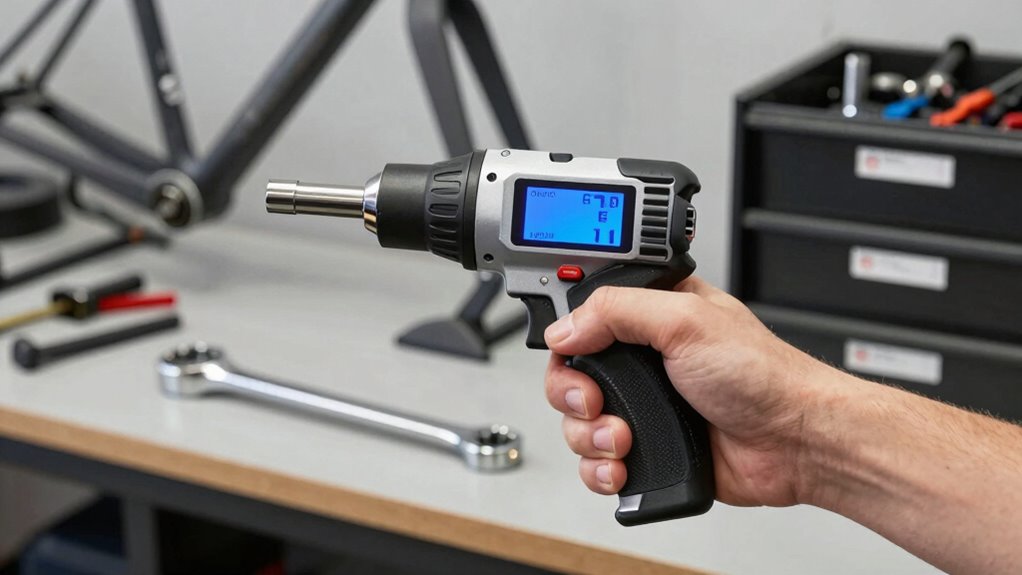
Choosing the right torque wrench for your bike depends on the specific parts you need to work on and the torque requirements they demand. Proper tool selection is essential for effective bike maintenance and preventing damage. Consider these factors:
- Torque range: Ensure the wrench covers the torque specs for your bike parts.
- Precision: Opt for a tool with high accuracy to apply correct tension.
- Type of wrench: Decide between digital or click-type based on your comfort and needs.
- Compatibility: Confirm the wrench fits the fasteners on your bike.
Tips for Picking a Safe and Reliable Torque Wrench for Your Bike
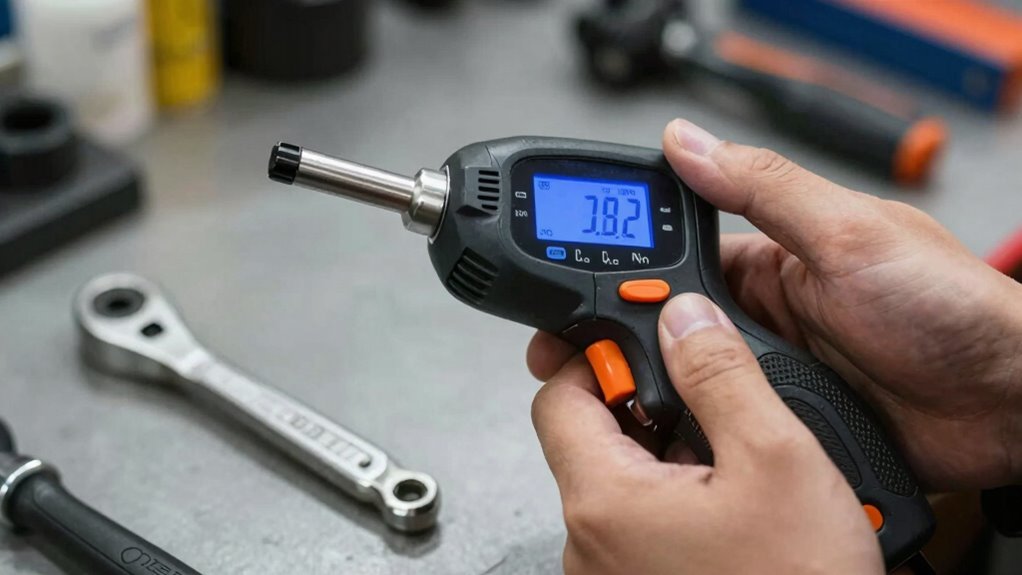
When selecting a torque wrench for your bike, you want to focus on calibration and accuracy to guarantee precise tightness. It’s also important to pick one that’s easy to use and comfortable, especially for long rides. Finally, consider durability and build quality so your wrench withstands regular use and harsh conditions.
Calibration and Accuracy
Ensuring your torque wrench maintains accurate calibration is essential for safe and effective bike maintenance. Regular calibration procedures help you verify that your tool meets accuracy standards, preventing under-tightening or over-tightening bolts. To choose a reliable torque wrench, look for models that specify calibration procedures and adhere to recognized accuracy standards. Keep in mind:
- Confirm the wrench can be recalibrated easily
- Check if calibration is verified by a professional periodically
- Opt for brands with clear calibration guidelines
- Ensure the wrench’s accuracy standards are certified
Proper calibration ensures your torque wrench delivers precise torque values, reducing the risk of damage or safety issues. Investing in a tool with proven calibration reliability means you can trust every measurement and maintain your bike safely.
Ease of Use
A torque wrench that’s easy to use makes maintaining your bike safer and more efficient. Look for an ergonomic design that fits comfortably in your hand, reducing fatigue during long rides or repeated adjustments. An intuitive interface, whether digital or click-type, helps you set and read torque values quickly and accurately. Aesthetic appeal matters too — a sleek, well-designed tool encourages proper handling and confidence. Choose a wrench with clear markings or digital displays, so you can easily verify settings without confusion. Lightweight construction enhances control and reduces strain. When ease of use is prioritized, you’re more likely to use the torque wrench correctly and consistently, ensuring your bike’s components stay properly tightened and safe for riding.
Durability and Build
Choosing a durable and well-built torque wrench is essential for reliable performance and safety on your bike. You want a tool made from high material strength to withstand regular use without losing accuracy. Look for an ergonomic design that fits comfortably in your hand, reducing fatigue during long sessions. Guarantee the construction feels solid, with tight fittings and minimal plastic parts that could break easily. A well-designed wrench provides consistent torque, preventing over-tightening or under-tightening. Consider models with corrosion-resistant finishes for longevity. Check for reinforced handles and sturdy mechanisms that can handle frequent adjustments. Investing in a high-quality, durable tool ensures your bike stays safe and performs at its best over time.
- High material strength for longevity
- Ergonomic design for comfort
- Corrosion-resistant finish
- Reinforced handles and mechanisms
Frequently Asked Questions
Can Digital Torque Wrenches Be Used for Other Bike Maintenance Tasks?
Yes, you can use digital torque wrenches for other bike maintenance tasks. They help guarantee precise tightening by utilizing digital calibration, which improves accuracy across various components. Just follow proper maintenance procedures, like regularly calibrating your tool and avoiding over-tightening. Digital torque wrenches are versatile and can handle tasks such as adjusting handlebars, stems, and seat posts, making your bike maintenance safer and more efficient.
How Do Environmental Factors Affect Torque Wrench Accuracy?
Environmental interference and climate impact can affect your torque wrench’s accuracy. Humidity, temperature fluctuations, and dust can cause metal expansion or contraction, leading to inconsistent readings. Extreme cold or heat may alter the wrench’s calibration, making it less reliable. To guarantee accuracy, store your torque wrench in a stable environment, avoid exposure to harsh conditions, and regularly calibrate it, especially after significant environmental changes.
Are There Specific Safety Certifications for Torque Wrenches?
You should look for torque wrenches that meet specific safety standards and have clear certification labels. These labels indicate that the tool complies with industry safety requirements, ensuring reliability and accuracy during use. Certifications from organizations like ASME or ISO demonstrate quality control. Always verify these labels before purchasing or using a torque wrench, as they help guarantee the tool’s safety and proper functioning, reducing the risk of accidents or damage.
What Maintenance Is Required to Keep a Torque Wrench Safe?
You need to regularly perform calibration procedures on your torque wrench to guarantee its accuracy. Store it in a clean, dry place, preferably in its case, to prevent damage and contamination. Avoid dropping or exposing it to extreme temperatures. Check for wear or damage before each use, and have it calibrated professionally if it shows signs of inaccuracy. Proper maintenance keeps your torque wrench safe and reliable for bike maintenance.
Can I Calibrate My Torque Wrench at Home?
Yes, you can calibrate your torque wrench at home by following proper calibration procedures. Imagine holding your wrench steady, then applying a precise amount of torque using a torque tester or a known weight. With careful home adjustment, you guarantee accuracy and safety for your bike repairs. Just remember to consult your wrench’s manual for specific calibration steps, and always test it afterward to verify your adjustments are correct.
Conclusion
Ultimately, choosing between a digital and click-type torque wrench depends on your needs and preferences. But one thing’s certain—using the right tool carefully can make all the difference in your bike’s safety and performance. Will you trust your instincts, or will the right features tip the scales? The choice is yours, and the stakes are higher than you think. Are you ready to ride with confidence? The next ride could depend on it.