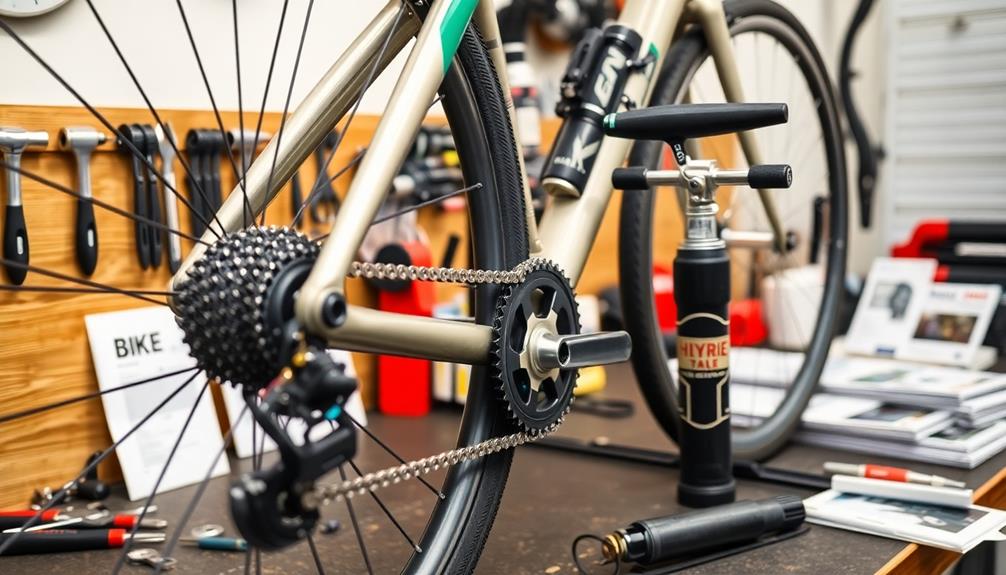
To fix disc brake rub, start by checking if your caliper is misaligned; loosen the bolts, gently squeeze the brake lever to center it, then tighten while holding pressure. Inspect the rotor for warping by spinning the wheel—if it wobbles, consider sanding high spots or replacing the rotor. Clean all debris and dirt from the rotor and pads with brake cleaner. Proper caliper alignment and rotor condition are key; continuing on will reveal more helpful tips.
Key Takeaways
- Check and realign the caliper to ensure even contact with the rotor.
- Inspect for and correct any rotor warping using sanding or a rotor truing tool.
- Clean the rotor and brake pads thoroughly with brake cleaner or isopropyl alcohol.
- Ensure the caliper bolts are tightened properly while applying slight brake pressure for centering.
- Regularly maintain and inspect the brake system to prevent recurring rubbing issues.

Disc brake rub can be frustrating, but with a few simple steps, you can fix it yourself. When your brakes are squeaking or rubbing against the rotor, the first thing to check is caliper alignment. Misaligned calipers are a common cause of brake rub, especially if you recently replaced pads or worked on your bike or vehicle. To correct this, lift the wheel and loosen the caliper bolts. Gently squeeze the brake lever to center the caliper over the rotor, then tighten the bolts while keeping pressure on the lever. This ensures the caliper sits correctly, preventing it from rubbing against the rotor during rides. If the caliper is misaligned, you’ll notice uneven pad wear or inconsistent braking feel, which are signs you need to realign it.
Another major culprit behind brake rub is rotor warping. Over time, heat from braking can cause the rotor to warp, resulting in uneven contact with the brake pads. Warped rotors often produce a pulsating brake feel or a persistent rubbing noise. To check for warping, spin the wheel and observe the rotor as it turns; if it wobbles side to side, warping is likely. Fixing a warped rotor isn’t always straightforward—it might require replacement if the warping is severe. However, for minor warps, you can sometimes true the rotor by carefully sanding or filing down the high spots. Use a fine-grit sandpaper or a rotor truing tool, gently sanding the high spots while spinning the wheel to restore a flat surface. Be cautious not to remove too much material, as this can weaken the rotor.
While working on your brakes, also inspect for debris or dirt that could cause rub. Dirt, mud, or even small stones lodged between the rotor and pads can create noise and friction. Clean the rotor and pads thoroughly with a brake cleaner or isopropyl alcohol, ensuring no contaminants remain. Regular maintenance includes checking for caliper alignment and rotor condition, which can help prevent issues before they develop. After cleaning, reassemble everything and test your brakes by spinning the wheel and applying the brake lever gently. If you still experience rub, double-check caliper alignment and rotor condition.
Fixing disc brake rub doesn’t require specialized tools beyond basic wrenches, a truing tool, and some cleaning supplies. By paying attention to caliper alignment and rotor condition, you can eliminate most issues causing brake rub. Regular maintenance, including cleaning and checking alignment, will keep your brakes functioning smoothly, giving you a safer and more comfortable ride or drive.
Frequently Asked Questions
How Often Should I Check My Disc Brakes for Rub Issues?
You should check your disc brakes for rub issues at least once a month. During a brake inspection, look for uneven pad wear or anything unusual. Also, verify your wheel alignment is correct, as misalignment can cause brake rub. If you notice any rubbing or unusual noise, address it promptly. Regular checks help prevent further damage and keep your braking system functioning smoothly and safely.
Can Disc Brake Rub Cause Damage to the Rotor?
Did you know that disc brake rub can accelerate rotor wear by up to 30%? Yes, it can cause damage to the rotor if left unaddressed. When your brake pad is misaligned or the rotor isn’t properly aligned, excessive friction occurs, leading to uneven wear or warping. Continuous rubbing stresses the rotor, possibly causing cracks or reducing its lifespan. Regularly checking and maintaining proper rotor alignment helps prevent costly damage.
Are There Specific Tools Needed to Fix Disc Brake Rub?
Yes, you’ll need specific tools like a hex wrench for caliper alignment and a rotor truing tool to fix disc brake rub. Start by loosening the caliper bolts, then realign the caliper to ensure it’s centered over the rotor. Use the rotor truing tool to gently straighten any warping. Proper caliper alignment and rotor truing help eliminate rubbing and improve braking performance.
Is It Safe to Ride With Disc Brake Rub Temporarily?
You shouldn’t ride with disc brake rub temporarily because it can cause uneven brake pad wear and damage the rotor alignment. The constant friction generates heat, which may lead to further issues and compromise your safety. Before riding, inspect the brake pads and rotor alignment, and fix the problem promptly. If you’re unsure, consult a mechanic to prevent worsening the damage and guarantee safe, smooth braking.
What Are the Signs That Disc Brake Rub Has Worsened?
If your brake noise suddenly turns into a deafening screech and you notice uneven wear on your tires or brake pads, the situation has worsened considerably. You might feel increased vibration or resistance when riding, and the brake rub might become more persistent, almost like dragging a heavy object. These signs indicate that the brake rub has escalated, risking further damage and reduced safety, so address it promptly before things get even worse.
Conclusion
Fixing disc brake rub is straightforward once you understand the causes. By checking for misalignment, debris, or worn parts, you can restore smooth stopping power. Did you know that properly maintained brakes can last 20-30% longer? Regular inspections not only improve safety but save you money in the long run. So, take a few minutes to keep your brakes in top shape—you’ll enjoy safer rides and better performance every time you hit the road.