Understanding e-bike classes and speed limits helps you ride legally and safely. Class 1 bikes assist up to 20 mph with pedal help, while Class 2 bikes also have a throttle option. Class 3 e-bikes can go up to 28 mph but often require helmets and follow specific rules. Staying within these limits is essential for safety and compliance. To learn more about how these classifications impact your riding experience, keep exploring the details ahead.
Key Takeaways
- E-bike classes are defined by their speed and assistance features: Class 1 (up to 20 mph), Class 2 (up to 20 mph with throttle), Class 3 (up to 28 mph).
- Speed limits for e-bikes vary by class and local regulations, affecting where and how you can ride legally.
- Class 1 & 2 e-bikes typically require no license, while Class 3 may need helmets and adherence to specific rules.
- Riding within designated speed limits enhances safety, reduces accident risk, and ensures compliance with laws.
- Proper maintenance and understanding of speed limits help maximize safety and longevity of your e-bike.
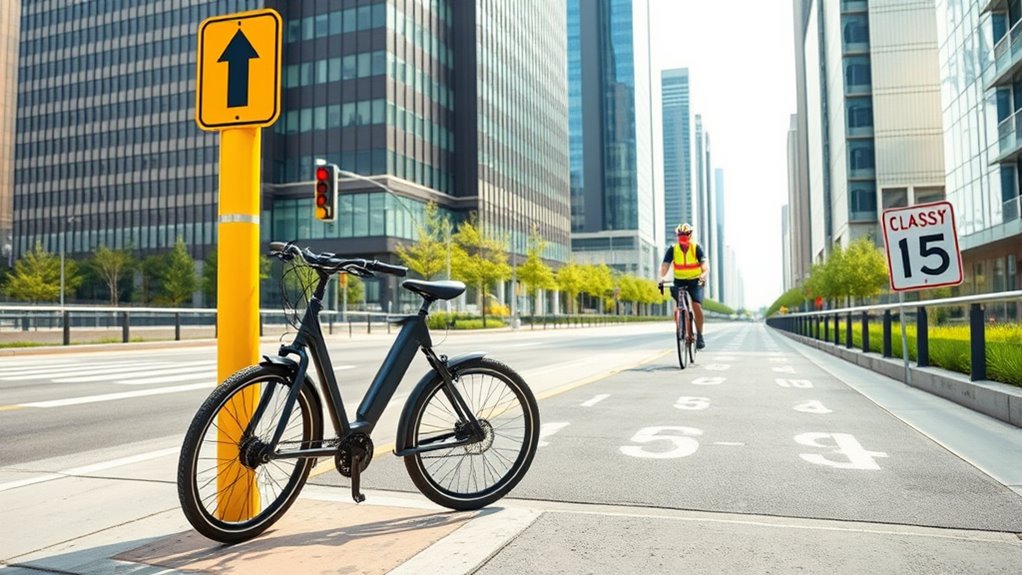
Are you unsure about the different types of e-bikes and what speed limits apply? It’s a common concern as the popularity of electric bikes continues to grow. Knowing the classifications can help you ride safely, legally, and confidently. E-bikes generally fall into three classes, each with its own rules regarding speed and where you can ride. Class 1 e-bikes are pedal-assist bikes that provide assistance only when you pedal, with a top speed of 20 mph. Class 2 bikes also have pedal assist but can be powered directly by a throttle, reaching 20 mph without pedaling. Class 3 bikes are speed pedelecs that assist up to 28 mph and often require the rider to wear a helmet and adhere to specific regulations.
Understanding these classes is essential for staying within legal limits and ensuring your safety. For instance, if you’re riding a Class 1 or 2 e-bike, you typically don’t need a license or registration, but you should still follow local laws and wear appropriate riding gear. Proper riding gear, including a helmet, gloves, and reflective clothing, can considerably reduce injury risk and improve visibility, especially as you approach higher speeds. Additionally, battery safety should be a priority; always use the charger provided by the manufacturer and avoid exposing the battery to extreme temperatures or water. Proper maintenance and careful handling of the battery can prevent dangerous malfunctions and extend the lifespan of your e-bike. Research shows that battery safety is crucial to prevent fires and equipment failures.
Wearing proper gear and maintaining your e-bike ensures safety and longevity.
Speed limits are a critical aspect of safe e-bike riding. Many cities and states enforce specific speed limits based on e-bike class, so it’s crucial to familiarize yourself with local regulations. Exceeding these limits can lead to fines, license suspension, or even safety hazards. For example, some areas restrict Class 3 e-bikes to bike lanes or trails, where their higher speeds are less likely to cause accidents. Always pay attention to signage and local ordinances to ensure you’re riding within the legal boundaries. Wearing the right riding gear, like a helmet and reflective clothing, not only boosts your safety but also helps you remain visible to pedestrians and other vehicles, especially when riding at higher speeds.
Ultimately, understanding your e-bike’s class and adhering to speed limits, combined with proper battery safety and gear, will give you a safer, more enjoyable riding experience. Stay informed about local laws, keep your equipment well-maintained, and always prioritize safety to make the most of your e-bike adventures.
Frequently Asked Questions
Are E-Bike Laws the Same Across All States?
No, e-bike laws differ across states. You need to check state-specific regulations because licensing requirements, age restrictions, and classifications vary. Some states treat e-bikes like traditional bicycles, while others impose registration or insurance rules. You must stay informed about local laws to ride legally and safely. Always verify your state’s rules before riding to avoid fines or penalties, ensuring a smooth and compliant experience.
Do E-Bike Speed Limits Vary for Different Terrains?
Ever wonder if your e-bike’s speed limits change with terrain? They definitely do! Terrain adaptability plays a vital role, as off-road trails or steep hills can challenge your bike’s performance. Speed regulation factors, including local laws and bike design, also influence limits. So, stay alert, because your e-bike’s maximum speed isn’t just about the motor — it’s about where you ride and how the terrain impacts it.
Can I Ride My E-Bike on Sidewalks?
You shouldn’t ride your e-bike on sidewalks, as it can compromise sidewalk safety and put pedestrians at risk. As a rider, you’re responsible for following local laws and ensuring safe riding practices. Stick to bike lanes or streets when possible, and always be alert to your surroundings. Respect pedestrian space, slow down in crowded areas, and prioritize safety to avoid accidents and stay within legal boundaries.
Are There Age Restrictions for E-Bike Riders?
Yes, there are age restrictions for e-bike riders. You must meet specific rider qualifications, which typically include being at least 16 years old, depending on your local laws. These restrictions are in place to guarantee safety and responsible riding. Make sure you check your area’s regulations to confirm your eligibility. If you’re under the age limit, you might need adult supervision or special permissions to ride an e-bike legally.
How Do E-Bike Classifications Impact Insurance Requirements?
Think of e-bike classifications as gears on a bike—they shift how smoothly your ride goes. Your insurance coverage depends on your e-bike’s classification criteria, which determine how much protection you need. Higher classes, like fast-moving racehorses, often require more extensive insurance, while lower classes are simpler to cover. Knowing your e-bike’s classification helps you choose the right insurance plan, ensuring you’re protected without overpaying.
Conclusion
Understanding e-bike classes and speed limits helps you ride confidently and safely. Stick to the rules, stay within designated speeds, and respect local laws to enjoy your ride without trouble. Remember, “Knowledge is power”—the more you know about your e-bike’s limits, the better you can navigate roads and trails. Keep learning and riding responsibly, and you’ll always be on the right path. Happy cycling!