
Many new e-bike owners underestimate how essential proper maintenance is for braking performance. Worn brake pads, dirty discs, or improperly inflated tires can considerably reduce your stopping power and safety. Heavier bikes and faster speeds demand more attention to these details, or you risk longer stopping distances and accidents. Understanding your braking system, keeping parts in good shape, and maintaining proper tire pressure are critical. If you want to stay safe and confident on your ride, there’s more to learn about what keeps your brakes working effectively.
Key Takeaways
- New owners often underestimate the increased stopping distance required due to e-bike weight and speed.
- Inadequate brake maintenance can lead to sudden failure, especially under heavy usage or challenging conditions.
- Many overlook the importance of tire condition and pressure on braking performance.
- Battery health impacts regenerative braking efficiency and overall control during stops.
- Lack of awareness about proper braking techniques can cause accidents and reduce brake lifespan.
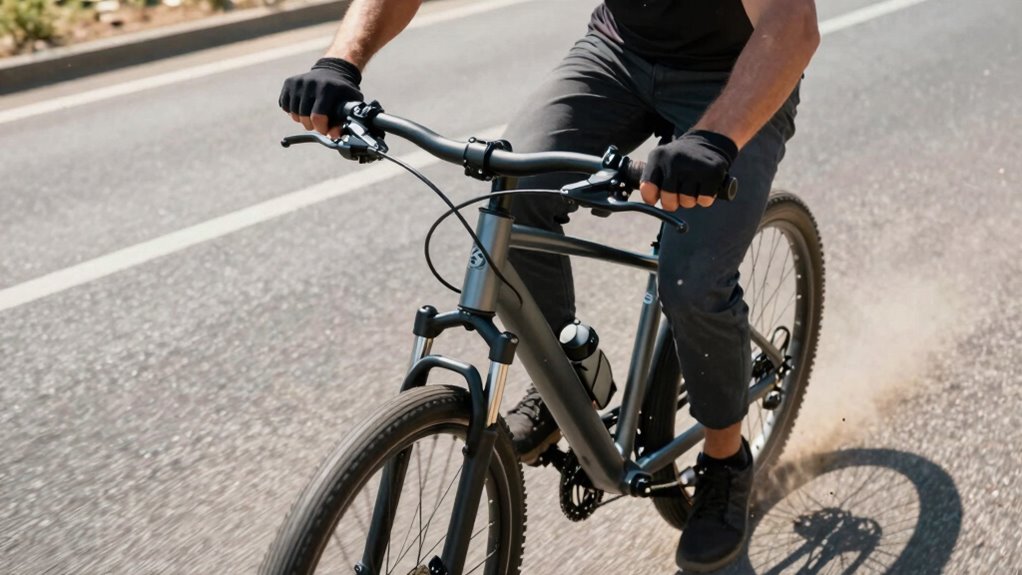
E-bikes have transformed how we ride, but their braking systems come with unique challenges you need to understand. When you first get your e-bike, it’s tempting to focus on speed and convenience, but neglecting proper braking practices can lead to serious safety risks. One vital aspect many new owners overlook is the importance of maintaining their brakes to guarantee they can stop effectively when needed. E-bike brakes, especially disc brakes, require regular inspection and adjustment. Worn brake pads or contaminated discs reduce stopping power, which could make all the difference in an emergency. You should check your brake pads frequently and replace them before they’re completely worn out. Proper tire maintenance is equally essential for safe braking. Worn or improperly inflated tires not only compromise ride quality but also affect your ability to stop smoothly. Under-inflated tires increase rolling resistance and can cause your bike to slide or skid when you hit the brakes, especially on wet surfaces. Over-inflated tires, on the other hand, may reduce grip, making braking less predictable. Always keep your tires at the recommended pressure and inspect them regularly for cuts, embedded debris, or uneven wear. Additionally, understanding how braking systems work on your e-bike can help you use them more effectively and extend their lifespan. Knowing the braking system components can also help you troubleshoot common issues before they become serious problems. Being aware of braking system maintenance routines can further ensure your brakes perform optimally over time. Regular brake fluid checks are also crucial, as contaminated or low brake fluid can significantly impair braking performance. Battery safety is another vital factor that often gets overlooked. While it might seem unrelated to braking, a compromised battery can cause sudden power surges or failures that impact your overall control of the bike. If your battery is damaged or improperly charged, you might experience inconsistent braking performance, especially if your e-bike employs regenerative braking systems that rely on the battery’s health. Guaranteeing your battery is in good condition and charging it correctly helps maintain the bike’s overall safety and responsiveness. As a new owner, you should familiarize yourself with the manufacturer’s recommendations regarding battery safety protocols and avoid exposing the battery to extreme temperatures or physical damage. Most importantly, don’t underestimate the importance of understanding your bike’s braking system. E-bikes are heavier and faster than traditional bikes, which means your braking distance is longer and must be more deliberate. Practice braking in safe environments to get a feel for your bike’s stopping power. Always anticipate stops early, especially when riding downhill or in wet conditions. Remember, your safety depends on your awareness of how to maintain your brakes, tires, and battery properly. Neglecting these factors can undermine your confidence and increase your risk of accidents. Staying vigilant about these details transforms your riding experience from potentially hazardous to confident and secure.

SkyStage 4 Pairs Bike Brake Pads, Disc Brake Pads (Resin,Semi-Metallic) for Mountain Bike Disc Brakes, Bicycle Brake Pads Compatible with TRP Tektro Shimano Deore Br Ebike Brake Pads (4 Pairs-Black)
- High-Performance Brake Compound: Resin semi-metallic for efficiency and durability
- Universal Bike Compatibility: Fits mountain, road, hybrid bikes, and various brands
- Temperature Resistant Design: Withstands up to 700°C for reliable stopping power
As an affiliate, we earn on qualifying purchases.
As an affiliate, we earn on qualifying purchases.
Frequently Asked Questions
How Often Should Brake Pads Be Replaced on an E-Bike?
You should replace your e-bike brake pads every 300 to 500 miles, but it depends on brake pad materials and riding style. Organic pads wear faster than metallic ones. Keep an eye on your e-bike brake sensors; when they activate earlier or squeal, it’s time for new pads. Regular inspections guarantee safe braking performance, so don’t delay replacing pads when you notice wear or sensor signals.
Can Weather Conditions Affect E-Bike Braking Performance?
Rain impact and temperature effects definitely influence your e-bike’s braking performance. Ironically, you might think wet roads improve grip, but they actually reduce braking efficiency, increasing stopping distances. Cold weather thickens brake fluid and reduces friction, making stops less predictable. So, you’ll want to be extra cautious in rainy or chilly conditions, as weather can turn your confident ride into a slippery challenge, catching you off guard when you least expect it.
Are Disc Brakes More Effective Than Rim Brakes?
Disc brakes are generally more effective than rim brakes because they offer better hydraulic efficiency, especially in wet conditions, providing more consistent stopping power. While disc brakes might seem complex, they excel in hydraulic efficiency, delivering smoother, more powerful stops. Rim brakes are mechanically simpler but less effective in adverse weather. As a new e-bike owner, understanding this helps you choose brakes that match your riding needs and conditions.
What’s the Best Way to Break in New Brake Pads?
You should properly bed new brake pads by gradually applying moderate pressure, avoiding sudden stops. This process guarantees ideal contact between the brake pad materials and the rotor, preventing uneven wear. Even if you’re enthusiastic to ride, taking time for proper bedding improves braking performance and lifespan. Remember, consistent, gentle braking during the bedding process helps transfer a thin layer of pad material onto the rotor, ensuring reliable stopping power.
Do E-Bike Brakes Require Special Maintenance or Adjustments?
Yes, e-bike brakes need regular maintenance and adjustments. You should check the brake fluid levels to guarantee smooth operation, especially in hydraulic systems. Also, keep an eye out for brake noise, which can indicate dirt or worn pads. Adjust the brake levers and calipers as needed to maintain peak braking performance. Proper care prevents issues like reduced stopping power and prolongs your brake system’s lifespan.
Conclusion
So, when you hop on your e-bike, remember—braking isn’t just about stopping; it’s about controlling your ride’s story. Underestimating your brakes is like ignoring the first drops of rain—you might make it, but the ride could turn stormy. Stay alert, give your brakes the respect they deserve, and enjoy the journey ahead. After all, safety isn’t just a feature; it’s the silent partner that keeps your adventures smooth and memorable.