
When choosing an e-bike conversion kit, you need to check if your dropouts, brake system, and cassette are compatible with the kit components. Measure dropout width, verify brake mount types, and make certain cassette spacing and freehub design match your drivetrain. Mismatched wheel sizes or incompatible brakes can cause installation issues or safety concerns. If you keep these details in mind, you’ll avoid common pitfalls—continue to explore how to confirm compatibility for a smooth upgrade.
Key Takeaways
- Verify dropout width and design (horizontal or vertical) to ensure motor and wheel compatibility before selecting a conversion kit.
- Check brake type and mounting standards (disc or rim) to confirm compatibility with the kit’s brake system and rotor size.
- Ensure cassette type (freehub or freewheel), tooth count, and spacing match the motor’s drivetrain specifications for smooth shifting.
- Confirm wheel size and axle compatibility to prevent clearance or fitment issues between the motor, wheel, and frame.
- Match the kit’s mounting system with frame material and finish to avoid damage and ensure secure attachment.
Will My Bike’s Dropouts Fit the Motor?

Before choosing an e-bike conversion kit, it’s vital to check if your bike’s dropouts can accommodate the motor. The dropout design influences motor placement and compatibility. Different frame materials, like aluminum or steel, affect how the motor attaches; some materials provide more flexibility, while others require specific adapters. You’ll want to measure the dropout width and verify it matches the motor’s mounting specifications. If your bike has horizontal dropouts, you might have more options for motor placement, but vertical dropouts can limit compatibility. Confirming that your bike’s frame material and dropout type align with the motor’s mounting system helps avoid fit issues. Properly evaluating these factors ensures your conversion kit will fit securely and operate smoothly. Additionally, understanding the dropout compatibility of your bike is crucial for a successful conversion.
Are My Frame Mounts Ready for the Conversion Kit?

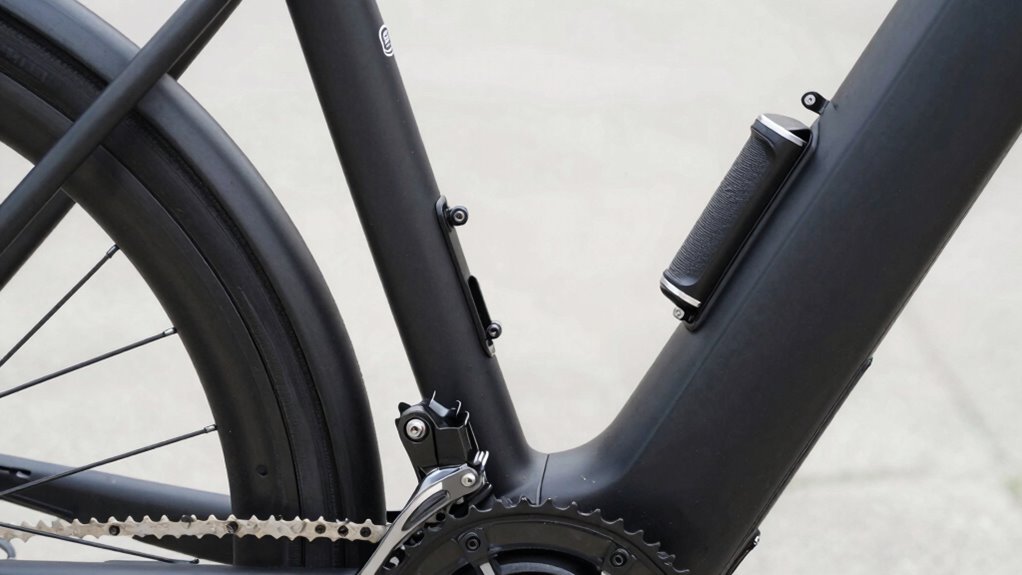
Ensuring your bike’s frame mounts are compatible with the conversion kit is a crucial step in the process. First, check the frame material; aluminum, steel, or carbon fiber require different mounting brackets because of their strength and flexibility. Second, examine the paint finish—if your frame has a delicate or glossy coating, verify the mounts won’t damage or chip it during installation. Third, verify that the mounts align with existing frame features, avoiding stress points or weak spots. Proper compatibility depends on matching the kit’s mounting system with your frame’s material properties and finish. Additionally, understanding frame compatibility can help you choose the right components and avoid costly mistakes. Considering material properties can also influence your choice of mounting hardware and installation techniques. Being aware of component specifications ensures you select the appropriate parts for your specific bike model. Paying attention to mounting hardware compatibility is essential to prevent installation issues. Moreover, consulting manufacturer guidelines can provide valuable insights into specific model requirements, ensuring a secure fit. Taking these steps guarantees your conversion kit will integrate seamlessly, providing a safe and efficient upgrade.
Will My Existing Brakes Work With the New Setup?
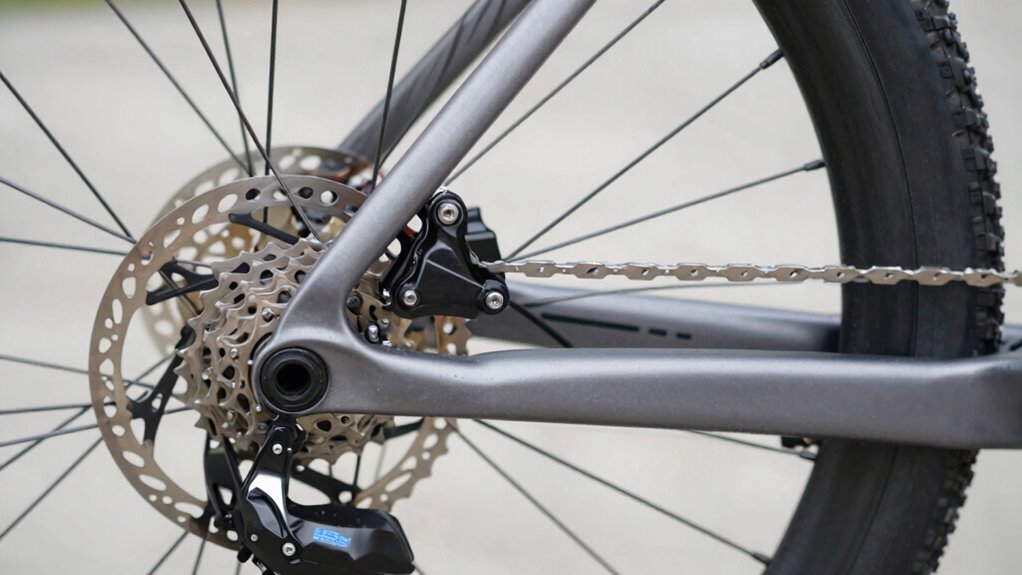
Your current brakes might be compatible with your new e-bike setup, but it depends on the type. Disc brakes generally work well with most kits, but rim brakes may require additional adapters. Check your brake system and the kit specifications to guarantee everything fits and functions safely. Additionally, understanding the compatibility of brake types can help ensure optimal performance and safety with your conversion, especially considering factors like Free Floating, which can influence brake performance and maintenance. Being aware of brake system compatibility can prevent issues that compromise safety or require costly modifications. Familiarity with different braking mechanisms can further aid in selecting the most suitable components for your conversion. For example, knowing the ethnicity of the manufacturer or other background details can sometimes influence the choice of components based on regional standards or preferences.
Compatibility With Disc Brakes
Many e-bike conversion kits are designed to be compatible with disc brakes, but it’s important to verify that your existing setup will work seamlessly. First, check the disc rotor size, ensuring it matches the kit’s specifications to prevent clearance issues. Second, confirm brake pad compatibility, as different kits may require specific pad types or mounting standards. Third, verify that the calipers can accommodate the new motor’s weight and torque without affecting braking performance. If your existing brakes have larger rotors or unique pad types, you might need adapters or replacements. Additionally, considering brake system compatibility can help you select the proper components for a safe setup. Making sure your brake calipers and pads are suitable for the combined weight and torque of the motor is also essential for maintaining safe stopping power. Checking brake performance requirements can ensure your brakes will handle the demands of the converted e-bike safely. Ensuring these factors align, including brake upgrade options if necessary, guarantees safe, reliable braking performance after conversion, preventing unexpected issues during your rides.
Compatibility With Rim Brakes
If your bike currently uses rim brakes, you’ll need to check if your existing setup can handle the new motorized components. Compatibility depends on brake pad compatibility, as some e-bike motors add width or alter caliper positioning. Measure your rim width to confirm it meets standard rim width standards—most rims are between 19-23mm wide—since wider rims may require different brake calipers or pads. Verify that your brake calipers can accommodate the wheel with added motor components, especially if the motor pushes the rim outward. If your brake pads are worn or incompatible with the new rim width or motor setup, you’ll need to upgrade or replace them. Ensuring proper clearance and brake pad compatibility guarantees safe, effective braking with your e-conversion. Additionally, understanding regulatory standards can help ensure your setup remains compliant and safe. Being aware of brake compatibility issues can prevent potential safety hazards during riding, especially when considering the impact of technological modifications on braking performance. Furthermore, checking caliper adjustability can help accommodate any changes in wheel width or added motor components, ensuring optimal braking function.
Is My Cassette Compatible With the Motor?

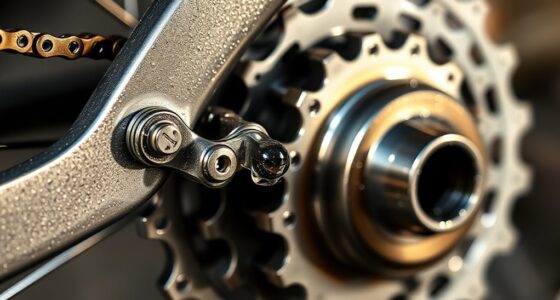
You need to make certain your cassette matches your motor’s gear compatibility requirements, such as freehub or freewheel types. Pay attention to the tooth count and spacing, as mismatched sizes can cause shifting issues. Verifying these details helps your conversion kit work smoothly with your existing drivetrain.
Gear Compatibility Requirements
Making certain your cassette is compatible with an e-bike conversion motor is crucial for smooth shifting and overall performance. Compatibility depends on several factors, including gear ratios and drivetrain specifications. To verify compatibility, consider these key points:
- Check the motor’s recommended gear range to match your cassette’s tooth count. Proper gear ratio matching helps ensure optimal performance and prevents drivetrain stress. Additionally, understanding the motor’s torque output can influence how your drivetrain handles different gear setups.
- Confirm your battery options support the motor’s power requirements without overloading.
- Ensure display compatibility, as some controllers and displays require specific gear configurations for optimal operation.
- Be aware of drivetrain compatibility to prevent mismatched components that could affect performance.
Misaligned gear compatibility can lead to poor shifting or drivetrain stress. Double-check your components against the motor’s specifications and manufacturer recommendations. By paying attention to these details, you’ll maintain efficient power transfer and a seamless riding experience.
Freehub Versus Cassette Types
Understanding the difference between freehub and cassette types is essential for guaranteeing your components are compatible with your e-bike conversion motor. Freehub compatibility determines how your cassette attaches to your wheel. Most modern bikes use freehubs, which have a splined body that accepts specific cassette types. If your wheel has a freehub, you need to match your cassette to that freehub’s spline pattern and width. Conversely, some older bikes use freewheel systems, which aren’t compatible with freehubs. When selecting a cassette, verify its compatibility with your freehub type, including the number of gears and spacing. Using incompatible cassette types can result in poor shifting performance or damage to your hub. Always check your wheel’s freehub specifications before purchasing a new cassette to ensure proper fit. Additionally, matching the number of gears is crucial for seamless shifting and overall drivetrain performance. Being aware of freehub standards can help prevent compatibility issues and ensure a smooth upgrade process.
Tooth Count and Spacing
Matching your cassette’s tooth count and spacing is essential to guarantee compatibility with your e-bike conversion motor. The tooth spacing affects how well the cassette fits onto the freehub body, while gear ratios determine your bike’s efficiency and performance. To ensure compatibility, consider these factors:
- Verify the cassette’s tooth count matches your motor’s specifications—common options include 11-28 or 11-34 teeth.
- Check that the tooth spacing aligns with your freehub’s design to prevent shifting issues or damage.
- Assess if the gear ratios suit your riding style, as wider ranges impact acceleration and top speed.
Matching these aspects ensures smooth operation and optimal power transfer, preventing mechanical problems and maximizing your e-bike’s performance.
Do Wheel Sizes and Mounts Match the Motor and Frame?
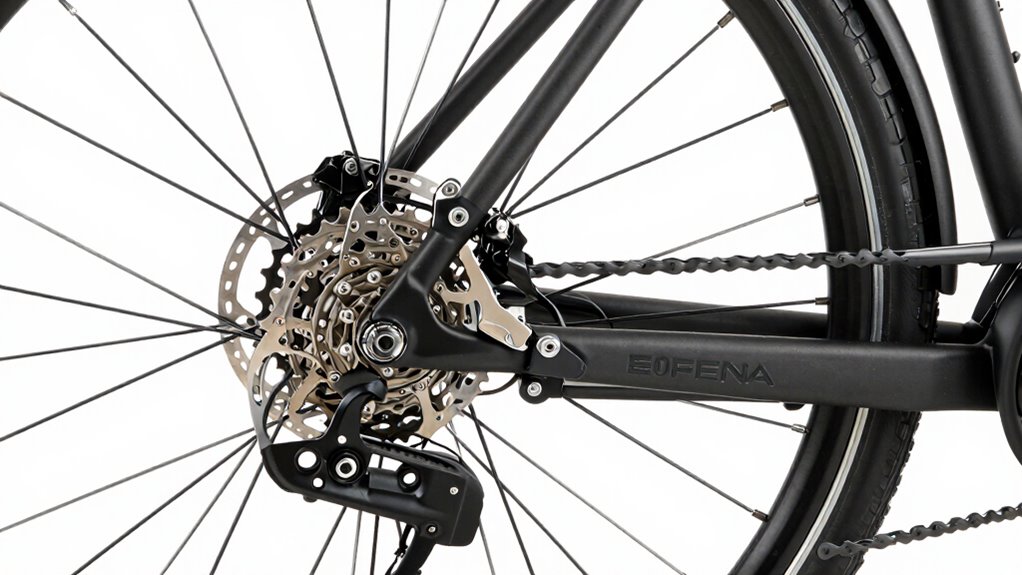
Are wheel sizes and mounts compatible with your motor and frame? You need to check if your bike’s frame geometry can accommodate the wheel diameter of your conversion kit. Different wheel sizes, like 26”, 27.5”, or 700c, require specific dropout widths and brake mounts. If the mounts don’t align with your frame’s dropouts, you might face installation issues or compromised safety. Additionally, ensure the motor’s axle fits the existing mounts or dropout spacing. Mismatched wheel sizes can cause clearance problems with brakes or frame components. Confirm that the frame’s geometry supports the chosen wheel diameter, preventing interference or handling issues. Proper compatibility ensures your conversion kit fits securely and functions smoothly, avoiding costly adjustments later. Always verify bike frame compatibility before purchasing or installing a conversion kit. Checking motor compatibility is also crucial to ensure the motor’s axle and mounting options match your bike’s setup.
How to Verify Compatibility Before Buying?
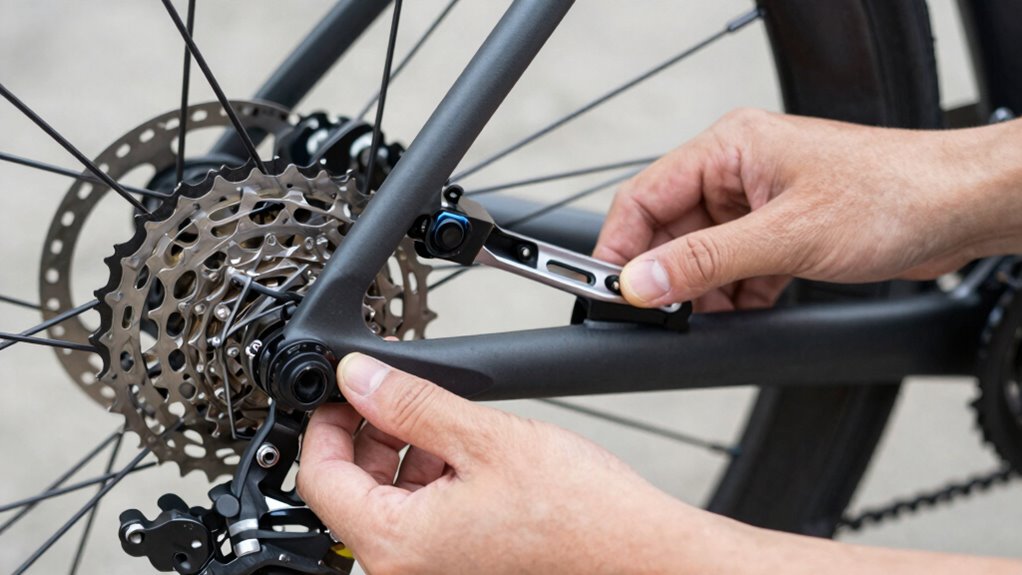
Before purchasing an e-bike conversion kit, it’s essential to verify that all components will fit your bike’s specific frame and existing parts. Start by checking the battery capacity to ensure it meets your riding range needs. Next, confirm the motor wattage suits your desired level of assistance and terrain. Finally, validate compatibility with your bike’s dropout spacing and brake system to prevent installation issues. Consider these key steps:
Verify your bike’s frame, dropout spacing, and brake compatibility before choosing an e-bike conversion kit.
- Match the battery capacity with your typical riding distance.
- Ensure the motor wattage aligns with your power and speed expectations.
- Confirm your bike’s dropouts and brake type are compatible with the kit’s mounting requirements.
Proper verification saves time and prevents costly mistakes, ensuring a smooth installation process.
Troubleshooting Common Fit and Compatibility Issues

When installing an e-bike conversion kit, you might encounter fit and compatibility issues that can disrupt the process. Common problems include mismatched dropouts, incompatible brakes, or incorrect cassette sizes. To resolve these, double-check your bike’s specifications against the kit’s requirements. Confirm the motor fits securely and troubleshoot any motor issues early—motor troubleshooting can prevent further damage. Always prioritize battery safety by inspecting connections and avoiding loose wiring, which can cause short circuits. If the motor isn’t engaging properly or the fit is tight, don’t force it; instead, verify compatibility and adjust components as needed. Addressing these issues promptly helps maintain your bike’s safety and performance, ensuring a smoother conversion experience.
Final Tips for a Smooth E-Bike Conversion
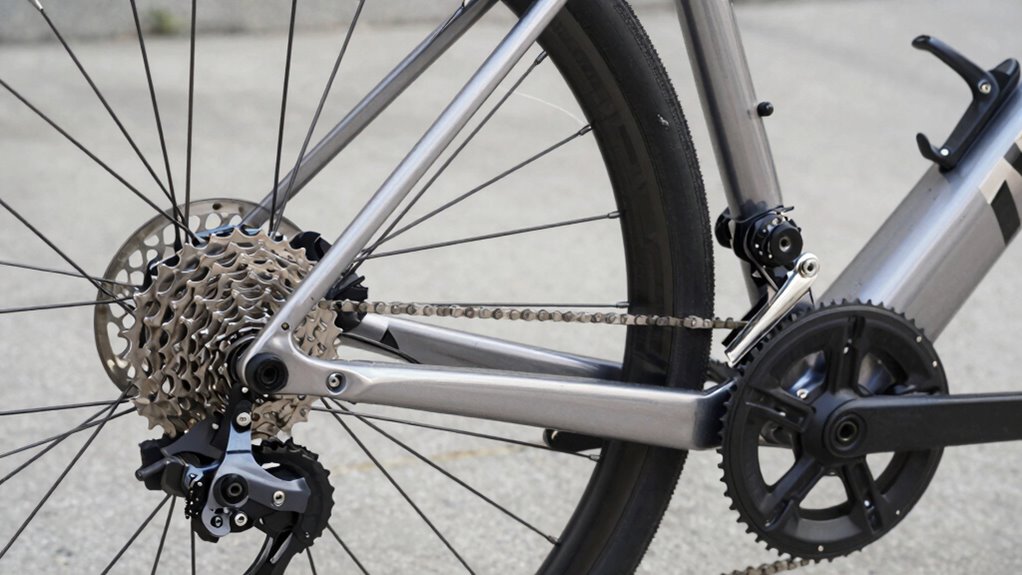
To guarantee a smooth e-bike conversion, take the time to thoroughly review all components and instructions before starting. Ensure the battery capacity aligns with your riding needs, and verify that the motor wattage provides sufficient power without overloading your frame. This preparation helps prevent compatibility issues and guarantees ideal performance.
Consider these final tips:
- Match your battery’s capacity with your desired range and riding style.
- Confirm the motor wattage suits your terrain and weight requirements.
- Double-check that all connectors and wiring are secure and correctly installed.
Frequently Asked Questions
Can I Upgrade My Existing Brakes to Handle the New Motor?
Yes, you can upgrade your brakes to handle the new motor, but you should first check for compatibility concerns. A brake upgrade might be necessary if your current brakes aren’t powerful enough for the added weight and speed. Make sure to select compatible brake types—like hydraulic or disc brakes—and verify they fit your bike’s frame and existing mounting points. This ensures safe, effective stopping power with your upgraded e-bike.
Are Disc Brake Mounts Compatible Across Different E-Bike Conversion Kits?
Think of disc brake mounts like puzzle pieces—some fit perfectly, others don’t. Disc brake standards vary, so compatibility considerations matter. Most modern e-bike conversion kits use standard mounts, but it’s not a guarantee. Check your kit’s specifications and compare them to your bike’s mount type. If they align, you’re golden; if not, you might need adapters or different kits. Always double-check before making any moves.
How Do I Determine if My Hub Spacing Matches the Motor?
To determine if your hub spacing matches the motor, check your wheel’s hub spacing measurement, usually in millimeters or inches. Use a compatibility checklist to compare your bike’s hub spacing with the motor’s specifications. If they match, installation should be straightforward. If not, you might need an adapter or different motor. Always double-check measurements to confirm a proper fit before purchasing or installing your e-bike conversion kit.
Is My Bike’s Frame Material a Concern for Installing the Kit?
Your bike’s frame material isn’t a huge concern, but it does matter. Imagine your frame as the backbone of your ride—stronger materials like aluminum or carbon fiber handle the extra torque of an e-kit better than steel. For frame compatibility, check if it’s designed to handle the added stress. Ignoring material considerations could lead to cracks or failures, so choose a kit suited for your frame’s strength and construction.
What Tools Are Needed for a Successful Installation?
You’ll need basic tools like Allen wrenches, screwdrivers, and a torque wrench for a smooth install. Check compatibility considerations first, especially for your bike’s dropouts, brakes, and cassette. A chain tool may be necessary if you’re changing cassettes, and a tire lever could help if you need to remove wheels. Having these tools ready guarantees you can handle adjustments and secure all components properly.
Conclusion
Ultimately, ensuring your bike’s compatibility feels like uncovering a hidden puzzle—every piece, from dropouts to brakes, must align perfectly. When you double-check each component, you might just find that your ideal e-bike conversion is closer than you think. Sometimes, the smallest detail makes all the difference, turning what seems like a coincidence into a seamless upgrade. Trust your research, and enjoy the ride knowing you’ve mastered the art of compatibility.