
To safely charge your electric motorbike at home with a larger battery or faster charger, you might need to upgrade your electrical system. Most homes have circuits that can’t support the increased load, risking overloads or electrical hazards. Signs like circuit breaker trips, flickering lights, or burning smells indicate your system needs attention. Consulting a qualified electrician guarantees the right upgrade, helping you achieve safer, faster charging—if you keep exploring, you’ll discover how to do it right.
Key Takeaways
- Upgrading your home’s electrical circuit may be necessary to support higher-capacity EV motorbike chargers safely.
- Check your existing breaker ratings and overall circuit load to determine if upgrades are needed.
- Signs like frequent tripping or flickering lights indicate overloaded circuits requiring professional inspection.
- Installing dedicated circuits and weatherproof outlets ensures safe, efficient home charging setups.
- Consult licensed electricians to assess your home’s electrical system and perform necessary upgrades compliantly.
Why Might Your Home Electrical System Need an Upgrade for EV Bike Charging?
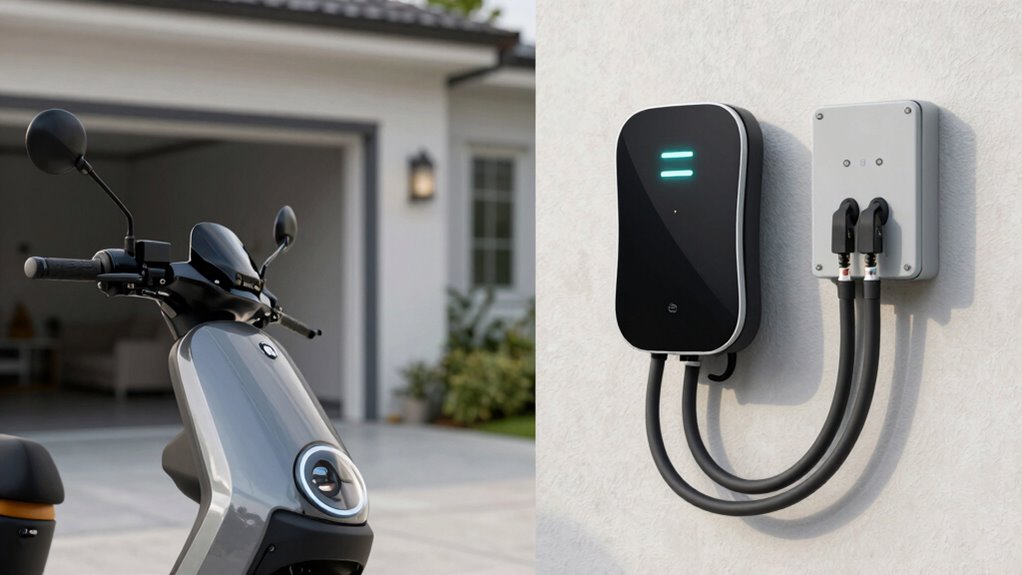
If you’re planning to charge your electric motorbike at home, it’s important to contemplate whether your current electrical system can handle the additional load. Larger battery capacity means more energy storage, which often requires a higher charging speed to keep your bike ready. If your system isn’t equipped for faster charging, it could lead to longer charging times or even electrical issues. Many homes have circuits that can’t support the power demands of high-capacity batteries or rapid chargers. Upgrading your electrical system ensures safe, efficient charging, preventing overloads. Consider the circuit’s amperage and wiring quality before plugging in a powerful charger. A properly upgraded system will support your bike’s battery capacity and desired charging speed without risking damage or safety hazards. Ensuring your system’s compatibility with electric vehicle charging standards is also crucial for safe and reliable operation. Additionally, consulting a qualified electrician can help determine if your home wiring meets current electrical safety requirements for such upgrades, especially as high-capacity batteries become more common in electric vehicles. Moreover, understanding the electrical load capacity of your home can help prevent unexpected circuit trips during high-demand charging sessions. Proper assessment of your home’s electrical system can help avoid potential hazards and ensure your EV bike charges efficiently.
How Can You Tell if Your Circuit Can Handle Your Electric Motorbike Charger?

Before plugging in your electric motorbike charger, it’s important to verify whether your home’s electrical circuit can handle the additional load. Start by checking your circuit capacity, which is usually rated in amperes on your breaker. Look at the breaker ratings in your electrical panel; common ratings are 15 or 20 amps. Ensure the total load on that circuit, including your charger, doesn’t exceed its capacity. If your existing breaker is nearing its limit, you might need a dedicated circuit or an upgraded breaker. Also, consider how many devices are running simultaneously on the same circuit. Proper assessment of breaker ratings and circuit capacity helps prevent overloads and guarantees safe, reliable charging for your electric motorbike. Additionally, understanding your electrical system’s capabilities can help you plan any necessary upgrades for safe and efficient charging. Knowing your home’s electrical capacity can also guide you in making informed decisions about circuit upgrades or additions. Conducting a load calculation can provide a detailed overview of your system’s ability to support additional devices. Performing a regular electrical inspection can identify potential issues before they become problems, ensuring safe operation. It’s advisable to consult a qualified electrician to conduct a thorough electrical assessment if you’re unsure about your system’s limits.
Signs That Your Circuit Is Overloaded or Unsafe
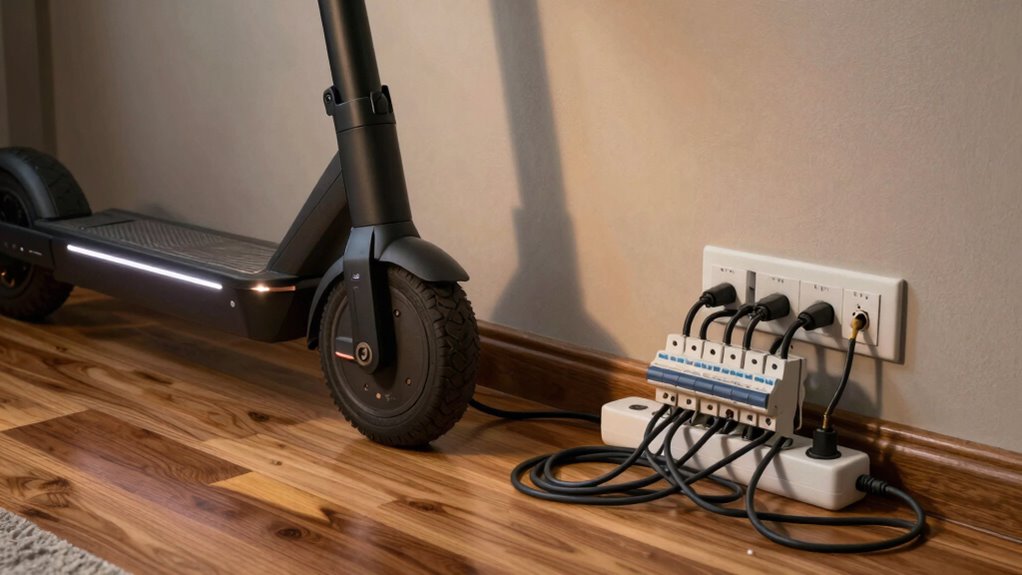
If your circuit keeps tripping or you notice sparks and burning smells, it’s a clear sign something’s wrong. Flickering or dimming lights can also indicate an overload or unsafe wiring. Pay attention to these warning signs to keep your home and equipment safe. Using electrical safety precautions can help prevent accidents and damage. Additionally, proper circuit capacity is essential to ensure your electrical system can handle the load from your electric motorbike charger without issues. Recognizing signs of energetic misalignment in your electrical setup can also help maintain a balanced and safe environment. Ensuring your home’s electrical system has adequate ventilation can further reduce the risk of overheating and improve overall safety. Understanding the importance of reliable heat pump systems can further ensure your home remains comfortable and energy-efficient.
Frequent Circuit Tripping
Frequent circuit tripping is a clear warning that your electrical system may be overloaded or unsafe. When your circuit breaker trips repeatedly, it indicates that your overcurrent protection is performing its job—preventing damage or fire hazards. However, persistent trips suggest that the circuit might be handling more load than it’s designed for, especially when charging an electric motorbike. Regular circuit maintenance becomes essential to identify and address underlying issues, such as faulty wiring or outdated breakers. Ignoring these signs can lead to more serious problems, including damage to your electrical system or safety risks. If you notice frequent tripping, it’s time to evaluate your circuit’s capacity and consider a professional upgrade to ensure safe, reliable charging.
Burning Smells or Sparks
Burning smells or sparks emerging from your electrical outlets or circuit breaker are clear warning signs that your circuit is overloaded or unsafe. These signs often indicate circuit overheating, which can damage wiring and create fire hazards. If you notice a burning odor or see sparks, immediately unplug the charger and turn off the affected circuit. Wiring damage may have occurred, compromising the safety and integrity of your electrical system. Ignoring these signs can lead to more severe problems, including electrical fires or permanent damage to your home’s wiring. It’s essential to have a qualified electrician inspect the circuit promptly. Upgrading your circuit or installing dedicated outlets for your motorbike charger can prevent future overheating and ensure safe, reliable charging. Additionally, understanding projector contrast ratio and other electrical safety features can help in designing safer home electrical setups. Regular maintenance and awareness of air purifier maintenance dos and don’ts can also contribute to overall safety and efficiency in your household electrical systems.
Flickering or Dimming Lights
When your lights flicker or dim unexpectedly, it often signals that your electrical circuit is overloaded or unsafe. This can happen when multiple lighting fixtures or high-power devices draw too much current from the same circuit. You might notice your lighting fixtures flickering when you plug in your electric motorbike charger or other appliances. Dimming lights may also occur when you turn on additional power outlets or appliances, indicating that your wiring can’t handle the load. Ignoring these signs can lead to overheating, damaged wiring, or even electrical fires. To keep your home safe, consider upgrading your circuit to handle the increased demand from your home charging setup. It’s a smart move that prevents hazards and guarantees reliable power for all your electrical needs. Understanding electrical loads is essential for ensuring your home’s wiring can support your new charging station safely, especially as demand for home charging solutions continues to grow. Additionally, consulting with a qualified electrician can help assess your current system and recommend appropriate circuit upgrades to ensure safety and efficiency.
What’s Involved in Upgrading Your Home’s Electrical Circuit?

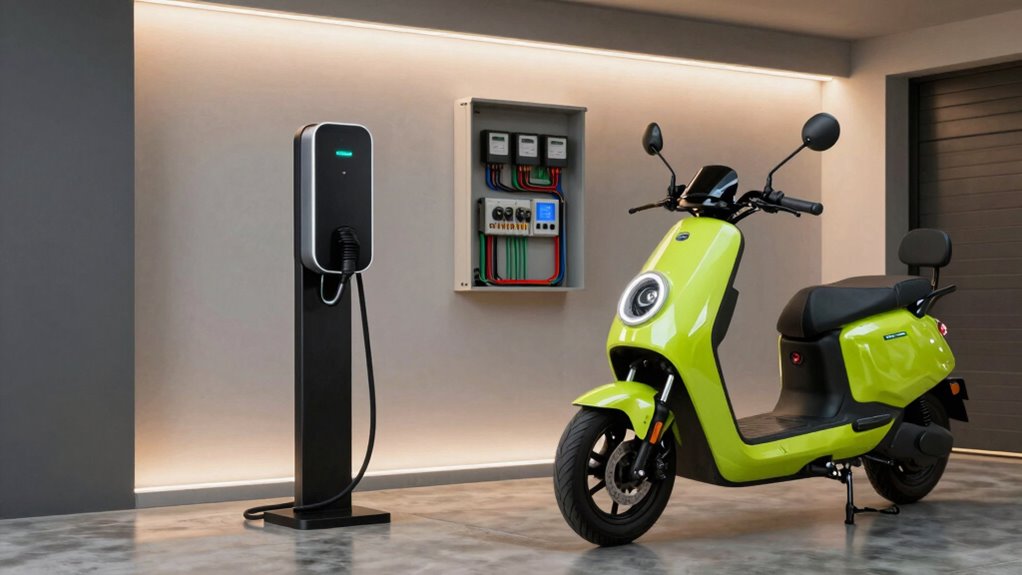
Upgrading your home’s electrical circuit is a crucial step to safely support the additional power demands of charging your electric motorbike. First, you’ll need to assess your current circuit’s capacity, considering your bike’s battery capacity and how much power charging will require. Installing a dedicated circuit for your charging station is often necessary to prevent overloads and ensure safety. This might involve adding a new breaker in your electrical panel and running new wiring tailored to handle higher currents. A professional electrician will evaluate your existing setup, determine if upgrades are needed, and install the appropriate components. The goal is to create a reliable, efficient charging station that seamlessly integrates with your home’s electrical system while accommodating your motorbike’s charging needs. Ensuring compatibility with home electrical standards is essential for safety and efficiency. Additionally, understanding your local regulations and electric vehicle charging requirements can help you plan the most effective upgrade. Considering the electrical load capacity of your home can help prevent future issues as you add more electric vehicle charging options. Evaluating your overall electrical system capacity can help identify potential upgrades needed as your charging needs grow. Proper planning and assessment can help avoid overloading circuits and ensure your home remains safe and functional during increased electrical use.
How to Choose the Right Professional for Your Circuit Upgrade
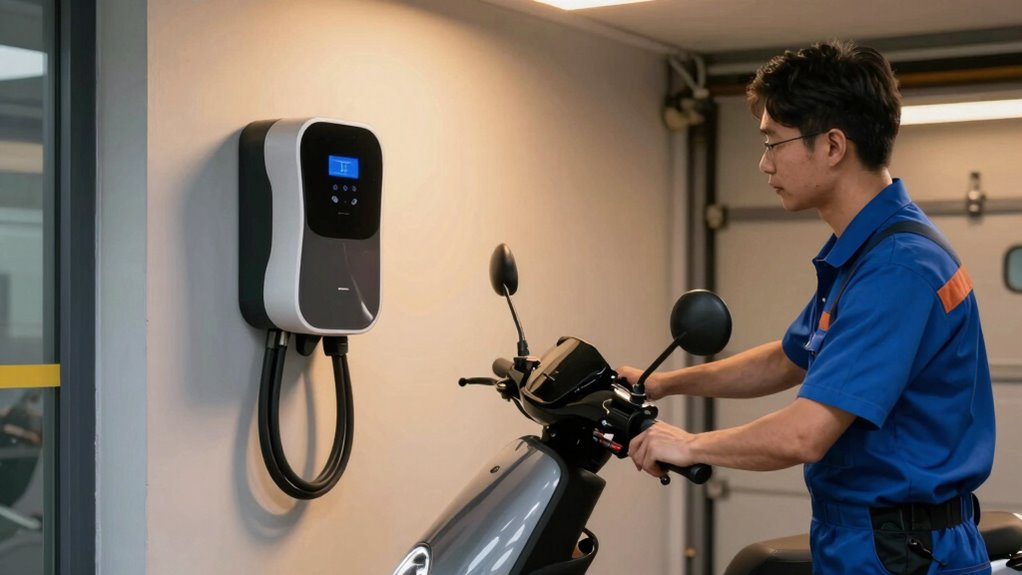
Choosing the right professional for your circuit upgrade guarantees your home’s electrical system remains safe and reliable. To find the best fit, focus on electrician selection by checking their experience with similar upgrades. Verify contractor credentials, including licenses and insurance, to ensure quality work and accountability. Consider their reputation by reading reviews or asking for references. Make sure they’re familiar with local electrical codes and standards. Additionally, discuss their availability and turnaround time to avoid delays. A qualified professional should provide a clear estimate and detailed plan. Remember, your home’s safety depends on choosing someone competent and trustworthy. It’s also beneficial to ensure they are familiar with home electrical safety standards to guarantee the upgrade meets all necessary regulations.
What Are the Costs and Timeframes for Upgrading Your Circuit?
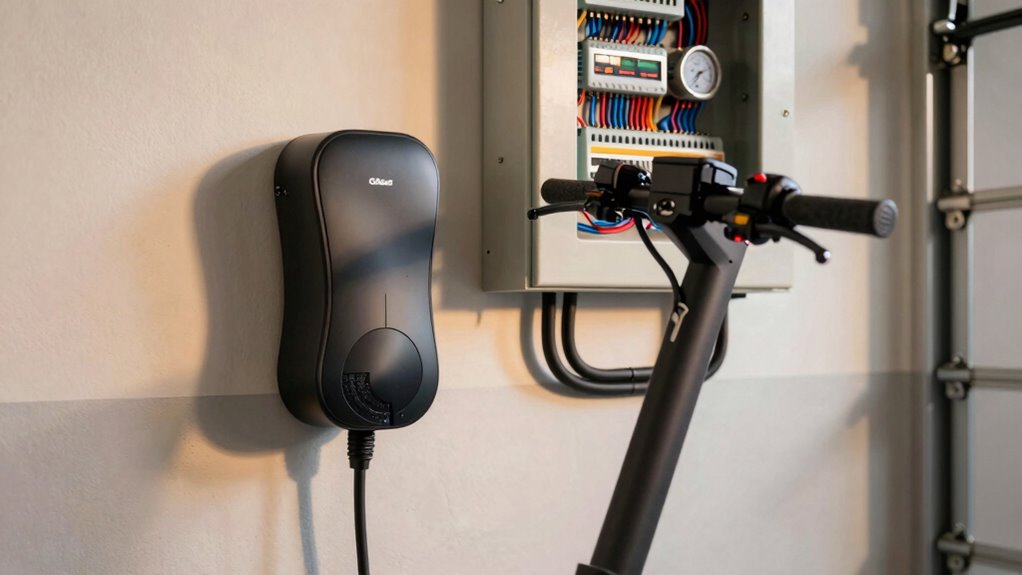
The costs and timeframes for upgrading your circuit can vary depending on several factors, including the extent of the work and your home’s existing electrical system. Typically, installing a dedicated charging station requires increasing your home’s power capacity, which may involve panel upgrades or new wiring. Expect costs to range from $500 to $2,000, depending on the complexity. Timeframes usually span from a few hours to a couple of days for larger upgrades. Here’s a quick overview:
| Work Needed | Estimated Cost | Timeframe |
|---|---|---|
| Basic outlet upgrade | $500 | 2-4 hours |
| Upgrading breaker panel | $1,000-$2,000 | 1-2 days |
| Adding dedicated circuit | $600-$1,200 | 1 day |
| Increasing power capacity | $1,500-$3,000 | 2-3 days |
| Full circuit overhaul | $2,000+ | Several days |
Safety Tips for Charging Your Electric Motorbike at Home
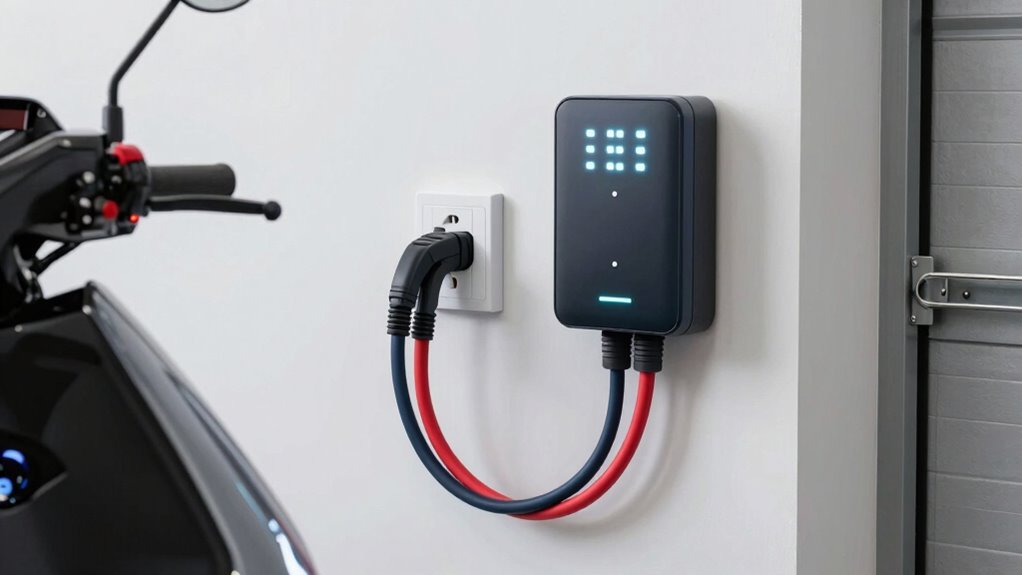
Ensuring safety while charging your electric motorbike at home is essential to prevent electrical hazards and damage. Properly placing your charging station helps avoid accidents and keeps your setup accessible. Use weatherproof connectors to protect against moisture and prevent short circuits, especially if you’re charging outdoors or in damp areas. Always inspect cords and connectors for damage before use. Avoid charging near water, flammable materials, or in poorly ventilated spaces. Keep chargers off the floor and away from high-traffic zones to prevent tripping hazards. Regularly check that your system meets safety standards and follow manufacturer instructions for safe operation. By implementing these tips, you’ll ensure a safe, reliable charging routine for your electric motorbike.
What Are Your Options if Your Circuit Can’t Handle the Charger?
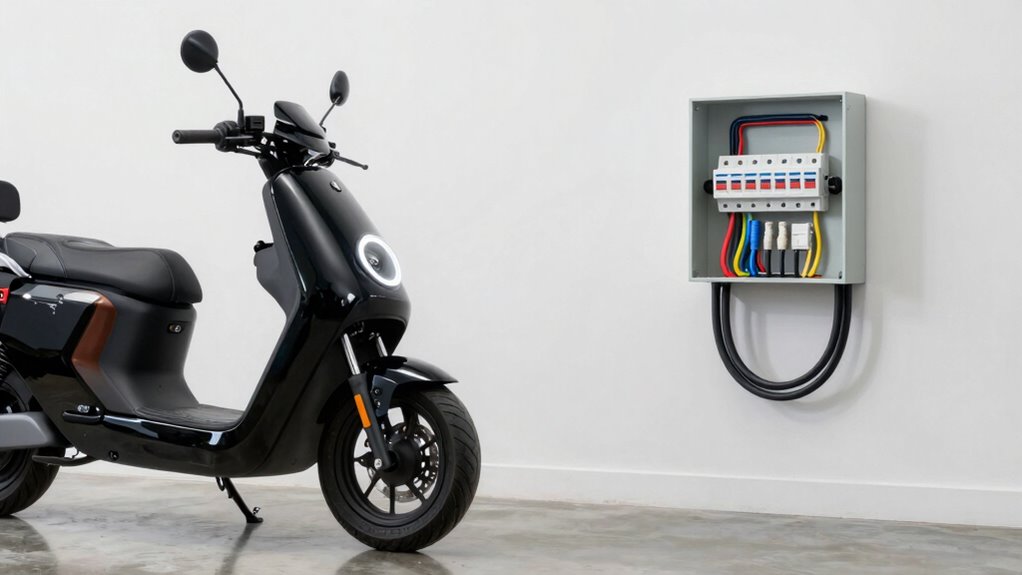
If your circuit can’t handle the charger’s power demand, you have several options to address the issue. First, consider upgrading your circuit’s wiring or installing a dedicated outlet to support higher power levels, which can improve charging speed. Alternatively, choose a charger with a lower power output compatible with your current circuit, though this may extend charging times. You might also evaluate your electric motorbike’s battery capacity; larger batteries generally require more power, so adjusting your charging setup accordingly can help. If faster charging is a priority, upgrading your circuit guarantees you won’t sacrifice charging speed. Consulting an electrician is wise to determine the best solution for your home’s electrical system, ensuring safety while meeting your motorbike’s charging needs efficiently.
Frequently Asked Questions
Can I Upgrade My Existing Outlet for Faster Charging?
Yes, you can upgrade your existing outlet for faster charging, but you need to check outlet compatibility and circuit capacity first. Confirm your current wiring can handle the increased load, or you’ll need to upgrade your circuit breaker and wiring. Consult a licensed electrician to assess your home’s electrical system, so you avoid overloads and ensure safe, efficient charging for your electric motorbike.
How Often Should I Have My Electrical System Inspected?
Think of your electrical system like a vintage radio—regular tuning keeps it running smoothly. You should have it inspected every 3 to 5 years, or sooner if you notice flickering lights or frequent breaker trips. During inspections, a professional checks your circuit breaker, wiring gauge, and overall safety. Regular checkups guarantee your system handles your charging needs safely and efficiently, preventing costly repairs down the line.
Are There Portable Charging Options for Home Use?
Yes, you can use portable adapters and battery chargers for home charging. Portable adapters let you connect your electric motorbike to standard outlets easily, while battery chargers are designed for more efficient and faster charging. Make sure to choose chargers compatible with your bike’s battery specifications. These options provide flexibility, so you can top up your motorbike’s charge conveniently without needing a dedicated charging station.
What Permits Are Required for Electrical Upgrades?
You’ll need to follow your local electrical codes and complete the permitting process before upgrading your circuit. Check with your city or county’s building department, as they typically require permits for electrical work to guarantee safety and compliance. Submit your plans and wait for approval before hiring an electrician. This way, you avoid fines or safety issues, and your home remains up to code during your electric motorbike charging upgrade.
How Do I Ensure My Home Wiring Meets Safety Standards?
Think of your wiring as the backbone of a sturdy bridge—if it’s not up to code, everything risks collapse. To guarantee safety, verify grounding practices are solid, preventing electrical shocks, and check that circuit breaker ratings match your charger’s demands. Regular inspections and professional assessments keep your home wiring in harmony, so your electric motorbike charges safely and efficiently—like a well-tuned engine running smoothly.
Conclusion
Think of your home’s electrical system as the heartbeat of your electric motorbike journey. When you upgrade your circuit, you’re giving it the pulse it needs to keep you moving safely and smoothly. Ignoring signs of strain is like pushing your heartbeat beyond its limit—dangerous and unsustainable. Invest in the right upgrade, and your home becomes the steady foundation beneath your ride’s wings, fueling your adventure with confidence and peace of mind.