
Choosing between front and rear hub motors impacts your bike’s handling, stability, and ride comfort. Front motors shift weight forward, making steering easier on uneven terrain but may cause wobbling at high speeds. Rear motors offer better traction and stability, especially on climbs, but can make quick turns feel heavier. Each setup has pros and cons, and understanding how placement affects performance can help you select the best option for your riding style; if you keep exploring, you’ll discover more useful details.
Key Takeaways
- Front hub motors improve maneuverability and are easier to install, but may reduce steering feel and stability at high speeds.
- Rear hub motors provide better traction, acceleration, and stability on inclines, making them ideal for climbing and rough terrains.
- Front motors are generally more affordable and simpler to maintain, while rear motors are more complex but offer higher efficiency.
- Placement impacts weight distribution: front motors shift weight forward, rear motors transfer weight to the back, affecting handling.
- Upgrading or repairing rear hub motors can be more challenging and costly due to compatibility and component availability.
How Front and Rear Hub Motors Affect Weight Distribution and Balance
When choosing between front and rear hub motors, understanding how they impact weight distribution and balance is crucial. Front hub motors shift weight forward, which can improve stability on flat terrain, but might slightly compromise steering feel. Rear hub motors move weight to the back, enhancing traction and handling during acceleration, especially on inclines. This distribution influences not only handling but also aerodynamic efficiency, as the bike’s center of gravity affects airflow. Additionally, the motor’s placement can impact aesthetic appeal; rear motors often look sleeker and more integrated, while front motors can be more conspicuous. Your choice should consider how you prioritize balance, aerodynamics, and visual style, ensuring your e-bike feels right for your riding style and preferences. Proper **weight distribution** plays a vital role in optimizing overall ride quality and rider comfort.
Impact on Handling and Stability During Different Riding Conditions

The placement of your hub motor considerably influences how your e-bike handles and stays stable across various riding conditions. A front hub motor can improve maneuverability and steering, especially on uneven terrain, but may affect wheel alignment, causing slight wobbling at higher speeds. It can also impact aerodynamics, creating more wind resistance from the front. Conversely, a rear hub motor offers better stability during fast riding and cornering, as it maintains a more balanced weight distribution. This placement enhances wheel alignment in straight-line riding, reducing wobble. However, it can make handling feel heavier during quick turns. Overall, the motor’s position affects how your bike responds to different surfaces and speeds, shaping your experience based on how well it maintains stability and smooth handling in diverse riding conditions. Additionally, motor placement can influence the overall weight distribution and balance, which are critical factors for rider confidence and control.
Differences in Traction and Power Transmission
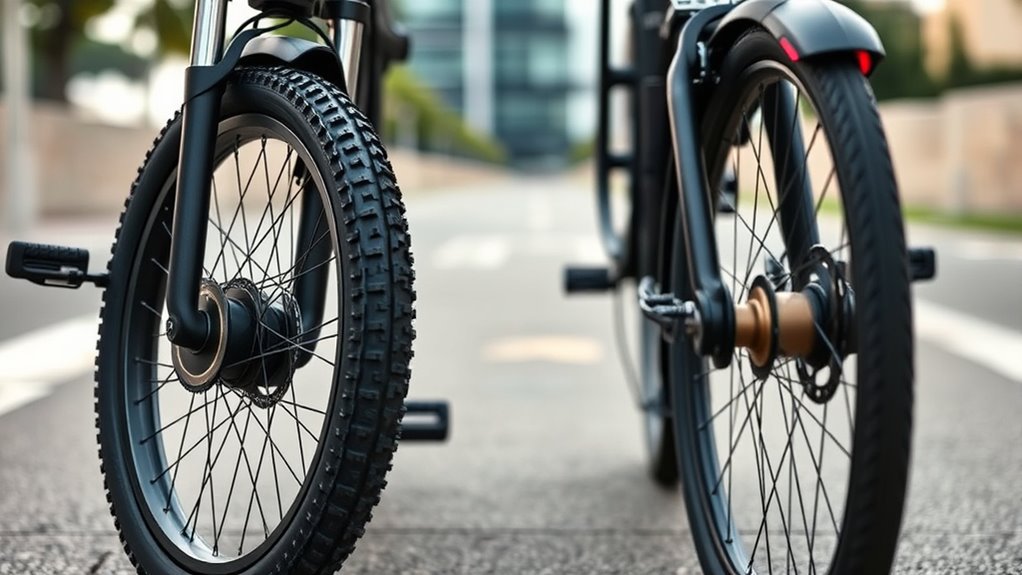
The placement of your hub motor considerably impacts how power is delivered to the ground, affecting traction and overall grip. Traction differences between front and rear motors influence how well you maintain control, especially on slippery or uneven terrain. Power transmission varies as well: rear hub motors often provide more direct power transfer, resulting in better acceleration and climbing ability. Conversely, front hub motors distribute power differently, which can reduce traction under heavy load. Consider these points: 1. Rear motors generally offer superior traction during acceleration and uphill riding. 2. Front motors help with stability and steering, especially in slippery conditions. 3. Power transmission efficiency tends to be higher in rear hub motors. 4. Traction differences impact handling, influencing your riding confidence and safety. Additionally, the contrast ratio of the motor system can influence how well the power output translates into effective traction and control.
Installation, Maintenance, and Repair Considerations

Installing, maintaining, and repairing hub motors requires attention to their specific placement and design. Rear hub motors often demand careful alignment with the chain or belt, while front motors are simpler to install but impact steering. Battery placement influences weight distribution, so consider whether the battery is mounted on the frame or integrated into the rack. Motor compatibility is essential; ensure your motor matches your bike’s wheel size and wiring system. Regular checks on wiring and connections prevent issues. When repairing, remember that rear motors tend to be more complex due to additional components. Here’s a quick comparison:
| Aspect | Front Hub Motor | Rear Hub Motor | Tips |
|---|---|---|---|
| Installation | Easier, less alignment needed | More precise, careful alignment | Check motor compatibility beforehand |
| Maintenance | Simpler, fewer components | More complex, more parts | Inspect wiring regularly |
| Battery Placement | Usually on frame or rack | Can affect weight balance | Optimize for ride stability |
| Repair Complexity | Lower | Higher | Seek professional help if needed |
Additionally, proper storage of the motors and components can help extend their lifespan and ensure safety during repairs.
Performance in Various Terrains and Riding Styles

Your riding experience varies greatly depending on the terrain and style you choose. Front and rear hub motors handle off-road trails and city streets differently, affecting your control and comfort. Understanding these differences can help you pick the best motor for climbing hills or steering challenging surfaces. Additionally, considering the motor placement can influence the overall riding stability and maneuverability.
Off-Road Handling Differences
Off-road handling differences between front and rear hub motors become especially noticeable when maneuvering challenging terrains and varied riding styles. Your bike’s tire grip and suspension compatibility play vital roles in how each motor type performs off-road. With a front hub motor, you’ll find better steering control and easier maneuverability, especially on uneven ground. Rear hub motors provide better traction during climbs and rough trails, but can challenge your bike’s balance. To optimize off-road handling, consider these points:
- Confirm tires have sufficient grip for loose or rocky surfaces.
- Use suspension that suits off-road conditions to absorb shocks.
- Balance weight distribution to improve stability.
- Pick a motor position that complements your riding style and terrain.
- Additionally, exploring local Water Parks can offer a fun way to relax after challenging rides or training sessions.
City Commuting Performance
When it comes to city commuting, the choice between front and rear hub motors substantially impacts how your e-bike handles various terrains and riding styles. A front hub motor offers smoother acceleration and quiet operation, with its battery placement often centered for balanced weight. Rear hub motors provide stronger torque, especially on inclines, but may produce more motor noise. Additionally, Volkswagen Tuning techniques often focus on optimizing power delivery, which can be analogous to choosing the right motor setup for performance and comfort.
| Feature | Front Hub Motor | Rear Hub Motor |
|---|---|---|
| Battery Placement | Centered for balance | Near rear wheel |
| Handling | Stable, maneuverable | Agile, responsive |
| Noise Level | Quieter | Slightly louder |
Climbing Efficiency Variations
Climbing efficiency varies markedly between front and rear hub motors, especially across different terrains and riding styles. Your choice impacts how well your e-bike handles steep inclines and rough paths. Battery placement plays a role: rear-mounted batteries often provide better weight distribution for climbing, while front motors may struggle with traction. Consider these points:
- Rear hub motors generally deliver more torque, aiding steep climbs.
- Front hub motors can cause wheel slip on loose surfaces due to weight shift.
- Motor noise levels differ; rear motors tend to be quieter under load.
- Battery placement influences overall balance, affecting climbing stability.
- The power distribution between the motor and rider’s effort can significantly impact climbing performance.
Ultimately, rear hub motors offer better climbing efficiency on challenging terrains, but noise levels and weight distribution are key factors for your riding style.
Cost and Availability of Components and Upgrades
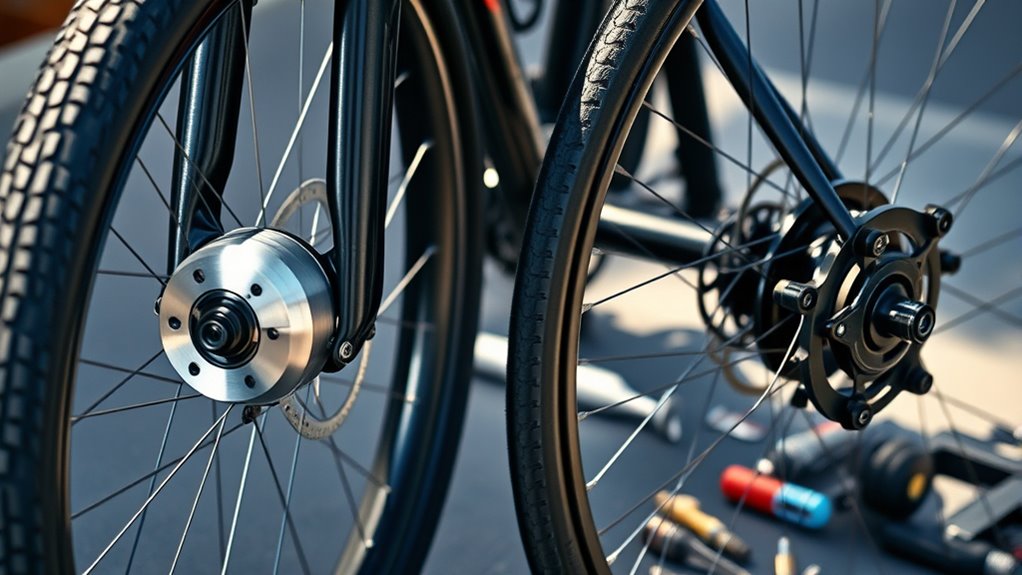
You’ll notice that front hub motors tend to be more affordable and easier to find replacement parts for, making repairs simpler. Upgrading components can be trickier since some parts aren’t compatible across different motor types or bike setups. Keep in mind that availability of spare parts varies, so sourcing specific components might take longer depending on your motor choice. Additionally, component compatibility plays a crucial role in ensuring smooth upgrades and repairs.
Component Price Differences
Component prices for front and rear hub motors can vary considerably, affecting your overall budget and upgrade options. Generally, rear hub motors tend to be more expensive due to higher motor efficiency and the need for better battery compatibility to handle increased power. When comparing costs, keep these points in mind:
- Rear motors often cost more because they require more complex components.
- Front motors are usually cheaper, making them ideal for budget builds.
- Upgrading motor efficiency may increase costs, especially with rear hubs.
- Compatibility with existing batteries can influence overall expenses, as some motors need specific voltage or capacity.
- The availability of performance upgrades for rear hub motors is often greater due to their higher efficiency and demand among enthusiasts.
Understanding these differences helps you choose a motor that fits your budget without sacrificing performance or upgrade potential.
Upgrade Compatibility Limits
While upgrading your hub motor, the availability and cost of compatible components can substantially limit your options. Higher battery capacity and motor wattage upgrades often require compatible controllers, freehub compatibility, and frame adjustments, which may not always be accessible or affordable. For example, increasing motor wattage might demand a new controller or wheel, raising costs. Similarly, upgrading battery capacity involves finding compatible batteries that fit your frame and wiring. Here’s a quick look at common upgrade limitations:
| Component Type | Compatibility Challenge |
|---|---|
| Battery Capacity | Finding compatible batteries for frame |
| Motor Wattage | Upgrading controllers and wheels |
| Controller | Matching voltage and current specs |
| Freehub | Ensuring compatibility with new motor |
These factors can restrict your upgrade options and budget.
Spare Part Availability
Securing spare parts for hub motors can be a significant challenge due to limited availability and fluctuating costs. When it comes to component sourcing, you might find that replacement parts are harder to locate than expected. This impacts your ability to repair or upgrade efficiently. To navigate this, keep these points in mind:
- Check manufacturer support for genuine spare part availability and long-term component sourcing.
- Research third-party suppliers that may offer compatible parts, but verify quality.
- Understand the market fluctuations that can affect component prices and lead times.
- Opt for popular models with a broader spare part availability to simplify maintenance and upgrades.
Being proactive ensures you’re not caught off guard when parts become scarce or costly.
Common Misconceptions and Myths About Hub Motor Placement
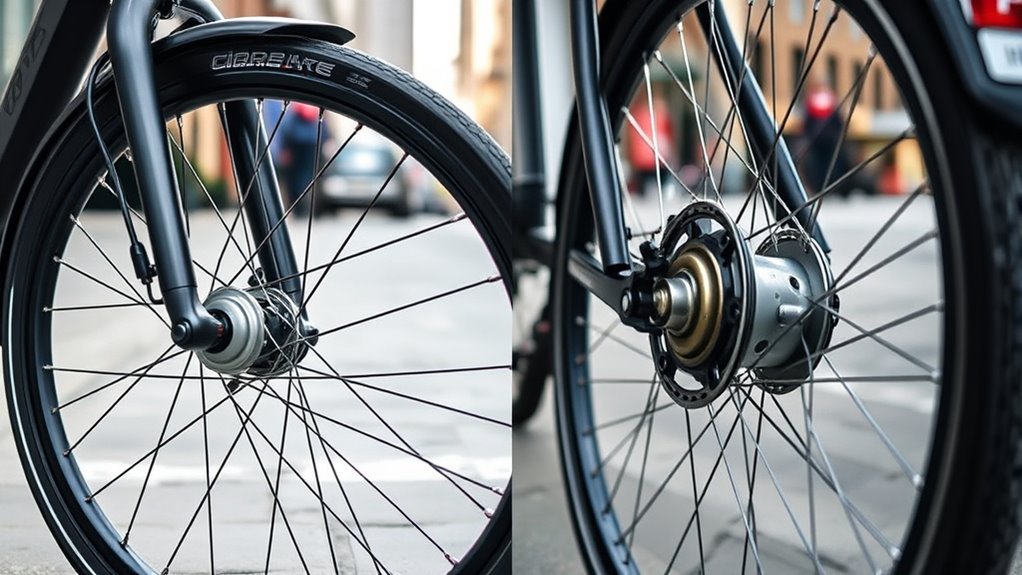
Many people believe that front and rear hub motors have clear-cut advantages and disadvantages, but some of these beliefs are actually myths. For example, it’s a misconception that front hub motors always handle better in snow or wet conditions; rear motors can perform just as well when properly maintained. Another myth is that motor noise is considerably worse with rear hubs, but noise levels depend more on quality and design rather than placement. Additionally, some think battery placement is less flexible with rear motors, but many bikes allow for strategic positioning regardless of the hub location. These myths can lead you to overlook options that might suit your riding style better. Understanding these misconceptions helps you make a more informed choice for your e-bike.
Frequently Asked Questions
Which Hub Motor Placement Offers Better Theft Protection?
Rear hub motors generally offer better theft protection because they’re less obvious and harder to remove quickly. When considering security concerns, you’ll find that a rear motor’s placement makes it less attractive to thieves, reducing theft risks. To maximize theft prevention, pair a rear hub motor with a strong lock and secure storage. This way, you enhance your bike’s security and protect your investment effectively.
How Does Motor Placement Influence Battery Life?
Think of your e-bike as a well-oiled machine where motor placement shapes battery life. A rear hub motor often offers better battery efficiency because it distributes weight more evenly, reducing strain on the battery. Conversely, front hub motors might cause quicker battery drain, impacting motor longevity. So, choosing the right placement helps your battery last longer and keeps your ride smooth, ensuring your e-bike performs at its best mile after mile.
Are Front or Rear Hub Motors More Compatible With Specific Bike Frames?
You’ll find that rear hub motors generally work better with most bike frames because they’re compatible with standard mountain or city bike designs, supporting diverse riding styles. Front hub motors are more suited for lightweight, urban bikes or those with less complex frame compatibility. Consider your riding style—aggressive or casual—and your bike’s frame specifications to choose the motor placement that offers the best compatibility and performance.
What Are the Best Options for Upgrading Hub Motors?
Upgrading your hub motor is like transforming your bike into a superhero machine! You want options that maximize motor efficiency and aren’t a nightmare to install. Look for high-quality, well-reviewed models that fit your bike’s frame and power needs. Consider brushless DC motors for smoother performance and easier installation. Skimping on quality can turn this upgrade into a headache, so choose options with proven reliability and straightforward setup.
How Does Motor Placement Affect Noise and Vibration Levels?
Motor placement substantially affects noise and vibration levels. Rear hub motors tend to produce less motor noise and vibrations because they’re more centralized and shielded, providing a smoother ride. Front hub motors may generate more vibration impact and noise, especially on rough terrain, because of their position. Your choice impacts ride comfort, so consider where vibrations and noise will be least disruptive for your cycling style.
Conclusion
Choosing between front and rear hub motors depends on your riding style and priorities. Think of it like a ship’s rudder—you need to know which way to steer for smooth sailing. Both options have their pros and cons, so weigh them carefully. Remember, “A stitch in time saves nine,” meaning addressing your needs now guarantees a better ride later. Make an informed choice, and enjoy the journey ahead!