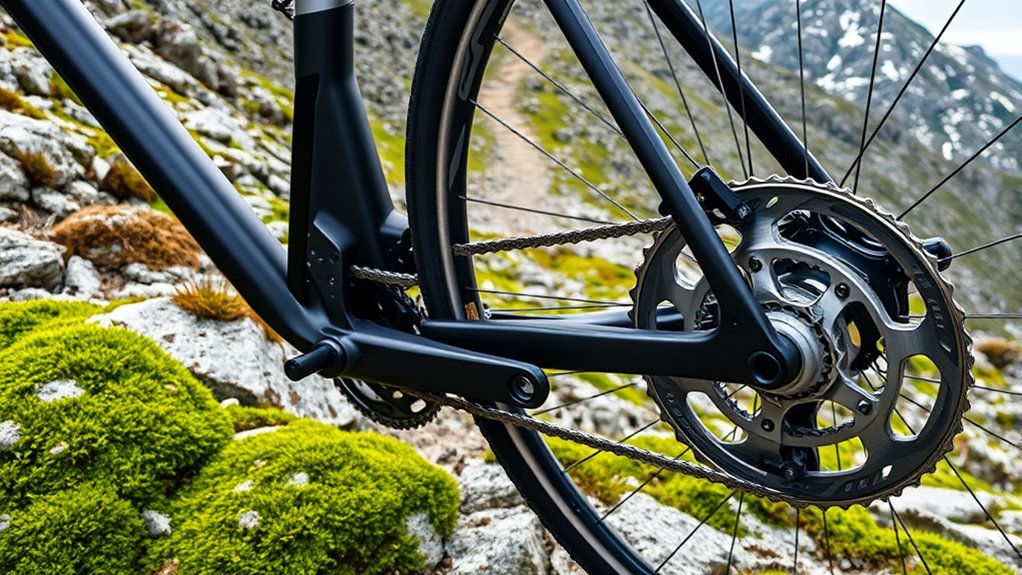

To ride steep terrain confidently, choose a drivetrain with a broad gear range that lets you adapt quickly to changing inclines. Pair it with a high-quality chain guide to keep your chain secure during aggressive climbs and technical sections. This combo helps you shift smoothly, maintain control, and avoid mechanical hiccups. Prioritize components designed for rugged riding for maximum efficiency. Keep exploring for more tips on setting up your drivetrain to conquer even the steepest trails.
Key Takeaways
- Opt for a wide-range cassette and crankset to handle sudden steep inclines efficiently.
- Use a 1x drivetrain for simplicity, or a 2x setup for more gear options on steep terrain.
- Incorporate high-quality chain guides to prevent chain drops during aggressive climbs.
- Prioritize gear ratios that allow maintaining steady cadence on steep slopes.
- Select durable, responsive components designed for rugged, technical riding conditions.

When tackling steep terrain, choosing the right drivetrain can make all the difference in your ride’s performance and control. On slopes where momentum and traction are essential, your gear ratios play a critical role in maintaining a steady cadence and preventing you from stalling or losing power. Opting for a drivetrain with a wide range of gear ratios allows you to adapt quickly to changing inclines, giving you the ability to shift into lower gears for steep climbs without losing momentum. This flexibility helps you stay in control and conserve energy, making those challenging ascents feel more manageable. Additionally, selecting a drivetrain that is compatible with high-quality chain guides ensures your chain remains securely in place during aggressive riding. chain guides become indispensable tools when riding on steep terrain. They keep your chain securely in place, preventing drops that can happen when you’re bouncing over uneven surfaces or shifting under load. A dependable chain guide ensures that your drivetrain remains smooth and responsive, reducing distractions and allowing you to focus on your line and technique. When the terrain gets aggressive, chain guides help you avoid the frustration and time loss of dropping your chain, especially if you’re riding with a complex gear setup or on a bike with a narrow chainline. They also protect your drivetrain components from damage caused by chain slap or debris, which is common on rough descents and climb sections. The combination of ideal gear ratios and effective chain guides enhances your ability to stay confident on steep trails. You’ll find that shifting is more precise, and your chain remains secure even during aggressive maneuvers. This setup minimizes mechanical issues that could interrupt your ride, allowing you to focus on conquering the terrain. When selecting a drivetrain for steep terrain, consider a setup that emphasizes a broad gear range, so you’re never caught off guard by sudden ascents or technical sections. Pair this with a high-quality chain guide, especially if you’re riding aggressively or on rugged trails, to keep everything running smoothly. In short, the right drivetrain setup with appropriate gear ratios and dependable chain guides will give you the confidence to push your limits on steep terrain. You’ll experience smoother shifts, fewer mechanical hiccups, and better control, all of which translate into a more enjoyable and efficient ride. No matter how challenging the trail, these choices ensure that your bike responds precisely to your commands, making every climb and descent more predictable and less stressful. With the right components, steep terrain becomes an exciting challenge rather than a formidable obstacle.
Frequently Asked Questions
How Do Drivetrain Choices Affect Bike Weight?
Your drivetrain choices directly impact your bike’s weight. High gear ratios often require sturdier, heavier components, while lightweight materials reduce overall weight but may compromise durability. Chain durability matters because a durable chain adds weight but lasts longer, saving you from frequent replacements. Balancing gear ratios and chain durability helps you optimize for lighter weight without sacrificing performance or longevity on steep terrain.
Are Certain Drivetrains More Durable on Steep Descents?
Think of your drivetrain as the backbone of your descent—some hold stronger than others. When tackling steep descents, gear ratios matter, but chain durability is king. A robust drivetrain with high-quality components stands up better to the pounding, preventing slips and breakages. Look for tough materials and reliable brands, because on the steepest trails, a durable drivetrain keeps you riding smoothly instead of fighting mechanical issues.
What’s the Maintenance Difference Between Drivetrain Types?
You’ll find maintenance varies between drivetrain types. Chains require regular lubrication to keep gear shifting accurate and prevent wear. A well-maintained chain ensures smooth shifting, especially on steep descents. Hub gears generally need less frequent adjustments and lubrication, making them lower maintenance. In contrast, derailleur systems demand more attention, like cleaning and precise gear tuning. Regular upkeep helps sustain performance and prolongs your drivetrain’s lifespan, regardless of the type you choose.
Can I Upgrade My Drivetrain for Better Steep Terrain Performance?
Upgrading your drivetrain for better steep terrain performance is like switching to a more powerful engine. You’ll want a gear ratio that offers easier climbing and smoother shifting, so look for a compatible setup. Make sure your chain matches the new drivetrain to avoid issues. Upgrading can markedly improve your ride, giving you better control and efficiency, especially on tough descents and steep climbs.
How Do Drivetrain Options Impact Bike Handling on Steep Trails?
Your drivetrain options directly affect how you handle steep trails. Choosing appropriate gear ratios and chainring sizes allows you to maintain control and efficiency. Smaller chainrings make pedaling easier on steep inclines, while larger ones can give you more speed on flatter sections. By selecting the right gear ratios, you’ll find it easier to stay balanced and confident on challenging terrain, improving your overall handling and ride experience.
Conclusion
As you carve through steep, rugged terrain, your drivetrain choice becomes the steady heartbeat of your ride. Picture the chain smoothly engaging, power transferring seamlessly with each pedal stroke, like a well-oiled machine dancing with the mountain’s rhythm. Whether you opt for a single chainring or a robust 12-speed setup, trust that your drivetrain will keep you confident and responsive. Embrace the thrill, knowing every twist and turn is powered by a system built for these demanding adventures.