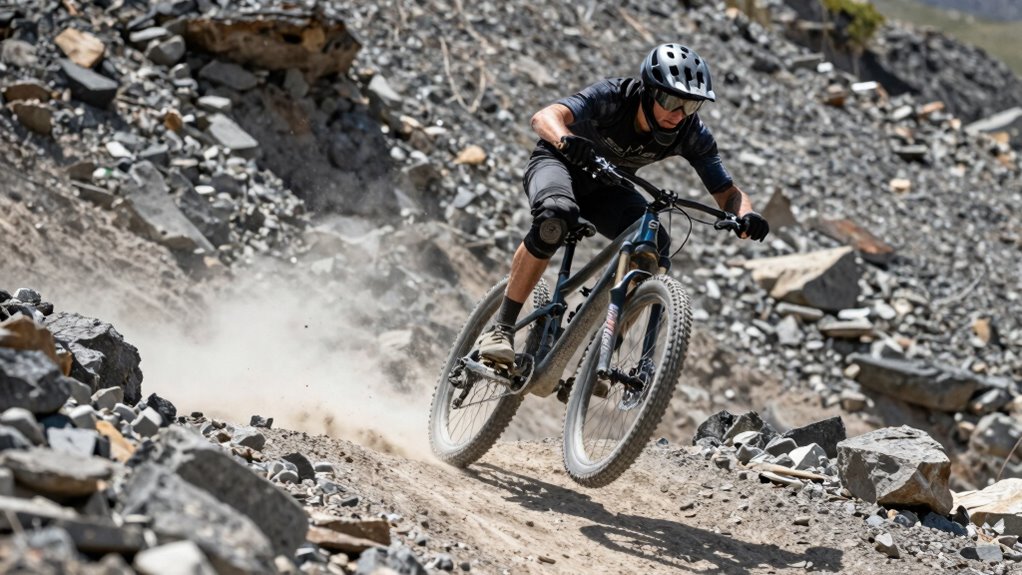

To float over rough gravel surfaces, you need to develop keen terrain awareness and perfect your body positioning. Shift your weight slightly back and loosen your grip on the handlebars to allow the bike to move more freely beneath you. Keep your elbows relaxed and look ahead to anticipate obstacles. Practice adjusting your speed and position proactively, feeling the terrain beneath you. Mastering these techniques will help you glide smoothly over tricky patches—continue to explore ways to improve your ride.

Get sports gear delivered free with Prime
- Fast, free delivery on millions of items
- Prime Video, Amazon Music and more included
- Member-only deals all year
Key Takeaways
- Develop terrain awareness to anticipate rough patches and adjust body position proactively.
- Practice proper body positioning, shifting weight back and relaxing elbows for better control.
- Maintain smooth, controlled movements by keeping hands light on handlebars.
- Use visual cues and feel the terrain to finesse your riding over uneven surfaces.
- Build confidence through regular practice, improving bike responsiveness and floatation techniques.

Riding over rough gravel surfaces can be intimidating at first, but with the right technique, you’ll learn to float smoothly and confidently. It’s about more than just speed; it’s about control, balance, and feeling connected to your bike. To start, make sure your bike is properly maintained. Check the tire pressure—lower pressure can improve grip and cushioning, helping you absorb shocks better. Regular bike maintenance, like lubricating the chain and inspecting brake functionality, ensures your bike responds precisely when you need it most. When your bike runs smoothly, your confidence naturally grows on uneven terrain.
Proper bike maintenance boosts confidence and control on rough gravel surfaces.
As you get comfortable with your bike, focus on your body position. Shift your weight slightly back and keep your elbows relaxed, maintaining a loose grip on the handlebars. This stance allows your suspension to do its job and helps you stay balanced over loose gravel. When approaching rough patches, look ahead rather than staring directly at your front wheel. Your eyes guide your body, enabling you to anticipate obstacles and adjust your weight distribution accordingly. This proactive approach is key to floating over uneven surfaces without getting jarred or losing control. Developing an awareness of terrain dynamics can further enhance your ability to adapt swiftly and effectively.
Nutrition tips also play a crucial role in mastering gravel riding. Long rides demand sustained energy and hydration. Carry lightweight snacks like energy bars or gels, and sip water consistently to stay hydrated. Proper nutrition prevents fatigue, which can impair your reflexes and decision-making. When you feel energized and alert, you’ll more naturally adopt the correct riding posture and technique needed to glide over rough terrain. Avoid heavy or greasy foods before riding, as they can cause sluggishness or stomach discomfort. Instead, focus on balanced meals rich in carbs and some protein, giving your muscles the stamina to keep you steady and responsive. Developing bike handling skills is essential for maintaining control and confidence on challenging surfaces.
Practicing your skills regularly will help you develop a sense of how your bike reacts on different surfaces. As you progress, you’ll learn to shift your weight and adjust your speed to maintain momentum over tricky patches. Keep your hands light on the handlebars, and focus on smooth, controlled movements. Remember, floating over rough surfaces isn’t about brute strength; it’s about finesse and feeling the terrain beneath you. With consistent bike maintenance, proper nutrition, and attentive riding, you’ll find yourself floating effortlessly over gravel that once seemed challenging. Confidence builds as your technique improves, turning rough terrain into an exciting part of your ride rather than an obstacle.
As an affiliate, we earn on qualifying purchases.
Frequently Asked Questions
What Specific Bike Setup Helps With Floating Over Rough Terrain?
To float over rough terrain, you should optimize your bike setup by adjusting tire pressure and suspension. Lowering your tire pressure increases grip and cushioning, helping you stay smooth over bumps. Similarly, tuning your suspension for softer settings absorbs shocks better, providing more control. This combination allows you to glide more effortlessly across uneven surfaces, making your ride more comfortable and confident, especially when traversing challenging gravel or rocky trails.
How Do Weather Conditions Affect Gravel Riding Techniques?
Weather impact plays a big role in your gravel riding techniques. Rain or mud makes the terrain slippery, so you need to adapt your riding style by reducing speed and maintaining a steady, balanced position. Wind can also affect your control, especially on open stretches. To handle these conditions, you should adjust your bike setup if needed and stay alert, so you can smoothly navigate changing terrain and stay safe.
Are There Recommended Safety Gear for Floating Over Rough Surfaces?
Yes, there are recommended safety gear for floating over rough surfaces. You should always wear a protective helmet to guard your head during falls or impacts. Knee pads are also essential to protect your knees from scrapes, bruises, or more serious injuries. Wearing gloves and elbow pads adds extra protection. Prioritizing this safety gear helps you stay confident and safe, letting you focus on mastering your technique over challenging terrain.
How Long Does It Typically Take to Master Floating Techniques?
Mastering floating techniques can take anywhere from weeks to a few months, depending on your dedication. You’ll find that improving balance techniques and muscle conditioning plays a vital role. At first, it’s a challenge, but with consistent practice, you’ll start feeling more confident. The key is patience—each ride brings progress. Keep pushing, stay focused, and soon you’ll float over rough surfaces smoothly, experiencing that exhilarating sense of control and mastery.
Can Road Bikes Be Adapted for Gravel Floating Skills?
Yes, you can adapt road bikes for gravel floating skills by making some bike maintenance adjustments, like upgrading tires and adding wider handlebars. Improving rider fitness is essential, as it helps you maintain control and balance over rough surfaces. Practice on varied terrains to develop confidence. With these tweaks and training, your road bike becomes a capable tool for mastering gravel floating, making rough rides smoother and more enjoyable.
Conclusion
Now that you’ve seen how gravel riders master floating over rough surfaces, you might wonder if it’s all just technique or if luck plays a role. The truth is, consistent practice and understanding your bike’s response are key — luck has little to do with it. With patience, you’ll develop a feel for the terrain, allowing you to float smoothly and confidently. So, keep riding, keep experimenting, and trust that your skill will grow with every ride.
NFL season / tailgating Picks
team gear
As an affiliate, we earn on qualifying purchases.