Switching to tubeless tires makes your gravel rides more reliable by preventing flats and letting you ride over sharp debris without worry. With tubeless, you can run lower pressures for better traction and comfort without risking pinch flats. Sealant coats the inside of your tires, sealing small holes as they happen and maintaining consistent air pressure. For a smoother, more confident gravel experience, tubeless setups are essential—keep exploring to discover how to optimize your system even further.
Key Takeaways
- Tubeless systems provide enhanced puncture resistance, ideal for rough gravel terrains.
- Proper sealant and installation ensure reliable sealing and maintain consistent air pressure.
- Compatibility with tubeless-ready tires and rims simplifies setup and reduces leaks.
- Lower pressure riding improves traction, comfort, and control on uneven gravel surfaces.
- Reduced flat occurrences and quick repairs increase confidence and reliability during gravel adventures.
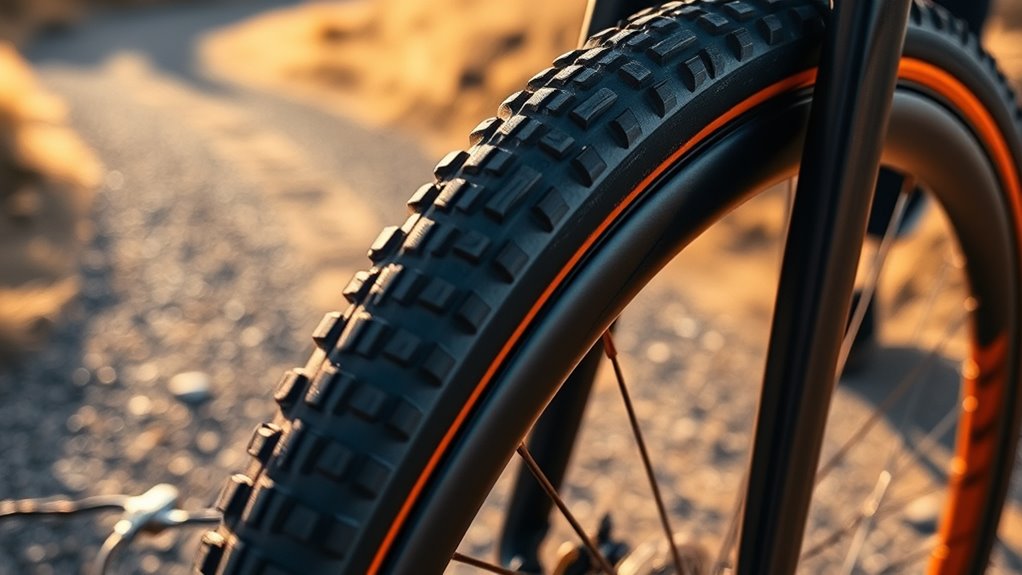
Have you ever wondered why more gravel riders are switching to tubeless setups? The answer lies in the significant advantages tubeless systems offer, especially when it comes to reliability on challenging terrains. One of the key benefits is tubeless sealing, which helps prevent punctures from small thorns, glass, and other debris you might encounter on gravel roads. With a properly sealed tubeless setup, you can often ride over sharp objects without stopping to patch a flat, saving you time and frustration. This is particularly important when you’re miles away from help or in remote areas where quick repairs aren’t always possible. The process of tubeless sealing is efficient, provided you have the right sealant and a good installation technique. Sealant continuously coats the inside of your tire, sealing small holes as they happen and keeping air pressure stable. Over time, the sealant can dry out, so you’ll need to top it up periodically to maintain excellent tubeless sealing performance.
Another critical aspect that makes tubeless appealing for gravel riding is tire compatibility. Not all tires are suitable for tubeless setups, so choosing tires designed for tubeless use is essential. These tires feature a bead and sidewall construction that ensures a tight fit against the rim, minimizing the chances of air leaks. When you’re selecting tires, pay close attention to the manufacturer’s specifications regarding tubeless compatibility. Using tires specifically designed for tubeless applications makes installation easier and reduces the risk of leaks or bead slippage during rides. Proper tire compatibility also means you can run lower pressures without risking pinch flats, which is a game-changer on uneven gravel surfaces. Lower pressures increase traction and cushion the ride, making long gravel adventures more comfortable and controlled.
The compatibility between your tires and rims is equally important. Make sure your rims are tubeless-ready, featuring a secure bead seat and appropriate sealing surfaces. When installing tubeless tires, you’ll need to ensure everything fits snugly, and sometimes, a bit of extra rim tape or sealant might be necessary to achieve an airtight seal. Once set up, tubeless systems tend to be more reliable and easier to maintain, especially on rough terrain where flats are common. The combination of tubeless sealing and tire compatibility ensures you can ride confidently, knowing your setup can handle the unpredictable nature of gravel roads. Overall, switching to tubeless for gravel riding isn’t just about reducing flats—it’s about enhancing your riding experience, comfort, and reliability on every adventure.
Frequently Asked Questions
How Often Should I Check My Tubeless Sealant?
You should check your tubeless sealant every 2 to 3 months to guarantee optimal performance. Sealant lifespan varies depending on climate and riding conditions, but regular checks help prevent unexpected flats. During these inspections, top off or replace the sealant if it’s dried out or diminished. Staying proactive with these checks keeps your gravel rides smooth, reducing downtime and maintaining reliable sealing power when you need it most.
Can Tubeless Tires Be Used With Regular Inner Tubes?
Imagine effortlessly switching gears on your gravel ride—can tubeless tires be used with regular inner tubes? Yes, but only when you’re considering inner tube compatibility. You can install a tubeless tire with a regular inner tube, but it defeats the purpose of a tubeless setup. For proper tubeless conversion tips, guarantee your rim and tire are compatible and be aware that using inner tubes may increase the risk of flats, so weigh your options carefully.
What Is the Best Valve Type for Gravel Tubeless Setups?
The best valve type for gravel tubeless setups is the presta valve, as it offers better compatibility with tubeless rims and valves. Presta valves are designed specifically for tubeless systems, reducing compatibility issues and ensuring a secure seal. They are lightweight and easier to adjust. Make sure to check your rim’s valve compatibility before choosing a valve type, so you avoid leaks or installation problems during your gravel rides.
How Do I Prevent Burping on Rough Gravel Terrain?
Ever notice how a perfect bead seating can prevent burping on rough gravel? You should double-check your rim tape to guarantee there are no leaks, as this helps maintain air pressure and keeps the bead snug. When you set up your tubeless tires, make sure the bead seats properly with a burst of air, then inflate to the recommended pressure. This simple step minimizes the chance of burping during rugged rides.
Are Tubeless Tires More Prone to Punctures?
Tubeless tires generally have a lower puncture frequency because the sealant quickly seals small holes, reducing the chance of flats. However, they can be more prone to punctures from larger sharp objects. Sealant longevity varies with use and conditions, so you’ll need to top it off regularly to maintain puncture protection. Overall, tubeless setups offer reliable protection, but staying attentive to sealant levels helps guarantee ideal performance on gravel.
Conclusion
Switching to tubeless for gravel riding is like giving your bike a secret weapon—it’s your reliable partner steering through rough terrains with confidence and ease. With fewer flats and lower pressures, you’ll feel like you’re gliding on a cloud of control, no matter what the trail throws your way. Embrace the tubeless revolution and turn every gravel adventure into a smooth, unstoppable journey. Trust me, once you go tubeless, you’ll never want to go back.