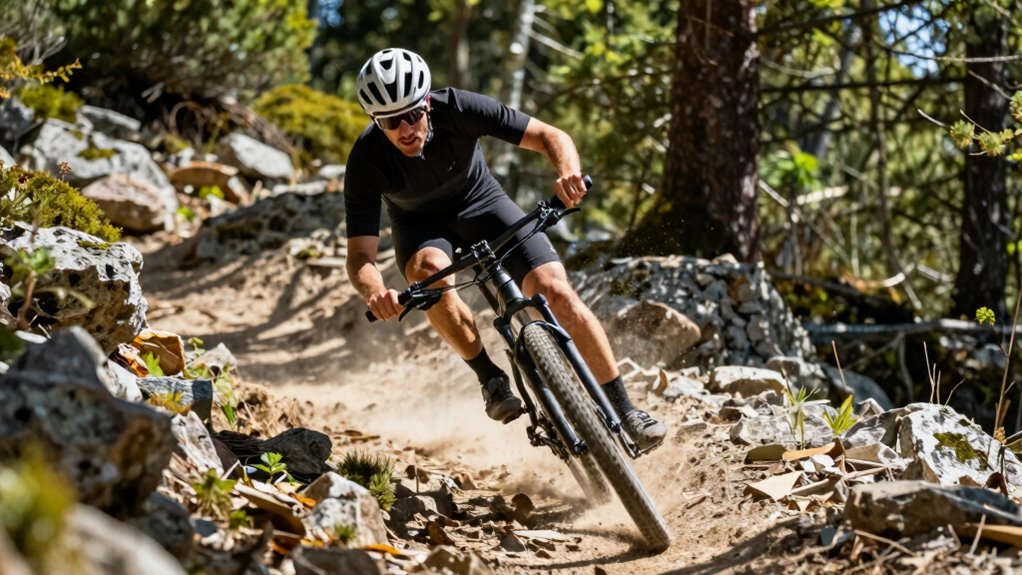

Gyroscopic stability helps your bike feel more balanced and gives you initial confidence, but it’s only one part of bike handling. Your ability to stay upright depends more on your continuous adjustments—shifting your weight, leaning, and responding to uneven surfaces. Steering and bike geometry also play vital roles in how your bike reacts during turns and maneuvers. If you want to understand how all these factors work together for better control, keep exploring this topic further.

Get sports gear delivered free — and shop member deals
- Fast, free delivery on millions of items
- Access to Prime Big Deal Days deals on October 6–7
- Prime Video, Amazon Music and more included
Key Takeaways
- Gyroscopic stability offers initial balance but does not account for rider input or external forces during riding.
- Effective bike handling relies more on rider movements and weight shifting than on wheel spin.
- Steering dynamics and bike geometry significantly influence responsiveness and control.
- Lighter or smaller wheels reduce gyroscopic effects but can improve maneuverability and agility.
- Continuous rider adjustments and balance dynamics are essential for stable, responsive riding beyond gyroscopic effects.
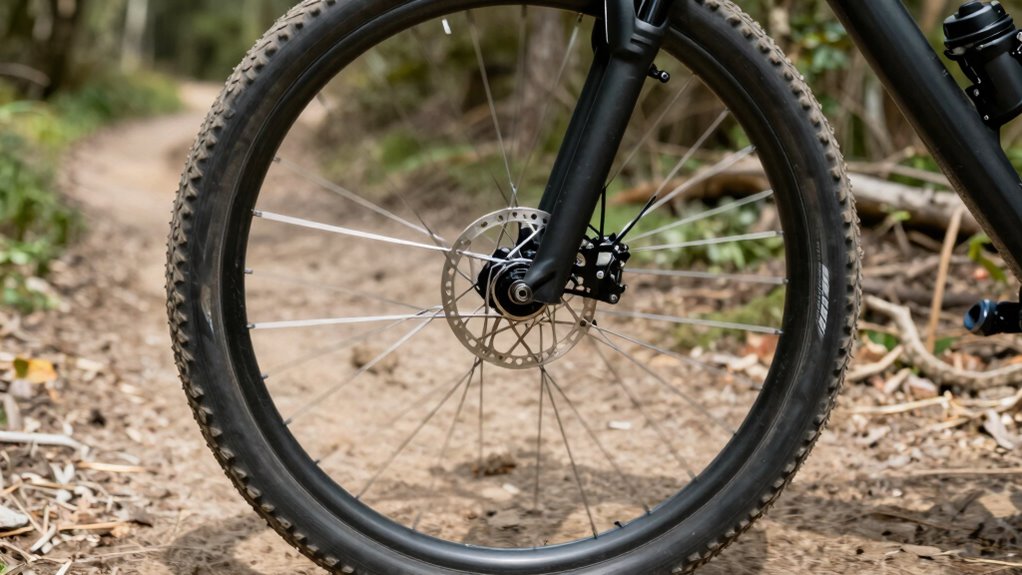
Have you ever wondered why a spinning bicycle wheel feels so stable when you’re riding straight? It’s because of gyroscopic stability, which is often mistaken as the main factor in bike handling. When the wheel spins, it resists changes to its orientation, making the bike feel steadier. But this is only part of the story. The true complexity of bike handling lies in balance dynamics and steering effects, which work together to keep you upright and on course.
Balance dynamics involve more than just the gyroscopic effect. As you ride, your body and the bike constantly adjust to maintain an upright position. Your ability to shift your weight, lean into turns, and respond to uneven surfaces all contribute to stability. These movements influence the bike’s center of mass and how it responds to external forces. Your quick, subconscious reactions help you stay balanced when encountering obstacles or changing directions. Gyroscopic stability might help initially, but it’s your body’s continuous adjustments that truly keep you upright. Bike handling is therefore a complex interplay of multiple factors beyond just the spinning wheel. Additionally, the rider’s perception of stability can also be affected by the bike’s handling characteristics, which are shaped by geometry and design. Understanding these factors can help riders develop better control and confidence.
Steering effects are equally essential. When you turn the handlebars, you initiate a chain reaction that influences the bike’s trajectory. By steering into a turn, you generate a counteracting force that helps the bike lean into the curve. This leaning, combined with the steering angle, creates a natural balance that allows you to navigate corners smoothly. The bike’s geometry, including trail and fork rake, work with steering effects to make handling predictable. These factors determine how easily you can change direction and recover from small imbalances. Additionally, bike geometry significantly impacts the responsiveness and stability during handling. A deeper understanding of steering dynamics can help riders improve their maneuvering skills and adapt more effectively to different terrains.
While gyroscopic stability offers resistance to sudden changes in wheel orientation, it doesn’t automatically translate into better handling. In fact, many experienced riders find that a bike with less gyroscopic effect—like a lightweight or smaller wheel—can be more responsive. That’s because balance dynamics and steering effects become more prominent in guiding the bike’s behavior. They allow for quicker, more precise adjustments, giving you control over your ride, especially at higher speeds or on tricky terrain. Recognizing the importance of these handling effects can greatly improve riding technique and confidence.
Ultimately, understanding that gyroscopic stability is only part of bike handling helps you see the bigger picture. It’s your ability to manage balance dynamics and steer effectively that truly defines how well you control your bike. Gyroscopic effects may give you initial confidence, but your skill in responding to steering effects and maintaining balance is what keeps you riding smoothly and safely.
bike handling and steering components
As an affiliate, we earn on qualifying purchases.
As an affiliate, we earn on qualifying purchases.
Frequently Asked Questions
Does Rider Weight Affect Gyroscopic Stability?
Yes, rider weight can influence gyroscopic stability. When you’re heavier, your weight adds to the bike’s overall mass, enhancing the gyroscopic effect which helps keep the bike steady at higher speeds. Conversely, a lighter rider might experience less gyroscopic stability, making the bike feel more responsive but potentially less stable. Keep in mind, though, that other factors like bike design and rider skill also play essential roles in handling.
How Does Tire Pressure Influence Bike Handling?
Tire pressure directly influences bike handling by affecting tire grip and responsiveness. When you adjust pressure, lower it for better grip on rough surfaces, enhancing control, but it may reduce speed and tire longevity. Higher pressure decreases rolling resistance, making your ride smoother and faster, but can compromise grip and maneuverability. Regular pressure adjustments help you optimize handling based on terrain and riding style, ensuring better control and safety.
Can a Heavier Bike Improve Stability?
Think of your bike as a ship; a heavier weight can act like a sturdy hull, offering better stability in rough waters. A heavier bike improves stability through better bike weight distribution and frame stiffness, making it less prone to wobbling. While it may be less nimble, the added weight helps you stay steady at high speeds or on uneven terrain, giving you a more confident ride through the waves.
What Role Does Steering Geometry Play?
Steering geometry greatly influences your bike’s handling by affecting steering response and frame alignment. A well-designed geometry guarantees quick, predictable steering, making turns easier. If the angles are too steep or too slack, your bike might feel twitchy or sluggish. Proper frame alignment ensures stability and control. You’ll notice smoother navigation, better balance, and confidence on the road or trail when your bike’s steering geometry is optimized for your riding style.
How Do Road Surface Conditions Impact Handling?
Imagine you’re in a vintage race, feeling every bump—road surface conditions greatly impact your handling. When asphalt texture is rough or slick, surface grip decreases, making steering more challenging. Wet or uneven surfaces can cause slipping or wobbling, reducing stability. You need to adjust your riding style, lean into turns carefully, and trust your bike’s geometry. Good awareness of surface conditions helps you respond quickly, maintaining control despite changing road surface states.
Conclusion
Think of gyroscopic stability as the spinning top that keeps your bike upright—it helps, but it’s not the whole story. Just like a top needs a steady hand and a good push to stay balanced, your bike relies on factors like frame geometry, rider position, and tire grip. By understanding that stability is a puzzle, not just a spinning piece, you can handle your bike with more confidence and control, no matter the terrain.
NFL season / tailgating Picks
team gear
As an affiliate, we earn on qualifying purchases.