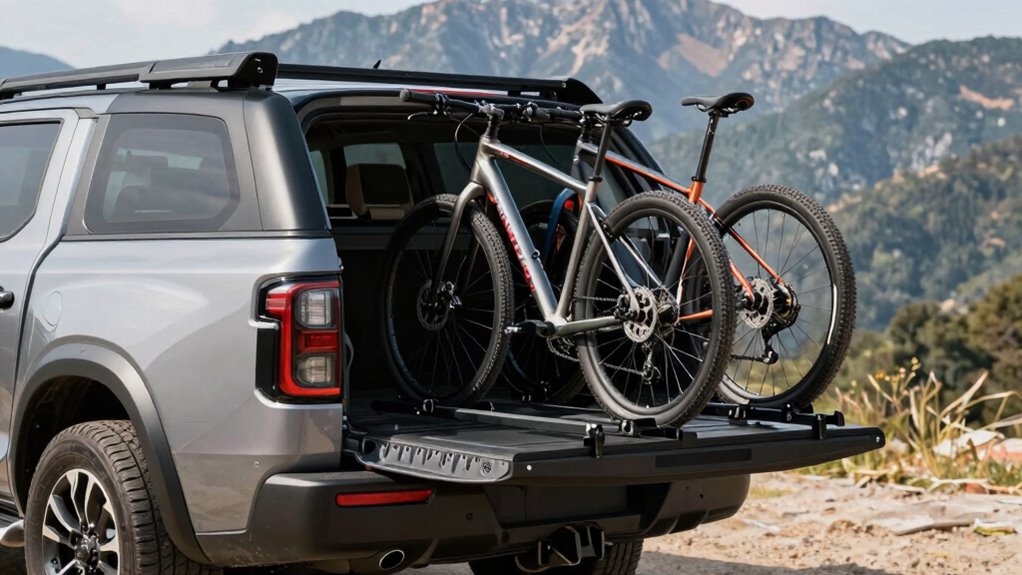
If you frequently transport bikes and value ease of loading, ramp-style hitch racks can be worth the extra space, especially since they include built-in ramps that make loading quicker and safer. They also offer excellent stability and security during transit. However, they do require more room, which might be a concern if you have limited storage. To decide if they’re right for you, consider their benefits and limitations—more details await below.
Key Takeaways
- Ideal for frequent bike transport, justifying the extra space needed for ramps and secure loading.
- Suitable for users with limited physical strength or physical limitations, making loading easier and safer.
- Best when bike security and quick loading are priorities, reducing bike damage risks during transit.
- Worth considering if vehicle compatibility and available storage space align with rack requirements.
- Less suitable for infrequent or casual use due to bulkiness and the need for proper installation and maintenance.
What Are Ramp-Style Hitch Racks and How Do They Work?
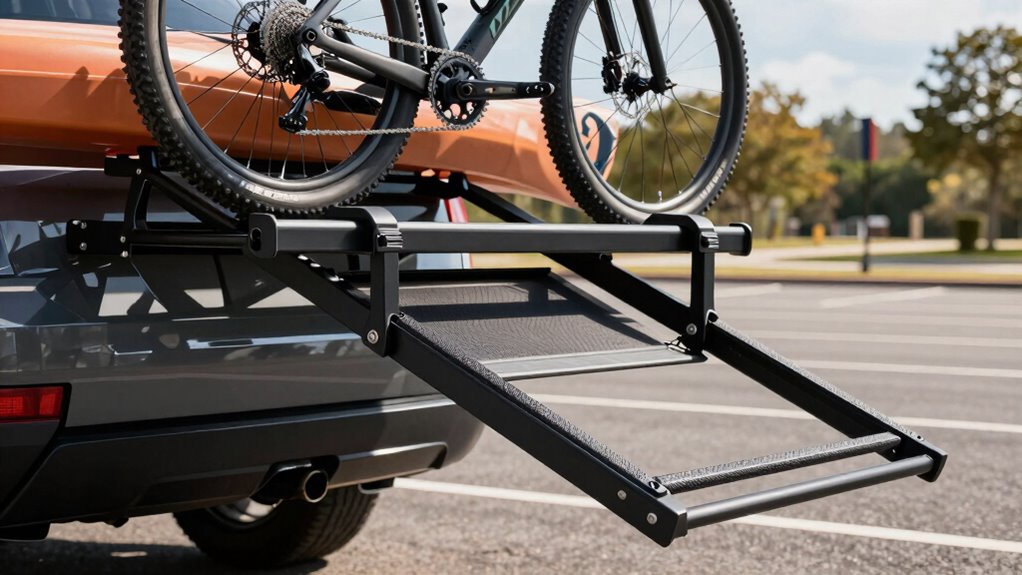
Have you ever wondered how ramp-style hitch racks make loading and transporting bikes easier? These racks feature a built-in ramp that allows you to roll your bike onto the rack with minimal lifting. This makes rack installation simpler because you can position your bike securely without awkwardly hoisting it. Ramp-style racks prioritize bike security by providing stable support points and locking mechanisms to keep your bike steady during transit. The ramp design reduces strain on your body and helps prevent bike damage. Additionally, ease of use is a key benefit, making them accessible for users of varying strength levels. Once your bike is rolled onto the rack, you secure it with straps or clamps, ensuring it stays put. Properly designed racks also support bike stability during transit, which is crucial for safety. Furthermore, the durability and resistance of ramp-style racks ensure they maintain their functionality over time, even with frequent use.
Pros and Cons of Using Ramp Hitch Racks

Ramp hitch racks offer several advantages, especially for those who frequently transport bikes or have limited strength. They make loading bikes easier, reducing strain and making the process quicker. Additionally, they often feature easy-to-use mechanisms that streamline the loading process, which is especially helpful for those with physical limitations. Modern designs also incorporate durable materials to withstand various weather conditions and ensure longevity. Proper installation techniques can significantly enhance safety and functionality, so understanding the setup process is crucial. However, bike security can be a concern if the rack’s locking mechanisms aren’t robust, leaving bikes vulnerable to theft. Additionally, ease of installation varies; some models are straightforward to set up, while others require more effort or special tools. The extra space needed for the ramp can be a drawback if you’re tight on storage or parking. Despite these cons, ramp hitch racks are ideal if you prioritize ease of use and want to minimize physical effort, but weigh the security risks and space requirements before choosing one. Understanding how mounts, OTA, and camera compare can help you select the best setup for your needs. Moreover, considering piercings and aftercare can enhance your overall experience with accessories and equipment.
Are Ramp Hitch Racks Worth the Extra Space?

Considering the extra space required for ramp hitch racks, you need to evaluate whether the benefits outweigh the storage and parking challenges. These racks often make loading and unloading easier, which can improve bike security by reducing the risk of drops or damage. However, they also demand more room, potentially limiting where you can park or store your vehicle. Rack compatibility is another key factor—ensure your hitch and vehicle can accommodate the ramp style without issues. If you frequently transport bikes and prioritize ease of use, the space trade-off might be worth it. But if space is limited or parking is tight, you might find these racks less practical. Additionally, consider hitch compatibility and how it impacts the overall functionality of the rack. From a creative storytelling perspective, highlighting user experiences with ramp hitch racks can help make your decision more relatable and informed.
Limitations of Ramp Hitch Racks You Should Know
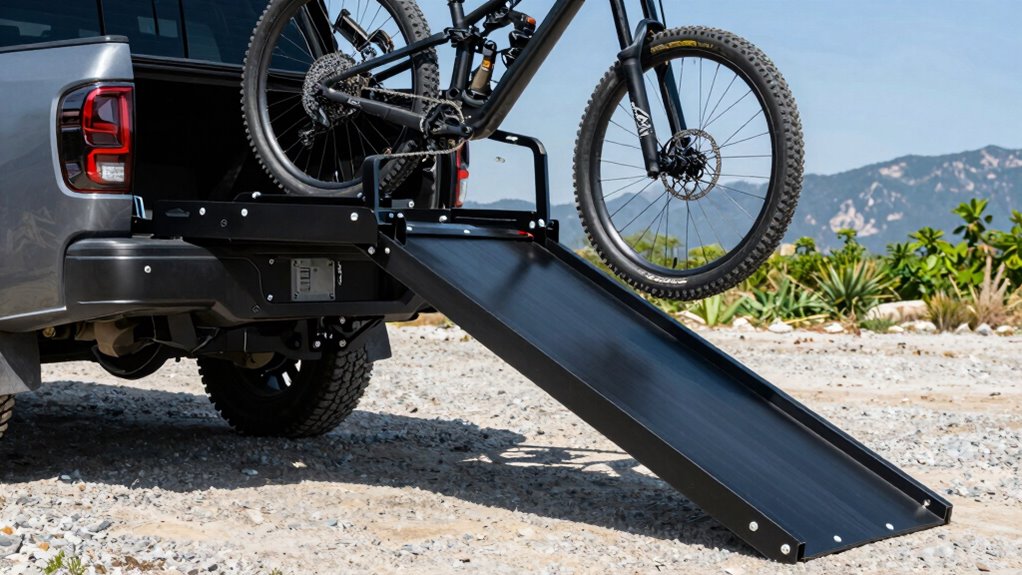
While ramp hitch racks offer easier loading, they come with notable limitations that can affect your overall experience. One major concern is bike theft prevention; since these racks often leave bikes more accessible, thieves might find it easier to target your bike. To mitigate this, guarantee you use lockable accessories and secure your bike tightly. Additionally, rack installation tips are vital, as improper setup can lead to instability or damage. Ramp hitch racks tend to be bulkier and harder to store when not in use, which might be inconvenient for limited storage space. Furthermore, these racks may not fit all vehicle types or hitch sizes, limiting versatility. It’s also important to consider filtration and pump protection, as maintaining your equipment can ensure consistent performance and safety during use. Proper maintenance and equipment longevity are essential to maximize your investment in bike transportation gear. Incorporating holistic SEO strategies by understanding the broader context of your bike rack needs can help you make more informed purchasing decisions. Additionally, understanding security features can help enhance the safety of your bikes during transit. Being aware of fit compatibility can help you select the most suitable rack for your vehicle and bikes, avoiding unnecessary issues. Keep these limitations in mind to guarantee safe, secure, and practical bike transportation.
Best Bike Transport Options for Small Vehicles
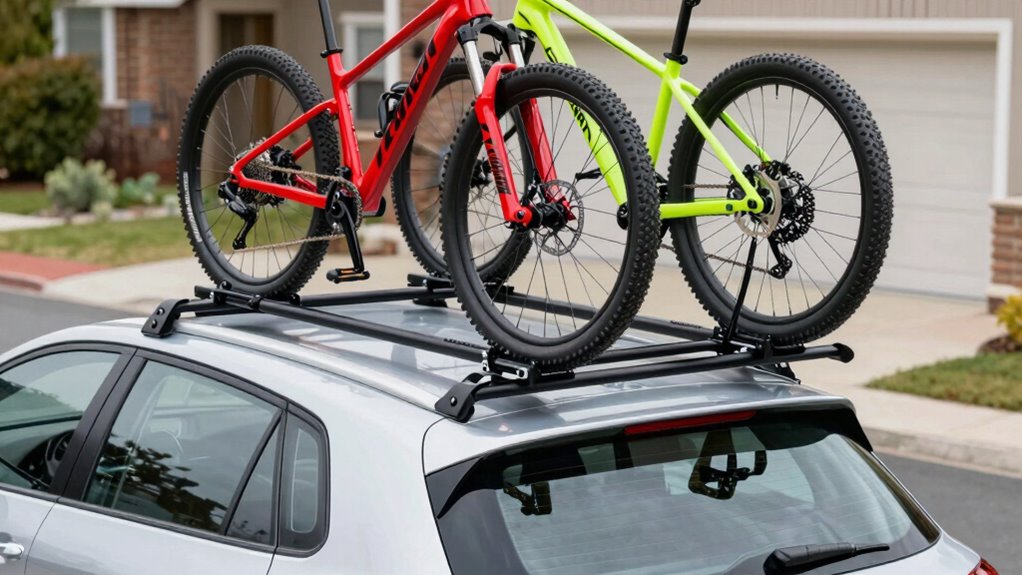
Small vehicles present unique challenges when it comes to transporting bikes, especially since many racks designed for larger SUVs and trucks may not fit or function properly. To guarantee bike security, look for compact, hitch-mounted racks with adjustable arms and secure straps. These racks are easier to install on small vehicles and often require minimal effort to secure your bikes safely. When installing your rack, double-check that it’s mounted firmly to avoid wobbling or detachment during transit. Consider foldable or tilt-in models for added convenience, especially if space inside your vehicle is limited. Additionally, selecting a high-quality rack that’s compatible with your small vehicle and prioritizes secure rack installation guarantees a safer, more reliable bike transport experience. Choosing a rack with proper weight capacity and stability features can further prevent accidents or damage while on the road. Being aware of vehicle compatibility ensures you select a rack that fits properly and functions safely during transport. Also, paying attention to installation ease can save time and reduce frustration when setting up your bike rack. Moreover, understanding rack security features can help prevent theft or accidental dislodging during travel.
Frequently Asked Questions
How Do I Install a Ramp-Style Hitch Rack Securely?
To install a ramp-style hitch rack securely, start by checking rack compatibility with your vehicle’s hitch receiver. Insert the rack and tighten the hitch pin or lock to prevent movement. make certain the bike security straps are firmly fastened around each bike frame, and double-check that the rack is stable. Proper installation keeps your bikes secure during travel and prevents damage, giving you peace of mind on the road.
Can Ramp Hitch Racks Accommodate All Bike Types and Sizes?
Ramp hitch racks generally can accommodate many bike types and sizes, but you need to check bike frame compatibility first. Some racks are better suited for mountain or fat bikes, while others fit road bikes comfortably. Always consider rack weight limits to avoid overloading. If your bikes are heavier or have unique frames, verify the rack’s specifications to guarantee a secure fit and safe transport.
Are Ramp Hitch Racks Compatible With Electric or Specialty Bikes?
Think of ramp-style hitch racks as adaptable bridges for your bikes. They’re generally compatible with electric and specialty bikes, but you need to check electric compatibility and bike thickness. Some racks may struggle with the wider frames or thicker tires of electric bikes, so look for models that specify support for these features. With the right choice, your electric or specialty bike can ride along smoothly, no matter the journey ahead.
How Do I Maintain and Clean Ramp-Style Hitch Racks?
You should regularly clean your ramp-style hitch rack to keep it in top shape. Use mild soap and water to remove dirt and debris, especially from the Bike rack materials like steel or aluminum. Check for rust or corrosion and apply lubricant to moving parts. When not in use, store your rack in a dry, covered area and follow rack storage tips like covering it to prevent weather damage, ensuring longevity and safety.
What Safety Precautions Should I Take When Using Ramp Racks?
Think of using your ramp rack as guiding a ship through treacherous waters. Always secure your bike with a sturdy bike lock, ensuring it won’t drift away unexpectedly. Check that the rack weight isn’t exceeded and that the ramp is properly secured before departure. Never rush the loading process, and double-check all connections. These precautions keep your cargo safe, preventing mishaps and protecting your investment as you navigate your journey.
Conclusion
Ultimately, weigh the worth of your wagon’s width against the want for a waft of convenience. Ramp-style hitch racks deliver a dependable, straightforward solution—if you’re willing to accommodate their bulk. With a bit of planning and patience, you’ll find the perfect pairing for your vehicle’s size and your cycling needs. Remember, choosing the right rack transforms transport troubles into trips of thrill and freedom. Happy hauling!