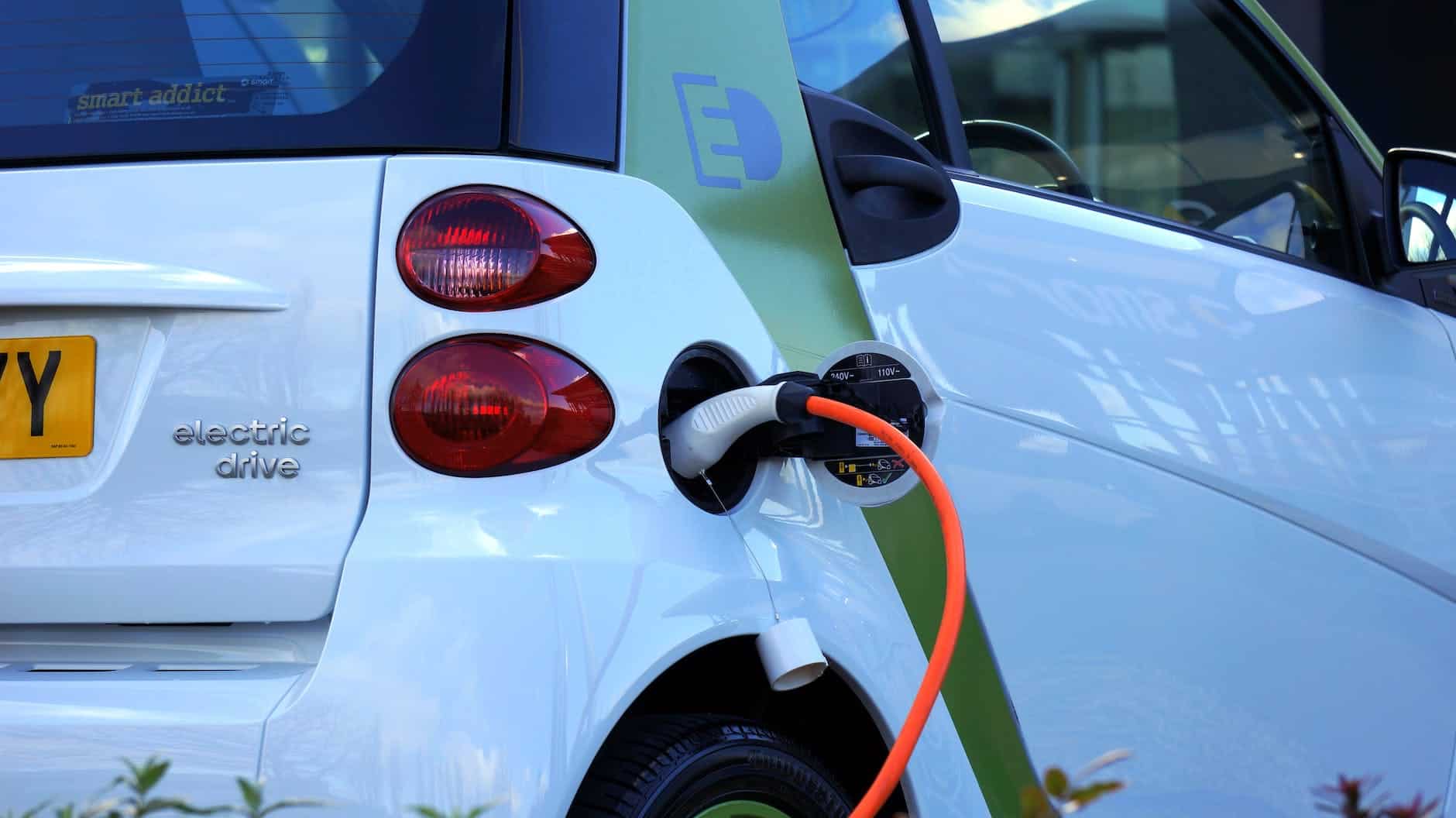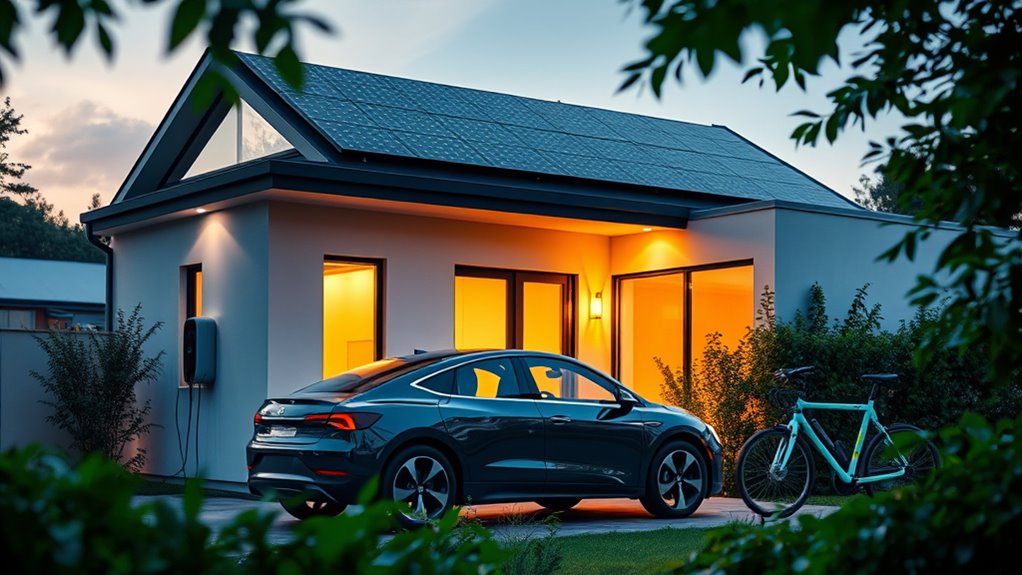

To power your EV and e-bike efficiently at home, installing renewable energy systems like solar and wind is a smart move. These sources generate clean electricity during the day and can be stored in batteries for nighttime use, reducing reliance on the grid. A smart energy management system helps optimize when and how you use your stored or generated power. Keep exploring to discover how integrating these solutions can make your home energy setup even better.
Key Takeaways
- Installing solar panels and wind turbines provides renewable power to charge EVs and e-bikes at home.
- Home batteries store excess energy for night-time or cloudy day vehicle charging, ensuring reliability.
- Smart energy systems optimize when to draw from solar, wind, or the grid, reducing costs and increasing efficiency.
- Renewable energy reduces dependency on the grid, lowering overall energy costs and carbon footprint.
- Integrating sustainable energy sources enhances home energy independence and supports eco-friendly transportation.

As more people adopt electric vehicles (EVs) and e-bikes, managing home energy becomes increasingly significant. With rising demand for charging, you need an efficient way to supply power without overloading your system or increasing costs. One effective approach is harnessing renewable sources like solar or wind energy. These sustainable options not only reduce your carbon footprint but also provide a steady supply of clean power for your EV and e-bike needs. Installing solar panels on your roof can generate electricity during the day, directly charging your vehicles or storing excess energy in batteries for later use. This setup allows you to cut down reliance on the grid and take advantage of natural resources, making your home more energy-independent.
Harness renewable energy like solar or wind to efficiently power your EVs and e-bikes at home.
Energy storage plays a vital role in managing the intermittent nature of renewable sources. By investing in home batteries, you can store surplus energy produced during sunny or windy periods and use it when your generation drops, such as at night or on cloudy days. This way, you guarantee a reliable power supply for your EV and e-bike charging needs without interruptions. Energy storage also helps you avoid peak-hour electricity rates, as you can charge your vehicles during off-peak times, saving money over time. When you combine renewable sources with energy storage, you create a resilient and efficient energy system that adapts to your usage patterns and minimizes waste.
You should also consider the capacity of your energy storage system, making sure it can handle the charging requirements of your EV and multiple e-bikes. Larger batteries give you the flexibility to charge your vehicles multiple times or during extended periods of low renewable generation. Additionally, integrating smart energy management systems allows you to monitor and control energy flow in real-time. These systems optimize when to draw power from renewable sources, store excess energy, or draw from the grid, ensuring you’re always using the most efficient and cost-effective option.
Adopting a home energy setup that prioritizes renewable sources and energy storage gives you more control over your energy consumption. It reduces your dependence on fossil fuels, cuts costs, and supports a more sustainable lifestyle. As EV and e-bike adoption continues to grow, such systems will become essential in creating a home that’s both eco-friendly and financially smart. You’ll enjoy the convenience of reliable, clean energy for your vehicles while contributing to a healthier planet.
Frequently Asked Questions
How Much Does It Cost to Install Home EV Charging Infrastructure?
The cost estimation for installing home EV charging infrastructure typically ranges from $500 to $2,500, depending on the charger type and electrical system upgrades needed. During the installation process, a licensed electrician assesses your home’s electrical capacity, handles permits, and installs the charger. Factors like wiring complexity and location can influence the overall cost. Planning ahead helps guarantee a smooth process and accurate cost estimation.
Can I Use Renewable Energy Sources for Home EV Charging?
Yes, you can use renewable energy sources for home EV charging. By integrating solar panels or wind turbines into your system, you boost your renewable integration and move toward energy independence. This setup allows you to charge your EV with clean energy, reducing your carbon footprint and reliance on the grid. With proper planning, your home can become a sustainable hub for your transportation needs, saving you money long-term.
What Are the Safety Considerations for Home EV and E-Bike Charging?
While charging your EV or e-bike, you’ll want to keep safety in mind. Make sure your electrical wiring is up to date and properly installed to prevent issues. Keep chargers away from flammable materials and never overload circuits. Regularly check for any signs of wear or damage. Following fire safety guidelines and consulting a professional for installation guarantees your charging setup remains a safe and smooth experience.
How Does Home Energy Storage Impact EV and E-Bike Charging?
Home energy storage enhances your EV and E-Bike charging by enabling solar integration, so you can store excess solar power for later use. This boosts grid independence, meaning you’re less reliant on the utility grid during peak times or outages. It also helps you save money on energy costs and reduces your carbon footprint, giving you more control over your energy consumption and supporting sustainable living.
Are There Government Incentives for Installing Home EV Charging Systems?
Yes, you can get government incentives for installing home EV charging systems. Many governments offer grants and tax credits to encourage clean energy adoption. You might qualify for government grants that cover part of your installation costs or receive tax credits that reduce your tax bill. Check local programs to see what’s available in your area, and act now to save money while supporting sustainable transportation.
Conclusion
By optimizing your home energy for your EV and e-bike, you’re not just saving money—you’re transforming your entire life! Imagine charging your vehicles faster than a rocket, fueling your adventures with the power of a thunderstorm, and becoming the hero of your own eco-friendly story. With the right setup, you’ll be unstoppable, leaving gas stations and pollution in the dust. Get ready to revolutionize your rides and conquer the world, one charge at a time!