
Indoor training reveals weak bike fits because it creates a controlled environment where misalignments and discomforts become more noticeable. Without outdoor variables, you can focus on your posture, spot issues like saddle height or handlebar reach, and feel small signals from your body. This clarity helps you identify areas needing adjustment. If you keep exploring, you’ll discover how fine-tuning your setup can improve comfort and performance in every ride.
Key Takeaways
- Indoor training provides a controlled environment that makes subtle misalignments more noticeable.
- Stationary riding highlights discomforts and posture issues not visible during outdoor rides.
- Precise bike adjustments are easier to identify and correct indoors due to consistent setup.
- Indoor sessions reveal body signals like hips rocking or back rounding, indicating weak bike fit.
- The confined setting amplifies small misalignments, exposing weaknesses in bike fit and rider posture.
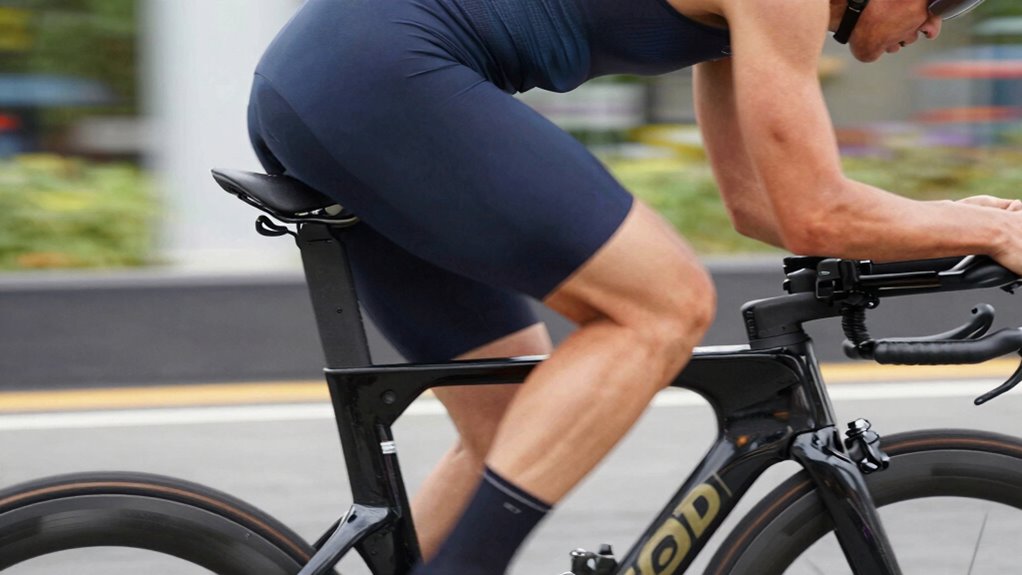
Indoor training has become an indispensable part of many cyclists’ routines, especially when outdoor riding isn’t possible. While it offers a great way to stay in shape and build endurance, it also exposes weaknesses in your bike fit that might go unnoticed during casual outdoor rides. When you’re riding indoors, every aspect of your cycling posture is under scrutiny because the environment is more controlled and stationary. Unlike outdoor riding, where variables like wind, road surface, and terrain can mask discomfort, indoor training highlights any misalignments or poor bike adjustment techniques you might have overlooked.
Your cycling posture plays a vital role here. If your saddle height isn’t set correctly, or if your handlebar position isn’t maximized, you’ll likely feel discomfort or strain after just a few minutes of riding. Poor posture can lead to inefficient pedaling, increased fatigue, and even injury over time. Because you’re stationary, you’re more aware of how your body interacts with the bike. Small misalignments become glaring issues, making it clear that your bike fit isn’t quite right. This heightened awareness is a good thing—it allows you to make precise adjustments that improve comfort and performance.
Bike adjustment techniques are key to fixing these issues. When you set up your bike properly, you guarantee that your cycling posture supports efficient movement and minimizes strain. For example, adjusting your saddle height so that your knee has a slight bend at the bottom of each pedal stroke promotes ideal power transfer. Similarly, positioning your saddle forward or backward influences your reach to the handlebars, which affects your overall posture. Handlebar height and reach are equally important; too high or too low can cause neck or back pain, especially during longer indoor sessions. Additionally, consistent monitoring of your bike fit ensures that small changes or discomforts are addressed promptly. Paying attention to your body positioning can help prevent long-term issues and improve overall cycling efficiency. Incorporating regular checks of your alignment can also help maintain a comfortable and efficient riding posture over time. Furthermore, understanding how your muscle engagement impacts your posture can help you develop a more sustainable riding technique.
Indoor training pushes you to pay close attention to these details because, without the distraction of outdoor elements, your body’s signals are more apparent. You’ll notice if your hips are rocking, if your back is rounded, or if your wrists are under undue pressure. These signs indicate that your bike adjustment techniques need refinement. The more precise your setup, the better your cycling posture becomes. When your posture is aligned correctly, you’ll experience less fatigue, better power output, and a more comfortable ride—both indoors and outside.
In essence, indoor training exposes weaknesses in your bike fit because it brings every misalignment into sharp focus. It’s a valuable opportunity to analyze and improve your cycling posture through careful bike adjustment techniques, leading to a more efficient, comfortable ride no matter where you’re pedaling.
indoor bike saddle height adjustment
As an affiliate, we earn on qualifying purchases.
As an affiliate, we earn on qualifying purchases.
Frequently Asked Questions
How Often Should I Recheck My Bike Fit During Indoor Training?
You should recheck your bike fit every 4 to 6 weeks during indoor training, especially if you’re increasing intensity or duration. Focus on maintaining ergonomic posture and make sure your saddle height stays correct. Small changes in flexibility or fatigue can affect your fit, so regularly evaluating these factors helps prevent discomfort and injury. Adjustments might be needed as your fitness improves or if you notice persistent discomfort.
Does Indoor Training Cause More Bike Fit Issues Than Outdoor Riding?
Like Icarus flying too close to the sun, indoor training can sometimes exaggerate bike fit issues. You might notice discomfort in bike comfort or saddle positioning more indoors because you’re staying in a fixed position longer. Without outdoor variables like wind or terrain, misalignments become clearer, revealing weak bike fit. So yes, indoor riding can reveal problems faster, making it essential to check and adjust your fit regularly for maximum comfort.
Can Poor Indoor Bike Setup Lead to Long-Term Injuries?
Yes, poor indoor bike setup can lead to long-term injuries. When your ergonomic posture isn’t properly adjusted, it puts excess strain on muscles and joints, increasing injury risk. If your saddle comfort isn’t right, you might develop saddle sores or nerve issues over time. Ensuring your bike fits well indoors, with correct saddle height and handlebar position, helps prevent these problems and maintains your overall health and comfort.
What Tools Are Best for Adjusting Bike Fit Indoors?
You need precise tools to perfect your indoor bike fit. Start with a digital or laser gauge to fine-tune saddle positioning and guarantee ideal bike ergonomics. An adjustable headset wrench or Allen keys help tweak handlebar height and reach. Don’t forget a mirror or smartphone camera to observe your posture, revealing hidden issues. With these tools, you open the door to a comfortable, efficient ride—dangerously close to perfection.
How Does Indoor Trainer Resistance Affect Bike Fit?
Indoor trainer resistance directly impacts your stationary ergonomics by highlighting any fit issues. When resistance calibration isn’t accurate, it can cause you to adopt unnatural positions, revealing weaknesses in your bike fit. High or inconsistent resistance makes poor fit more noticeable, potentially leading to discomfort or injury. Proper resistance calibration ensures smooth, realistic pedaling, helping you maintain ideal ergonomics and identify fit problems early, so you can adjust accordingly.
stationary bike handlebar riser
As an affiliate, we earn on qualifying purchases.
As an affiliate, we earn on qualifying purchases.
Conclusion
Indoor training reveals your bike fit’s flaws like a spotlight on a dark stage, exposing issues you might never notice otherwise. It’s not just about comfort; it’s about discovering peak performance and preventing injury. When you ride indoors, your weaknesses become crystal clear, demanding attention and precision. Think of it as a rigorous mirror reflecting your true form—only then can you perfect it. Embrace these revelations, and your ride will transcend ordinary to legendary.
indoor cycling posture correction accessories
As an affiliate, we earn on qualifying purchases.
As an affiliate, we earn on qualifying purchases.
bike fit measurement tools
As an affiliate, we earn on qualifying purchases.
As an affiliate, we earn on qualifying purchases.