To keep your bike quiet between deep cleans, regularly inspect and tighten loose bolts, especially on suspension and drivetrain parts. Quick cleaning of dirt and grime with a soft brush and damp cloth helps prevent buildup that can cause noise. Apply lubricant to moving parts like the chain and suspension components to reduce friction. Staying on top of these simple steps guarantees smoother, quieter rides, and there’s more to discover if you look further into ongoing maintenance tips.
Key Takeaways
- Regularly inspect and tighten loose bolts and fittings to prevent rattling noises.
- Lubricate moving parts lightly to reduce friction and squeaks.
- Clean dirt and grime from components frequently to prevent buildup that causes noise.
- Ensure proper adjustment and alignment of suspension and drivetrain parts.
- Monitor for early signs of wear and address issues promptly to maintain quiet operation.
If your bike has started making squeaks and rattles, it’s likely due to loose or worn parts that need attention. Noisy bikes can be annoying and can also signal underlying issues that may worsen if ignored. To keep your bike quiet between deep cleans, start by inspecting the bike suspension. Your suspension absorbs shocks and helps maintain control, but dirt, grime, and lack of lubrication can cause it to squeak or creak. Check the fork and rear shock for any signs of dirt buildup or loose bolts. Clean these parts gently with a soft brush and a damp cloth, then apply a suitable lubricant specifically designed for suspension components. This helps ensure smooth movement and reduces noise caused by friction or dirt intrusion. Proper suspension maintenance is crucial for long-term performance and noise reduction.
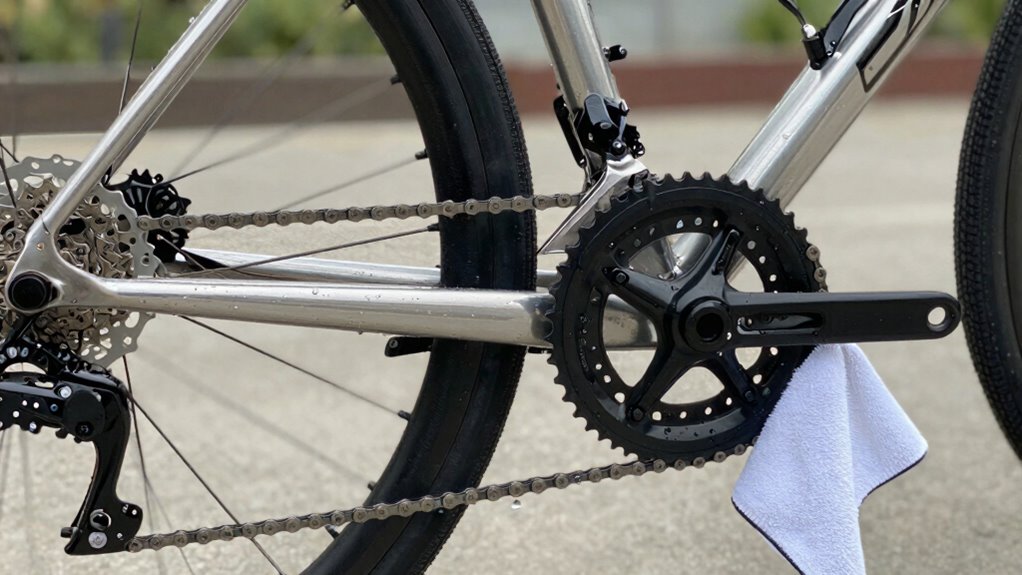
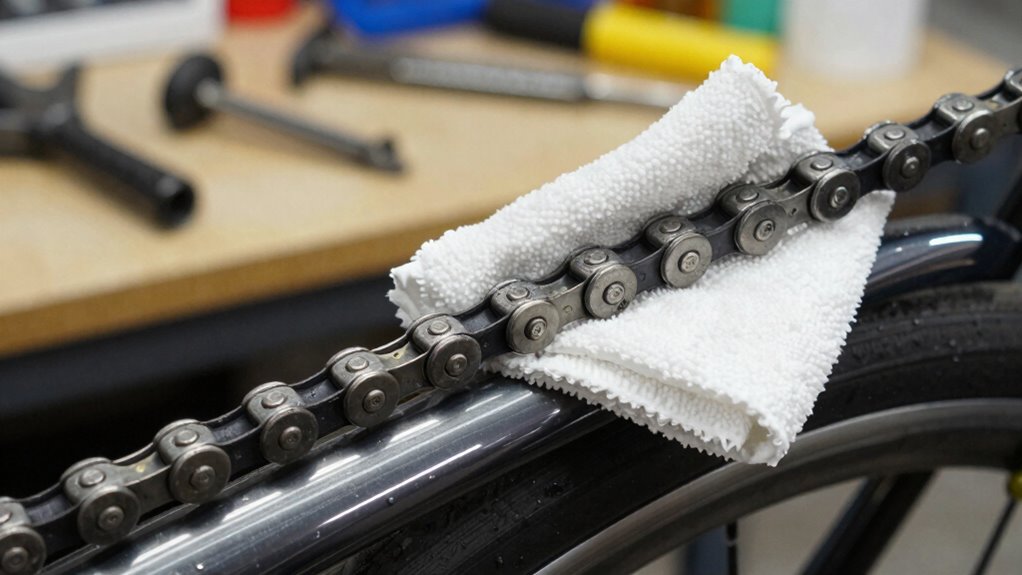
Next, focus on chain lubrication. A dry or dirty chain can create a lot of noise as it grinds over the sprockets. Regularly inspect your chain for grime, rust, or stiff links. Use a degreaser to remove old grease and dirt, then thoroughly dry the chain. Once clean, apply a high-quality chain lubricant. Make sure to spin the pedals backward while applying the lube evenly across the entire length of the chain. Wipe off any excess to prevent dirt from sticking. Proper chain lubrication not only quiets your ride but also extends the life of your drivetrain components. Additionally, maintaining lubrication consistency helps prevent parts from drying out and becoming noisy over time. Regular inspection of moving parts can help catch issues early before they become louder problems. Ensuring that all components are properly adjusted and tightened can also prevent rattles and squeaks, especially during rides over rough terrain.
As an affiliate, we earn on qualifying purchases.
Frequently Asked Questions
How Often Should I Perform Deep Cleanings on My Bike?
You should perform deep cleanings on your bike every 1 to 3 months, depending on how often you ride and riding conditions. Regular bike maintenance and sticking to a cleaning schedule help prevent dirt buildup and keep your bike running smoothly. If you ride in muddy or wet environments frequently, opt for more frequent deep cleans. Consistent maintenance ensures longevity and peak performance of your bike.
What Tools Are Best for Bike Lubrication?
Think of your bike’s chain as a smooth-running engine—using the right tools makes all the difference. For chain maintenance, a quality chain brush and a drip applicator work best. When comparing lubricants, lighter options like dry or wax-based lubricants minimize dirt buildup. A good chain tool helps apply lubricant precisely, ensuring your bike runs quietly and efficiently. Proper tools make your lubrication routine easier and more effective.
Can Weather Conditions Affect Bike Noise Levels?
Weather impact definitely affects your bike’s noise levels. Rain, mud, and cold can cause parts to squeak or rattle more, making noise mitigation trickier. To keep things quiet, regularly clean and lubricate your bike, especially after bad weather. Use weather-resistant lubricants and check for loose components. By maintaining your bike in different weather conditions, you help prevent noise caused by moisture or dirt buildup, ensuring smoother, quieter rides.
Are There Specific Brands of Lubricants Recommended?
You should choose eco-friendly lubricants like those made from biodegradable ingredients for quieter, safer rides. Some popular brands include Muc-Off and Finish Line Eco-Lube. You can also use DIY lubrication methods, such as diluted olive oil or beeswax, to keep your bike running smoothly without harsh chemicals. Always apply lubricants to moving parts, wipe off excess, and regularly inspect your bike to maintain silence and performance.
How Do I Identify the Source of Unusual Bike Noises?
To identify the source of unusual bike noises, listen carefully for chain squeal or gear grinding. Check your chain for dryness or dirt, as these cause squeal. Examine the gears for misalignment or debris, which lead to grinding sounds. Ride slowly and shift gears smoothly to pinpoint when the noise occurs. Inspect the derailleur, cassette, and chainrings for damage or wear to find the exact issue.
Conclusion
Just like a well-tuned orchestra, your bike runs smoothly when you keep it clean and well-maintained. Regular deep cleans and attentive lubrication guarantee each part moves silently and effortlessly, echoing the harmony of a quiet symphony. Think of your bike as a trusted steed, silent and swift, ready to carry you on countless adventures. With a little care, you’ll enjoy a peaceful, whisper-quiet ride every time, turning every journey into a serene escape.