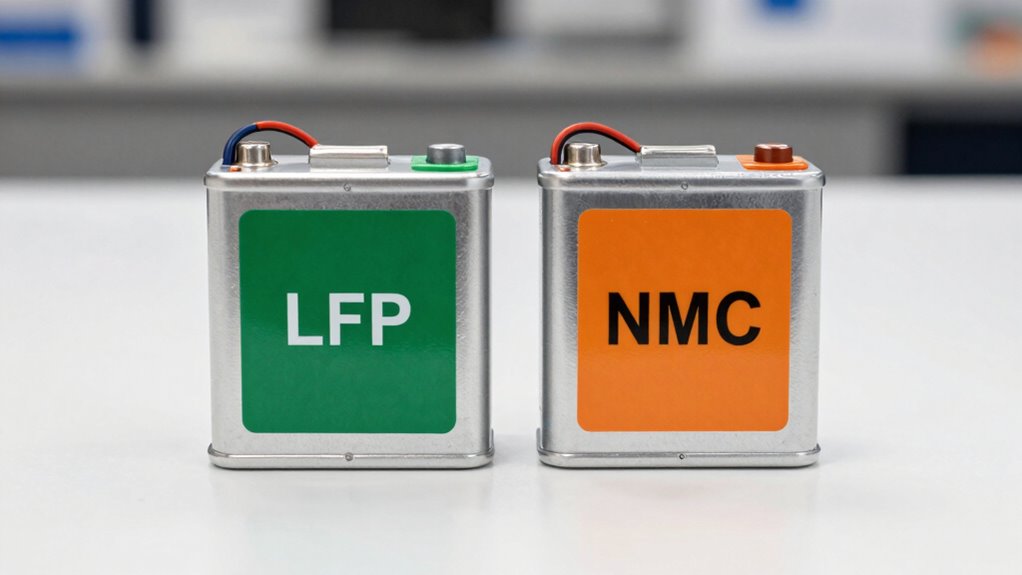

If you’re comparing LFP and NMC batteries, think of LFP as safer, more durable, and eco-friendly but with less energy capacity, making it ideal for budget-friendly or long-lasting applications. NMC batteries pack more power and are lighter, perfect for high-performance electric vehicles but with slightly higher safety risks. To understand which suits your needs best, keep exploring the key differences—they can make all the difference in your choice.
Key Takeaways
- LFP batteries use iron phosphate, offering safer chemistry, longer lifespan, and easier recycling compared to NMC batteries.
- NMC batteries combine nickel, manganese, and cobalt for higher energy density and lighter weight, suitable for high-performance applications.
- LFP batteries are more thermally stable and safer, while NMC batteries can store more energy but pose higher safety risks.
- NMC batteries charge faster and provide greater range, making them ideal for long-distance electric vehicles.
- LFP batteries are cheaper, environmentally friendly, and better for long-term durability and sustainability.
What Are LFP and NMC Batteries? An Introduction to Battery Chemistry

Understanding the differences between LFP (Lithium Iron Phosphate) and NMC (Nickel Manganese Cobalt) batteries is essential if you’re exploring energy storage options. LFP batteries use iron phosphate in their chemistry, which makes manufacturing processes safer and more environmentally friendly. They also have a longer cycle life and are easier to recycle, supporting sustainable battery recycling efforts. The choice between these chemistries impacts not only performance but also how the batteries are recycled at the end of their life. Knowing these fundamental differences helps you understand their applications and the importance of efficient battery recycling to reduce environmental impact. Additionally, the contrast in safety profiles of these chemistries influences their suitability for various uses, from consumer electronics to electric vehicles.
Are LFP or NMC Batteries Safer and More Durable? Safety and Longevity
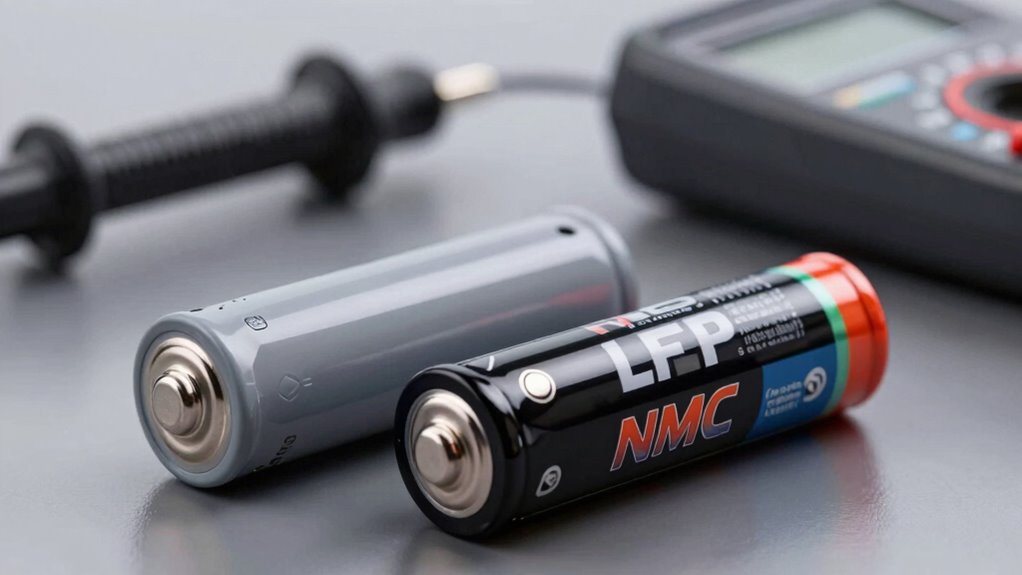
When comparing LFP and NMC batteries, safety and durability are key factors that can influence your choice. LFP batteries are generally safer, thanks to their stable chemistry, making thermal runaway less likely. NMC batteries, while offering higher energy density, can pose greater safety risks if damaged or improperly handled. Regarding longevity, LFP batteries often last longer, with more charge cycles before degrading substantially. Additionally, advancements in battery safety features are continuously improving the overall safety profiles of both types. For instance, thermal stability plays a crucial role in preventing overheating and potential safety hazards. Furthermore, ongoing research into battery degradation mechanisms helps developers enhance the lifespan of these batteries. For example, understanding electrochemical processes allows for better design and management of battery health. However, recycling challenges differ: LFP batteries are harder to recycle due to their chemistry, impacting their environmental footprint. NMC batteries, though more recyclable, may have a higher environmental impact during manufacturing and disposal. Your decision depends on balancing safety, durability, and environmental considerations for your specific needs. Additionally, understanding the safety features of each battery type can help you make a more informed choice tailored to your applications.
How Do LFP and NMC Batteries Differ in Performance and Composition?

LFP and NMC batteries differ markedly in their performance and composition, which directly impacts their suitability for various applications. LFP batteries tend to have a lower battery density, meaning they store less energy per unit volume compared to NMC batteries. This makes NMC batteries more suitable for applications needing higher energy capacity. However, LFP batteries excel in charging speed, allowing you to recharge them faster and with greater safety. battery chemistry also influences the overall lifespan and safety of the batteries, with each chemistry offering different advantages. NMC batteries generally offer higher voltage and energy density, making them ideal for lightweight, high-performance devices. The chemistry differences also influence their stability: LFP batteries are more thermally stable, while NMC batteries can handle higher currents. Understanding these distinctions helps you choose the right battery based on your performance needs and composition preferences, especially considering the importance of battery safety in connected home fitness devices. Additionally, battery longevity varies between chemistries, affecting long-term reliability and maintenance requirements. Recognizing battery performance traits can help optimize your device choices and ensure safety and efficiency over time.
Which Battery Type Is Better for Your Electric Vehicle? Choosing Between LFP and NMC

Choosing the right battery type for your electric vehicle depends on your priorities. If you value faster charging speed, NMC batteries typically perform better, allowing quicker top-ups. They also tend to have higher energy density, extending your range. However, if battery recycling is important to you, LFP batteries are more environmentally friendly, with a longer lifespan and easier recycling process. LFP’s stability means less degradation over time, which can save you money in the long run. On the other hand, NMC batteries often provide higher capacity in a smaller package but may require more careful management for recycling purposes. Consider your driving habits, environmental concerns, and how quickly you need to recharge when choosing between LFP and NMC for your EV. Additionally, understanding battery safety is crucial for ensuring reliable performance and minimizing hazards. Knowing about battery chemistry can help you make more informed choices about longevity and safety, especially when considering battery management systems. Moreover, being aware of battery degradation mechanisms can help you optimize your vehicle’s performance over time.
What Factors Affect Cost and Range in EV Batteries?
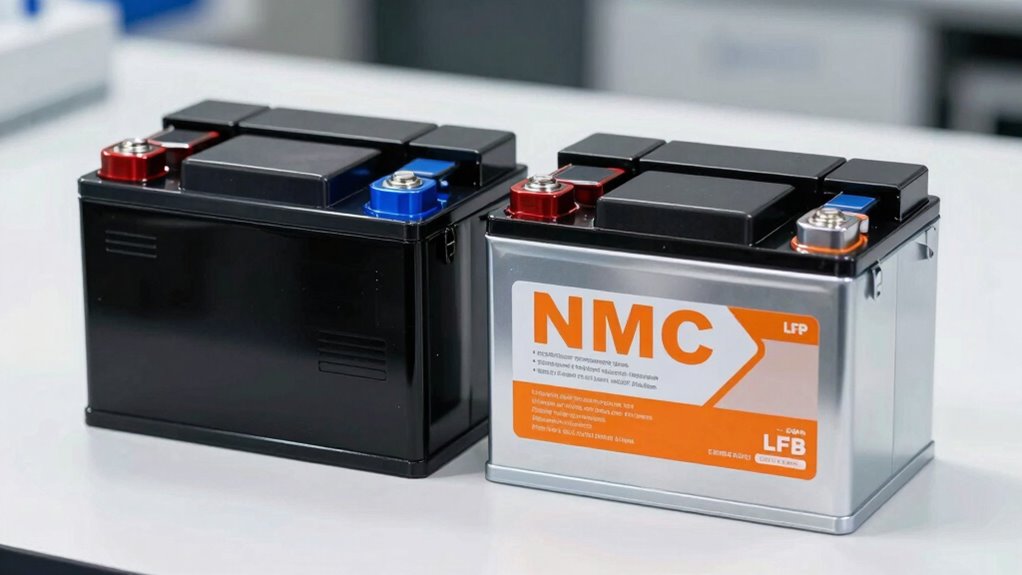
Several factors directly influence the cost and range of EV batteries, impacting both your budget and driving experience. Understanding these cost factors and range considerations helps you make smarter choices.
- Battery capacity: Larger capacity batteries cost more but provide longer range.
- Chemistry type: LFP batteries are typically cheaper but may offer slightly lower energy density than NMC, affecting range.
- Manufacturing quality: Higher-quality materials and advanced production methods increase costs but improve longevity and efficiency.
- The choice of chemistry also influences the environmental impact and sustainability of the batteries, which is becoming an increasingly important consideration for consumers.
These factors determine how much you’ll spend initially and how far your vehicle can go on a single charge. By considering capacity, chemistry, and quality, you can balance your budget with your driving needs, ensuring you get the best value for your investment.
When Should You Use LFP Batteries Instead of NMC, and Vice Versa? Practical Use Cases
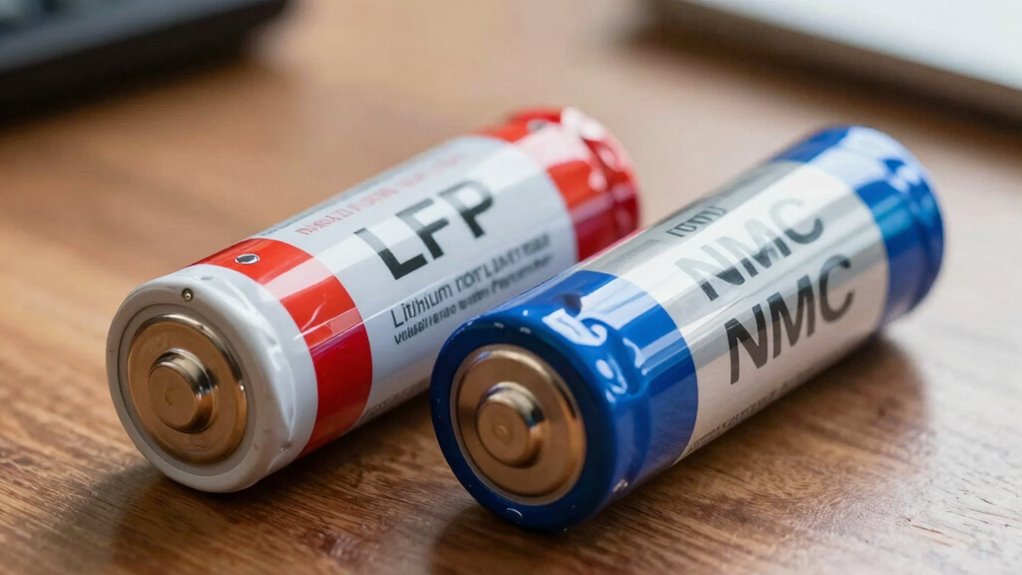
Depending on your driving needs and budget, different battery chemistries may serve you better. If you prioritize longevity and safety for grid storage or portable electronics, LFP batteries are ideal due to their stability and longer cycle life. Conversely, if you need higher energy density for longer-range EVs, NMC batteries excel. Use LFP for budget-friendly EVs, stationary storage, or applications where safety is critical. NMC is better for vehicles requiring lightweight, compact batteries with higher energy density.
| Use Case | Recommended Battery |
|---|---|
| Grid storage | LFP |
| Portable electronics | LFP |
| Long-range EVs | NMC |
| Cost-sensitive EVs | LFP |
Frequently Asked Questions
How Do Recycling and Environmental Impacts Differ Between LFP and NMC Batteries?
You’ll find that LFP batteries have a simpler recycling process, mainly because they contain fewer toxic materials, leading to a smaller environmental footprint. NMC batteries, however, require more complex recycling due to their mix of metals like nickel, manganese, and cobalt, which can pose environmental concerns if not properly handled. Overall, LFP batteries tend to be more environmentally friendly in recycling and impact, but both need responsible management.
Can LFP or NMC Batteries Be Used in Solar Energy Storage Systems?
Yes, you can use both LFP and NMC batteries in solar energy storage systems. LFP batteries often have a longer battery lifespan, making them ideal for long-term use, while NMC batteries provide higher energy density. When considering cost comparison, LFP batteries tend to be more affordable upfront and last longer, which can save you money over time. Your choice depends on your energy needs and budget.
What Are the Charging Time Differences Between LFP and NMC Batteries?
You’ll find that LFP batteries generally have a slower charging speed compared to NMC batteries, which can deliver power more quickly. This difference affects how fast your battery can be recharged and how efficiently it supplies power during use. If rapid charging and higher power delivery are priorities, NMC batteries are better suited. However, if safety and longevity matter more, LFP batteries might be the better choice, despite their slightly slower charging times.
How Do Temperature Sensitivities Vary Between LFP and NMC Chemistries?
Imagine you’re in an old science lab, where temperature swings matter. LFP batteries are like sturdy knights—less sensitive to heat, maintaining battery durability even in high temps. NMC batteries, however, are more temperamental, risking capacity loss if temps soar. This makes LFP generally more cost-effective long-term, with fewer thermal management needs. If you prioritize safety and longevity, LFP is your best choice, especially in hot environments.
Are There Any Emerging Technologies That Could Replace LFP or NMC Batteries?
You might see solid-state batteries and lithium-sulfur tech as emerging replacements for LFP and NMC chemistries. Solid-state batteries promise higher safety and energy density, while lithium-sulfur offers potential for lighter, more powerful batteries. These advances could revolutionize energy storage, making current chemistries less dominant. Keep an eye on these innovations, as they could soon offer better performance, longevity, and safety for your electric vehicle or portable device.
Conclusion
Choosing between LFP and NMC batteries depends on your needs. Did you know LFP batteries last up to 10,000 cycles, far exceeding NMC’s 2,000? If safety and longevity matter most, LFP might be your best bet. For higher energy density and longer range, NMC can be more suitable. Understanding these differences helps you make smarter choices for your electric vehicle and future tech investments.