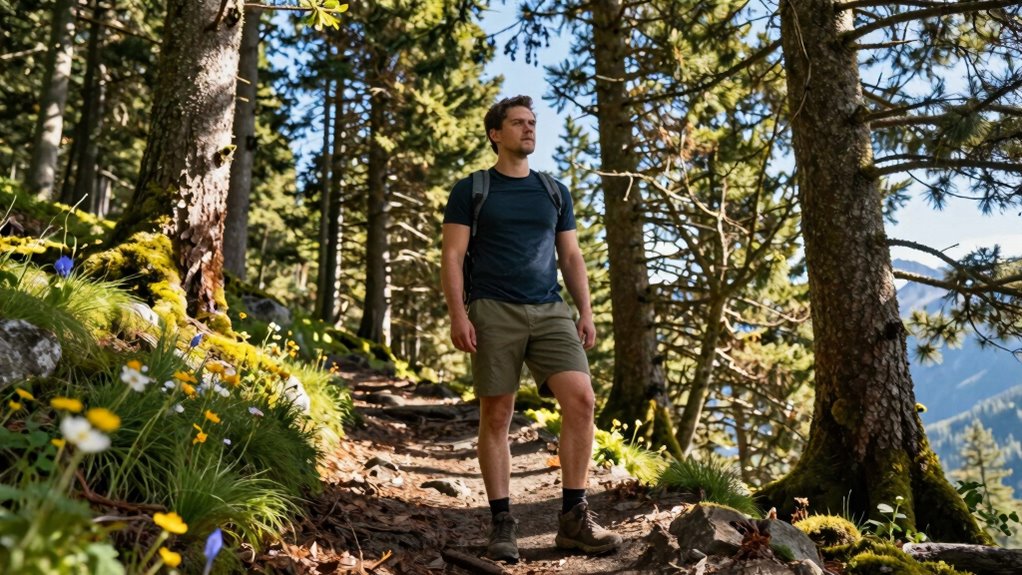

To look ahead without freezing, focus on small, manageable trail segments and don’t try to see too far at once. Trust trail markers, environmental cues, and your map to stay confident and oriented. Pause if you’re unsure, and recover your focus before moving forward. Break the route into parts, and pay attention to nearby markers rather than every detail. Keep your mind calm and steady—more tips to help you stay confident on the trail are just ahead.

Get sports gear delivered free with Prime
- Fast, free delivery on millions of items
- Prime Video, Amazon Music and more included
- Member-only deals all year
Key Takeaways
- Focus on a small, manageable section of the trail to prevent overwhelm.
- Use trail markers and environmental cues to confirm your direction and stay confident.
- Pause periodically to check your map or GPS, avoiding rushed decisions.
- Develop a mental map of the trail to enhance your sense of orientation.
- Balance looking ahead with awareness of your surroundings to stay alert and calm.
Looking ahead on trails is essential for safety and navigation, but it can sometimes cause you to freeze in place with uncertainty or fear. When your eyes dart down the path, scanning for trail markers or landmarks, it’s easy to feel overwhelmed by the unknown. To avoid this, develop a habit of focusing on manageable sections of the trail rather than trying to process everything at once. Break the route into small, clear segments, and look ahead just far enough to prepare for what’s coming next. This prevents you from becoming overwhelmed and helps maintain your confidence. This way, you stay alert without becoming paralyzed by every detail.
Trail markers are your best tools for reassurance and direction. When you see a blaze, cairn, or sign, take a moment to identify it, then plan your next move. Keep your gaze steady on the trail ahead, but remain aware of these markers without obsessing over every one. Remember, trail markers are usually placed at regular intervals, so you can trust that following them will lead you correctly. If you spot a marker that seems off or missing, don’t panic—pause, check your map or GPS, and then proceed. Relying on trail markers, rather than constantly searching the entire trail, helps maintain your focus and prevents you from freezing due to uncertainty. Developing a mental map of the trail can also boost your confidence and help you stay oriented when markers are hard to see. Additionally, understanding how to interpret environmental cues can help you stay on track even when trail markers are obscured or absent.
As an affiliate, we earn on qualifying purchases.
Frequently Asked Questions
What Gear Is Best for Looking Ahead Safely?
You should choose gear that enhances your vision and boosts trail awareness, like a high-quality headlamp or polarized sunglasses. These help you see clearly ahead and recognize obstacles early, preventing you from freezing up. Consider using a lightweight, adjustable headlamp for low light conditions and sunglasses that reduce glare. This gear guarantees you stay focused on the trail, maintaining confidence and safety while looking ahead without hesitation.
How Can I Prevent Eye Strain on Long Hikes?
To prevent eye strain on long hikes, you should practice vision exercises and incorporate regular eye relaxation. Take breaks to stare into the distance, focusing on different points to relax your eye muscles. Blink frequently to keep your eyes moist, and avoid staring at screens or your gear for extended periods. These habits help reduce fatigue, keep your vision sharp, and guarantee you stay comfortable and alert on your trail adventures.
Is There a Technique to Improve Peripheral Vision?
Like a seasoned explorer, you can improve your peripheral vision by practicing visual scanning. Focus on a central point and gently expand your awareness to the edges of your vision, avoiding staring directly. This technique enhances peripheral awareness, helping you detect obstacles early. Regularly shift your gaze and consciously include your side vision, so you stay alert and confident, much like a hero steering through uncharted territory without hesitation.
How Do Weather Conditions Affect Looking Ahead?
Weather conditions considerably impact your ability to look ahead on trails. Poor visibility from fog, rain, or snow can make it harder to see upcoming obstacles, increasing the risk of freezing up. To stay safe, prioritize weather preparedness by carrying proper gear and checking forecasts. Adjust your pace and focus on trail visibility, using your peripheral vision to stay alert. Being prepared helps you maintain confidence and avoid hesitation, even in challenging weather.
Can Mindfulness Help Reduce Trail Anxiety?
Yes, mindfulness meditation can help reduce trail anxiety. By practicing mindfulness, you stay present, which makes it easier to manage your anxiety and stay focused on the trail. Incorporate simple techniques like deep breathing and paying attention to your surroundings. Regular mindfulness practice enhances your anxiety management skills, helping you stay calm and confident, so you can look ahead without freezing or feeling overwhelmed during your hike.
Conclusion
Looking ahead on trails helps you stay confident and aware, but it shouldn’t cause you to freeze with hesitation. Practice scanning your path smoothly, focusing on a few key points at a time. For example, imagine you’re approaching a tricky section—by keeping your gaze a few steps ahead rather than fixating on obstacles, you maintain control and flow. Over time, this habit boosts your confidence and keeps you moving safely without getting stuck.
Halloween Picks
halloween
As an affiliate, we earn on qualifying purchases.