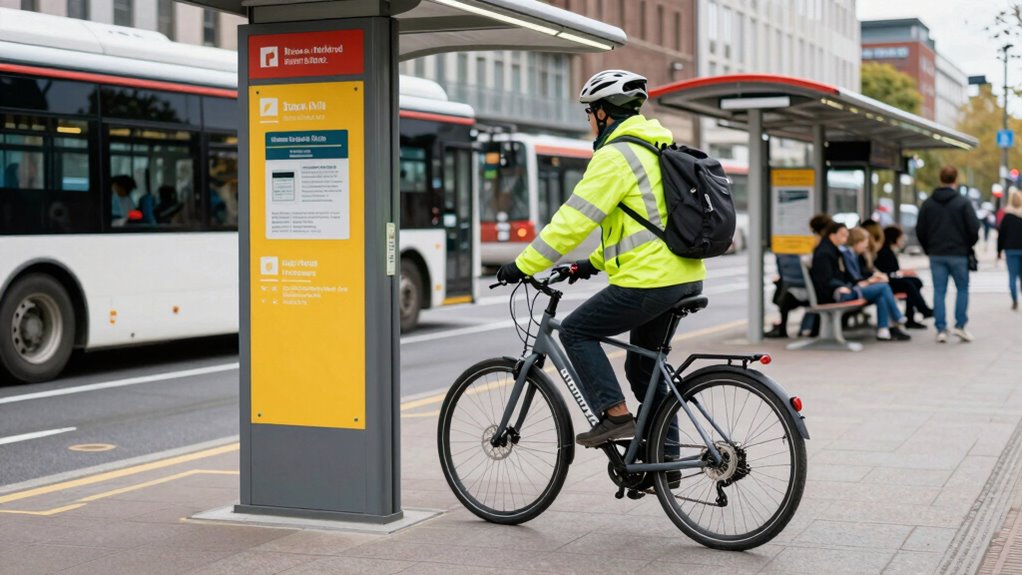
To make bike-to-transit trips easier, choose routes with well-maintained bike lanes and avoid unsafe intersections. Check transit schedules beforehand and use real-time updates to coordinate your arrival. Secure your bike at designated stations with a good lock, and carry essential repair tools. Stay flexible by exploring alternative routes if needed, and connect with local cycling groups for tips. Keep safety and efficiency in mind—there’s more to learn to optimize your trip fully.
Key Takeaways
- Plan routes with well-maintained bike lanes and avoid unsafe intersections for safer, smoother trips.
- Check transit schedules in advance and use real-time updates to coordinate timely arrivals.
- Secure bikes with quality locks and use designated stations or lockers at transit stops.
- Learn local cycling laws and stay informed about safety technologies to ride responsibly.
- Adjust your schedule and choose alternative routes when faced with delays or unsafe conditions.

Combining biking with transit can substantially expand your travel options, but it often comes with challenges that discourage many from making the switch. One of the biggest concerns is safety, especially when it comes to bike lane safety. To make your trips smoother and safer, start by choosing routes with well-maintained bike lanes. These lanes are designed to keep cyclists separated from vehicle traffic, reducing the risk of accidents. Before heading out, familiarize yourself with local bike lane maps and look for areas where the infrastructure is most reliable. If certain routes seem risky or poorly maintained, consider alternative paths or combining quieter streets with designated bike lanes to avoid dangerous intersections.
Choose well-maintained bike lanes and plan routes to stay safe and connected.
Another key to seamless bike-to-transit trips is transit schedule coordination. No matter how well you plan your biking route, if the transit schedule doesn’t align, you’ll end up waiting or rushing, which defeats the purpose of convenient travel. To avoid this, check transit times in advance and plan your biking schedule accordingly. Many transit agencies now provide real-time updates via apps or websites, so you can see exactly when your bus or train is arriving. This allows you to adjust your biking pace to arrive just in time, preventing long waits or missed connections. If you’re unsure about the schedule, consider leaving a little earlier or later to give yourself a buffer, especially during peak hours when delays are common.
Investing in a good bike lock and secure rack space at transit stations can also make your trips hassle-free. When you know your bike will be safe at the station, you won’t worry about theft or damage while waiting for your transit connection. Many transit stations now have designated bike racks or even bike lockers, which provide added security. Make a habit of quickly checking the station’s bike facilities before your trip so you can plan your route accordingly. Also, consider carrying a small repair kit with essentials like tire levers and a pump, so you’re prepared for minor issues on the go. Additionally, understanding the importance of bike lane safety can help you identify the most secure and comfortable routes, enhancing your confidence and overall experience. Being aware of proper biking techniques can further improve your safety and efficiency, especially in mixed traffic environments. It’s also helpful to stay informed about local cycling laws to ensure you’re riding responsibly and legally. Moreover, keeping up with new safety technologies can provide additional layers of protection during your rides.
Finally, communication and flexibility are essential. If you notice frequent delays or unsafe bike lanes, don’t hesitate to seek alternative routes or adjust your schedule. Connecting with local cycling groups or transit users can give you valuable tips and support. By paying attention to bike lane safety, planning around transit schedule coordination, and staying adaptable, you’ll find it easier to integrate biking with transit into your daily routine, making your trips more efficient and enjoyable.
bike lock with key and combination
As an affiliate, we earn on qualifying purchases.
As an affiliate, we earn on qualifying purchases.
Frequently Asked Questions
What Are the Best Types of Bikes for Bike-To-Transit Trips?
You should choose a practical, lightweight bike with sturdy frames for bike-to-transit trips. Folding bikes are ideal because they’re compact and easy to store, especially with bike storage options at transit stations. Add bike accessories like racks or panniers to carry your gear comfortably. Look for bikes with quick-release wheels for convenience, and make sure they’re durable enough for daily use. This makes your bike-to-transit trips smoother and more efficient.
How Do I Secure My Bike at Transit Stations?
Securing your bike at transit stations is like locking a treasure chest—tight and secure. Use sturdy bike lock types, such as U-locks or heavy-duty chains, for maximum security. Always choose well-lit, busy areas with good station security, and lock your bike through the frame and at least one wheel to a solid, immovable object. Double-check that your lock is tight; a secure bike keeps your mind at ease.
Are There Specific Transit Passes for Bike Commuters?
Yes, many transit agencies offer specific passes for bike commuters that include bike storage options and transit discounts. These passes often provide discounts on combined bike and transit fares, making your trips more affordable. Some agencies also include secure bike lockers or racks as part of their bike storage solutions. Check your local transit provider’s website to find the right pass tailored for your bike-to-transit needs and enjoy seamless, cost-effective commuting.
How Can I Plan a Multi-Modal Route Efficiently?
You can plan a multi-modal route efficiently by using route optimization tools that consider transit schedules and bike-friendly paths. Keep your bike well-maintained to prevent delays—statistics show that well-maintained bikes reduce breakdowns by 70%. Map out your journey in advance, factoring in bike maintenance needs and transit timings, and choose routes with dedicated bike lanes. This way, your trip becomes smoother, faster, and more reliable.
What Safety Precautions Should I Take During Bike-To-Transit Trips?
You should always lock your bike securely using quality bike storage to prevent theft. Wear visible clothing and use lights or reflectors to stay safe during transit, especially at night. Familiarize yourself with transit safety protocols, like knowing the rules for boarding and exiting, and stay alert for other passengers. Planning your route ahead of time reduces surprises, making your bike-to-transit trip safer and smoother overall.
Conclusion
Imagine yourself effortlessly gliding your bike onto a transit rack, feeling the breeze as you settle into your seat. With simple preparations and thoughtful planning, bike-to-transit trips become smooth and enjoyable. Picture the ease of combining two eco-friendly modes, reducing stress and saving time. As you pedal away from your destination, know that these small steps make your journey greener, simpler, and more connected. Embrace the ride, and let transit and bike work harmoniously for your daily adventures.