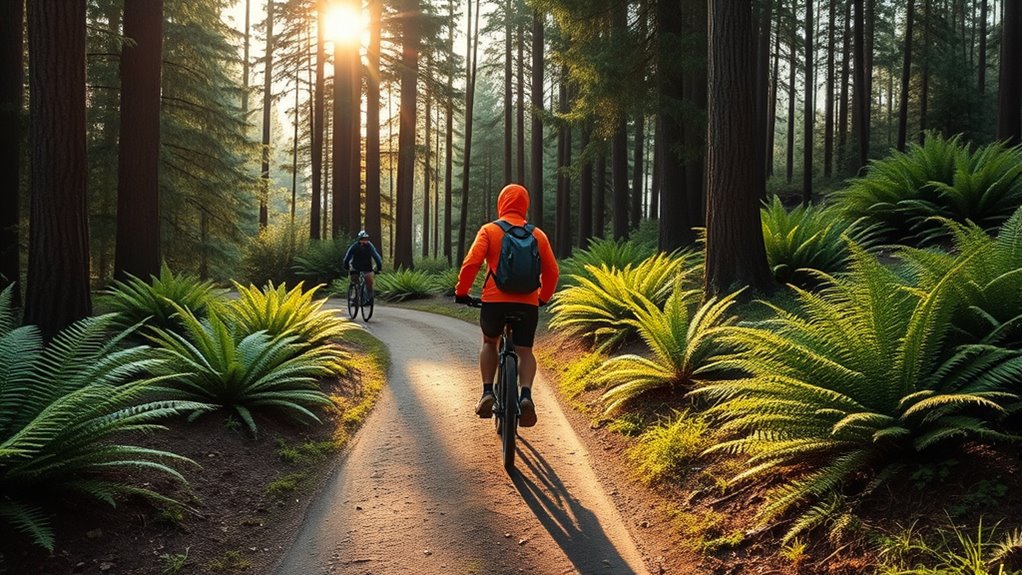
When using trails, it’s important to practice good etiquette and follow right-of-way rules to keep everyone safe and respectful. Yield to uphill hikers and slow down when passing others, signaling your intentions clearly. Stay on designated paths to protect the environment, obey signage about closures and directions, and communicate politely with fellow users. Respect trail signs and other users’ space—doing so creates a safer, more enjoyable experience for all. Keep going to discover helpful tips and essential practices for trail harmony.

Key Takeaways

  • Yield to uphill hikers and those in narrow or blind sections to ensure safe trail sharing.
  • Use clear verbal cues or hand signals to communicate intentions with other trail users.
  • Stay on designated trails to prevent environmental damage and ensure safe navigation.
  • Respect trail signage indicating right-of-way, closures, or specific user rules.
  • Step aside promptly when approached from behind to allow others to pass safely.
follow trail signage etiquette

When sharing trails, understanding and practicing proper etiquette and right of way is vital for everyone’s safety and enjoyment. Whether you’re hiking, biking, or walking, being aware of trail etiquette helps prevent accidents and ensures a respectful environment for all users. One of the most important aspects of trail etiquette is paying attention to trail signage. These signs provide essential information about trail conditions, directions, and right-of-way rules. Ignoring trail signage can lead to confusion, collisions, or even injuries. Always take a moment to read and follow the posted signs, especially in areas with multiple trail users or narrow paths.

Pay attention to trail signage for safety, directions, and right-of-way rules to ensure a respectful and smooth trail experience.

Hiking safety depends heavily on your ability to recognize and respect right-of-way protocols. Typically, downhill hikers yield to those going uphill because climbing requires more effort and stopping to step aside can be more challenging. When encountering other trail users, slow down and communicate clearly, whether through verbal cues or hand signals. If you see someone approaching from behind, step aside promptly to let them pass safely. This simple act minimizes the risk of accidents and keeps the trail flowing smoothly. Remember, patience is key—don’t rush or force your way past others; instead, wait for an appropriate moment to pass.

Trail signage often indicates who has the right of way or specifies specific rules for different trail segments. For example, some signs may designate certain trails for hikers only, while others are shared with mountain bikers or horseback riders. Respect these designations to avoid conflicts and maintain hiking safety. When in doubt, slow down and yield to others, especially in blind corners or narrow sections where visibility is limited. Using trail signage as a guide demonstrates your respect for the trail and its users, promoting a safer and more harmonious experience for everyone involved.

Additionally, being aware of trail signage helps you stay on designated paths, preventing erosion and environmental damage. Straying from marked trails can lead to dangerous terrain or getting lost, especially in unfamiliar areas. Observe and obey all signs about trail directions, closures, or warnings about wildlife or weather conditions. By doing so, you not only protect yourself but also contribute to preserving the natural environment and ensuring the trail remains safe and accessible for future visitors. Incorporating sustainable practices such as respecting trail boundaries aligns with homesteading principles that emphasize conservation and environmental stewardship.

Practicing good trail etiquette and adhering to right-of-way rules, guided by trail signage, creates a safe, enjoyable environment for all trail users. Your attentiveness and respect for others make shared outdoor spaces more pleasant and help promote hiking safety for everyone. Remember, a few thoughtful actions can make the trail safer and more enjoyable for all who venture into nature’s embrace.

Frequently Asked Questions

How Should I Handle Encounters With Wildlife on the Trail?

When you encounter wildlife on the trail, stay calm and keep your distance. Observe wildlife behavior—most animals won’t bother you if you give them space. Avoid sudden movements or loud noises that cause trail disturbance. If an animal seems agitated or approaches, back away slowly and give it room. Remember, respecting their space helps protect both you and the animals, ensuring a safe and enjoyable experience for everyone.

What Should I Do if I Encounter Aggressive Trail Users?

When you encounter aggressive trail users, stay calm and use de-escalation techniques like speaking softly, maintaining space, and avoiding direct confrontation. Picture yourself as a peaceful presence amid tension. If their behavior persists or escalates, report the incident to trail authorities to guarantee safety for everyone. Your calm response can defuse the situation, and reporting helps prevent future conflicts, creating a safer trail environment for all.

Are There Specific Rules for Sharing Trails With Horses?

When sharing trails with horses, you should always give them plenty of space and stay alert. Remember, horse safety is essential, so avoid startling or rushing past riders. Your rider responsibilities include staying quiet, controlling your speed, and yielding right of way when necessary. By respecting horse riders and their animals, you help guarantee a safe, enjoyable experience for everyone on the trail.

How Can I Minimize My Environmental Impact While on the Trail?

To minimize your environmental impact, practice Leave No Trace principles and adopt sustainable practices. Stay on designated trails to protect surrounding habitats, pack out all trash to prevent pollution, and avoid disturbing wildlife by keeping noise levels low. Use eco-friendly gear, respect plant life, and tread lightly. By consciously choosing sustainable practices, you help preserve natural beauty for others and ensure trails remain healthy for future adventurers.

When hiking at night, always use proper lighting equipment like headlamps or flashlights to see clearly and be seen. Wear reflective gear on your clothing and backpack to increase visibility to others. Stick to designated trails, move at a slow pace, and listen carefully for sounds that could indicate hazards. Carry a fully charged phone and tell someone your route. These precautions help guarantee your safety during night trail adventures.

Conclusion

Remember, respecting trail etiquette and right of way keeps everyone safe and the trail enjoyable. When you yield, you create a rhythm that others follow, making the journey smoother for all. As you move forward, think of the trail as a shared space where kindness and awareness connect us, turning each encounter into a moment of harmony. So, stay courteous, stay alert, and let the trail’s natural flow guide your way.

You May Also Like

Tire Inserts Vs Higher Pressure: Which Saves Rims?

More impact protection and rim safety come with tire inserts or higher pressure—discover which option truly keeps your rims safer.

Mountain‑Bike Trail Etiquette: Do’s & Don’ts

Correct trail etiquette ensures a safer, more enjoyable mountain-biking experience—discover essential do’s and don’ts to ride responsibly and respectfully.

Top Mountain Biking Destinations Around the World

Pursue your ultimate adventure with top mountain biking destinations worldwide that promise breathtaking scenery and unforgettable trails to explore.