To fuel long gravel days, focus on maintaining steady carbohydrate intake—about 30-60 grams per hour—using easy-to-digest snacks like gels, chews, or fruit. Sip fluids regularly every 15-20 minutes, adding electrolytes to stay balanced. Start well-hydrated, and plan your nutrition ahead of time for convenience. Proper fueling helps you maintain energy and delay fatigue. Keep these strategies in mind to enhance your ride—and if you continue, you’ll uncover even more tips to optimize your performance.
Key Takeaways
- Consume 30-60 grams of carbs per hour using gels, chews, or small snacks to maintain energy levels.
- Hydrate regularly every 15-20 minutes with water or electrolyte drinks to prevent dehydration.
- Start rides well-hydrated and prepare easily accessible nutrition for continuous fueling.
- Vary carbohydrate sources to prevent palate fatigue and optimize digestion during long rides.
- Replenish glycogen and hydrate post-ride with carbs, protein, and fluids for effective recovery.
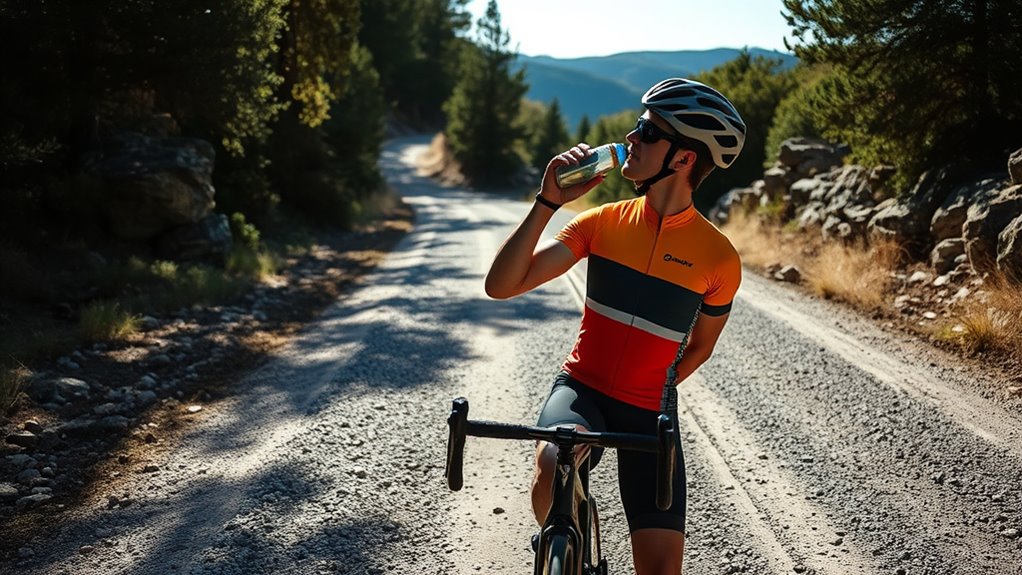
Long gravel rides test your stamina and demand proper fueling to keep you moving efficiently. When tackling these extended adventures, your success hinges on effective nutrition strategies and hydration planning. Without enough fuel or fluids, you risk bonking or dehydration, which can turn a challenging ride into a frustrating ordeal. To stay at your best, you need a clear plan for what you eat and drink along the way.
Start by understanding your body’s energy needs. During long rides, your body primarily relies on carbs for sustained energy. Incorporate easily digestible sources like energy gels, chews, or bars that you can consume quickly without causing stomach discomfort. These should be part of your nutrition strategies, tailored to your ride duration and intensity. For example, if you’re planning a ride over several hours, aim to consume about 30-60 grams of carbohydrates each hour. This steady intake helps maintain blood glucose levels and delays fatigue. Remember, variety can prevent palate fatigue—mixing gels, fruit, and small sandwiches keeps things interesting and ensures you’re getting a range of nutrients.
Fuel your long rides with 30-60 grams of carbs hourly to sustain energy and prevent fatigue.
Hydration planning is equally essential. Dehydration impairs your performance and recovery, so you should drink regularly, even if you don’t feel thirsty. A good rule of thumb is to sip small amounts every 15-20 minutes. Use a water bottle or a hydration pack that’s easy to access while riding. Consider adding electrolytes to your fluids, especially if you’re sweating heavily or riding in hot conditions. Electrolyte drinks replenish salts lost through sweat and help prevent cramping. Keep an eye on the weather, as heat increases your hydration needs, and adjust your intake accordingly.
Pre-ride preparation can make a big difference. Start your ride well-hydrated and have some nutrition ready before you set off. During the ride, set reminders to consume fluids and snacks so you don’t forget. Post-ride, prioritize rehydration and replenishing glycogen stores with balanced meals containing carbs and protein. This recovery process supports muscle repair and helps you prepare for future rides.

WEIZE Road Bike, 700C Wheel City Commuter Bicycle, 14 Speed Drop Bar, Racing Adult Bike with Caliper Brakes, High-Carbon Steel Hybrid Bikes, Urban Adult Bicycle for Men and Women,White
Caliper brake system: The road bike adopts a dual caliper brake design, which is lighter in overall weight...
As an affiliate, we earn on qualifying purchases.
Frequently Asked Questions
What Are the Best Snacks for Sustained Energy on Gravel Rides?
For sustained energy on gravel rides, you should prioritize easy-to-digest snacks like energy gels and trail mix. Energy gels give you quick carbs to keep your energy levels stable, while trail mix offers a good mix of fats, protein, and carbs for longer-lasting fuel. Keep a variety handy so you can adapt to your energy needs throughout the ride and avoid hitting a wall.
How Much Water Should I Carry for a Full Day?
You should carry about 2 to 4 liters of water for a full day, depending on your pace and weather. Don’t put all your eggs in one basket; plan hydration strategies that include regular sips and water filtration options when needed. Keep a close eye on your intake, and remember, staying ahead of thirst is the key to keeping your energy up and enjoying every mile.
Do I Need Special Fuel for Different Weather Conditions?
You don’t always need special fuel for different weather conditions, but adding fuel additives can help. In cold weather, fuel stabilizers prevent gelling, while in hot conditions, fuel treatment can prevent vapor lock. Weather adaptations like using ethanol-free fuel in winter or higher-octane options in summer can improve performance. Always check your bike’s recommendations and carry appropriate additives to guarantee your ride stays smooth regardless of the weather.
How Often Should I Take Electrolyte Supplements?
You should take electrolyte supplements regularly, especially during long rides, because staying hydrated is essential. As a coincidence, your hydration timing and supplement dosage are closely linked—aim to replenish electrolytes every 1-2 hours, depending on sweat loss. Pay attention to how you feel, and don’t wait until you’re overly thirsty or cramping. Consistent intake helps maintain balance and prevents dehydration, ensuring you stay strong and focused on your ride.
What’s the Ideal Timing for Meal Consumption During Long Rides?
You should aim to eat small, carbohydrate-rich meals or snacks every 1 to 2 hours during long rides. This meal timing strategy helps maintain energy levels and prevents fatigue. Plan your fueling schedule by carrying easily digestible foods like gels, bars, or bananas, and consume them at regular intervals. Sticking to a consistent fueling schedule guarantees you stay energized and avoid bonking during those extended gravel adventures.

Schwinn Network 1 Hybrid Bike, 700c Mens and Womens Bike, 21-Speed Hybrid Bicycle, Aluminum Frame, Suspension Fork, Alloy Linear Pull Brakes, Adult Bicycle
HYBRID BICYCLE: Ride confidently on or off the pavement in the Network 1 by Schwinn. With 700c wheels,...
As an affiliate, we earn on qualifying purchases.
Conclusion
As you tackle those long gravel days, remember that proper fueling keeps you rolling smoothly. Pack snacks with carbs and protein, stay hydrated, and listen to your body’s signals—no need to be a martinet about it. Think of your ride as a great adventure, like those explorers of old who relied on their wits and supplies. With good fueling, you’ll conquer every mile, feeling as unstoppable as a steam-powered locomotive chugging through uncharted territory.

AVASTA 700C Road Adult Step-Over Gravel Hybrid Bike Bicycle for Men Woman Male Female,Lightweight Aluminum Alloy Frame with 21-Speed Gearing for City Commuting,Dual Disc Brakes,19 inch Frame,White
🚴♂️【Durable Aluminum Alloy Frame】This lightweight yet strong frame is built to last, offering a perfect balance of durability...
As an affiliate, we earn on qualifying purchases.

YITAHOME 700C Road Bike, 21 Speed Commuter Bicycle for Men Women, Lightweight Aluminum Frame Racing Bike, Adult Bicycle with Dual Disc Brake
All-Terrain 700 x 28C Wheels: Go further with less energy thanks to the road bike's large wheels; Enjoy...
As an affiliate, we earn on qualifying purchases.