
To stay safe while cycling, it’s essential to recognize road signs and understand their meanings. Pay attention to warning signs, prohibitions, and guidance markers to anticipate hazards and obey traffic rules. Quickly interpreting signs helps you adjust your speed and direction, avoiding accidents and ensuring smooth navigation. Being alert to signs early on keeps you in control and confident on the road. Keep exploring further to discover how each sign can boost your safety and riding skills.
Key Takeaways
- Recognize common signs like prohibitions, warnings, and directions to understand riding rules and hazards.
- Stay alert and scan signs early to anticipate changes and adjust your cycling behavior accordingly.
- Learn the meanings of color-coded signs, such as red for prohibitions and yellow for warnings, for quick interpretation.
- Use proactive observation to navigate safely through complex or high-traffic areas with multiple signs.
- Understanding road signs enhances safety, compliance, and confidence during cycling in various environments.

Understanding road signs is essential for cyclists to stay safe and navigate traffic confidently. When you’re out riding, recognizing and understanding the signs around you can make all the difference in avoiding accidents and ensuring smooth travels. Sign recognition isn’t just about knowing what a sign looks like; it’s about instantly interpreting its meaning and adjusting your riding accordingly. This skill is *vital* for maintaining safe riding practices, especially in busy or unfamiliar areas. The more familiar you are with common signs, the better you’ll respond to changing conditions on the road.
Recognizing and understanding road signs is vital for safe, confident cycling in any area.
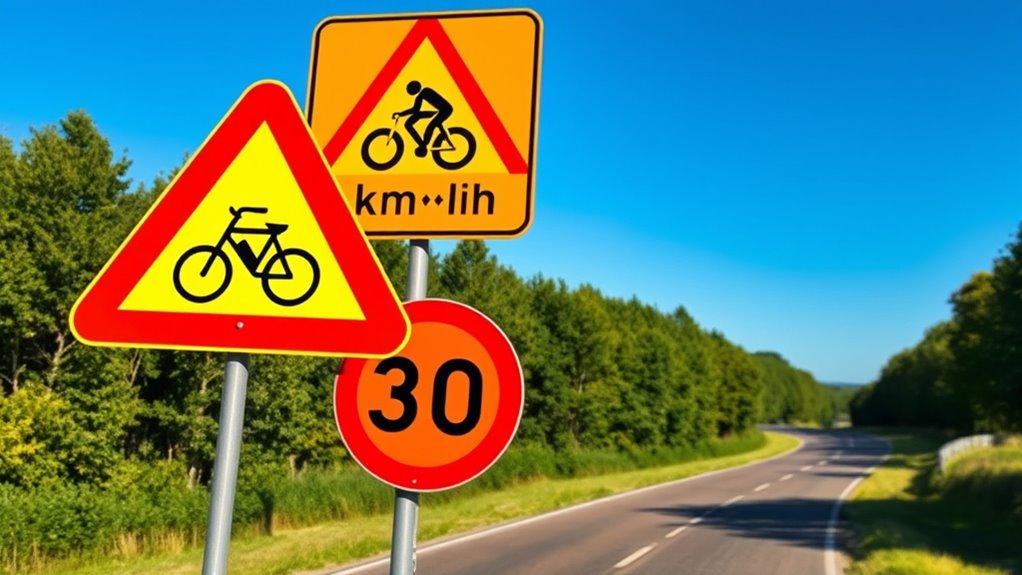
Start by familiarizing yourself with the most common signs you’ll encounter. For example, a red circular sign with a slash typically indicates something you should avoid or a prohibition, like “No Entry” or “No Parking.” Recognizing these signs early helps you avoid violations and potential hazards. Similarly, warning signs—often yellow diamonds—alert you to upcoming conditions such as sharp turns, pedestrian crossings, or uneven pavement. When you see these, you can slow down and prepare, reducing your risk of losing control or having an accident. Knowing what these signs mean enables you to plan your movements ahead of time, ensuring safer riding.
Pay attention to regulatory signs that specify rules unique to cyclists. These might include signs indicating bike lanes or shared paths, helping you stay within designated areas. Recognizing these signs allows you to ride legally and predictably, which benefits everyone on the road. Also, look for directional signs that point toward destinations or routes. Understanding these helps you stay oriented and reach your destination efficiently, without unnecessary detours or confusion. When you can quickly interpret various signs, you’ll feel more confident riding in different environments, whether city streets, suburban roads, or rural paths.
Practicing sign recognition also means staying alert and observant at all times. Keep your eyes moving, scanning for signs well ahead of time, especially in complex or high-traffic areas. This proactive approach gives you ample time to react appropriately—whether that’s slowing down, changing lanes, or stopping altogether. Remember, safe riding isn’t just about controlling your bike; it’s about understanding your surroundings. The more adept you are at reading signs, the more you’ll anticipate hazards and respond effectively, making your ride safer for you and others.
Frequently Asked Questions
Are There Specific Signs for Electric Bikes?
You’ll find specific signs for electric bikes, like e-bike zone signs, indicating designated areas. These signs often mark electric bike lanes or e-bike zones where electric bikes are permitted or prioritized. Keep an eye out for these signs to stay within legal areas, avoid fines, and ensure safe riding. Recognizing e-bike zone signs helps you navigate properly and enjoy your ride while respecting local regulations.
How Do Signs Differ Between Urban and Rural Areas?
You’ll notice urban signage often features bright, clear symbols and dedicated bike lanes, guiding you smoothly through busy streets. In contrast, rural signage tends to be more subtle, with simpler signs alerting you to changing terrain or hazards. Urban signage emphasizes safety and direction for city cyclists, while rural signage focuses on caution and awareness of natural surroundings. Adapting to these differences guarantees you stay informed and secure on every ride.
What Should I Do if a Sign Is Damaged or Unclear?
If you encounter a damaged or unclear sign, you should report the issue immediately to local authorities or the relevant agency responsible for sign maintenance. While waiting for repairs, exercise extra caution and follow any available guidance or road markings. Reporting damaged signs helps guarantee safety for all road users, including cyclists. Don’t attempt to fix the sign yourself; leave maintenance to trained personnel.
Are There Signs Indicating Upcoming Hazards or Construction?
Yes, you’ll see hazard warning signs and construction alerts on the road. These signs alert you to upcoming hazards or construction zones, so you can slow down, stay alert, and navigate safely. Pay close attention to these signs, especially in unfamiliar areas, to avoid accidents or obstacles. Always follow the instructions on hazard warnings and construction alerts to keep yourself and others safe while cycling.
How Do Signs Vary Internationally for Cyclists?
International sign standards vary, so you’ll notice differences in cyclist signage across countries. Some use universal symbols, while others incorporate local cultural signage differences, like colors or icons that reflect regional customs. You should stay alert for these variations, as they help communicate hazards or rules effectively. By understanding international sign standards, you can navigate unfamiliar roads confidently and stay safe, regardless of where you’re cycling.
Conclusion
By paying attention to road signs, you stay safe and avoid fines. It might seem like a lot to remember, but once you get used to the signs, it becomes second nature. Don’t let unfamiliar symbols intimidate you—most are there to protect you. Keep alert, follow the signs, and ride confidently. With a little practice, steering the roads will become easier, making your cycling experience safer and more enjoyable every time you hit the pavement.