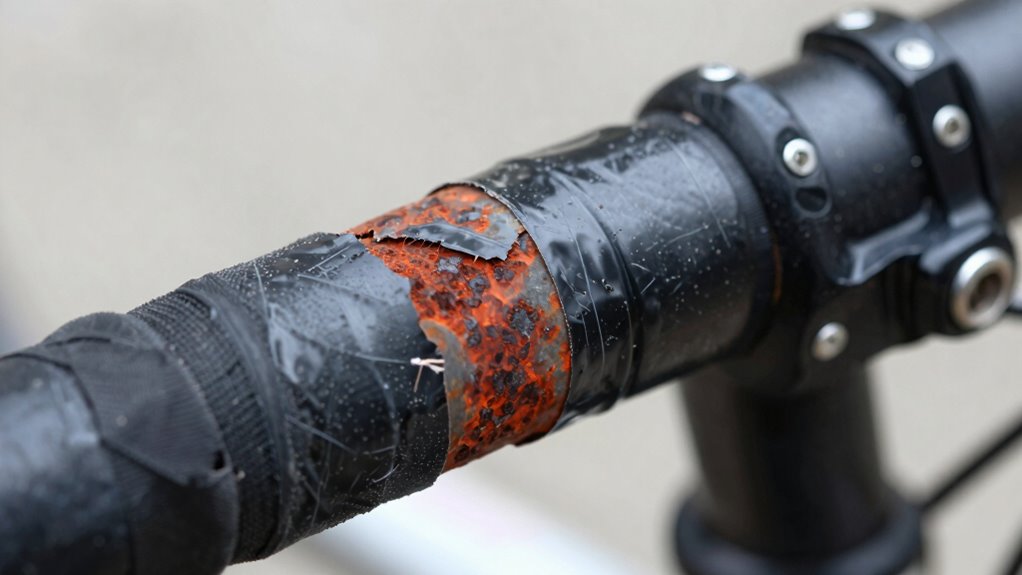

Rust under your bar tape is a sneaky problem many riders overlook, because it’s hidden from view and can develop silently over time. Moisture trapped beneath the tape causes corrosion that weakens your handlebars and cables, risking safety. Regularly peeling back a small section to check for rust or discoloration can save you from costly repairs. Keep your bike properly maintained to prevent this issue—if you look closer, you’ll catch more hidden dangers lurking beneath the tape.
Key Takeaways
- Rust can develop silently under handlebar tape, hidden from view during regular rides.
- Periodically peeling back tape reveals hidden rust, preventing unnoticed deterioration.
- Moisture trapped beneath tape fosters corrosion, weakening handlebar integrity over time.
- Rusted cables and handlebars increase safety risks like failure and reduced grip security.
- Regular inspection, cleaning, and moisture management are essential for early rust detection and prevention.
Why Rust Under Bar Tape Is Hidden and Why It’s a Problem
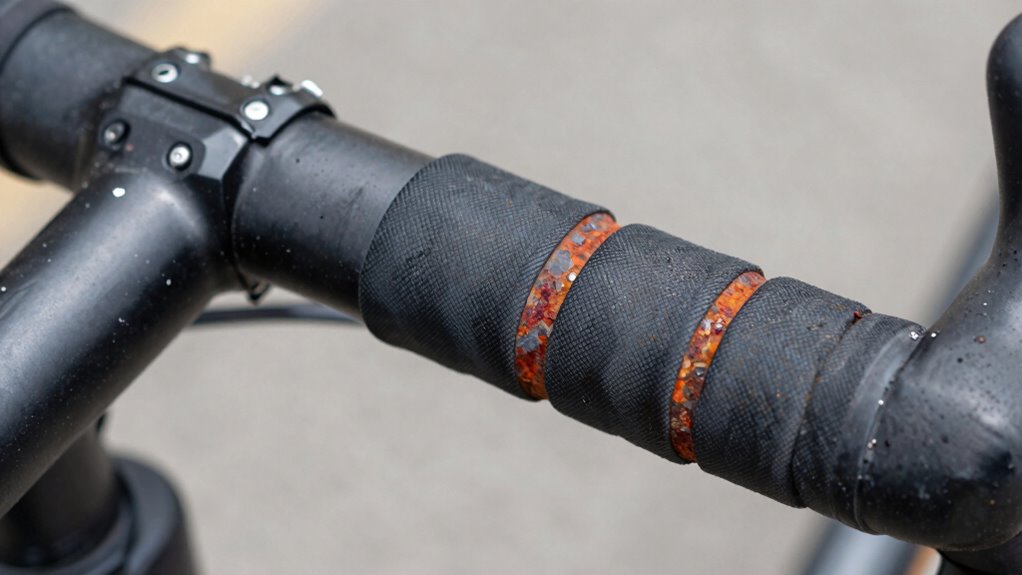
Rust under bar tape often stays hidden because the tape covers the handlebar area completely, preventing you from noticing any corrosion developing underneath. Handlebar corrosion can occur silently, creating hidden rust spots that weaken the metal over time. Since you can’t see beneath the tape, rust can develop unnoticed, making it harder to catch early. This concealed rust compromises the integrity of your handlebars, increasing the risk of sudden failure during rides. The tape acts as a barrier, trapping moisture and promoting corrosion without your knowledge. If left unchecked, these concealed rust spots can expand, leading to costly repairs or replacements. Recognizing that rust can hide underneath your bar tape highlights the importance of regular inspections to keep your bike safe and in top condition. Additionally, understanding material choice for your handlebar coverings can help reduce moisture buildup and corrosion risks. Being aware of corrosion processes can further inform your maintenance routines to prevent hidden rust issues, especially when combined with proper cleaning techniques.
How to Check Under Your Bar Tape for Rust and Damage
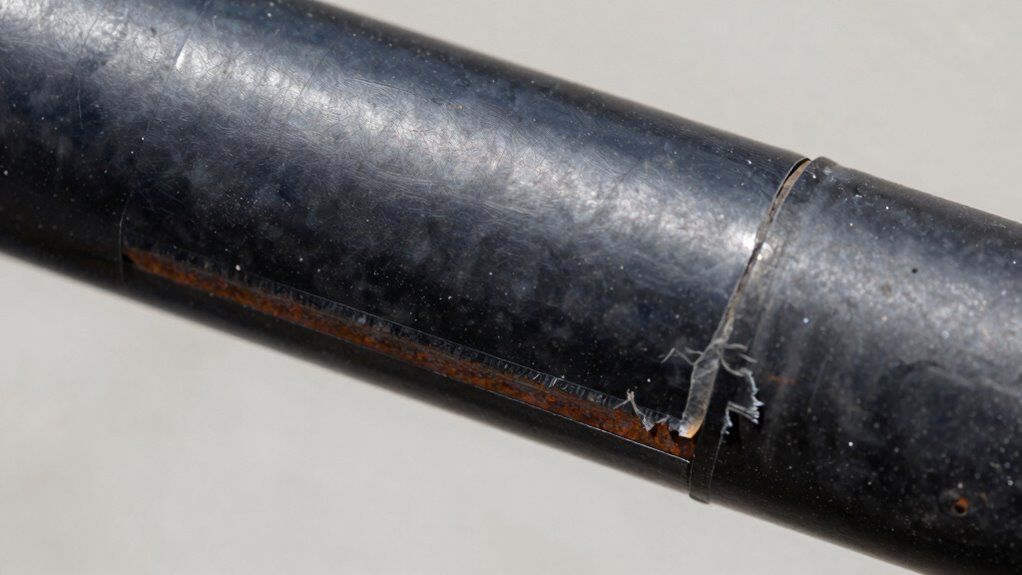
To effectively check for rust and damage under your bar tape, it’s important to periodically remove or peel back a small section of the tape in a controlled manner. This lets you inspect for signs of cable corrosion and grip deterioration that might not be visible otherwise. Look for:
- Rust spots or discoloration along exposed cables
- Frayed or cracked tape edges indicating wear
- Areas where the grip feels less secure
- Corrosion buildup around the brake or shifter housing
Gently lift the tape, avoiding excessive force, and examine the underlying cables carefully. Regular checks can prevent unnoticed deterioration that could compromise control or lead to cable failure. Additionally, inspecting the piercing and jewelry materials nearby can help identify potential sources of irritation or corrosion that might contribute to rust. Being aware of cable maintenance techniques can help you address issues promptly. Staying proactive by monitoring your cables keeps your ride safe and ensures your handlebar setup remains in top condition. Conducting a visual inspection regularly can help catch early signs of damage before they worsen. Incorporating routine preventive care is essential for extending the lifespan of your components and maintaining optimal performance.
What Happens If You Ignore Rust Under Bar Tape? Risks Explained
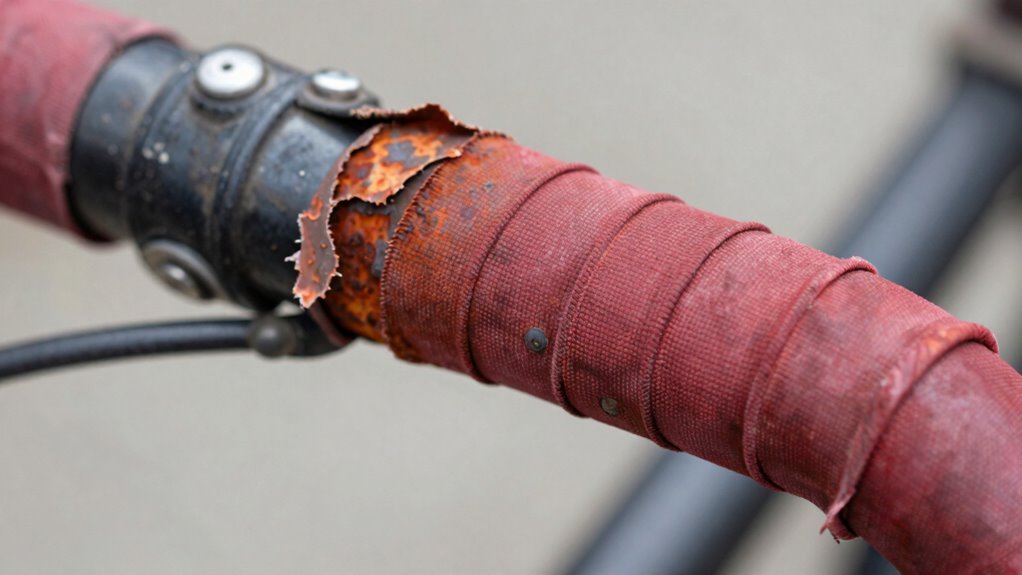
Ignoring rust under your bar tape can lead to serious safety risks, as corrosion weakens the integrity of your brake and shifter cables. Over time, rust can cause cables to fray or snap, risking sudden failure while riding. Poor bike storage conditions often accelerate this process, trapping moisture under the tape and promoting corrosion. As rust develops, your handlebar grip may become less secure, making control harder and increasing the chance of accidents. Even if the rust seems minor, neglecting it allows corrosion to spread and compromise vital components. This can lead to costly repairs and dangerous riding conditions. Regularly checking and maintaining your handlebar area helps prevent rust buildup, ensuring your cables stay strong and your grip remains firm for safe, confident cycling. Proper maintenance is essential to protect your bike’s components from long-term damage, especially when storage conditions are not ideal. Additionally, understanding how to detect early signs of rust can help you take prompt action before significant deterioration occurs. Using appropriate cleaning techniques can also help remove surface rust and prevent further corrosion.
How to Prevent Rust Under Your Bar Tape During Maintenance
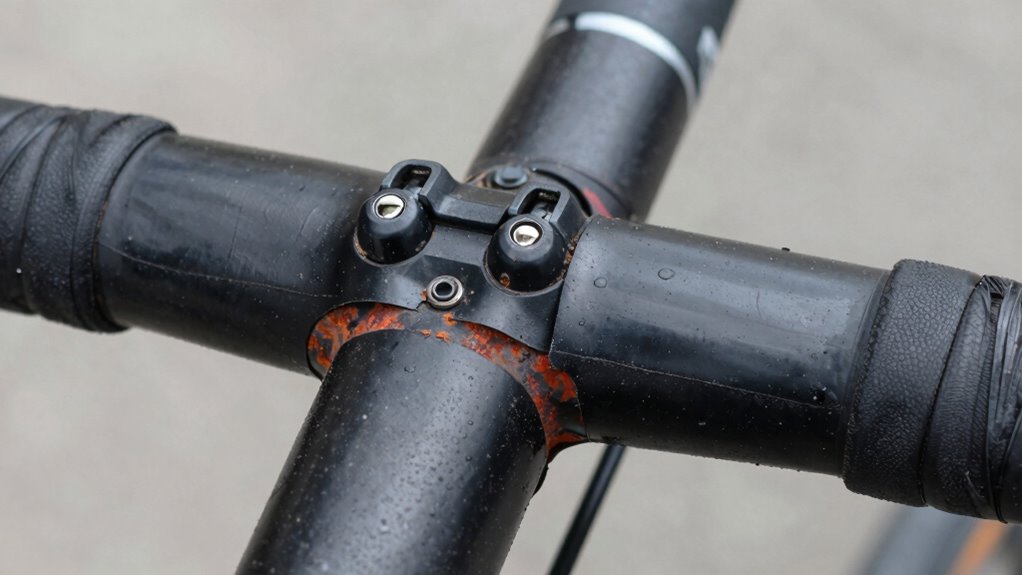
Preventing rust under your bar tape starts with proper maintenance and regular inspections. To avoid handlebar corrosion, you need to keep the area dry and free of moisture buildup. Check the tape adhesive regularly to ensure it’s secure and not trapping dirt or water. Here are key steps to prevent rust:
- Wipe down your handlebars after rides, especially if they get wet.
- Remove old tape periodically to inspect for hidden rust or corrosion.
- Use a light coating of anti-corrosion spray on metal surfaces beneath the tape.
- Ensure proper tape installation, avoiding excessive tape adhesive that can trap moisture.
How to Remove and Replace Your Bar Tape Without Causing Rust

To remove and replace your bar tape without causing rust, start by carefully loosening and taking off the old tape. Next, gently clean any rusted areas to prevent further corrosion. Additionally, consider using protective coatings on metal surfaces to shield them from moisture and rust over time. Applying a rust inhibitor can provide an extra layer of protection, especially if you live in a humid environment. Proper air purifier maintenance ensures that moisture levels around your bike are minimized, reducing the risk of rust formation. Being mindful of metal corrosion and implementing preventive measures can significantly extend the lifespan of your bike components. Also, regularly inspecting the metal surfaces for early signs of rust can help catch issues before they become severe. Finally, reapply the tape properly, ensuring it’s secure and doesn’t trap moisture.
Loosen and Remove Tape
Before removing your bar tape, it’s important to loosen it carefully to avoid damaging the handlebars or causing rust. Gently work around the handlebar grip area, loosening tape adhesion without pulling too hard. This prevents tearing or exposing metal prematurely. To do this effectively:
- Use your fingers or a plastic spudger to lift edges gently
- Avoid metal tools that could scratch or gouge the handlebar
- Start from the ends and work inward, loosening tape gradually
- Keep the tape in one piece if possible, to check for rust-prone spots
- Consulting precious metal investment resources can help you understand how exposure to moisture might affect metal components over time
Taking your time ensures the tape comes off smoothly, reducing the risk of damaging the handlebar or trapping moisture that could lead to rust. Patience preserves both your tape and handlebars.
Clean Rusted Areas Carefully
When dealing with rusted areas on your handlebars, it’s crucial to clean them carefully to avoid further damage or spreading corrosion. Handlebar corrosion can weaken the metal, so gentle cleaning is key. Use a soft brush or fine steel wool to remove loose rust without scratching the surface. Dabbing a rust remover or vinegar solution can help dissolve stubborn spots—just make sure you don’t over-apply, as excess moisture can worsen rust. After cleaning, thoroughly dry the area to prevent new rust from forming. Properly cleaned rust spots make for a smoother, safer tape replacement process, avoiding future issues with handlebar corrosion under your new tape. Incorporating hydrotherapy techniques, such as soaking the handlebars in warm water, can also help loosen rust and make cleaning easier. Additionally, applying a rust-inhibiting protective coating after cleaning can help prevent future corrosion. Being aware of Handlebar corrosion causes can help you take preventative measures to avoid rust recurrence.
Reapply Tape Properly
Removing and replacing your bar tape carefully is essential to prevent rust from reappearing or spreading. When reapplying tape, ensure you clean the handlebar thoroughly, especially around hidden spots prone to rust. Proper bar tape storage can help maintain its condition and prevent moisture buildup. To avoid issues during handlebar customization, follow these tips:
- Use clean hands and tools to handle tape and bars
- Check for rust or moisture before re-taping
- Wrap the tape tightly without over-compressing, which can trap moisture
- Secure tape ends firmly to prevent movement and moisture entry
- Additionally, inspecting the essential oils for maintenance can help preserve the metal parts and keep rust at bay. Regularly applying a corrosion inhibitor can further protect your bike’s components from rust development. Proper bike maintenance routine is also vital to ensure long-term protection against corrosion.
Choosing Rust-Resistant Handlebar Tape and Protecting Your Bars
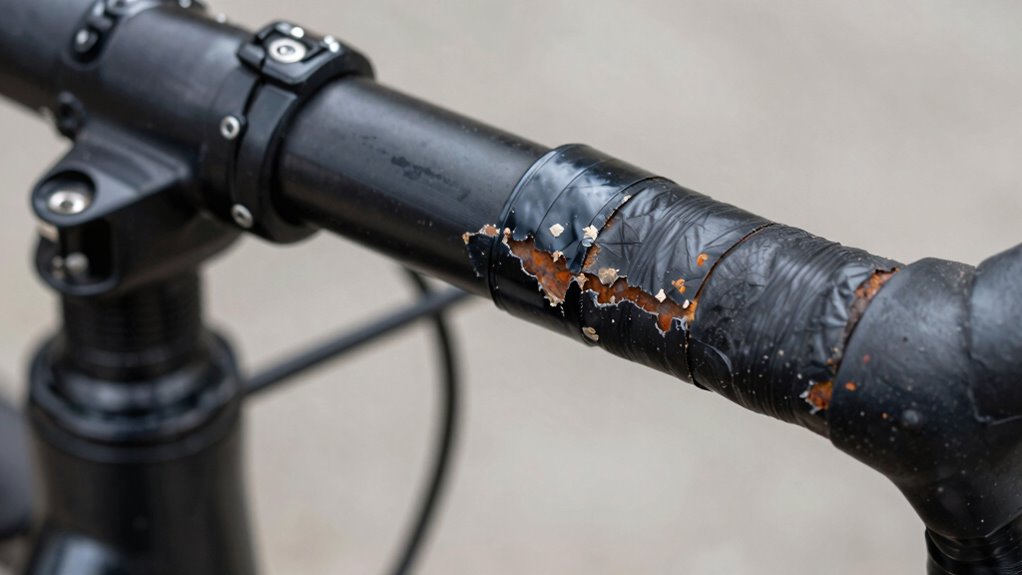
To prevent rust from ruining your handlebar tape, it’s essential to choose materials that resist corrosion and take proactive steps to protect your bars. Opt for handlebar tape made from synthetic materials like silicone or polyurethane, which offer excellent tape durability and are less prone to handlebar corrosion. Avoid natural leather or fabric tapes that absorb moisture and accelerate rust formation. Additionally, consider using a protective coating or anti-corrosion spray on your handlebars before wrapping the tape. Regularly inspect your bars for signs of moisture buildup and wipe them down after rides, especially in wet conditions. Properly selected tape and consistent maintenance can considerably extend the life of your handlebar and keep rust at bay.
What to Do If You Find Rust Under Your Bar Tape
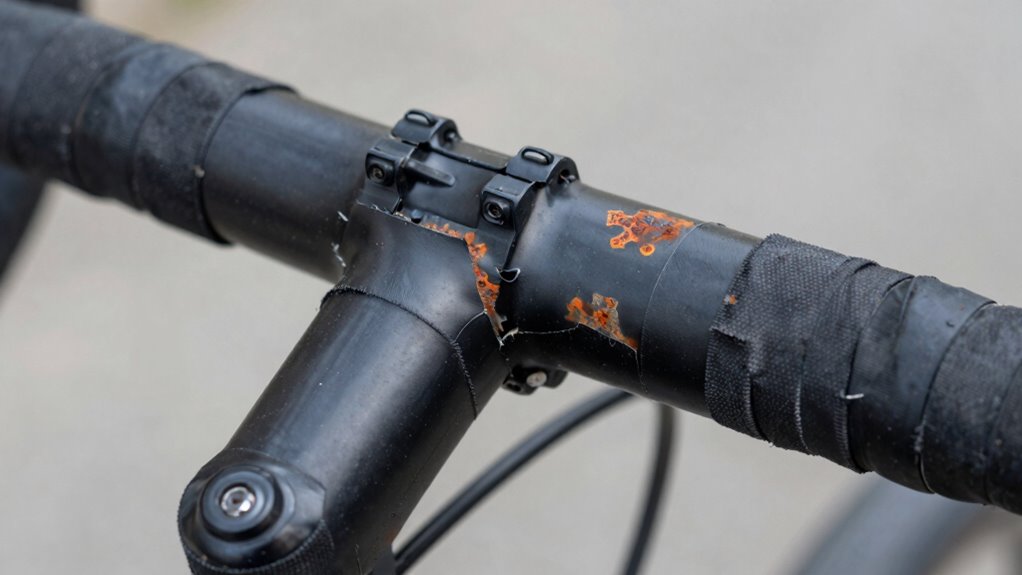
Discovering rust beneath your handlebar tape can be frustrating, but addressing it promptly helps prevent further damage. First, carefully remove the tape to inspect the extent of the rust. Clean the area with a gentle rust remover or a mixture of baking soda and water, using a soft brush to scrub away corrosion. Make certain you dry the handlebar thoroughly to maintain handlebar hygiene. When reinstalling tape, consider using high-quality, rust-resistant tape to prevent future issues. Pay attention to proper tape installation to avoid trapping moisture. Regularly check under your handlebar tape for signs of rust, especially if you ride in wet conditions. Staying proactive ensures your handlebars stay in top shape and prolongs their lifespan.
Frequently Asked Questions
Can Rust Under Bar Tape Cause Handlebar Failure?
Yes, rust under bar tape can cause handlebar failure if left unchecked. Handlebar corrosion weakens the metal structure, making it more prone to cracks or breaks. As tape deteriorates, it can hide rust and moisture, accelerating damage. Regularly inspecting under your bar tape helps catch rust early, preventing potential handlebar failure. Don’t ignore signs of tape deterioration—address rust promptly to guarantee your safety and preserve your bike’s integrity.
Does Weather Affect the Likelihood of Rust Forming Under Tape?
Weather definitely impacts rust formation under your tape. When it’s rainy or humid, moisture accumulation becomes a relentless enemy, creeping into tiny gaps and weakening tape adhesion. Over time, this persistent moisture creates the perfect storm for rust to develop unnoticed beneath your handlebar tape, risking damage and failure. So, always check your tape regularly, especially after bad weather, to catch rust early before it causes serious problems.
Are There Specific Bike Types More Prone to Rust Under Tape?
Yes, certain bike types are more prone to rust under tape. If your handlebar material is steel, it’s more vulnerable, especially with improper tape installation allowing moisture to seep in. Aluminum or carbon handlebars are less likely to rust, but if moisture gets trapped under the tape, corrosion can still develop. Regularly check your tape installation and keep the area dry to prevent rust from forming.
How Long Does It Typically Take for Rust to Develop Unnoticed?
Rust can develop unnoticed in just a few weeks if you delay inspections. At first, it’s hidden beneath the tape, with rust visibility minimal or absent, making it easy to overlook. Over time, moisture accumulates, and corrosion sneaks in, slowly compromising your bike’s integrity. Regularly check under your bar tape, especially after rainy rides, so you catch rust early—before it becomes a costly, hidden problem.
Is Professional Maintenance Required to Remove Rust Safely?
You don’t always need professional maintenance to remove rust safely. Regular rust prevention, like inspecting your bike and replacing the tape when it shows signs of wear, helps prevent rust from developing unnoticed. If rust appears, gently clean it with a rust remover or sandpaper, then apply protective coating. Doing this yourself saves money and keeps your bike in top shape, but seek professional help if the rust is extensive or stubborn.
Conclusion
If you ignore rust under your bar tape, you risk weakening your handlebars and compromising safety. Think of it like a hidden leak in a boat—you might not see the damage until it’s too late. Regularly check beneath your tape, address rust promptly, and choose resistant materials. By staying vigilant, you keep your ride smooth and safe, preventing small issues from turning into costly repairs. Stay proactive to enjoy trouble-free cycling sessions.