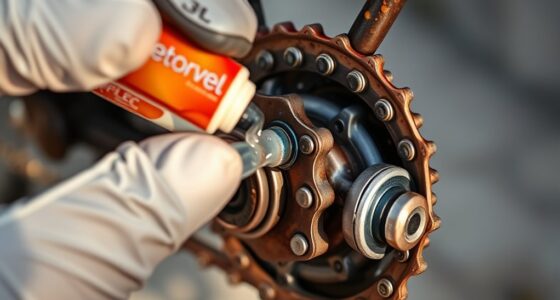
To fix rusty spokes and nipples, start by inspecting your wheels for surface rust in areas prone to moisture. Use a wire brush or steel wool to remove loose rust, then wipe the area with a damp cloth. Apply a rust inhibitor or lubricant to protect against future corrosion. If rust is severe, consider replacing the affected spokes or nipples with corrosion-resistant parts. Keep your wheels maintained to prevent ongoing issues—continue exploring for more expert tips.
Key Takeaways
- Inspect spokes and nipples regularly for surface rust and signs of corrosion.
- Remove rust with a wire brush or steel wool, then clean and apply rust-inhibiting coatings.
- Use rust-resistant lubricants or sprays to prevent moisture accumulation on metal parts.
- Replace severely corroded spokes and nipples with coated or corrosion-resistant parts.
- Maintain proper wheel tension and keep wheels dry to prevent future rust formation.
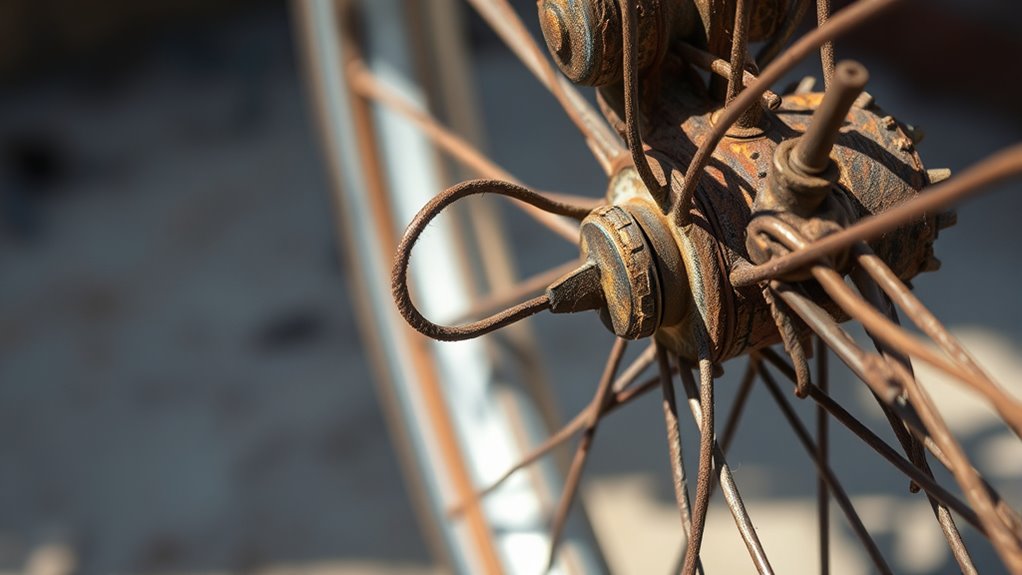
Rusty spokes and nipples can compromise your bike’s performance and safety if left unaddressed. Over time, exposure to moisture and dirt causes these metal parts to corrode, weakening their integrity and increasing the risk of wheel failure. To keep your bike riding smoothly, you need to regularly assess and maintain these components. Start by inspecting your spokes and nipples for rust, paying close attention to areas where moisture tends to accumulate. If you spot surface rust, don’t ignore it; cleaning and treating these parts promptly can prevent further deterioration. You can use a wire brush or steel wool to remove loose rust, then wipe the area clean with a damp cloth. Applying a corrosion resistant coating afterward helps protect the metal from future rust, extending the lifespan of your wheel components.
Inspect rusted spokes and nipples; clean with a wire brush, then apply protective coating to extend wheel life.
In addition to cleaning, consider preventive measures like applying a rust-inhibiting spray or lubricant designed for bike parts. These products create a barrier against moisture and help maintain the tension of your spokes, which is essential for true wheel alignment. If the rust is severe and the spokes or nipples are compromised beyond simple cleaning, replacing them might be necessary. When replacing, opt for corrosion resistant coatings on new parts, such as zinc or nickel plating, which resist rust and corrosion much better than standard steel. This proactive approach reduces the frequency of maintenance needed and keeps your wheels true longer.
Taking care of rusty spokes and nipples isn’t just about aesthetics; it’s about safety and performance. A well-maintained wheel ensures smooth rides, better handling, and reduces the chance of sudden failures while you’re on the road. Regularly inspect your wheels, especially after riding in wet or muddy conditions. Tighten loose nipples to maintain proper spoke tension—uneven tension can cause wheel wobble or rim damage. If you’re not comfortable doing these repairs yourself, visit a bike shop for professional assistance. They can true your wheels and replace any severely corroded spokes or nipples efficiently.
Lastly, preventive maintenance is your best defense. Use rust-resistant coatings on new wheel components, keep your bike stored in a dry place, and regularly clean and lubricate your chain and other moving parts. Rusty chain maintenance goes hand-in-hand with caring for your spokes and nipples, since a well-lubricated chain reduces the chance of rust spreading to other parts. Proper corrosion protection and maintenance techniques can significantly extend the lifespan of your bike’s wheel components. By staying proactive and using protective coatings, you’ll keep your bike safer and performing at its best for miles to come.
Frequently Asked Questions
Can Rusty Spokes Be Safely Reused After Cleaning?
Yes, you can safely reuse rusty spokes after cleaning if you focus on rust prevention. First, remove all rust thoroughly with a wire brush or rust remover. Check the spoke material choices—stainless steel resists rust better. Once cleaned and inspected for cracks or damage, apply a rust-inhibiting coating. Proper maintenance extends the lifespan of your spokes, ensuring they stay strong and reliable for your bike or wheel project.
What Are the Best Rust Removers for Bicycle Spokes?
For rust removal, you wanna choose the best rust removers that contain rust converters or rust inhibitors. These products transform rust into a stable compound and prevent future corrosion, making your spokes last longer. Look for options like WD-40 Specialist Rust Remover or Evapo-Rust, which are effective and easy to use. Applying these regularly keeps your spokes clean, protected, and ready for smooth riding.
How Long Does a Spoke Rust Repair Typically Last?
A rust repair on bicycle spokes typically lasts between six months to a year, depending on your rust prevention efforts. To maximize spoke longevity, regularly clean and dry your wheels, apply protective coatings, and avoid exposure to moisture. Proper maintenance helps prevent future rust buildup, ensuring your spokes stay strong longer. Keep an eye on any signs of rust and address them promptly to extend the lifespan of your repair and maintain bike performance.
Is It Necessary to Replace All Rusted Nipples or Only Some?
You should substitute only the rusted nipples to maintain your wheel’s integrity, but consider nipple replacement if multiple are heavily corroded. Doing so helps with rust prevention and ensures even tension across spokes. Replacing all rusted nipples prevents future issues and extends wheel life. Regular inspection and maintenance are key, and upgrading to corrosion-resistant nipples can save you from frequent repairs.
Are There Preventive Measures to Avoid Future Rust Buildup?
Did you know that over 60% of rust issues could be prevented? To avoid future rust buildup, you should apply protective coatings on your bike parts and control humidity levels in storage areas. Using rust-resistant lubricants and keeping your bike dry will notably extend its lifespan. Regular inspections and maintenance also help catch rust early, preventing it from spreading and causing more extensive damage.
Conclusion
So, next time you notice rusty spokes and nipples, remember that a simple fix can save your ride. Sometimes, a quick clean and a dab of lubricant are all it takes to keep everything rolling smoothly. Funny how a little rust can remind you of the importance of regular maintenance, isn’t it? With a bit of effort, you might just discover that your bike rides better than ever—sometimes, the smallest fixes make the biggest difference.