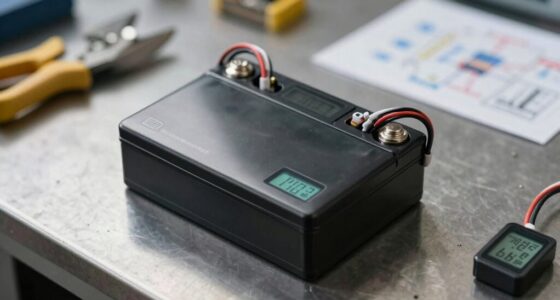
To build a safer battery corner, choose a stable, non-flammable surface like concrete and keep it organized in a dedicated space away from flammable materials. Make certain good ventilation to disperse hydrogen gas and install smoke detectors. Keep a fire extinguisher nearby and regularly inspect batteries for damage or leaks. Maintain a tidy area and use proper storage for tools and supplies. Following these safety tips helps protect your garage—continue exploring for more essential safety steps.

Get sports gear delivered free with Prime
- Fast, free delivery on millions of items
- Prime Video, Amazon Music and more included
- Member-only deals all year
Key Takeaways
- Select a dedicated, non-flammable, well-ventilated area away from combustible materials.
- Install smoke detectors and ensure proper ventilation to disperse hydrogen gases safely.
- Use fire-resistant surfaces and keep a suitable fire extinguisher nearby for electrical fires.
- Regularly inspect batteries, connections, and cables for corrosion, damage, or leaks.
- Keep tools organized, maintain a tidy space, and separate flammable materials from batteries.

Creating a dedicated, secure space for your batteries in the garage is vital for safety and efficiency. When you set up a specific battery corner, you minimize risks associated with accidental damage, leaks, and electrical hazards. Proper organization ensures that your batteries are easily accessible for regular battery maintenance, which is essential for prolonging their lifespan and ensuring safe operation. By keeping your batteries in a designated area, you can quickly spot potential issues like corrosion, swelling, or leaks, preventing small problems from escalating into dangerous situations.
To build a safer battery corner, start by selecting a stable, non-flammable surface—preferably concrete or a fire-resistant mat—that can withstand any potential leaks or spills. Avoid placing batteries directly on wooden shelves or papered surfaces, as these materials can easily catch fire if a leak occurs or if sparks happen during maintenance. Make sure the area has good ventilation; batteries, especially lead-acid types, can emit hydrogen gas during charging, which is highly flammable. Proper airflow reduces the risk of gas buildup, decreasing the chance of fire or explosion. Additionally, ensuring proper ventilation helps disperse flammable gases and maintain a safer environment.
Incorporate fire safety measures into your setup. Keep a fire extinguisher rated for electrical and chemical fires nearby, and ensure you know how to use it effectively. Avoid storing flammable materials, such as gasoline, paint, or cleaning agents, in the battery area. Instead, designate a separate storage space for these items to prevent accidental ignition. Installing smoke detectors in your garage adds an extra layer of protection, alerting you immediately if a fire starts. Regularly check the batteries for corrosion or damage, and clean the terminals with a wire brush and baking soda solution to prevent electrical faults or leaks that could lead to fires. Proper ventilation is critical for dispersing potentially explosive gases and maintaining a safe environment. Good battery maintenance also involves inspecting cables and connections for fraying or loose terminals, which can generate sparks or heat. Always disconnect batteries properly before cleaning or performing maintenance, and wear protective gloves and goggles to prevent contact with corrosive substances. Label your batteries clearly and organize tools nearby so you don’t have to rummage through clutter when working on them. Keeping the area tidy reduces the chance of accidental short circuits or knocking over batteries, which could cause leaks or sparks. Regularly inspecting your setup and understanding battery safety measures can significantly minimize the risk of accidents. Additionally, consider using proper storage techniques to prevent accidental spills and damage.
garage fire extinguisher for electrical fires
As an affiliate, we earn on qualifying purchases.
As an affiliate, we earn on qualifying purchases.
Frequently Asked Questions
What Types of Batteries Are Safest for Garage Storage?
You should opt for sealed lead-acid or lithium-ion batteries, as their chemistry makes them safer for garage storage. These batteries are less prone to leaks and emit fewer harmful gases. Always store them in sturdy, non-conductive storage containers to prevent short circuits and spills. Proper ventilation and avoiding extreme temperatures also help guarantee safety, reducing the risk of fire or chemical exposure in your garage.
How Often Should I Inspect Stored Batteries for Safety?
Think of your stored batteries as silent guardians that need regular check-ins. You should inspect them at least once a month, looking for signs of corrosion, leaks, or swelling. Proper battery maintenance and storage tips help prevent hazards. By routinely checking your batteries, you guarantee their strength and safety, keeping your garage secure. Regular inspections act as a safeguard, preserving your energy sources and peace of mind.
Are There Specific Fire Extinguishers Recommended for Battery Fires?
For battery fire safety, you should use Class D fire extinguishers, specifically designed for metal fires, or multi-purpose ABC extinguishers that work on various types of fires. These extinguishers are recommended because they effectively suppress battery fires without causing additional hazards. Always keep the appropriate fire extinguisher nearby in your garage’s battery corner, and make sure you know how to use it properly to protect yourself and your property.
Can I Store Multiple Batteries Together Safely?
You can store multiple batteries together safely if you prioritize proper storage organization and battery disposal. Keep them in a cool, dry place away from flammable materials, and make certain they don’t touch each other to prevent short circuits. Use designated containers for each battery type, and regularly check for leaks or damage. Proper storage organization minimizes risks, and adhering to battery disposal guidelines helps prevent dangerous accidents.
What Are Signs of a Failing or Leaking Battery?
You’ll notice signs of a failing or leaking battery through corrosion around the terminals or battery case. Acid leaks may appear as white, crusty deposits or a bluish-green residue. If you see these, it’s a clear warning that the battery is compromised and may be dangerous. Regularly inspect your batteries, and if you detect corrosion or leaks, handle them carefully and replace the battery promptly to guarantee safety.
Conclusion
Creating a safer battery corner is like planting a sturdy tree—protecting everything around it. By following these simple steps, you’ll minimize risks and guarantee your garage remains a secure space. Regular inspections, proper ventilation, and organized storage are your best tools. Remember, safety isn’t just a one-time effort; it’s a continuous commitment. With a little care, you’ll turn your battery corner into a fortress—strong, reliable, and ready for any challenge.
Halloween Picks
halloween
As an affiliate, we earn on qualifying purchases.