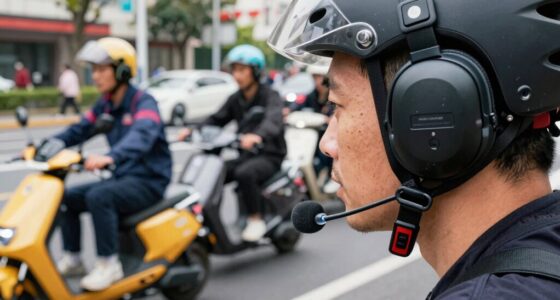
Smart glasses for riders offer exciting benefits like navigation and alerts right in your line of sight, making rides safer and more convenient. However, they still raise questions about privacy and security, since they can record sensitive moments and be hacked. Distraction and malfunction risks also remain, potentially compromising safety. Legal and social concerns add to the uncertainty, leaving many doubts about their readiness. Want to understand what’s holding these devices back? Keep exploring to uncover more.

Get sports gear delivered free with Prime
- Fast, free delivery on millions of items
- Prime Video, Amazon Music and more included
- Member-only deals all year
Key Takeaways
- Privacy concerns about data collection, sharing, and potential surveillance remain unresolved.
- Safety risks from distractions and malfunctioning overlays can compromise rider awareness.
- Legal and ethical issues about recording, privacy invasion, and device misuse are still evolving.
- Security vulnerabilities could expose personal information or enable hacking attacks.
- Lack of clear regulations and standards creates uncertainty about responsible use and liability.

Smart glasses are revolutionizing the way riders navigate and stay connected on the road. They offer a glimpse into the future of riding, with augmented reality features that seamlessly overlay directions, alerts, and information directly onto your field of vision. Imagine glancing at your glasses and instantly seeing turn-by-turn navigation, traffic updates, or even incoming calls, all without taking your eyes off the road. This technology promises increased safety and convenience, but it also raises serious questions about privacy and safety. As you adopt these devices, you might wonder who is collecting your data and how it’s being used. With augmented reality, your glasses can record and transmit what you see, potentially exposing personal moments or sensitive surroundings to third parties. Privacy concerns aren’t just about personal data; they also involve the security of your device itself. Hackers could exploit vulnerabilities to access your location history or intercept communications, making your riding experience vulnerable to cyber threats.
Despite the enticing benefits, many riders are hesitant to fully embrace smart glasses because of these privacy issues. You could find yourself constantly questioning whether your device is listening or tracking you, which can be unsettling. Manufacturers promise secure encryption and privacy settings, but no system is completely immune to breaches. This uncertainty makes it difficult to trust the technology fully, especially when it involves real-time data sharing with third-party services. Additionally, augmented reality can sometimes distract rather than assist. While the overlays aim to keep your focus on the road, they can also clutter your view or mislead you if the information isn’t accurate or malfunctions. This risk of distraction, combined with privacy concerns, makes many riders cautious about integrating smart glasses into their daily rides. Furthermore, the security vulnerabilities associated with connected devices heighten these concerns, as they could be exploited by malicious actors. Ensuring data security in these devices is an ongoing challenge that needs more attention from manufacturers and regulators. Cybersecurity measures are crucial to protecting users from potential threats, but they are often complex and evolving.
Concerns about device hacking and unauthorized access are central to the debate over adopting this technology. Moreover, there’s the issue of legality and etiquette. Laws surrounding the use of recording devices while riding are still evolving, and some areas may restrict or regulate their use. You may worry about inadvertently breaking laws or invading someone’s privacy with these augmented displays. Then there’s the social aspect—wearing high-tech devices might feel intrusive or disconnect you from the environment and people around you. As much as smart glasses seem to offer convenience, the potential for misuse or unintended consequences keeps the technology under scrutiny. Until developers and regulators address these issues transparently, many riders will remain hesitant. In short, while smart glasses hold exciting promise, their current state leaves you questioning whether the benefits outweigh the risks, making them more of a provocative innovation than an everyday essential.
smart glasses for riding with navigation
As an affiliate, we earn on qualifying purchases.
As an affiliate, we earn on qualifying purchases.
Frequently Asked Questions
How Do Smart Glasses Improve Safety for Riders?
Smart glasses improve safety for riders by providing augmented reality overlays that display vital information directly in your line of sight, reducing distractions. They enable hands-free communication, so you can stay connected without taking your focus off the road. This real-time data helps you make better decisions quickly, enhancing awareness of surroundings and potential hazards. Overall, smart glasses promote safer riding by keeping essential info accessible and your hands free.
Are Smart Glasses Compatible With All Motorcycle Helmets?
Smart glasses aren’t compatible with all motorcycle helmets. Helmet compatibility depends on the helmet’s design and size adjustments. You’ll need to check if your helmet can accommodate smart glasses comfortably without compromising safety or fit. Some helmets have specific slots or mounts, while others might require adapters. Always verify the compatibility and confirm proper fit before riding, so your smart glasses don’t interfere with your helmet’s protective features.
What Is the Battery Life of Smart Glasses During Long Rides?
During long rides, the battery life of smart glasses varies based on battery efficiency and power management. Typically, they last between 4 to 8 hours, but this depends on usage features like display brightness and connectivity. To extend their lifespan, you should optimize power management settings, turn off unnecessary features, and carry a portable charger. Good battery efficiency and smart power management are key to ensuring your smart glasses last throughout your ride.
How Do Smart Glasses Handle Wet or Muddy Conditions?
Smart glasses handle wet or muddy conditions with water resistance and mud protection features. You’ll find that many models are designed with sealed seals and durable materials to keep out water and dirt, ensuring they still function during rain or muddy trails. However, it is crucial to check specific IP ratings because some glasses perform better in extreme conditions, giving you peace of mind without compromising your ride.
Can Smart Glasses Be Customized for Individual Rider Preferences?
Think of smart glasses as a tailored suit for your ride—fully customizable to fit your style and needs. With augmented reality features, you can tweak displays, controls, and overlays to match your preferences. Many brands offer adjustable settings, ensuring a custom fit for your vision and comfort. So yes, these high-tech goggles can be personalized, making your riding experience as seamless and unique as your fingerprint.
Conclusion
As a rider, you might feel like smart glasses are your new best friend, offering navigation and communication at a glance. But remember, just like trying to navigate a foggy morning, these devices still cloud some questions—privacy concerns, safety risks, and tech reliability. Until these hurdles clear, smart glasses remain more of a tantalizing horizon than a fully realized road companion. Keep your eyes open; the future’s still riding in the distance.
Halloween Picks
halloween
As an affiliate, we earn on qualifying purchases.