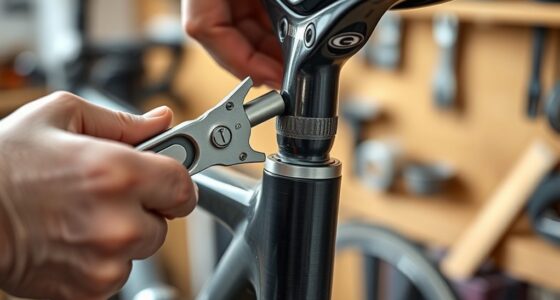
To stop crushing your carbon bike in 5 minutes, always set your torque wrench according to manufacturer specs and double-check the setting before tightening. Avoid guessing or relying solely on feel, as over-tightening can cause cracks or damage. Regularly calibrate your wrench for accuracy, and use smooth, controlled force. Following these simple steps keeps your carbon components safe and secure. Keep going, and you’ll discover more tips to master your bike maintenance with confidence.
Key Takeaways
- Always use the manufacturer’s recommended torque settings for carbon components to prevent damage.
- Regularly calibrate your torque wrench to ensure accurate and consistent tightening.
- Set and lock the torque wrench to the specified value before tightening any bolts.
- Avoid applying force beyond the recommended torque to prevent crushing or cracking carbon parts.
- Double-check all torque settings and proper tool operation before finishing your bike maintenance.
Why Proper Torque Settings Protect Your Carbon Components
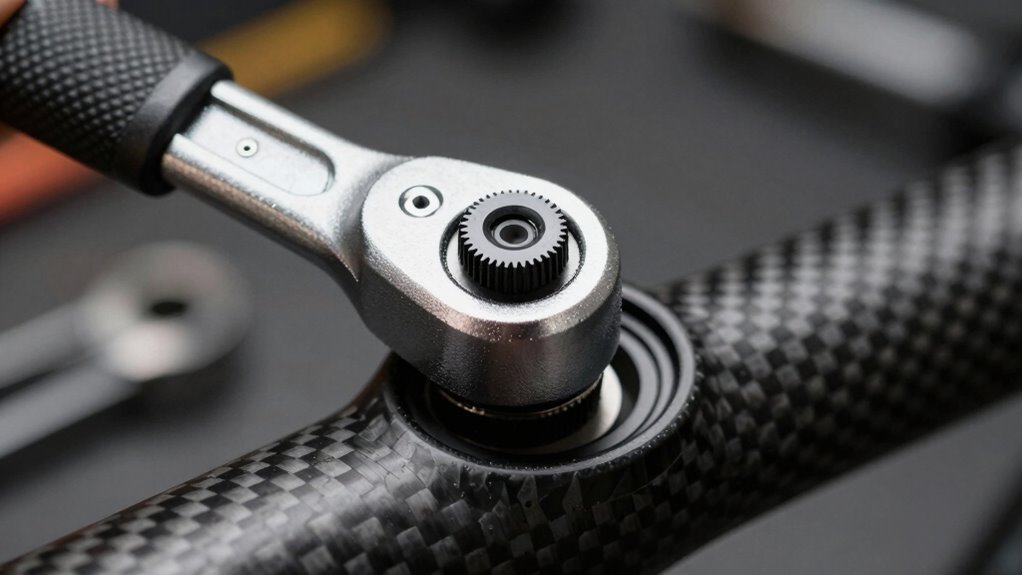
Using the correct torque settings is essential because it prevents damage to your carbon bike components. Carbon fiber is lightweight and strong but also delicate if overtightened. Applying too much torque can cause cracks or fractures, compromising the component’s integrity. Conversely, too little torque can result in loose parts that shift or cause accidents. Torque safety guarantees each bolt is tightened just enough to hold parts securely without risking damage. Proper torque settings distribute pressure evenly, protecting your carbon fiber components from stress and fatigue over time. Additionally, controlled torque application is crucial for maintaining the long-term durability of your bike. When using a torque wrench, understanding torque specification ensures you apply the correct amount of force for each bolt. This knowledge helps prevent material fatigue caused by improper tightening techniques. Properly calibrated tools and awareness of material properties help prevent unnecessary stress on your carbon components during assembly. Recognizing the importance of precise torque can make a significant difference in avoiding costly repairs or replacements. By following recommended torque values, you maintain your bike’s performance and longevity. Remember, precision in torque application isn’t just about avoiding damage—it’s about keeping your ride safe and reliable.
How to Set Your Bicycle Torque Wrench Correctly
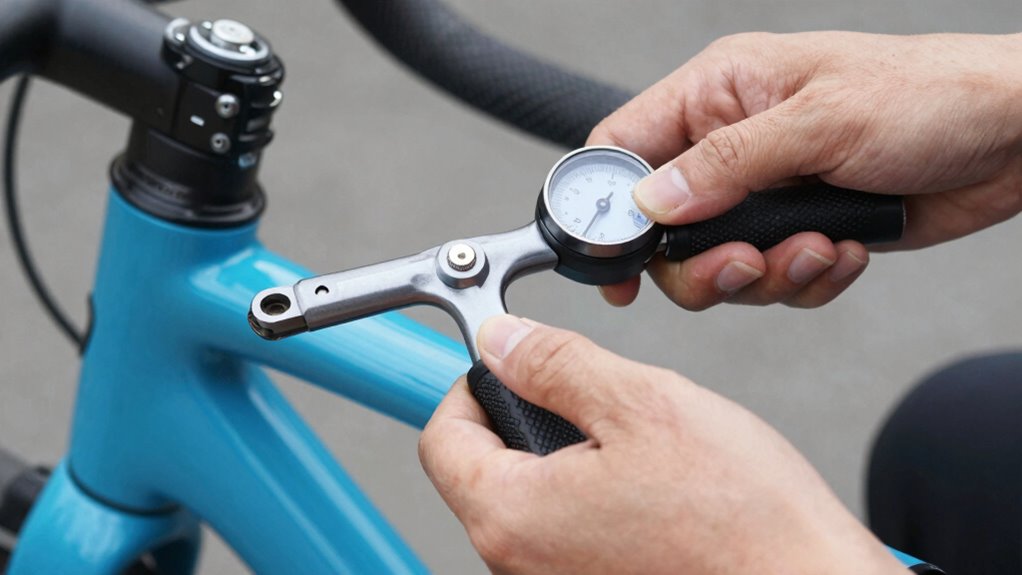
Setting your bicycle torque wrench correctly is essential for ensuring accurate tension and preventing damage to your components. Begin by checking the torque calibration of your wrench, ensuring it matches the manufacturer’s specifications. Proper calibration guarantees your readings are precise and reliable. Next, consider wrench ergonomics; grip the handle comfortably and ensure your hand is positioned for consistent application of force. Turn the adjustment dial or scale to the recommended torque value, locking it in place if necessary. Always double-check your settings before use. Using an ergonomically designed wrench minimizes fatigue and improves control, helping you tighten components accurately. Calibration accuracy is a key factor in reliable torque application. Proper setup not only protects your bike’s carbon parts but also extends the lifespan of your tools and ensures safe, efficient maintenance. Additionally, paying attention to proper tool maintenance can help keep your torque wrench functioning correctly over time.
Common Mistakes That Lead to Over-Tightening and Damage
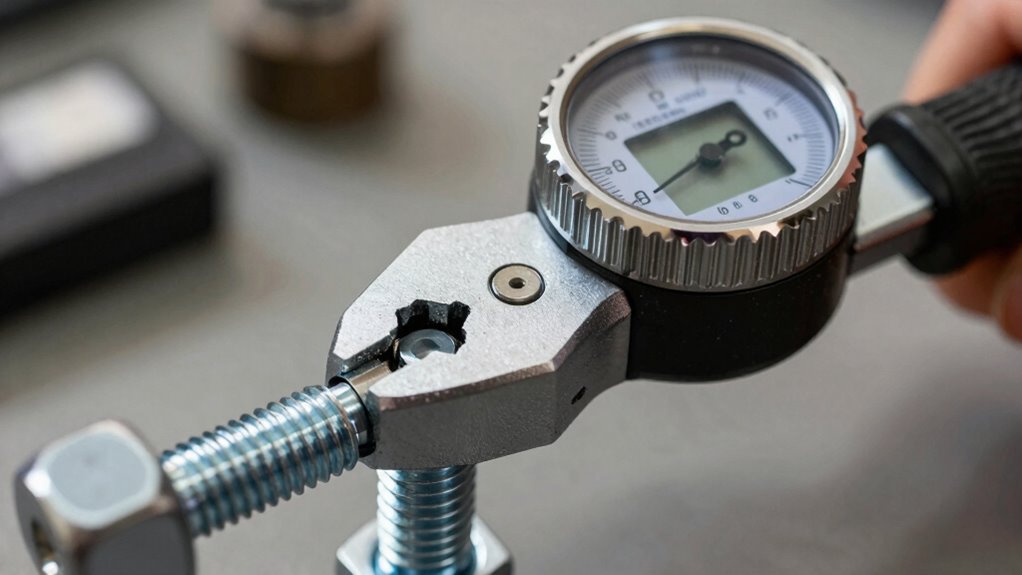
One common mistake that leads to over-tightening is relying solely on feel rather than proper torque settings. When you ignore recommended torque values, you risk damaging carbon components, compromising their safety and longevity. A frequent error is neglecting regular wrench calibration, which can cause inaccurate torque application. If your wrench isn’t calibrated correctly, you might think you’re applying the right amount of force, but in reality, you could be over-tightening and risking carbon damage. Over-tightening not only weakens the material but also reduces the component’s safety. Always verify your wrench’s calibration periodically, especially if you notice inconsistent torque results. Using a torque wrench with accurate calibration ensures proper application and prevents overtightening. Proper torque application guarantees carbon safety and helps prevent costly repairs or replacements caused by overtightening. Additionally, understanding torque specifications for different components can help you avoid common pitfalls and ensure safe, effective tightening. Recognizing the material strength of carbon components is essential for applying the correct torque and avoiding damage. Familiarity with manufacturer’s guidelines can further enhance your confidence and accuracy during assembly. Being aware of proper tightening techniques can also significantly reduce the risk of overtightening and damage.
Tips to Prevent Crushing Carbon When Using a Torque Wrench
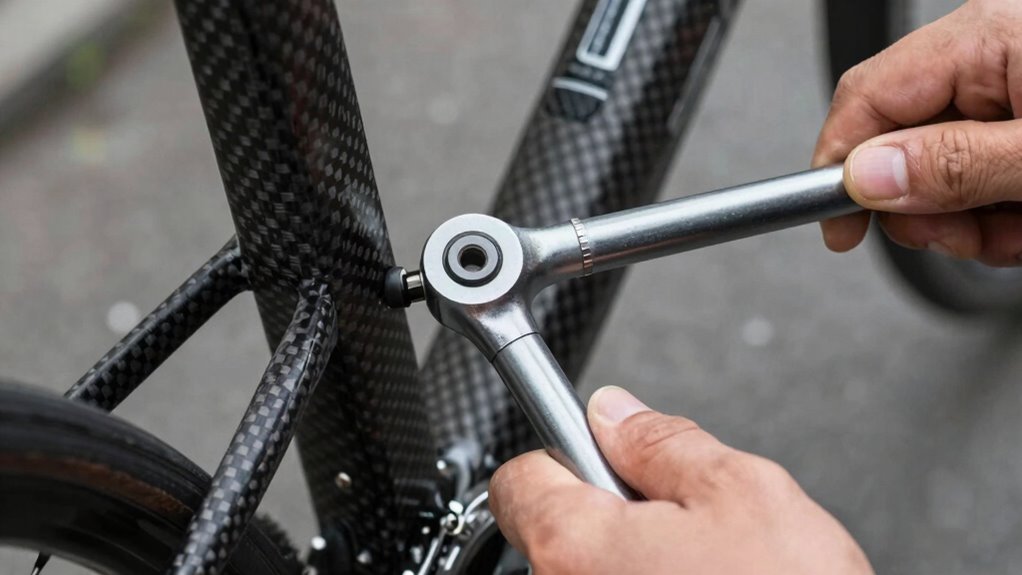
To prevent crushing carbon components when using a torque wrench, it is vital to stay within the manufacturer’s recommended torque specifications and avoid applying excessive force. This guarantees your bike maintenance remains safe and effective. Proper tool calibration is essential; regularly check your torque wrench’s accuracy to prevent over-tightening. Additionally, always use the correct torque settings for carbon parts, as they are more delicate. Being aware of decoding slang can also help you better understand and communicate about bike parts and maintenance. Ensuring you understand reliable power sources and their proper use can help you select the right tools and accessories to avoid damaging sensitive components. Using a torque wrench with smooth operation is crucial to prevent sudden force spikes that can crush carbon. Incorporating outdoor kitchen materials knowledge can help you select the right tools and accessories to avoid damaging sensitive components. For example, understanding the horsepower of electric dirt bikes can guide you in choosing appropriate tools for high-performance maintenance tasks.
Troubleshooting Your Torque Wrench for Accurate Tightening
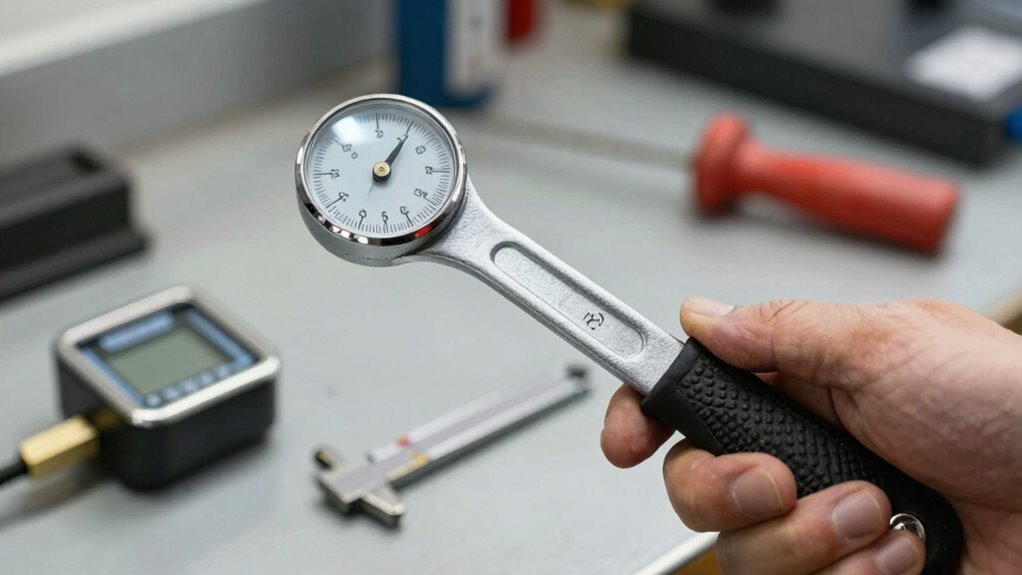
Even with proper calibration and careful use, your torque wrench can sometimes give inaccurate readings. To troubleshoot this, start by checking your calibration techniques—recalibrate if you notice inconsistent torque outputs. Regular calibration ensures your wrench provides precise measurements. Also, examine how you store your wrench; improper wrench storage can lead to misalignment or damage, affecting accuracy over time. Store it in a clean, dry place, preferably in a case or on a hook, avoiding exposure to extreme temperatures or humidity. Additionally, inspect the wrench for visible signs of wear or damage, such as a bent handle or worn-out components. If issues persist, consider professional calibration or replacing parts. Proper maintenance and storage are key to maintaining your torque wrench’s accuracy for reliable tightening every time. Remember, understanding measurement techniques can also help you make more informed decisions about tool investments and maintenance. Incorporating preventive maintenance practices can extend the lifespan of your torque wrench and ensure consistent performance. Furthermore, regularly checking your tool against calibration standards can help identify deviations early. Moreover, familiarizing yourself with common troubleshooting methods can help quickly identify and resolve calibration issues.
Frequently Asked Questions
Can I Use a Torque Wrench on Other Bike Parts Besides Carbon Components?
Yes, you can use a torque wrench on other bike parts made from alternative materials like aluminum or steel. It’s a versatile, multi-use tool perfect for precise tightening without over-tightening delicate components. Just guarantee you set the correct torque specifications for each part to avoid damage. A torque wrench helps protect your bike’s integrity, whether you’re working on carbon, aluminum, or steel, making maintenance safer and more effective.
What Is the Ideal Storage Method for My Torque Wrench?
To keep your torque wrench accurate, store it in a clean, dry environment away from humidity and extreme temperatures. Imagine it resting in a protective case or on a dedicated shelf, not in a toolbox cluttered with tools. Regularly check its calibration schedule, ideally every 6 to 12 months, to guarantee precision. Proper storage prevents damage and maintains the wrench’s reliability when you need it most.
How Do Temperature Variations Affect Torque Wrench Accuracy?
Temperature variations can impact your torque wrench’s accuracy by affecting its internal calibration. Fluctuations in temperature reduce temperature stability, causing readings to become less reliable. To maintain precision, you should regularly check and calibrate your wrench, especially if it’s exposed to different environments. Frequent calibration ensures your torque measurements stay accurate despite temperature changes, so always store your wrench in a controlled environment and adhere to recommended calibration intervals.
Are Digital Torque Wrenches More Reliable Than Manual Ones?
Digital torque wrenches are generally more reliable than manual ones due to their digital accuracy, providing consistent torque readings and easier calibration. You can trust digital models for precise measurements, especially in critical tasks. However, manual torque wrenches can still be highly accurate if properly maintained and calibrated. Your choice depends on your need for convenience and precision, but digital tools often offer greater consistency and ease of use.
How Often Should I Calibrate My Torque Wrench for Optimal Performance?
You should calibrate your torque wrench at least once a year to ensure peak performance maintenance. If you use it frequently or work on critical components, consider more frequent calibration, such as every six months. Regular calibration helps maintain accuracy and prevents over-tightening or damage. Keep track of your calibration schedule, especially if you notice inconsistent torque readings, to ensure your wrench performs reliably when you need it most.
Conclusion
By following these tips, you’ll keep your carbon components safe and sound, avoiding the nightmare of crushing them like a soda can. Think of your torque wrench as a gentle giant—when used correctly, it protects your bike’s delicate parts while giving you peace of mind. Remember, a little attention goes a long way. With proper technique, you’ll ride confidently, knowing your bike’s secrets are safe, and your carbon components will thank you for it.