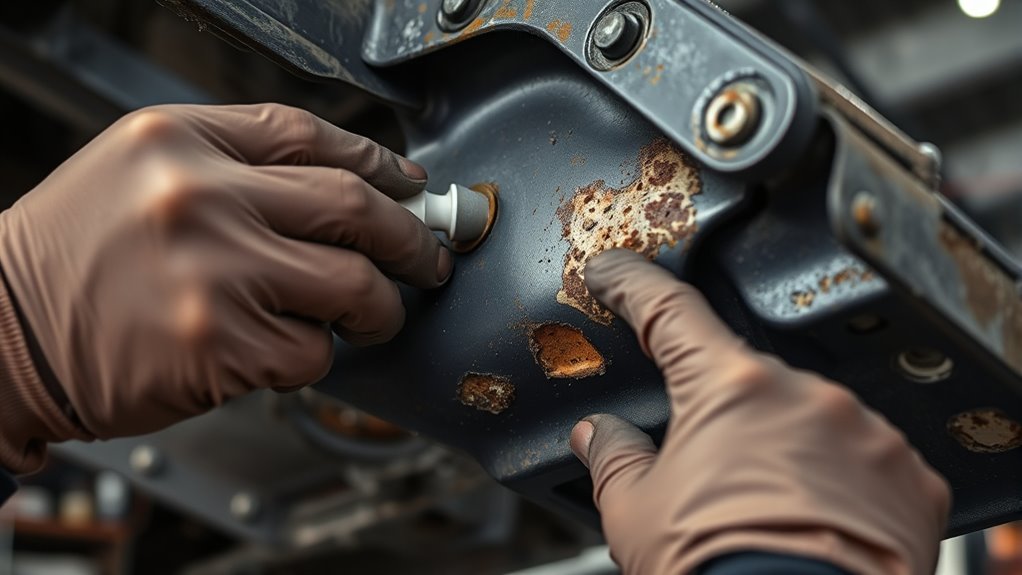

To treat hidden frame rust, start by inspecting your vehicle regularly for soft spots, bubbling paint, or flaky metal. Use a screwdriver to tap suspected areas and drill small inspection holes if needed. Remove loose rust with wire brushes or grinders, then apply rust converter to halt further damage. Seal and protect the area with rust-inhibiting primers and coatings. Approaching rust early extends your vehicle’s lifespan—continuing with proper techniques can keep hidden rust at bay.
Key Takeaways
- Conduct thorough inspections, including tapping and using flashlights to locate soft spots and hidden rust areas.
- Remove rusted sections and weld in new metal to restore structural integrity.
- Apply rust inhibitors, converters, and sealants to prevent further corrosion after cleaning.
- Keep drain holes clear and wash regularly to prevent moisture buildup that accelerates rust.
- Use undercoating sprays and protective coatings to shield the frame from future rust development.
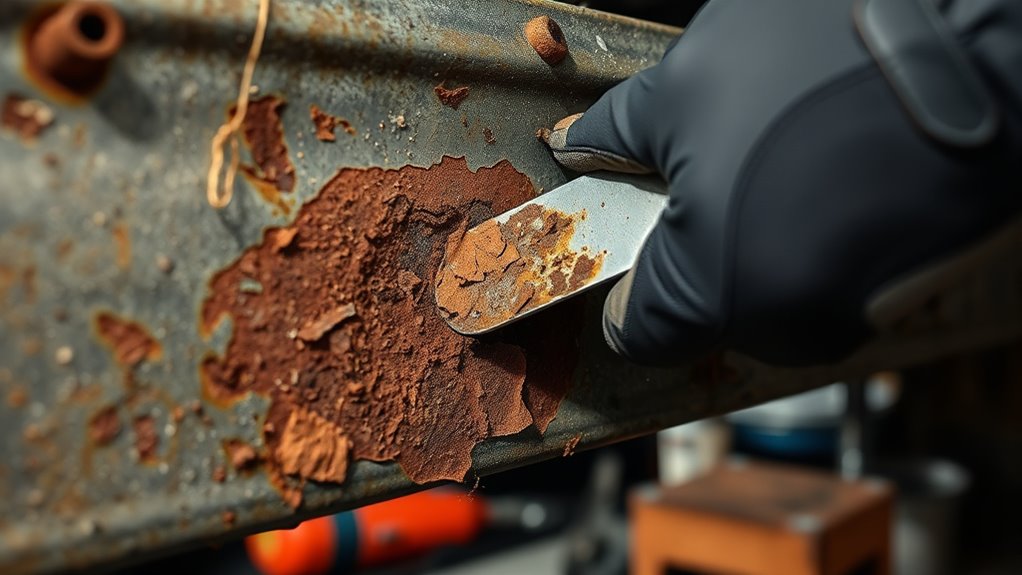
Hidden frame rust can silently weaken your vehicle’s structure if left untreated, often lurking behind panels or inside the frame where it’s hard to see. This kind of rust can be particularly insidious because it develops out of sight, meaning you might not notice any problems until significant damage has occurred. That’s why regular inspections are vital for catching rust early on. Using proper inspection techniques, such as tapping the frame with a screwdriver handle or using a flashlight to look into hard-to-reach areas, can help you identify signs of rust before they become serious. You should also check for bubbling paint, soft spots, or flaky metal, which indicate underlying corrosion. When inspecting, pay close attention to seams, joints, and areas exposed to moisture or road salt, as these are common spots for hidden rust to take hold. Additionally, staying informed about automated inspection tools can improve detection accuracy and efficiency.
Once you identify rust, taking steps to prevent further corrosion is essential. Rust prevention methods include applying rust-inhibiting primers and sealants that create a barrier against moisture. Regularly washing your vehicle, especially during winter or in salty environments, helps remove corrosive substances that accelerate rust formation. Waxing your car can also add a protective layer, reducing the chances of moisture reaching vulnerable spots. If you find early signs of rust, addressing it promptly with rust converter products can stop the process from spreading. These chemicals chemically convert rust into a stable compound, preventing it from worsening. For more severe cases, you might need to remove rusted sections and weld in new metal, but that’s best left to professionals.
Preventing hidden frame rust also involves strategic maintenance routines. Keep drain holes clear so water doesn’t pool inside frame cavities, and regularly inspect areas prone to collecting debris or moisture. Using undercoating sprays or protective coatings can further shield your vehicle from corrosive elements, especially if you frequently drive on salted roads or in humid environments. Remember, early detection and consistent rust prevention methods can save you from costly repairs down the line. Staying proactive with inspections and applying protective treatments ensures your vehicle remains safe and structurally sound. By adopting these practices, you’re not just prolonging the life of your car but also maintaining its safety, performance, and resale value.
Frequently Asked Questions
How Can I Detect Hidden Frame Rust Early?
To detect hidden frame rust early, regularly inspect your vehicle’s underside and wheel wells for discoloration, bubbling paint, or soft spots. Use a flashlight and mirror to check hard-to-see areas. Keep up with rust prevention by applying protective coatings and sealants, especially in vulnerable spots. Reinforce the frame if you notice any weakness, and address rust promptly to prevent costly repairs later. Catching rust early helps maintain your vehicle’s safety and longevity.
What Tools Are Best for Inspecting Concealed Rust?
Did you know that 75% of vehicle failures are linked to rust? To inspect concealed rust effectively, use a borescope or a mirror with a flashlight for hard-to-reach areas. These tools help you identify corrosion early, so you can apply rust prevention measures and corrosion barriers before damage worsens. Regular inspections with these tools keep your vehicle safer and extend its lifespan.
Are DIY Methods Effective for Treating Hidden Rust?
DIY methods can be effective for treating hidden rust if you’re thorough and patient. You should start by inspecting the area carefully, using tools to remove loose rust and applying rust converters or primers to prevent further corrosion. Regular DIY maintenance, like applying rust prevention products, helps keep your vehicle protected. However, for severe or deeply hidden rust, professional treatment guarantees lasting results. Consistent care is key to maintaining your vehicle’s integrity.
How Often Should Hidden Rust Be Checked?
You should check for hidden rust at least every six months to maintain rust prevention effectively. Regular corrosion inspection helps you catch any signs of rust early, preventing it from spreading further. By staying vigilant, you can address rust issues promptly, saving you money and effort in the long run. Consistent inspections guarantee the integrity of your vehicle’s frame, keeping it safe and durable for years to come.
Can Hidden Rust Significantly Affect Vehicle Safety?
Yes, hidden rust can critically affect your vehicle’s safety by compromising its structural integrity. Rust prevention is vital, especially in hidden areas like the frame, because corrosion weakens key components without visible signs. Regular inspections help catch rust early, allowing you to take action before it becomes a safety hazard. Neglecting this can lead to costly repairs and potential accidents, so stay vigilant and address hidden rust promptly.
Conclusion
Don’t let hidden rust silently steal your vehicle’s strength. By regularly inspecting and treating those unseen spots, you’re not just preserving your car—you’re protecting your investment and safety. Remember, ignoring these hidden threats is like leaving a ticking time bomb; it only takes one overlooked spot to cause major damage. Stay vigilant, treat rust early, and keep your ride solid for miles to come. After all, a well-protected car is a car that lasts.