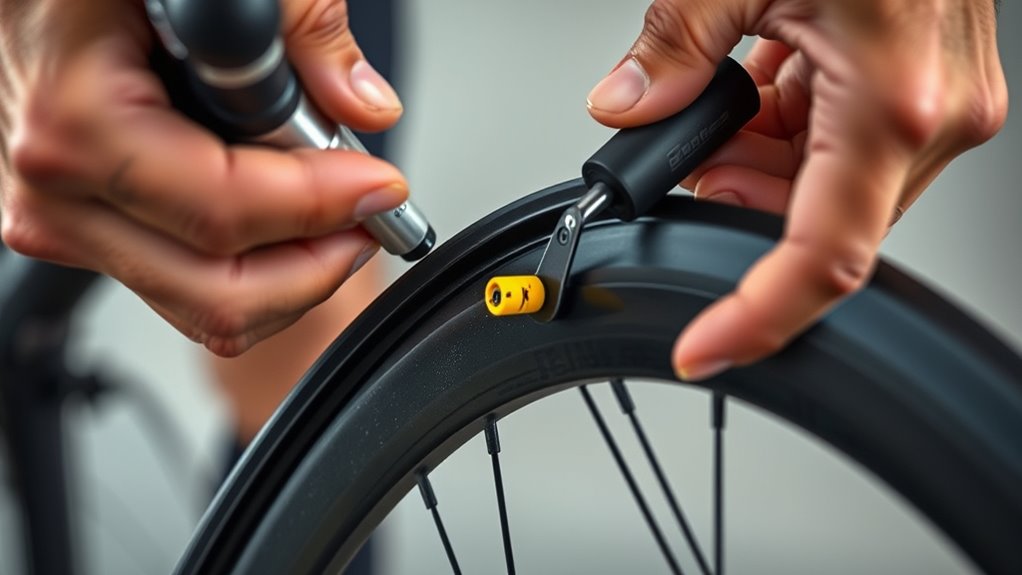

To avoid overlooking tubeless tire setup, carefully inspect your wheels and guarantee the rim tape covers all spoke holes smoothly. Choose the right sealant and apply it evenly inside the tire, then make sure the bead seats perfectly for a secure fit. Regularly check valve tightness and sealant levels, and troubleshoot leaks promptly. focus on these key points, and you’ll master tubeless setup—keep going, and you’ll discover even more expert tips.

Get sports gear delivered free — and shop member deals
- Fast, free delivery on millions of items
- Access to Prime Big Deal Days deals on October 6–7
- Prime Video, Amazon Music and more included
Key Takeaways
- Ensure rim tape fully covers spoke holes and is installed smoothly without wrinkles for airtight sealing.
- Use compatible valves that fit securely and seal tightly with the rim tape to prevent leaks.
- Properly apply sealant, evenly distribute inside the tire, and regularly check and top off sealant levels.
- Confirm bead seating is complete and re-seat if leaks or pressure drops occur during setup.
- Regularly inspect valve cores, bead contact, and sealant condition to maintain optimal tubeless performance.
As an affiliate, we earn on qualifying purchases.
Preparing Your Wheels and Tires for a Flawless Seal

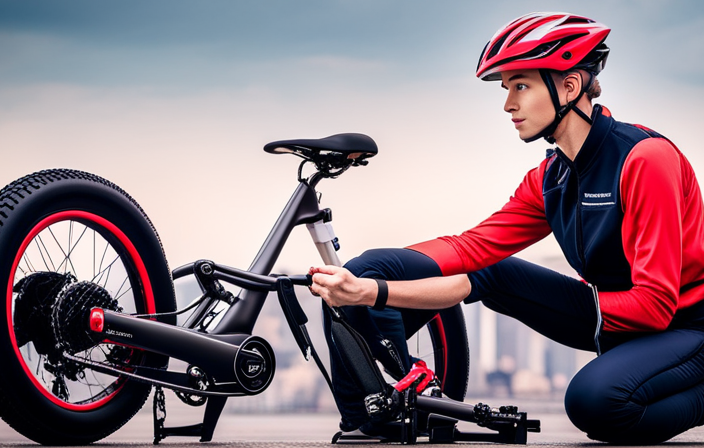
To guarantee a perfect seal when setting up tubeless tires, start by thoroughly inspecting your wheels and tires. Check valve compatibility to ensure your valve fits securely and matches your rim type; incompatible valves can cause leaks. Next, focus on rim tape selection—use high-quality, tubeless-specific tape that properly covers the spoke holes. Proper rim tape prevents air loss and keeps sealant contained. Make sure the tape is applied smoothly, without wrinkles or gaps, to create an airtight barrier. Confirm that the valve hole is properly sealed with the tape, allowing the valve to seat firmly. This preparation is vital for a reliable seal and a smooth tubeless setup, setting the foundation for effective sealing and ride performance. Additionally, understanding the signs of spoilage in your sealant can help you maintain optimal performance over time.
Selecting the Right Sealant and Applying It Properly

Choosing the right sealant is key to maintaining an airtight, reliable tubeless setup. You want a sealant that offers good sealant longevity, meaning it lasts several months without drying out or losing effectiveness. When applying, use proper application techniques—shake the bottle well, pour directly into the tire, and ensure even distribution by rotating the wheel. Proper application helps prevent leaks and ensures the sealant coats the inside of the tire evenly. Avoid overfilling, which can cause clumping, or underfilling, which reduces sealing capacity. Regularly check the sealant level and top off as needed. Selecting high-quality sealant and applying it correctly guarantees a smoother ride, fewer flats, and less hassle on the trail. Additionally, understanding the material durability of the sealant can help you choose options that resist drying out and maintain performance longer.
Regular Maintenance and Troubleshooting for Peak Performance

Maintaining your tubeless setup requires regular checks and prompt troubleshooting to guarantee peak performance. Start by inspecting the valve core to ensure it’s tight and functioning properly, preventing slow leaks. If you notice a drop in pressure, remove and re-seat the valve core to improve sealing. Next, check the bead seating; uneven or incomplete bead seating can cause leaks or difficulty maintaining pressure. If beads aren’t seated properly, deflate the tire, break the bead, and reseat it carefully, ensuring the tire bead fully contacts the rim. Keep an eye out for cuts or debris that might compromise the seal. Regular maintenance like this helps identify issues early and keeps your tubeless setup running smoothly, reducing the risk of flats and improving ride quality.
Frequently Asked Questions
How Long Does a Tubeless Tire Sealant Typically Last Before Needing Replacement?
Sealant longevity usually lasts between 2 to 6 months before you need to consider sealant replacement. Factors like riding conditions, tire type, and climate can affect how long it remains effective. Regularly check your tires for signs of sealant drying out or losing its sealing ability. To maintain ideal performance, plan to refresh your sealant every few months, especially if you notice frequent punctures or reduced sealing capacity.
Can Tubeless Tires Be Used With Any Rim Type or Are Special Rims Required?
You can use tubeless tires with most rim types, but rim compatibility is key. Check if your rims are tubeless-ready or need tubeless adapters to guarantee a proper seal. Some rims require specific tubeless-compatible designs, while others might need special valves or tape. Always verify your rim’s specifications, and if needed, invest in tubeless adapters to make your setup secure and effective.
Is There a Specific Inflation Pressure Recommended for Tubeless Setups?
Think of inflation pressure like the Goldilocks zone—just right. For tubeless setups, follow the manufacturer’s inflation guidelines to optimize performance and safety. Too high or too low can affect ride quality and sealant longevity. Proper pressure helps maintain a good seal, reduces flats, and extends sealant life. Always check recommended PSI for your tires and riding conditions, and keep an eye on pressure to make certain your tubeless system stays in top shape.
What Are Common Signs That Indicate a Tubeless Tire Needs Resealing?
You’ll notice a tubeless tire needs resealing if you see a persistent tire puncture or hear hissing sounds indicating air loss. Sealant drying out can also cause leaks, so if your pressure drops unexpectedly or you see wet spots on the tire, it’s time to reseal. Regularly check for these signs to prevent flats and keep your tubeless setup performing efficiently.
Are Tubeless Tires Suitable for All Types of Cycling, Including Off-Road?
Tubeless tires are suitable for all types of cycling, including off-road, road cycling, and urban commuting. They provide better puncture resistance, lower weight, and improved traction, making them versatile for diverse terrains. Whether you’re tackling rugged trails or cruising city streets, tubeless setups help you ride smoothly and confidently. Just guarantee proper installation and maintenance for peak performance across all cycling adventures.
Conclusion
Remember, a well-set tubeless tire is like a well-oiled machine—you get out what you put in. By preparing your wheels properly, choosing the right sealant, and staying on top of maintenance, you’ll enjoy a smoother, more reliable ride. Don’t wait for issues to arise; stay proactive. As the saying goes, “An ounce of prevention is worth a pound of cure.” Keep your setup tight, and your rides will be trouble-free.
Fall Picks
fall essentials
As an affiliate, we earn on qualifying purchases.