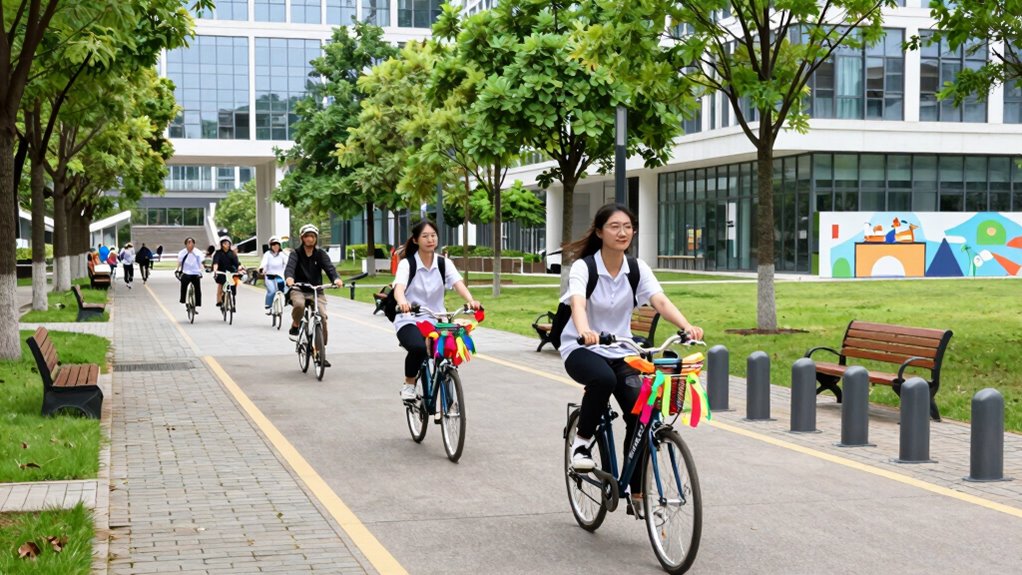

Universities build better bike cultures by investing in safe, well-maintained infrastructure like dedicated bike lanes, racks, and lighting. They promote safety through programs on helmet use and signaling, and foster community with group rides and repair clinics. Initiatives also align with sustainability and wellness, encouraging eco-friendly, healthy lifestyles. By creating a positive, inclusive attitude towards biking, campuses make cycling a natural, enjoyable part of campus life. Explore further to discover how these strategies can transform your experience.

Get sports gear delivered free — and shop member deals
- Fast, free delivery on millions of items
- Access to Prime Big Deal Days deals on October 6–7
- Prime Video, Amazon Music and more included
Key Takeaways
- Implement comprehensive safety programs, infrastructure improvements, and secure bike facilities to promote confidence and safety among students.
- Organize social events, group rides, and repair clinics to foster community and encourage active participation.
- Invest in dedicated bike lanes, racks, and signage to enhance accessibility and normalize biking on campus.
- Align biking initiatives with sustainability and wellness goals through incentives and health-focused campaigns.
- Cultivate a positive biking culture by promoting visible, happy bikers and integrating biking into campus identity and values.
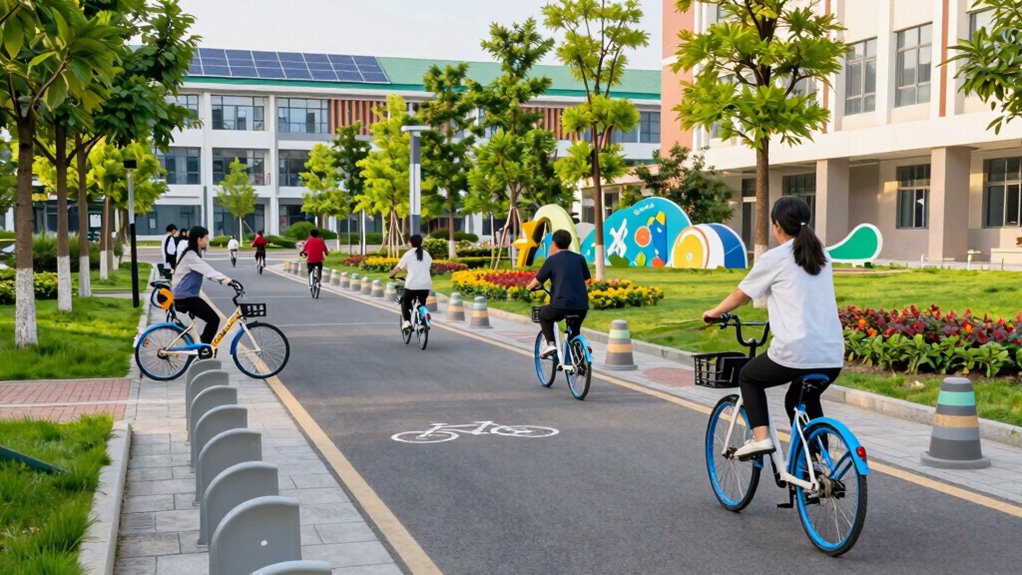
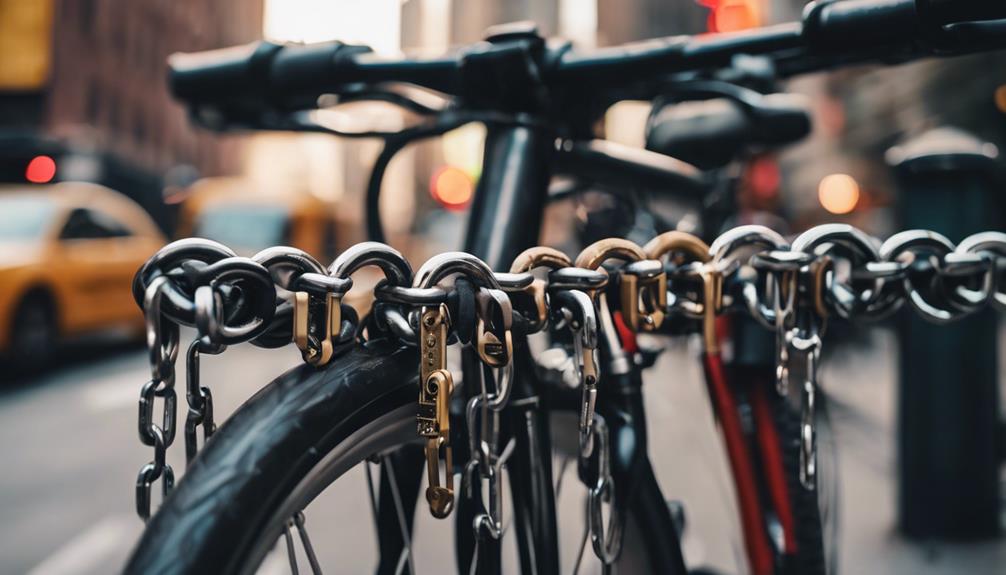
Have you ever noticed how some universities are transforming their campuses into bike-friendly hubs? It’s not just about adding bike racks or painting bike lanes; it’s about creating a culture that encourages biking as a safe, sustainable, and enjoyable way to get around. One of the key strategies these schools use is emphasizing bike safety. They understand that for students to embrace biking, they need to feel secure on the road. That’s why many campuses implement comprehensive safety programs, including educational workshops on proper helmet use, bike maintenance, and signaling. They also invest in well-maintained infrastructure—smooth, clearly marked bike lanes, ample lighting, and secure bike racks that deter theft. When students see that their safety is a priority, they’re more likely to hop on their bikes regularly. Promoting bike safety as part of campus culture helps to normalize biking and reduce accidents, making it a more attractive option for students.
But safety isn’t the only factor in building a thriving bike culture. Universities recognize that student engagement is vital. To foster this, they often organize group rides, bike repair clinics, and themed cycling events that bring students together. These activities create a sense of community and make biking feel more inclusive and fun. When students participate in such initiatives, they not only learn valuable skills but also develop a stronger connection to biking as part of campus life. This sense of belonging encourages more students to choose biking over other transportation options. Additionally, many universities are incorporating campus infrastructure improvements that support biking, which significantly influence student participation. Creating a positive bike culture can also inspire ongoing support for improvements and initiatives that benefit the entire campus community. Furthermore, universities are leveraging infrastructure investments to enhance the safety and accessibility of bike paths, which is essential for a thriving biking environment. Emphasizing bike safety can foster a culture of trust and responsibility among students, which is essential for a thriving biking environment.
Furthermore, universities are making efforts to integrate biking into their broader sustainability and wellness goals. They promote biking as an eco-friendly choice that reduces carbon footprints, aligning with students’ desire to make responsible decisions. Many campuses offer incentives, like discounts at campus cafes or discounts on bike gear, to motivate students to bike more often. These initiatives show that the university values active transportation and wants to make it accessible and appealing.
Creating a bike-friendly culture isn’t just about infrastructure; it’s about changing attitudes. When students see their peers biking safely and happily, it becomes contagious. The university’s role isn’t just to provide the physical space but to nurture an environment where biking feels natural, safe, and rewarding. By focusing on bike safety and student engagement, they turn biking from a simple mode of transportation into a vital part of campus life. This shift benefits everyone—reducing traffic congestion, improving health, and fostering community—all while making the campus more sustainable and lively.
bike helmet with safety certification
As an affiliate, we earn on qualifying purchases.
As an affiliate, we earn on qualifying purchases.
Frequently Asked Questions
How Do Universities Fund Bike Infrastructure Projects?
Universities fund bike infrastructure projects through various sources like student fees, grants, and partnerships. You can see this in bike lane expansion efforts or when planning cycling events. Often, they allocate budget from transportation or sustainability funds, and sometimes secure government grants. These investments improve safety and encourage cycling, making it easier for students and staff to choose bikes over cars, ultimately fostering a stronger bike culture on campus.
Are There Student-Led Initiatives for Bike Advocacy?
You’ll find inspiring student-led initiatives for bike advocacy thriving on campuses, fueling a vibrant culture of campus cycling. These passionate students organize events, push for better bike lanes, and promote sustainable transportation, making a real difference. Their dedication shines through in their efforts to create safer, more accessible biking environments, showing that student advocacy can truly shape a greener, healthier campus community. Your involvement can help amplify this positive momentum.
What Safety Measures Are in Place for Student Cyclists?
You’ll find that universities prioritize safety for student cyclists through helmet enforcement policies and clear bike lane signage. Helmet enforcement encourages protective gear use, reducing injury risks, while well-marked bike lanes guide cyclists safely across campus. These measures create a safer riding environment, making it easier and more appealing for students to choose biking as a sustainable commute option. Overall, these strategies foster a safer, more bike-friendly campus community.
How Do Bike Programs Impact Campus Sustainability Goals?
You see, bike programs like bike sharing and cycling competitions fuel campus sustainability goals by reducing reliance on cars and lowering emissions. These initiatives encourage students to choose eco-friendly transportation, fostering a greener environment. Bike sharing programs offer convenient access, while cycling competitions boost community engagement. Together, they create a ripple effect—promoting sustainable practices that not only benefit the planet but also instill lifelong eco-conscious habits among students.
What Partnerships Exist Between Universities and Local Bike Shops?
You’ll find that universities partner with local bike shops through bike sharing initiatives and bicycle maintenance workshops. These collaborations make it easier for students and staff to access affordable bikes, promote bike safety, and learn repair skills. By working together, universities and bike shops create a vibrant bike culture, encouraging more eco-friendly commuting options while supporting sustainability goals. Such partnerships foster community engagement and help build a sustainable campus environment.
Conclusion
As you explore how universities foster bike culture, it’s almost like the right initiatives align just when needed. The growing infrastructure, supportive policies, and community engagement seem to converge naturally, making cycling an effortless choice. It’s no coincidence that these efforts often happen together, creating a ripple effect of healthier, greener campuses. In this seamless blend of planning and passion, you realize that building a bike-friendly environment isn’t just strategic—it’s inevitable when the right elements come together.
Halloween Picks
halloween
As an affiliate, we earn on qualifying purchases.