
If you’re choosing between Zwift and TrainerRoad, think about what motivates you: if immersive virtual worlds, social riding, and gamification keep you engaged, Zwift is the way to go. On the other hand, if you prefer data-driven, structured workouts focused on performance, TrainerRoad offers that with personalized plans and detailed metrics. Both platforms support your smart trainer and gear, but each caters to different cycling goals—exploring these differences further can help you decide which suits you best.
Key Takeaways
- Zwift offers immersive, animated virtual worlds with social features, while TrainerRoad focuses on data-driven workouts with minimal virtual environment visuals.
- Zwift supports media multitasking and external media playback, enhancing entertainment during rides; TrainerRoad emphasizes simplicity and workout focus.
- Zwift promotes social engagement through group rides, races, and community events; TrainerRoad prioritizes personalized training plans and performance analytics.
- TrainerRoad provides scientifically designed, adaptive workouts targeting specific training zones; Zwift offers more generic plans with less personalized adaptation.
- Both platforms support a wide range of smart trainers and sensors, but Zwift generally offers easier device integration and broader compatibility.
Overview of Virtual Cycling Platforms and Core Features
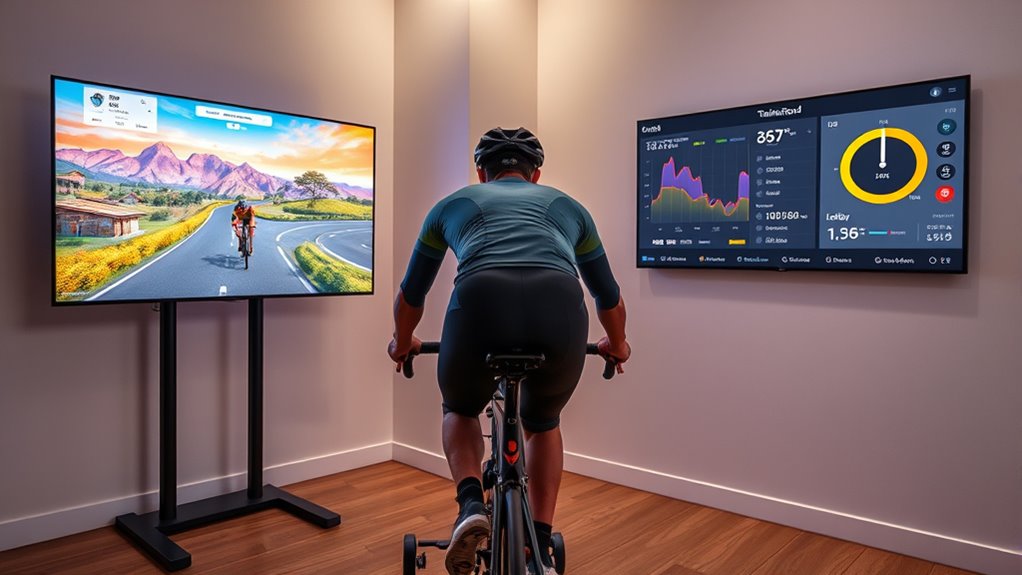
Virtual cycling platforms like Zwift and TrainerRoad offer different experiences tailored to riders’ goals. Zwift immerses you in virtual worlds like Watopia and Paris, combining virtual cycling with social features such as group rides and races. It emphasizes entertainment with gamified elements, virtual navigation, and interactive environments. While Zwift promotes engagement through interactive environments and social features, TrainerRoad, on the other hand, focuses on structured workouts and detailed training plans designed to boost performance. It integrates smoothly with smart trainers and external devices, providing analytics, progress tracking, and adaptive training. Additionally, TrainerRoad emphasizes data-driven training, allowing riders to tailor their workouts to specific performance metrics. Some platforms also offer safe sleep environments advice for athletes recovering from fatigue, ensuring optimal rest and recovery, which can be integrated into training regimens. The platform’s ability to support performance tracking helps riders monitor improvements over time. While Zwift prioritizes virtual worlds and social engagement, TrainerRoad emphasizes precision, performance, and data-driven training. Both platforms support smart trainers, but their core features cater to different rider preferences—entertainment and community versus structured, goal-oriented training.

Zwift offers a variety of virtual worlds like Watopia, Paris, and New York, each with unique routes and lively environments. You can engage with others through group rides, races, and events, using features like chat and kudos to stay connected. With gamification elements such as awards and virtual medals, Zwift keeps you motivated and makes every ride more engaging. Additionally, the platform promotes imaginative mindset by encouraging creative ways to approach training and social interaction. The platform’s ability to foster community engagement further enhances the social experience, making riding more enjoyable and motivating. Furthermore, innovations like virtual environments are expected to incorporate advanced AI integration, which could personalize user experiences and optimize training plans for individual riders, similar to how some dog platforms incorporate technological advancements to improve care and interaction. A focus on secure payment processing within the platform can also ensure safe transactions for subscriptions and in-app purchases, contributing to overall user trust.
Virtual Environment Diversity
Have you ever wondered how digital cycling platforms create diverse and engaging environments? With Zwift, you get a rich variety of virtual worlds, from real-world locations like London and New York to fictional environments such as Watopia and Paris. These worlds feature unique routes and stunning scenery that make each ride feel fresh and exciting. The platform uses immersive visual elements like waterfalls, balloons, pirate ships, and Easter eggs to boost exploration and engagement. Virtual navigation is straightforward, controlled through keyboard, companion app, or controllers, though the routes are predefined, limiting open-world exploration. This diversity keeps your rides interesting, encouraging you to explore different environments while enjoying the vibrant, immersive atmosphere Zwift offers. Additionally, market growth in AI technology enhances these virtual environments by improving realism and interactivity, making the experience even more captivating. Advances in virtual environment design continue to expand the possibilities for creating more dynamic and personalized riding experiences, further enriching the virtual cycling experience.
Social Engagement Features
Ever wondered how digital cycling platforms foster a sense of community among riders worldwide? Zwift’s social features make this possible through real-time group rides, races, and virtual world events that encourage community engagement. You can join organized group rides at any time, with pacing options like pacer bots to keep everyone synchronized. Zwift also offers social tools such as Ride On encouragement, kudos, and a companion app to connect and motivate you. While it lacks built-in voice chat, external apps like Discord fill that gap for verbal communication. Its gamification elements, like awards and Easter eggs, add fun and motivation, making virtual riding more engaging and social, ultimately creating a lively, interactive community experience. Additionally, the platform’s anime-inspired visuals enhance the immersive experience and appeal to diverse rider interests. Recognizing the importance of local legal resources, Zwift’s community features can also help riders connect with local events or groups, enriching their overall experience. Furthermore, the platform’s interactive features facilitate a more connected and motivating environment for riders across the globe. Moreover, incorporating diverse types of honey into your nutrition plan can provide natural energy sources and health benefits that support your training and recovery. A comprehensive understanding of modern farmhouse design elements can also inspire an inviting, cozy atmosphere in your home, blending rustic charm with contemporary style.
TrainerRoad’s Focus: Structured Workouts and Performance Optimization
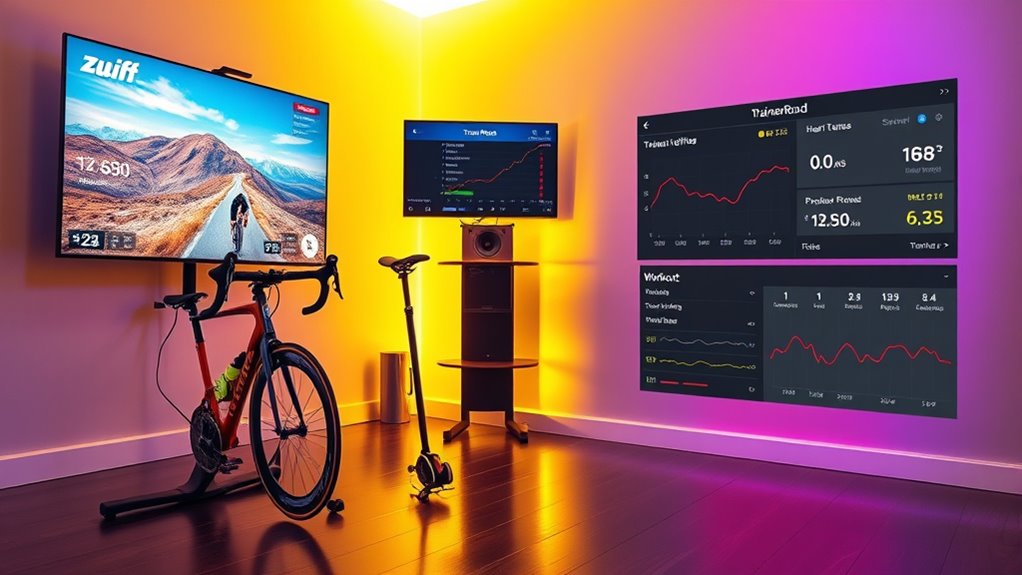
TrainerRoad prioritizes structured workouts and performance optimization by offering a library of plans crafted by professional coaches. These workouts target specific training zones and goals, helping you build a solid foundation and improve steadily. Its adaptive training system personalizes plans based on your performance data, adjusting intensity and volume to guarantee ideal progression without overtraining. The training plans are organized into phases—base, build, and specialty—so you can align your training with racing schedules or personal milestones. TrainerRoad emphasizes data-driven progress, tracking metrics like TSS, CTL, and FTP to monitor your improvements. By applying scientific principles, it designs workouts that maximize fitness gains while minimizing fatigue, ensuring you train smarter and more efficiently. Additionally, it incorporates privacy and cookies considerations to enhance user experience and maintain transparency. The platform also integrates performance metrics to provide comprehensive insights into your training effectiveness. Incorporating evidence-based training approaches helps optimize your results and prevent plateaus, while also addressing common security vulnerabilities associated with digital platforms.
Comparing User Experience and Media Compatibility
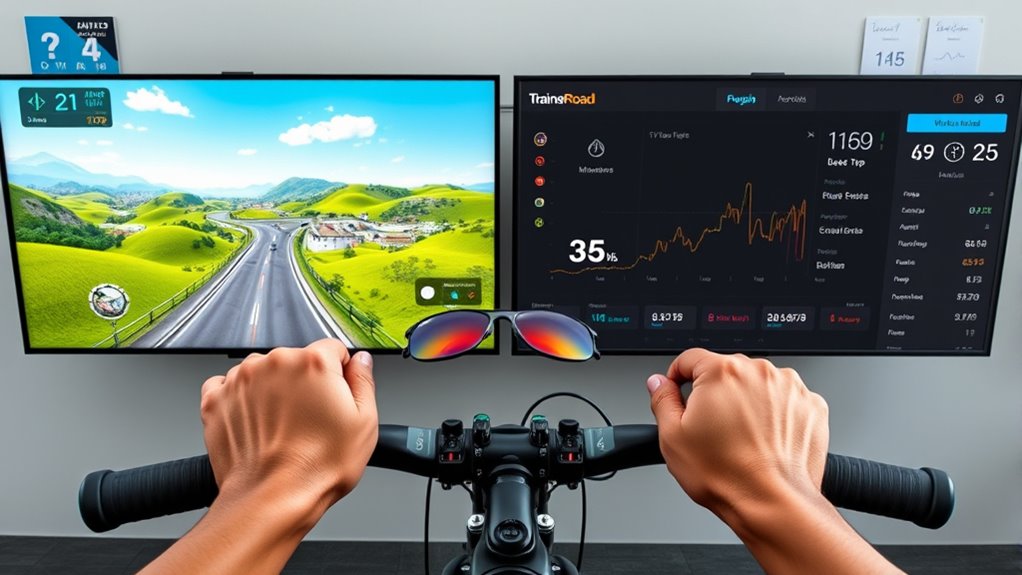
You’ll notice that Zwift offers a rich, immersive environment with social features, making your rides feel more engaging. TrainerRoad, on the other hand, focuses on detailed analytics and a minimal interface, which helps you stay focused on performance. When it comes to media compatibility, Zwift’s visual and social elements dominate, while TrainerRoad lets you multitask with shows or music with minimal distraction.
Immersive Virtual Environments Compatibility
Immersive virtual environments profoundly shape your riding experience by blending visual engagement with realistic scenery. Zwift offers stylized, animated virtual environments like Watopia and Paris, creating an immersive experience filled with dynamic scenery, waterfalls, balloons, and Easter eggs that boost exploration. Rouvy enhances immersion with high-quality real-world route footage, simulating outdoor scenery for a more authentic ride. In contrast, TrainerRoad emphasizes data visualization and workout metrics over immersive scenery, with minimal virtual environment features. Media compatibility also varies; Zwift supports external media playback through device multitasking, allowing you to enjoy music or videos while riding. Overall, Zwift’s virtual environments prioritize immersive visual engagement, while TrainerRoad focuses on performance data, with media compatibility tailored accordingly.
Media Multitasking and Ease
When it comes to media multitasking during indoor cycling, ease of use and compatibility can substantially impact your workout experience. TrainerRoad excels here by supporting media playback like shows or music in minimal mode, so you can enjoy entertainment without losing workout visibility. Its streamlined interface makes switching between workout data and media sources straightforward on compatible devices. Zwift, on the other hand, offers an immersive visual environment but doesn’t natively support media multitasking, making it less seamless for watching videos or listening to music while riding. While both platforms can run alongside media apps, TrainerRoad provides more straightforward app compatibility for media multitasking, allowing you to stay focused on your workout while easily integrating your preferred media.
Training Plans, Personalization, and Adaptive Capabilities

Training plans that adapt to your performance and needs are essential for maximizing progress, and platforms like TrainerRoad excel in this area through their personalized, data-driven approach. You receive adaptive training plans that automatically adjust based on your performance, fatigue, and missed workouts, thanks to machine learning algorithms. Real-time performance monitoring helps you stay on track with metrics like TSS and CTL, enabling precise adjustments. TrainerRoad’s “TrainNow” feature offers auto-recommendations tailored to your current condition, ensuring your workouts are optimized for progress. In contrast, Zwift’s training plans tend to be more generic and less focused on individual data, relying more on fixed structures and community insights. This makes TrainerRoad a better choice if personalized, adaptive plans are your priority for sustained improvement.
Integrating Platforms With Hardware and Compatibility Considerations
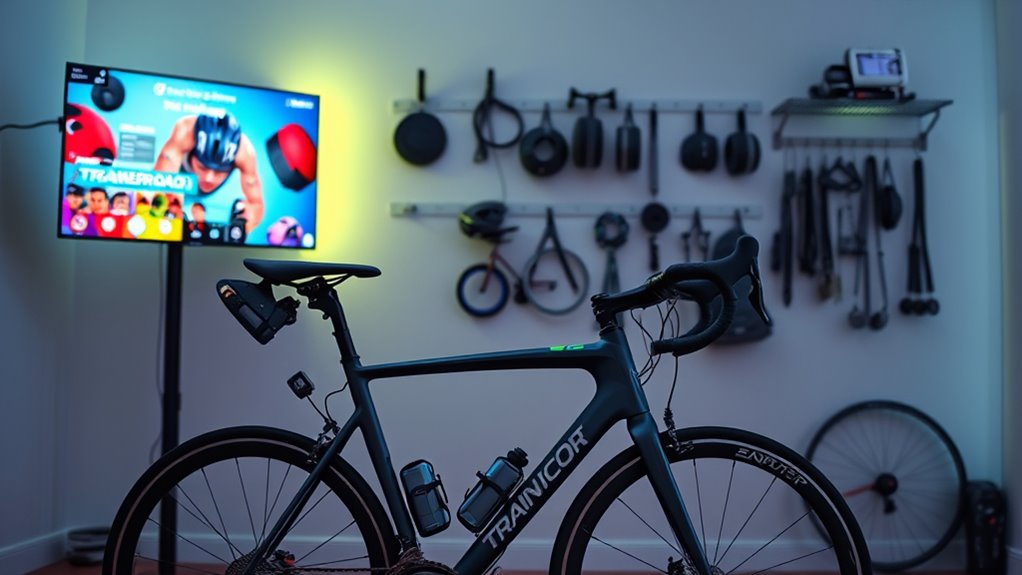
Integrating virtual platforms with your hardware requires understanding their compatibility and connection options. Many smart trainers, like Wahoo KICKR or Tacx Neo, support Bluetooth and Ant+ signals, making device support flexible. Zwift simplifies Ant+ passthrough, allowing easy connection of multiple sensors and trainers without complex setup, which is ideal for seamless integration. TrainerRoad can control compatible smart trainers via Bluetooth on supported devices and outputs Ant+ signals that can work with Zwift for combined use. Compatibility varies across platforms; Zwift generally offers broader device support and easier integration, especially with popular trainers. For advanced setups, running TrainerRoad on one device while using another for virtual scenery demands careful synchronization of Bluetooth and Ant+ connections to ensure smooth operation.
Choosing the Best Platform for Your Cycling Goals
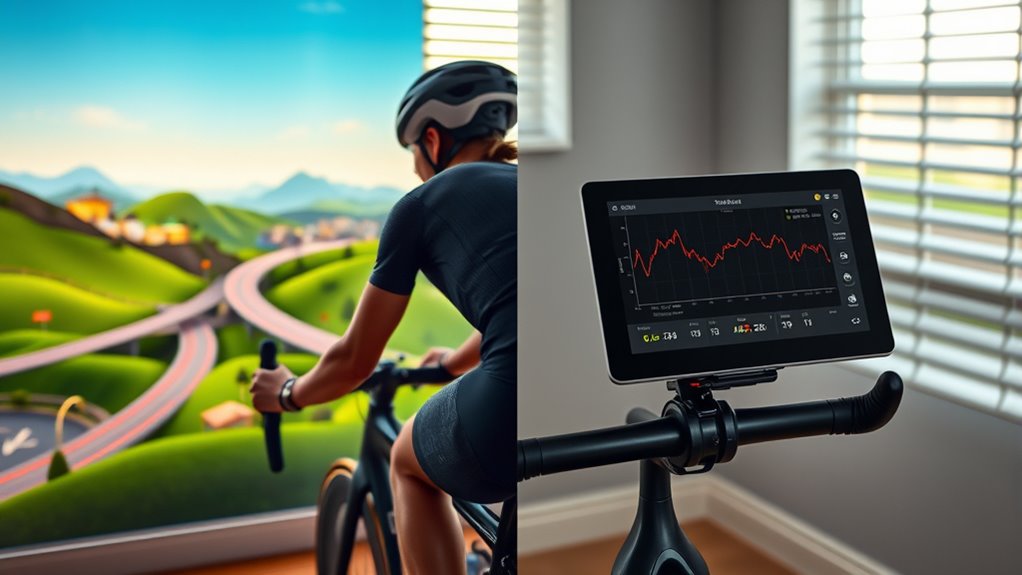
Choosing the right platform depends on your cycling goals and what motivates you most. If you thrive on social, immersive virtual training, Zwift is your best pick. Its features like group rides, races, and gamified rewards create a lively environment that keeps you engaged. On the other hand, if you prefer targeted, structured training plans backed by science, TrainerRoad offers highly personalized workouts with adaptive analytics. Consider these options:
Choose Zwift for social, immersive training or TrainerRoad for data-driven, structured workouts.
- Want motivation through entertainment and community? Zwift’s virtual worlds energize your training.
- Need precise progress tracking and data-driven plans? TrainerRoad’s structured workouts optimize your performance.
- Looking for a balance of fun and focused improvement? Choose based on whether social engagement or detailed analytics matters most to you.
Your choice aligns with your goals—whether social and immersive or disciplined and goal-oriented.
Frequently Asked Questions
What Is the Difference Between Zwift and Kinomap?
You want to know the difference between Zwift and Kinomap. Zwift offers animated, gamified environments that make riding fun and social, with features like group rides and races. Kinomap provides real-world route videos captured from actual locations, giving you an immersive scenic experience. While Zwift emphasizes entertainment and community, Kinomap focuses on realistic scenery and training based on genuine GPS footage.
Is It Okay to Zwift Every Day?
Riding every day is like watering a plant—you can’t overdo it or you might harm it. It’s okay to Zwift daily if you vary your intensity and listen to your body. Incorporate rest days or low-intensity rides to prevent burnout and injury. Just remember, consistency is great, but recovery is key. Balance your workouts, and you’ll stay motivated and avoid overtraining.
Does the Zwift Cog Work With Trainerroad?
The Zwift cog doesn’t work with TrainerRoad because they use different systems. Zwift’s virtual gear is just a visual, while TrainerRoad controls resistance through Bluetooth or Ant+. You can’t sync Zwift’s virtual shifting directly with TrainerRoad. If you try to match gears manually, it’s a workaround, but it isn’t seamless or automatic. So, you’ll need to manage resistance separately during your workouts.
How Do I Convert Trainerroad Workout to Zwift?
Imagine turning a recipe into a delicious dish — that’s what converting TrainerRoad workouts to Zwift feels like. You export your TrainerRoad workout as a TPX or ZWO file, then upload it into Zwift using third-party tools like WorkoutLoader or Zwift Workout Editor. You can also manually input your workout parameters into Zwift’s workout builder to match TrainerRoad’s intensity, intervals, and durations precisely.
Conclusion
Choosing between Zwift and TrainerRoad depends on your cycling goals and preferences. Zwift’s immersive worlds and social features appeal to those who enjoy gamified, interactive riding, while TrainerRoad’s structured plans suit performance-focused riders. Did you know that over 1 million cyclists worldwide use Zwift? Whichever platform you pick, both can boost your fitness—so get on your bike and start pedaling toward your goals today!