To keep your bike in top shape, perform a weekly routine that includes checking your tire pressure with a reliable gauge and inflating to the recommended PSI. Inspect tires for damage or debris, and ensure brake pads and quick-release levers are secure. Lubricate your chain evenly after cleaning, focusing on rollers and joints. Maintaining these simple steps will boost safety and longevity—keep going to discover more tips for a smooth, trouble-free ride.
Key Takeaways
- Check and adjust tire pressure weekly to manufacturer specifications for optimal ride quality and safety.
- Inspect tires for damage, embedded debris, and tread wear to prevent flats and ensure safety.
- Clean and lubricate the chain thoroughly to maintain smooth drivetrain operation and prevent wear.
- Examine brake pads, quick-release levers, and drivetrain components for signs of wear or looseness.
- Conduct overall bike inspections to identify issues early, extending bike lifespan and preventing breakdowns.
Maintaining your bike regularly is essential to keep it running smoothly and extend its lifespan. One of the most important aspects of your weekly routine is checking and adjusting the tire pressure. Proper tire pressure ensures a smoother ride, better handling, and less wear on your tires. You should use a reliable pressure gauge to verify that each tire is inflated to the manufacturer’s recommended PSI, which you can usually find on the sidewall of the tire. Underinflated tires create more rolling resistance, making your bike harder to pedal and increasing the risk of flats, while overinflated tires can lead to a harsher ride and increased chances of blowouts. Take a moment to inspect your tires for any signs of damage or embedded debris that could puncture the rubber. Maintaining correct tire pressure not only improves your riding experience but also helps prevent premature tire replacement. Additionally, some riders incorporate sound therapy techniques to enhance focus and relaxation during their maintenance routine, making the process more enjoyable.
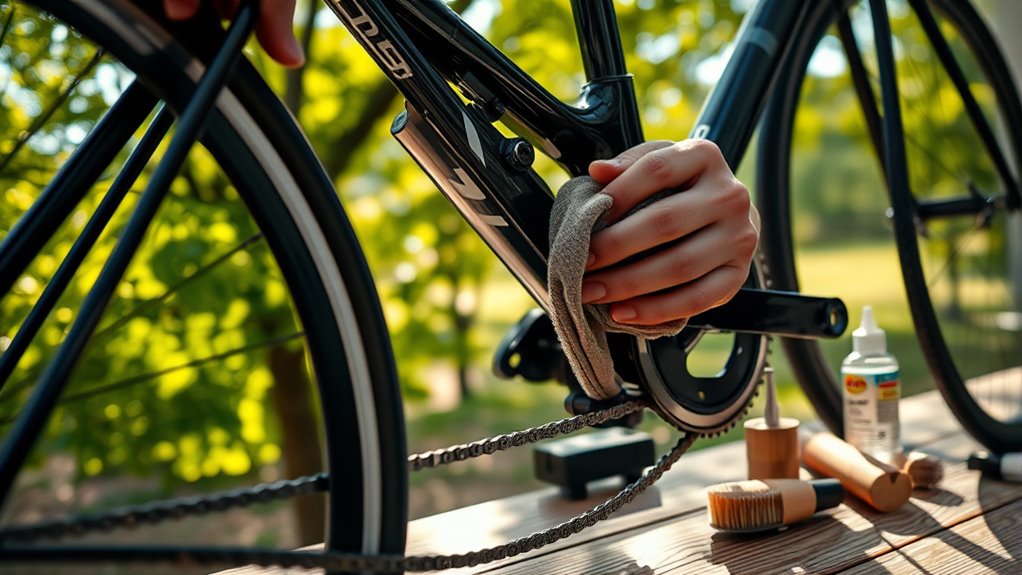
Another crucial task in your weekly bike care routine is chain lubrication. Your chain is the driving force behind your bike’s movement, so keeping it well-lubricated is vital for smooth operation and long-lasting performance. First, wipe off any dirt, grime, or old lubricant from the chain using a clean rag. This prepares the chain for fresh lubrication and ensures that dirt doesn’t get trapped, which could cause increased wear. Apply a quality bike-specific chain lubricant evenly along each link, focusing on the rollers and pin joints. Be careful not to over-lubricate, as excess can attract dirt and grime, leading to chain wear and poor shifting. After applying the lubricant, rotate the pedals backward for a few revolutions to distribute the oil thoroughly across the chain links. Then, wipe off any excess lubricant with a clean rag to prevent dirt accumulation. Regular chain lubrication keeps your drivetrain running silently and efficiently, reducing strain on your gears and crankset.
Beyond tire pressure and chain lubrication, take a moment to inspect your brake pads, check your tire tread for wear, and ensure your quick-release levers are tight. These simple but essential steps help prevent issues during your rides and keep your bike in top condition. Remember, consistency is key—by dedicating a few minutes each week to these maintenance tasks, you’ll notice improved performance, fewer breakdowns, and a longer lifespan for your bike. Staying proactive with your bike care routine not only makes every ride safer and more enjoyable but also saves you money in the long run by avoiding costly repairs down the line. Keep these habits up, and your bike will serve you well for many miles ahead.
Frequently Asked Questions
How Often Should I Replace My Bike Chain?
You should replace your bike chain when it experiences about 0.5% to 1% chain stretch, usually every 2,000 to 3,000 miles, depending on riding conditions. Regularly check for chain stretch with a ruler or gauge, and don’t wait until you notice skipping or poor shifting. Timely replacement ensures smoother rides, longer gear and cassette life, and prevents costly damage. Stay attentive to chain wear to keep your bike performing at its best.
What Is the Best Lubricant for Different Weather Conditions?
Ever wonder how to keep your bike running smoothly in all weather? You should use weather-specific lubricants tailored to seasonal lubrication needs. For wet conditions, opt for waterproof lubes that resist water and mud, while dry conditions call for light, dirt-resistant lubricants. In winter, choose lubricants that prevent freezing, and in summer, go for thinned oils that penetrate better. This approach guarantees peak performance, no matter the weather.
How Do I Check for Frame Damage?
To check for frame damage, start with a thorough frame inspection. Look for cracks, dents, or bends, especially around welds and joints. Run your hand along the frame to feel for any irregularities or weak spots. Regular inspections help damage prevention and guarantee your bike stays safe. If you notice any issues, get them repaired promptly to avoid further damage or potential accidents. Keep an eye on your bike’s condition regularly.
When Should I Replace My Brake Pads?
Think of your brake pads as the foundation of your safety fortress. When you notice brake pad wear reaching the indicator line or a squealing sound, it’s time for replacing brake pads. Don’t wait until they’re completely worn down, risking damage to your braking system. Regularly check their thickness to guarantee your stopping power remains strong, and replace them promptly to keep your ride safe and reliable.
Can I Clean My Bike With Household Cleaners?
You should avoid using household cleaners on your bike because they can damage components or remove protective coatings. Instead, focus on proper bike maintenance by using cleaners specifically formulated for bikes, which effectively remove dirt and grime without harming parts. Household cleaning products often contain chemicals that aren’t suitable for bike frames, brakes, or chains. Stick to bike-specific products to keep your bike in top shape and ensure a safe, smooth ride.
Conclusion
So there you have it—your weekly bike care ritual. Ignore these simple steps, and your bike will rebel, refusing to roll smoothly, maybe even throwing a fit at the worst moment. But follow through, and you’ll keep your trusty steed happy, healthy, and ready to conquer any hill or pothole. After all, neglect your bike, and it’ll neglect you back—probably with a squeal or a chain slip. Happy riding, or should we say, happy babysitting?