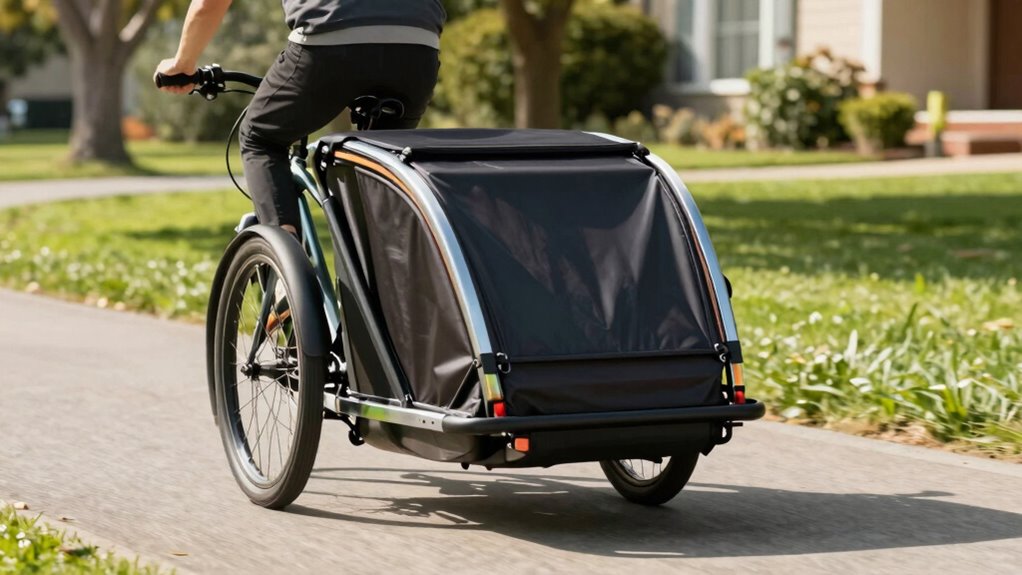

Bike trailers feel more stable than you might expect because they are engineered with a low center of gravity and balanced weight distribution, which keeps them grounded during rides. Proper load placement, like heavier items near the front and close to the axle, helps create a secure, tipping-resistant platform. Good traction from quality tires also plays a key role, ensuring they follow your bike smoothly on uneven surfaces. Keep exploring to discover how design features enhance your confidence behind the bike.

Get sports gear delivered free with Prime
- Fast, free delivery on millions of items
- Prime Video, Amazon Music and more included
- Member-only deals all year
Key Takeaways
- Proper weight distribution and low center of gravity enhance trailer stability, reducing perceived swaying.
- Engineered design features, such as attachment points near the rear axle, promote predictable handling.
- Good tire traction and contact with the road improve grip, preventing fishtailing during turns or bumps.
- Well-maintained, quality tires with appropriate tread patterns contribute to smoother, more stable rides.
- Familiarity with trailer behavior and gradual adjustments build rider confidence in stability.
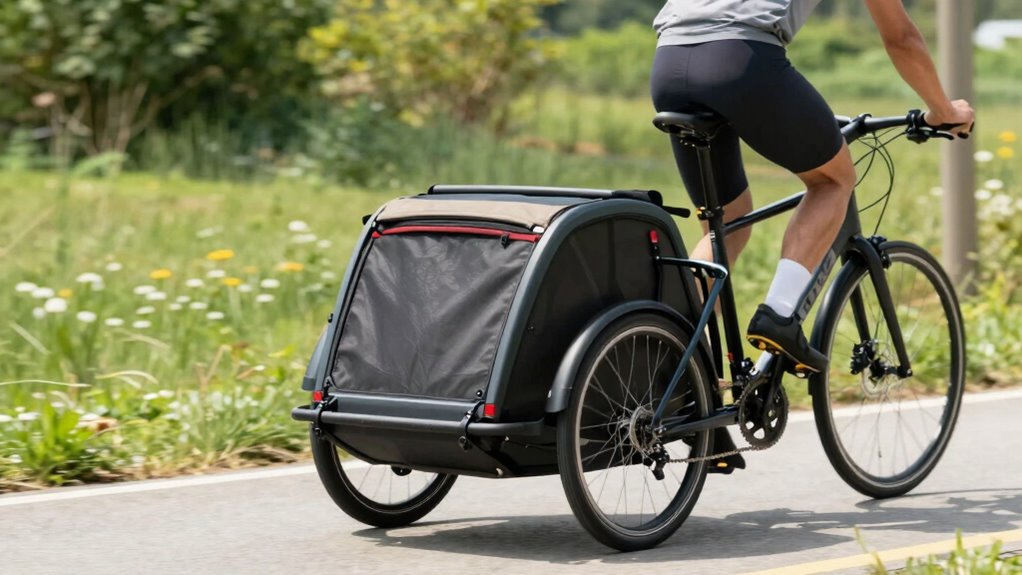
When you first attach a bike trailer, it’s common to feel uneasy about its stability, worried it might sway or tip over. That feeling often stems from unfamiliarity with how trailers behave when connected to your bike. In reality, bike trailers are designed with stability in mind, and understanding the principles behind their balance can help ease your concerns. One key factor is bike trailer weight distribution. Most trailers are built to keep the weight centered and low to the ground, which greatly enhances stability. When the load is properly balanced—placing heavier items toward the front and keeping the weight close to the axle—you create a stable platform that resists tipping. This careful distribution minimizes shifting during turns or bumps, making the trailer feel more secure.
Proper weight distribution and low center of gravity enhance bike trailer stability and confidence.
Another reason trailers feel steadier than expected lies in traction and grip dynamics**. When you start pedaling, the trailer’s tires make contact with the road, and their grip is vital for maintaining stability. Good traction ensures that the trailer follows your bike smoothly, even on uneven surfaces. Trailers with wider or higher-quality tires offer better grip, reducing the chance of slipping or fishtailing. As you accelerate or turn, the grip dynamics work to keep the trailer aligned with your bike’s path. Properly inflated tires and clean contact patches help maximize this grip, further stabilizing the trailer’s movement. Additionally, tire quality and tread pattern influence traction and grip**, which are crucial for a stable ride.
Additionally, the trailer’s design plays a role in how steady it feels. Many models incorporate a low center of gravity, which naturally discourages tipping. The attachment point, often near the rear axle of your bike, also helps distribute forces evenly during turns, preventing unexpected sways. As you get used to the trailer’s behavior, you’ll notice that it responds predictably to your movements. Sharp turns or sudden stops may require some adjustment, but overall, the trailer’s design and the correct weight distribution work together to give you a sense of security.
In essence, what initially feels unstable or wobbly becomes much more manageable once you understand the importance of proper weight distribution and grip dynamics. With a well-balanced load and tires that grip well, the trailer stays close to your bike’s line of travel. Over time, you’ll see that trailers are engineered to be stable, and once you get accustomed to their handling, you’ll appreciate just how confident you can feel while riding.
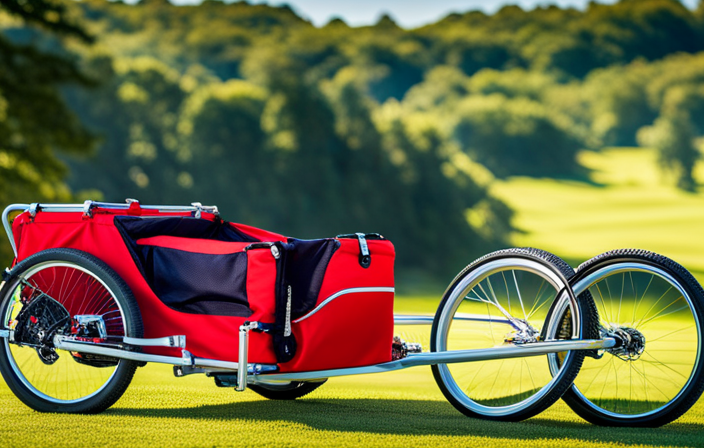
bike trailer with low center of gravity
As an affiliate, we earn on qualifying purchases.
As an affiliate, we earn on qualifying purchases.
Frequently Asked Questions
How Does Trailer Weight Distribution Affect Stability?
Trailer weight distribution considerably impacts stability by influencing weight shift and the center of gravity. When you evenly distribute the load, it minimizes unwanted sway and keeps the trailer balanced behind you. Placing heavier items lower and closer to the axle lowers the center of gravity, enhancing stability. Proper weight distribution allows you to ride confidently, even on uneven terrain, making your biking experience safer and more comfortable.
Are Certain Bike Types Better for Trailer Stability?
Imagine cruising smoothly on a sturdy mountain bike, its wide tires gripping the trail, perfectly suited for trailer stability. Certain bike types, like a mountain or hybrid bike, are better because they offer better bike rack compatibility and secure trailer attachment types. These bikes handle the added weight and movement more confidently, providing a stable ride. Their frame design and tire stability make a noticeable difference when towing a trailer.
How Quickly Do Stability Perceptions Improve With Practice?
Your perception of trailer stability improves quickly as you gain rider balance and trail familiarity. Most new users notice increased confidence within a few rides, often after mastering smooth steering and braking. As you practice, your instincts sharpen, and you become more comfortable handling different trail conditions. This ongoing experience helps you trust the trailer’s stability, making future rides feel more natural and secure.
Do Trailer Designs Influence Rider Confidence?
You’ll find that trailer designs considerably influence your rider confidence. For example, trailers with low, wide profiles improve bike handling by lowering the center of gravity, making you feel more stable on the trail. A well-designed trailer enhances your overall trail experience, reducing wobbling and increasing control. So, choosing a thoughtfully designed trailer can boost your confidence, especially as you gain experience and tackle more challenging terrains.
What Safety Features Enhance Trailer Stability?
To enhance trailer stability, focus on cargo security and tire pressure. Securing your cargo prevents shifting that could cause imbalance, while maintaining proper tire pressure guarantees smooth handling and reduces wobbling. Regularly check tire pressure before rides, and use straps or nets to keep items stable inside the trailer. These safety features help you feel more confident, making your ride safer and more stable than you might expect.
Conclusion
So, next time you hop onto your bike with a trailer, remember—your trailer is practically a superhero, defying every ounce of your doubts! It’s more stable than a mountain goat on a cliff, more confident than a seasoned rider in a race. Trust it, lean into the ride, and you’ll realize that bike trailers aren’t just stable—they’re the superhero sidekicks of your cycling adventures. Embrace the stability and enjoy the ride of your life!
Halloween Picks
halloween
As an affiliate, we earn on qualifying purchases.