
When cycling in winter, layering is key to staying warm, dry, and comfortable. Start with moisture-wicking base layers to manage sweat, then add insulating layers like fleece or down for heat. Top with windproof outer shells that breathe and protect you from the elements. Don’t forget accessories like gloves, hats, and neck gaiters to keep extremities warm. Proper layering prevents overheating or dampness—if you want to avoid common mistakes and optimize your gear, there’s more to discover below.
Key Takeaways
- Use moisture-wicking base layers to keep sweat away from the skin and prevent chills during rides.
- Layer with breathable insulation like fleece or wool to trap heat while allowing moisture escape.
- Choose windproof and breathable outer shells to resist cold air and maintain proper ventilation.
- Incorporate accessories like gloves, neck gaiters, and hats under helmets for added warmth and protection.
- Avoid overlayering; adjust layers based on activity level and weather to prevent sweating and overheating.
winter cycling base layers moisture-wicking
As an affiliate, we earn on qualifying purchases.
As an affiliate, we earn on qualifying purchases.
Understanding the Importance of Base Layers in Cold Weather
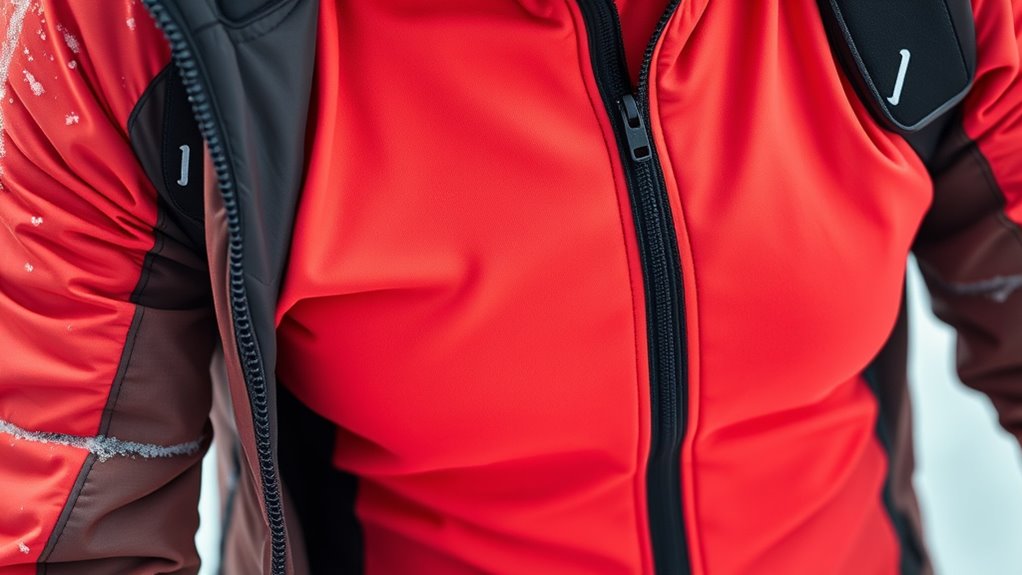
When cycling in cold weather, your base layer is the foundation of your entire outfit. It plays a crucial role in thermal regulation by keeping your body warm without overheating. A good base layer also manages moisture control, wicking sweat away from your skin to prevent chills and discomfort. When you ride, your body generates sweat, which can cool you down quickly if not properly managed. Choosing a moisture-wicking fabric ensures sweat evaporates efficiently, keeping you dry and comfortable. Proper thermal regulation helps you maintain a stable core temperature, so you stay warm without bulk. Incorporating natural materials like merino wool can enhance moisture management and insulation properties. Remember, a high-quality base layer forms the essential first step for layering effectively, maximizing comfort and performance during winter rides.
Choosing the Right Insulation Layer for Winter Rides
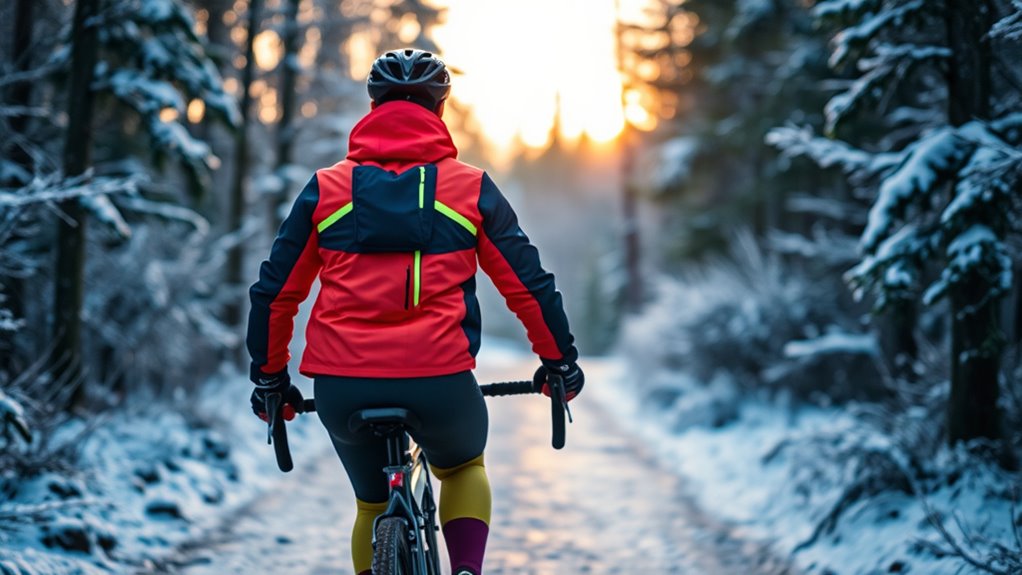
Your base layer sets the stage for staying warm, but selecting the right insulation layer is just as vital to keep you comfortable during winter rides. Thermal insulation traps body heat, so choose materials like fleece or down that provide effective warmth without adding unnecessary bulk. Moisture management is essential—opt for insulators that wick sweat away from your skin to prevent chills and maintain dry comfort. Avoid insulation that absorbs moisture or loses insulating properties when wet. Layering options like lightweight puffy jackets or wool sweaters work well, but ensure they balance warmth with breathability. The goal is to stay warm without overheating or trapping sweat, so pick an insulation layer that fits your ride intensity and expected conditions. Incorporating insulating materials that provide warmth even when damp can further enhance your comfort on cold rides.
The Role of Outer Shells and Windproof Fabrics
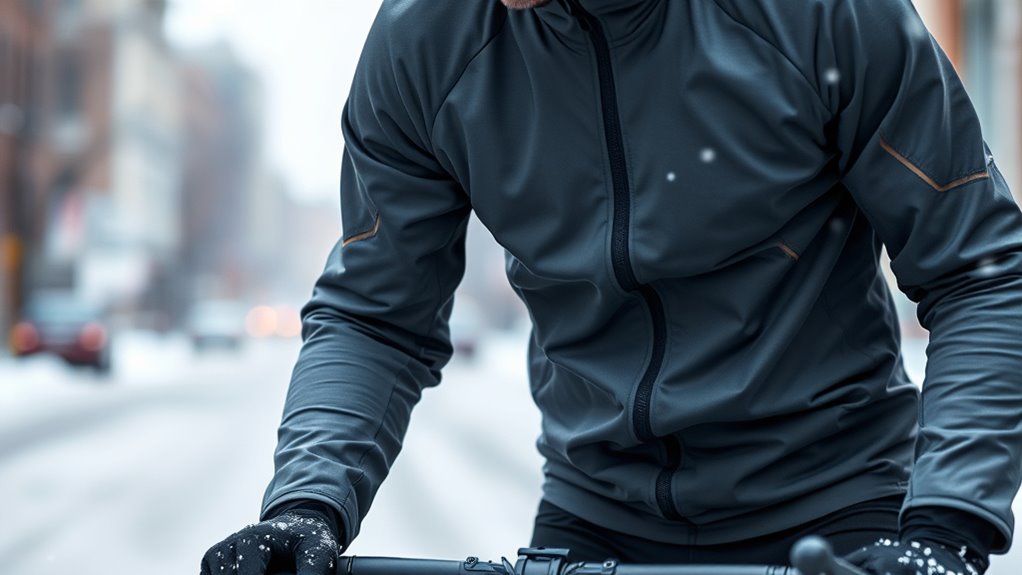
Outer shells and windproof fabrics are key to keeping you warm and comfortable on winter rides. They resist wind, reducing heat loss, while still allowing moisture to escape so you stay dry. Choosing durable materials guarantees your gear lasts through tough conditions without sacrificing breathability. Additionally, selecting high-quality projectors can significantly enhance your home cinema experience by providing clearer, more vibrant images in your dedicated space.
Wind Resistance Benefits
Wind resistance is essential for maintaining warmth and comfort during winter cycling, especially in cold, breezy conditions. By blocking wind, outer shells and windproof fabrics help improve thermal regulation, so your body retains heat more effectively. This reduces the need for excessive layering, allowing you to stay comfortable longer. Additionally, some windproof jackets feature high-visibility elements, enhancing your visibility to others on the road, which boosts safety during low-light or foggy days. The wind-resistant layer also minimizes the wind chill effect, keeping you warmer even when riding at higher speeds. Incorporating tableware materials that are lightweight and breathable can further enhance your comfort during long rides. Overall, investing in good windproof gear ensures you stay warm, maintain better thermal regulation, and stay visible, making winter cycling safer and more enjoyable.
Breathability and Moisture
While blocking the wind keeps you warm, it’s equally important that your outer shell allows moisture and heat to escape. Good fabric breathability guarantees sweat doesn’t linger, preventing chills and discomfort. When choosing windproof fabrics, look for materials designed for moisture management, which wick sweat away from your skin. This helps keep you dry from the inside out, maintaining comfort during intense rides. An outer shell with high breathability balances wind protection with vapor transfer, so you stay warm without overheating. Additionally, self-watering planters can help keep your indoor environment more humid, which can be beneficial during dry winter months when cycling indoors.
Material Durability Factors
Durability is a crucial factor when selecting cycling clothing layers, especially for outer shells and windproof fabrics, because these layers face constant exposure to the elements and rough conditions. You need fabrics with good fiber elasticity to withstand stretching and movement without tearing or losing shape. This flexibility helps outer shells resist fabric abrasion caused by bike contact, debris, and frequent use. Look for high-quality materials that balance durability with lightweight comfort, ensuring your gear lasts through winter rides. Fabrics with reinforced weaves or coatings can also enhance resistance to wear and tear. Additionally, choosing fabrics that can accommodate fetal movements ensures comfort during long rides. Remember, investing in durable outer layers means fewer replacements and better protection against wind, rain, and cold, keeping you safer and more comfortable on every ride.
Accessories That Make a Difference: Gloves, Hats, and Neck Gaiters
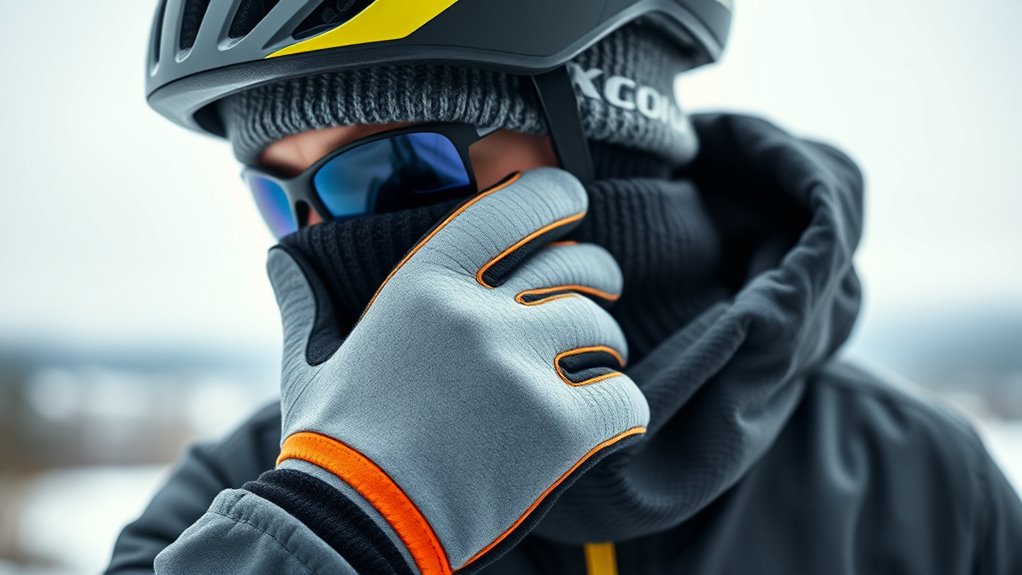
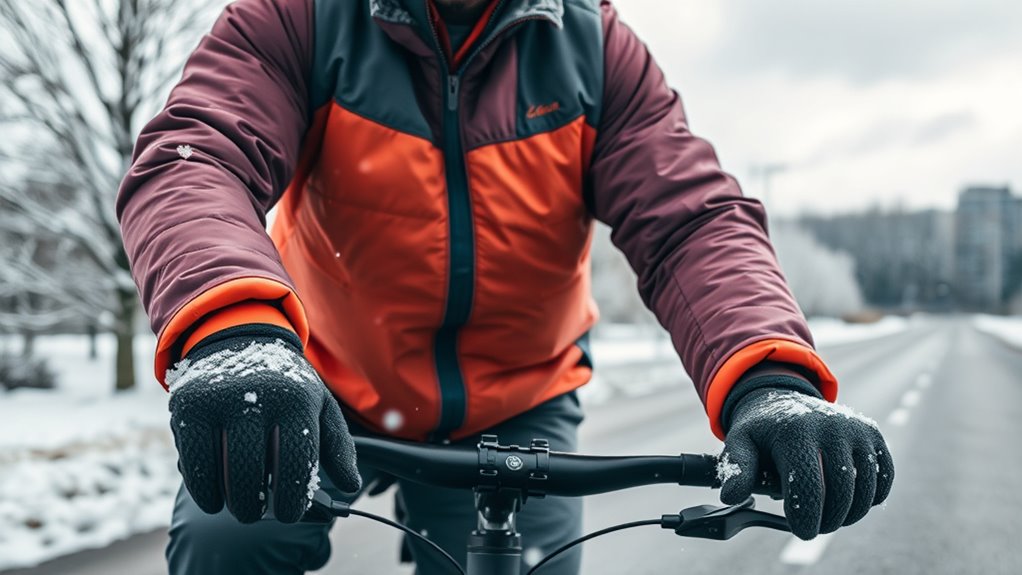
Accessories like gloves, hats, and neck gaiters are essential for staying warm and comfortable during winter cycling. They protect your extremities and neck from cold air, preventing frostbite and discomfort. Thermal gloves keep your hands warm and dexterous, making it easier to operate brakes and gears. A well-fitting hat under your helmet adds an extra layer of insulation, especially on chilly mornings. Neck gaiters shield your neck and face from wind and cold, reducing heat loss. Choose moisture-wicking materials to stay dry and comfortable. Proper accessories can make a significant difference in your winter riding experience, helping you stay focused and enjoy your ride longer. Modern heat pump technologies also emphasize the importance of appropriate insulation and clothing to enhance energy efficiency during colder months.
Layering Strategies for Varying Winter Conditions

Adapting your layering strategy is essential for tackling the wide range of winter conditions you might face on your ride. Start with thermal leggings to keep your legs warm in cold or windy weather, and add a moisture-wicking base layer to stay dry. When temperatures drop further, layer with an insulated jacket or shell. If conditions are dark or low visibility, wear reflective gear to ensure you’re seen. For milder days, lighter layers like a long-sleeve jersey may suffice, but always carry an extra layer for sudden temperature drops. Adjust your layers based on wind, precipitation, and temperature changes. Proper layering helps you stay comfortable and safe, no matter how winter throws its weather at you.
Tips for Managing Moisture and Ventilation
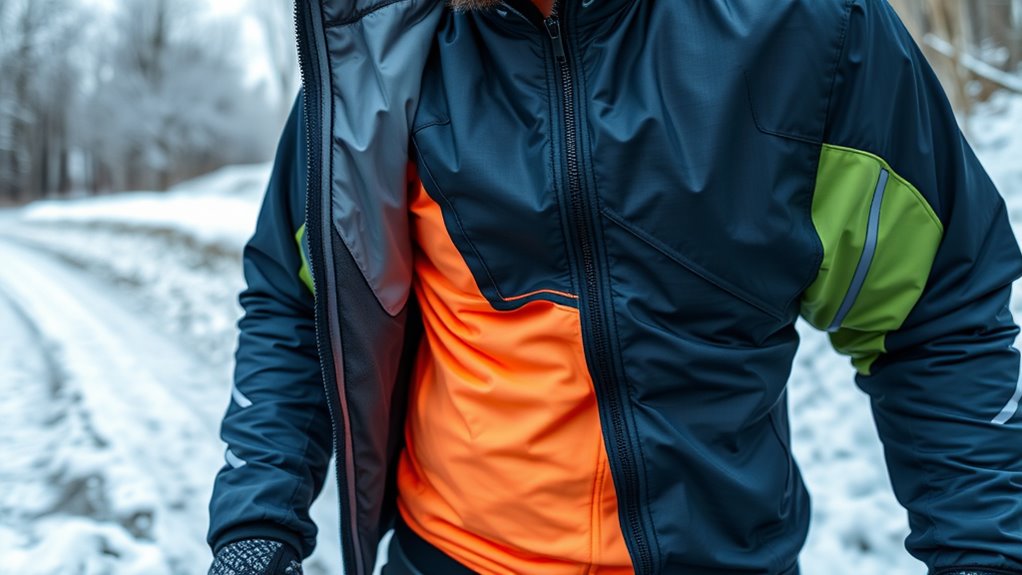
Managing moisture and ventilation is key to staying comfortable during winter rides. Proper moisture management prevents sweat buildup that can lead to chills, while effective ventilation strategies keep you dry and regulate body temperature. To optimize these, choose breathable fabrics that wick moisture away from your skin. Adjust ventilation by opening vents or zippers when you start to warm up, ensuring sweat escapes and fresh air circulates. Layer smartly so that moisture moves outward, not inward. Consider cycling jackets with vents or mesh panels for better airflow. Keep accessories like headbands or gloves breathable to avoid trapping moisture. Staying dry and well-ventilated helps you avoid discomfort and hypothermia, making your winter rides safer and more enjoyable.
- Use moisture-wicking base layers
- Open vents during exertion
- Wear breathable, layered clothing
- Adjust layers as your effort changes
Common Mistakes to Avoid When Layering for Winter Cycling
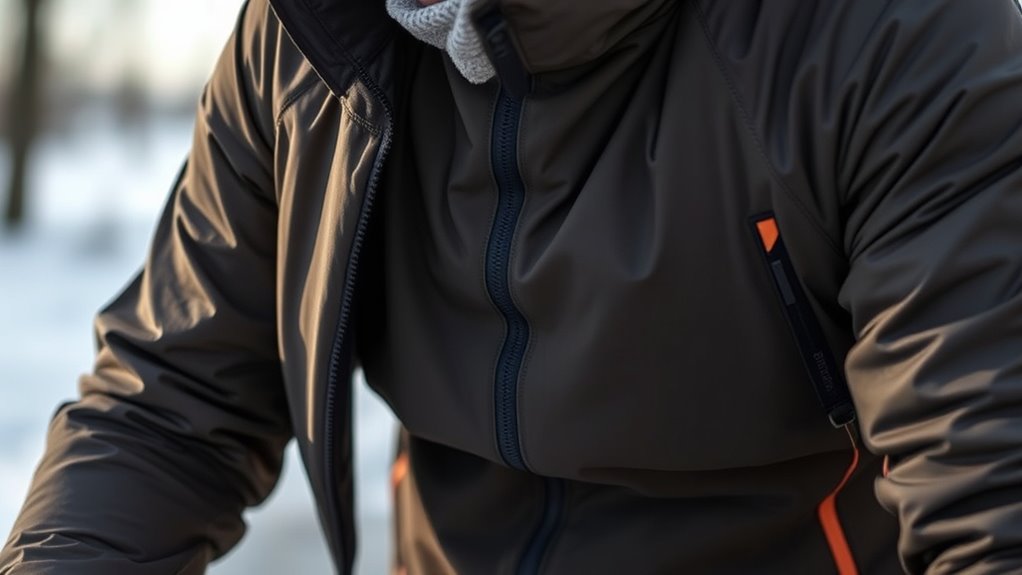
One common mistake is overlayering, which can make you sweat and lead to discomfort or chills. Ignoring breathability in your clothing choices can trap moisture and cause you to feel cold or damp. To stay comfortable, focus on balancing warmth with fabrics that allow moisture to escape. Additionally, selecting clothing materials that wick away sweat helps maintain a dry and comfortable ride.
Overlayering Risks
Overlayering can seem like a quick fix to stay warm, but piling on too many clothes often backfires. Excess layers create layering pitfalls that lead to overheating, restricted movement, and sweating, which worsens your comfort and safety. Overlayering hazards include trapping moisture next to your skin, causing chills when you stop, and increasing fatigue because of the added weight. It can also cause friction and chafing, making your ride uncomfortable. Instead of layering blindly, focus on a balanced setup with moisture-wicking and insulating layers. Remember, more isn’t always better—aim for a comfortable, breathable system that adapts to your activity level. Proper layering minimizes layering pitfalls and keeps you warm without the risks of overlayering hazards. Additionally, understanding how to diversify your gear with precious metals investment options can help you plan for financial stability during off-seasons or emergencies.
Ignoring Breathability
Ignoring breathability in your layering approach can quickly turn a warm winter ride into an uncomfortable ordeal. When your clothing doesn’t allow moisture to escape, moisture accumulation happens, trapping sweat against your skin. This leads to chills and discomfort, even if the temperature isn’t extreme. Breathable fabrics promote sweat evaporation, helping to regulate your body temperature and keep you dry. Without proper airflow, sweat stays trapped, increasing the risk of hypothermia if conditions are cold or wet. Choose layers made from moisture-wicking materials that enable sweat evaporation and allow air circulation. Avoid heavy, non-breathable fabrics that trap moisture. Prioritizing breathability ensures your body stays dry and comfortable, letting you focus on riding rather than battling dampness and cold.
Frequently Asked Questions
How Do I Prevent Sweat From Making My Clothes Damp During Winter Rides?
To prevent sweat from making your clothes damp during winter rides, focus on moisture management and clothing ventilation. Choose breathable fabrics that wick sweat away from your skin, keeping you dry. Adjust your layers to allow airflow, opening vents when you start to sweat. Proper ventilation helps release excess heat and moisture, reducing dampness. Staying dry improves comfort and warmth, so prioritize clothing designed for effective moisture management and good ventilation during winter cycling.
What Are the Best Materials for Winter Cycling Gloves and Hats?
For winter cycling gloves and hats, choose materials with thermal insulation and moisture wicking properties. Look for gloves with fleece or merino wool linings that trap heat while pulling moisture away from your skin. Opt for hats made of wool or synthetic fibers designed for thermal insulation and moisture management. These materials keep you warm, dry, and comfortable throughout your ride, preventing cold and dampness from affecting your performance.
How Do I Adjust Layers for Sudden Weather Changes?
Sure, adjusting layers for sudden weather changes is easy—just don’t forget your layering strategies! When rain hits, peel off that extra fleece or add a waterproof shell. If it gets colder unexpectedly, toss on a thermal layer underneath. Quick weather adaptation means keeping your core dry and warm while staying flexible. Stay prepared, and you’ll ride comfortably through whatever surprises Mother Nature throws your way.
Can Layering Help With Preventing Frostbite on Exposed Skin?
Layering can definitely help prevent frostbite by providing thermal protection and ensuring skin coverage. When you layer properly, you create a barrier that keeps your skin warm and reduces exposure to cold air. Focus on adding insulating layers over exposed skin and wear windproof outer shells. This way, you maintain consistent warmth, especially on vulnerable areas, and markedly lower your risk of frostbite during winter rides.
What Are Some Eco-Friendly Options for Winter Cycling Clothing?
Think of eco-friendly cycling gear as a green shield, protecting both you and the planet. You can choose sustainable fabrics like recycled polyester or hemp, which reduce waste and resource use. Look for eco-conscious brands committed to ethical manufacturing and eco-friendly practices. These options let you stay warm and stylish while supporting sustainability, turning your ride into a symbol of care—for yourself and Earth.
Conclusion
Layering smartly keeps you warm and comfortable during winter rides. Did you know that improper layering can decrease your body temperature by up to 15%? Staying dry and ventilated is key, so choose your layers wisely and don’t forget accessories. With the right approach, you’ll enjoy every winter ride, no matter how cold it gets. Stay prepared, stay warm, and keep pedaling through the winter wonderland!