To winterize your bike, start by checking and maintaining the tire pressure regularly, guaranteeing they’re inflated to the recommended psi for better traction and safety on icy roads. Clean and lubricate your chain to prevent rust and ensure smooth shifting, applying a quality lubricant suited for cold conditions. Inspect brake pads and cables, replacing worn parts, and store your bike in a dry, sheltered spot to prevent moisture damage. Keep your bike in top shape for winter rides by following these tips.
Key Takeaways
- Regularly check and maintain tire pressure to ensure optimal grip and safety on cold or icy roads.
- Clean and lubricate the chain weekly to prevent rust and ensure smooth shifting in wet winter conditions.
- Inspect brake pads, cables, and other components for wear, ensuring responsive braking during slippery rides.
- Store the bike in a dry, sheltered area or cover it to protect against moisture, rust, and snow damage.
- Perform overall mechanical checks, tighten loose bolts, and ensure all systems are functioning properly before riding.
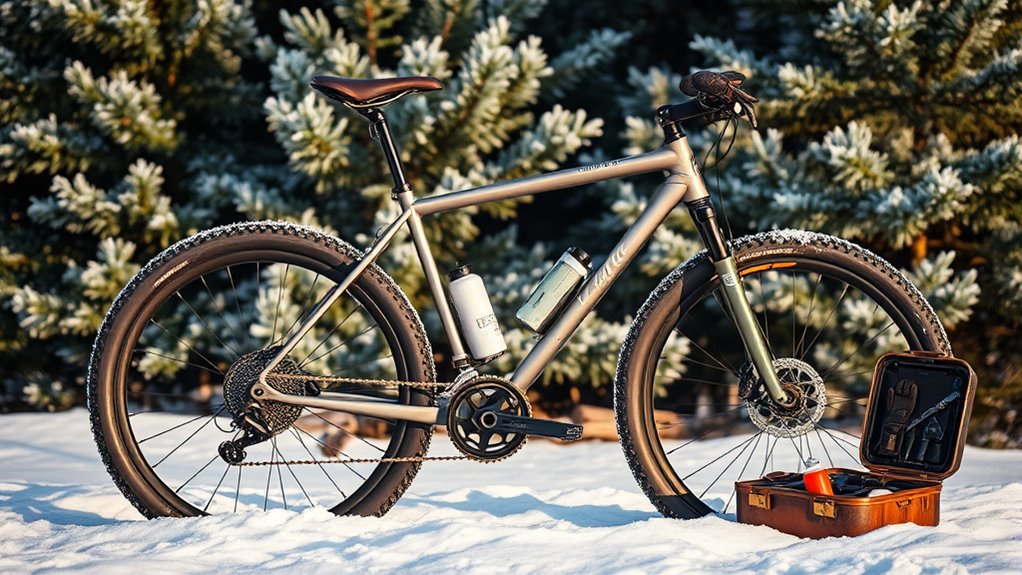
Winterize Your Bike
As winter approaches, preparing your bike for the cold months ahead is vital. Cold temperatures and wet conditions can take a toll on your bike’s performance, so taking some time to winterize it will save you headaches later. Start by checking your tire pressure. Cold air causes tires to lose pressure faster, which can lead to poor traction and increased risk of flats. Use a reliable pump or pressure gauge to guarantee your tires are inflated to the manufacturer’s recommended psi. Under-inflated tires not only make riding more difficult but also increase the chance of damage from rough or icy surfaces. Properly inflated tires provide better grip, improve riding efficiency, and help prevent accidents during slippery conditions. Remember, it’s a good idea to check tire pressure before each ride during winter, as fluctuations are common with temperature changes.
Next, focus on chain lubrication. Winter riding exposes your chain to moisture, road salt, and grime, which can cause rust and accelerate wear if left unprotected. Before hitting the road, thoroughly clean your chain to remove dirt and old lubricant. Once dry, apply a high-quality bike chain lubricant designed for wet or cold conditions. Proper lubrication ensures smooth shifting and reduces friction, making your ride safer and more comfortable. It also helps prevent rust buildup, which can severely damage your drivetrain over time. After applying lubricant, wipe off any excess to avoid attracting dirt and debris. Regularly lubricating your chain during winter rides is essential—consider doing it weekly if you ride frequently. This simple task can extend the life of your chain and other drivetrain components, saving you money on repairs later. Additionally, understanding how refrigeration cycle principles work can help you troubleshoot issues with your bike’s electrical components, ensuring everything functions smoothly throughout winter.
Aside from tires and chain, make sure your bike’s brakes are responsive, especially since stopping distances increase on icy or wet surfaces. Check your brake pads and cables, replacing worn components as needed. Lubricate moving parts sparingly—only where necessary—to avoid attracting dirt that can impair functionality. Additionally, protect your bike from rust by storing it in a dry, sheltered spot when not in use. If you keep your bike outside, consider using a cover to shield it from snow and moisture. Regularly inspecting your bike for loose bolts or damaged parts also helps prevent accidents caused by mechanical failure. Taking these steps may seem minor, but they greatly enhance your safety and guarantee your bike remains in good condition throughout the winter months. By paying attention to tire pressure, chain lubrication, and overall maintenance, you’ll be well-prepared to enjoy winter rides safely and smoothly.
Frequently Asked Questions
How Often Should I Winterize My Bike?
You should winterize your bike once a year, ideally in late fall or early winter, as part of your seasonal preparation. Regular winter maintenance helps prevent rust, corrosion, and battery issues. If you ride often during winter, consider checking your bike more frequently. Proper winterization guarantees your bike stays in good condition, ready to ride again when the seasons change. Don’t skip this essential step to avoid costly repairs later on.
Can I Winterize My Bike Myself?
Absolutely, you can winterize your bike yourself. Did you know that proper bike maintenance during seasonal preparation can extend your bike’s lifespan by up to 30%? With basic tools and some patience, you can clean, lubricate, and protect your bike from rust and corrosion. Follow a step-by-step guide, and you’ll save money while ensuring your bike stays in top shape for spring riding.
What Tools Are Needed for Winterizing?
You’ll need basic tools like a tire pressure gauge to check and adjust your tire pressure, ensuring your tires are properly inflated for winter storage. A wrench or Allen keys are necessary for brake inspection and adjustments, making sure your brakes are functioning well. Additionally, having a soft cloth, lubricant, and possibly a pump helps with cleaning, lubricating parts, and topping off air. These tools make winterizing your bike straightforward and effective.
How Do I Store My Bike Properly During Winter?
Think of your bike like a treasured relic from the past; to preserve its legacy, you need proper storage solutions. Store your bike in a cool, dry place, ideally hanging or on a stand to prevent tire damage. Perform thorough bike maintenance, like cleaning and lubricating parts, before storing. Cover it with a breathable cover to shield it from dust and moisture, ensuring it’s ready for your next adventure.
When Is the Best Time to Start Winterizing?
You should start winterizing your bike in early fall, before temperatures drop consistently below freezing. This pre-winter maintenance helps prevent rust, corrosion, and damage during off-season storage. Once you notice the weather turning colder, it’s time to prepare your bike for long-term storage, ensuring it’s clean, lubricated, and stored in a dry, sheltered place. Starting early makes off-season storage easier and keeps your bike in top condition for spring riding.
Conclusion
Now that your bike’s winterized, it’s ready for the cold months ahead. But don’t forget—hidden dangers can still lurk beneath the surface. A sudden freeze or unexpected snowstorm might catch you off guard if you missed a vital step. Stay vigilant, keep inspecting your bike, and be prepared for whatever winter throws your way. The road may be quiet now, but the true test is yet to come—are you ready for it?