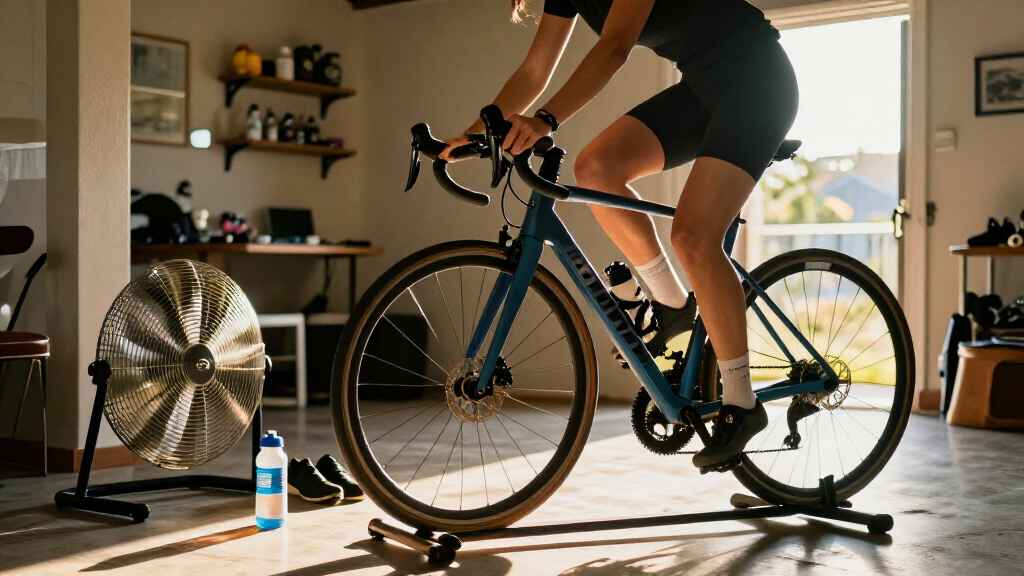

The best indoor cycling trainers balance ride feel, setup demands, and compatibility with your bike. I rank the Wahoo KICKR V6 as the best overall for connected training, while the Garmin Tacx NEO 2T stands out for premium smart features and the Saris Fluid2 offers a simpler fluid-resistance option. The main choice is between smart direct-drive trainers, which require more investment and setup, and wheel-on or roller models, which can be easier to store but often offer fewer connected features. Bike fit, noise, space, and the type of resistance all affect which trainer makes sense at home. Read on for the full comparison and guidance on choosing among all 13 options.

Get sports gear delivered free with Prime
- Fast, free delivery on millions of items
- Prime Video, Amazon Music and more included
- Member-only deals all year
Complete the kit


Key Takeaways
- Smart direct-drive trainers lead for connected workouts: the Wahoo KICKR V6, Garmin Tacx NEO 2T, and ThinkRider smart models are the lineup’s picks for riders prioritizing app-based training.
- Premium performance comes with more commitment: high-end smart trainers bring advanced features, but require a suitable bike setup, more space, and a larger outlay than basic wheel-on stands.
- Wheel-on stands offer a simpler entry point: Alpcour, FDW, VEVOR, Sportneer, and similar stands are alternatives for riders who want a more straightforward indoor setup and can accept fewer smart-training capabilities.
- Resistance type shapes the ride and routine: magnetic options generally provide resistance through a roller at the rear wheel, while fluid models such as the Saris Fluid2 and Alpcour fluid stand use a different resistance system; neither category automatically offers smart control.
- Rollers are a distinct choice, not a direct substitute: the Garmin Tacx Antares suits riders seeking a balance-and-cadence challenge, but its riding demands differ from trainers that hold the bike in place.
| ThinkRider X2Max Smart Bike Trainer |  | Best for Steep Virtual Climbs | Resistance mechanism: Electromagnetic | Maximum power: 2,000 W | Power meter error: ±2% | VIEW LATEST PRICE | See Our Full Breakdown |
| Alpcour Foldable Magnetic Indoor Bike Trainer Stand |  | Best for Portable, Adjustable Basics | Resistance mechanism: Magnetic | Resistance settings: 6 | Compatible wheel sizes: 26–28 inches and 700c | VIEW LATEST PRICE | See Our Full Breakdown |
| Saris M2 Smart Indoor Electromagnetic Resistance Bike Trainer |  | Best for Easy Smart- Trainer Setup | Resistance type: Electromagnetic | Power accuracy: ±5% | Connectivity: ANT+ FE-C and Bluetooth | VIEW LATEST PRICE | See Our Full Breakdown |
| FDW Magnetic Indoor Bike Trainer Stand |  | Best for Simple Five-Level Training | Model: FDW-M8 | Resistance mechanism: Magnetic | Resistance settings: 5 | VIEW LATEST PRICE | See Our Full Breakdown |
| VEVOR Foldable Magnetic Bike Trainer with 6-Level Resistance |  | Best for Higher Load Capacity | Model number: HS-QX-009AK | Resistance type: Magnetic | Resistance levels: 6 | VIEW LATEST PRICE | See Our Full Breakdown |
| CXWXC Fluid Bike Trainer Stand for 26–29-Inch or 700c Wheels |  | Best Wheel-On Pick for App Connectivity | Resistance mechanism: Fluid | Compatible wheel sizes: 26–29 inches and 700c | Load capacity: 330 pounds | VIEW LATEST PRICE | See Our Full Breakdown |
| Garmin Tacx NEO 2T Smart Trainer |  | Best Premium Direct-Drive Trainer | Resistance: Magnetic with 32 neodymium magnets | Design: Foldable direct-drive | Wireless connectivity: ANT+ and Bluetooth | VIEW LATEST PRICE | See Our Full Breakdown |
| Saris Fluid2 Indoor Bike Trainer |  | Best Value for Simple Fluid Training | Brand: Saris | Model: Fluid2 Indoor Trainer | Weight: 7.3 pounds | VIEW LATEST PRICE | See Our Full Breakdown |
| Alpcour Fluid Bike Trainer Stand for Indoor Riding |  | Best for Stable, Portable Fluid Training | Dimensions: 19 × 19 × 18 inches | Resistance settings: 1 | Compatible wheel sizes: 26–29 inches and 700c | VIEW LATEST PRICE | See Our Full Breakdown |
| ThinkRider XXPRO Smart Bike Trainer |  | Best for Steep Virtual Climbs | Maximum power: 2,500 watts | Maximum simulated gradient: 25% | Data accuracy: ±1% | VIEW LATEST PRICE | See Our Full Breakdown |
| Wahoo KICKR V6 Smart Indoor Trainer |  | Best for Connected, High-Power Training | Brand: Wahoo Fitness | Model: KICKR V6 (WFBKTR122) | Connectivity: 2.4 GHz Wi-Fi | VIEW LATEST PRICE | See Our Full Breakdown |
| Garmin Tacx Antares Indoor Bicycle Rollers, 62 cm |  | Best for Balance and Bike-Handling Practice | Brand: Garmin | Model: Tacx Antares T1000 | Wheel compatibility: 26–29 inches | VIEW LATEST PRICE | See Our Full Breakdown |
| Sportneer Magnetic Indoor Bike Trainer for 26–28-Inch and 700C Wheels |  | Best Value for Simple Resistance Workouts | Brand: Sportneer | Model: TY-JS007-C | Wheel compatibility: 26–28 inches and 700C | VIEW LATEST PRICE | See Our Full Breakdown |
| indoor cycling trainer | Resistance mechanism | Dimensions | Item weight |
|---|---|---|---|
| ThinkRider X2Max Smart Bike Tr | Electromagnetic | — | — |
| Alpcour Foldable Magnetic Indo | Magnetic | 21.5 × 19 × 16.5 inches | 9.34 kg |
| Saris M2 Smart Indoor Electrom | — | 22 × 20 × 9 inches | — |
| FDW Magnetic Indoor Bike Train | Magnetic | 19.6 × 17.7 × 21.6 inches | 17.6 pounds |
| VEVOR Foldable Magnetic Bike T | — | 23.23 × 21.85 × 16.14 inches | 17.3 pounds |
| CXWXC Fluid Bike Trainer Stand | Fluid | — | — |
| Garmin Tacx NEO 2T Smart Train | — | — | 47.4 pounds |
| Saris Fluid2 Indoor Bike Train | Fluid | 22 × 7 × 20 inches | — |
| Alpcour Fluid Bike Trainer Sta | Fluid | 19 × 19 × 18 inches | — |
| ThinkRider XXPRO Smart Bike Tr | Electromagnetic | 19.49 × 18.9 × 20.87 inches | — |
| Wahoo KICKR V6 Smart Indoor Tr | — | — | 22 kg |
| Garmin Tacx Antares Indoor Bic | — | — | 18.7 pounds |
| Sportneer Magnetic Indoor Bike | Magnetic | 22 × 22 × 15.5 inches | 19.3 pounds |
More Details on Our Top Picks
ThinkRider X2Max Smart Bike Trainer
I’d choose the ThinkRider X2Max for app-based training where steep virtual climbs and hard efforts matter more than quick storage. Its electromagnetic resistance supports up to 2,000 W and simulates slopes up to 18%, giving it a wider performance range than the basic magnetic FDW and VEVOR stands, whose resistance is adjusted through a limited number of levels. ANT+ and BLE support connection to cycling software such as Zwift, while the stated ±2% power-meter error provides a useful training reference. The tradeoff is a 35.2-pound frame that is less convenient to move than the 17.3-pound VEVOR. A cassette is also not included, so setup calls for an extra compatible component. I’d rank it ahead of simpler wheel-on stands for structured virtual workouts, but not for riders seeking the easiest storage.
Pros:- ANT+ and BLE connectivity supports compatible cycling software such as Zwift.
- Up to 2,000 W resistance capacity and 18% simulated slope suit demanding workouts.
- Stated power-meter error of ±2% provides a close training reference.
- Triangular I-beam structure is designed for stability.
Cons:- Cassette is not included, adding a setup requirement.
- At 35.2 pounds, it is heavier to move and store than the VEVOR foldable stand.
- The 240-pound load capacity is lower than the Saris M2’s stated 300 pounds.
Best for: Riders who want app-connected training, high resistance capacity, and simulated climbs for structured indoor workouts.
Not ideal for: Cyclists who need a lightweight trainer for frequent storage or want a ready-to-ride setup without sourcing a cassette.
- Resistance mechanism:Electromagnetic
- Maximum power:2,000 W
- Power meter error:±2%
- Simulated slope:Up to 18%
- Connectivity:ANT+ and BLE
- Noise level:About 58 dB at 30 km/h
- Weight:35.2 pounds
- Load capacity:240 pounds
- Cassette:Not included
Our verdict“Choose the X2Max if you want smart-app workouts and steep simulated climbs, and can accommodate its weight and separate cassette setup.”
Alpcour Foldable Magnetic Indoor Bike Trainer Stand
The Alpcour magnetic stand suits riders who want a straightforward way to ride their own road or mountain bike indoors, with six resistance settings controlled from the handlebar. That gives it more adjustment steps than the FDW’s five levels and avoids the app setup required by the smart Saris M2. Its foldable stainless steel frame, included carrying bag, and front wheel riser block make storage and transport part of the package rather than an extra task. The compromises are its wheel-size limits—26–28 inches and 700c are specified—and the absence of an independent noise measurement, so I can’t compare its actual sound level with the Saris M2’s stated 69 dB at 20 mph. I’d pick it for flexible, non-connected workouts, not for riders who want automatic resistance or verified quiet operation.
Pros:- Six resistance settings can be adjusted from the handlebar.
- Foldable stainless steel frame supports storage and transport.
- Includes a front wheel riser block and carrying bag.
- Designed for road and mountain bikes within its stated wheel-size range.
Cons:- Compatibility is specified for 26–28-inch and 700c wheels, which excludes some setups.
- No independent noise measurement is provided for comparison with trainers such as the Saris M2.
- Magnetic resistance settings do not provide the app-connected workout control of smart trainers.
Best for: Road and mountain bike owners seeking a foldable trainer with handlebar-adjustable resistance and included storage accessories.
Not ideal for: Riders with wheel sizes outside the stated compatibility range or those who need app-controlled resistance and measured noise specifications.
- Resistance mechanism:Magnetic
- Resistance settings:6
- Compatible wheel sizes:26–28 inches and 700c
- Bike types:Mountain bike and road bike
- Material:Stainless steel
- Item weight:9.34 kg
- Dimensions:21.5 × 19 × 16.5 inches
- Included accessories:Front wheel riser block and carrying bag
Our verdict“Pick the Alpcour if portability and simple handlebar resistance adjustment matter more than smart features or measured noise performance.”
Saris M2 Smart Indoor Electromagnetic Resistance Bike Trainer
I’d steer riders toward the Saris M2 when they want app-compatible workouts without removing the rear wheel or taking apart their bike. Its wheel-on installation is simpler than the cassette-dependent ThinkRider X2Max, while ANT+ FE-C and Bluetooth connect it to apps such as Zwift and Rouvy. The stated ±5% accuracy is less precise than the X2Max’s ±2%, but it still supplies a defined power estimate for guided sessions. Its 300-pound maximum load also exceeds the X2Max’s stated 240 pounds. The main drawbacks are a listed 69 dB at 20 mph, which may bother riders in quiet homes, and a single resistance profile rather than the more extensive simulated-climb capability of the ThinkRider. This is a practical smart option, not the strongest pick for immersive gradient changes.
Pros:- Wheel-on installation avoids bike disassembly.
- ANT+ FE-C and Bluetooth connect with Zwift, Rouvy, and compatible apps.
- Stated ±5% power accuracy supports app-guided workouts.
- 300-pound maximum load capacity exceeds the ThinkRider X2Max’s stated limit.
Cons:- Listed noise level is 69 dB at 20 mph, which may be disruptive in quiet rooms.
- Single resistance profile offers less variation than smart trainers with simulated gradients.
- Its stated power accuracy is less precise than the ThinkRider X2Max’s ±2%.
Best for: Cyclists who want to connect an existing bike to training apps with minimal installation and no rear-wheel removal.
Not ideal for: Riders training in noise-sensitive spaces or seeking steep simulated climbs and more advanced resistance behavior.
- Resistance type:Electromagnetic
- Power accuracy:±5%
- Connectivity:ANT+ FE-C and Bluetooth
- App compatibility:Zwift and Rouvy
- Noise level:69 dB at 20 mph
- Maximum load capacity:300 pounds
- Weight:20 pounds
- Dimensions:22 × 20 × 9 inches
- Warranty:Limited lifetime warranty
Our verdict“Choose the Saris M2 for convenient wheel-on smart training, unless quiet operation or steep virtual climbs are your priority.”
FDW Magnetic Indoor Bike Trainer Stand
The FDW magnetic stand is the no-frills choice here for riders who want a foldable trainer with five resistance levels and broad road- or mountain-bike use. Compared with the Alpcour, it has one fewer adjustment level and doesn’t list a handlebar-mounted control or carrying bag; its appeal is a straightforward setup and a 300-pound stated weight capacity. It is also much less complex than the smart Saris M2, but that means no listed app connectivity or power measurement for structured virtual workouts. The claimed wheel fit runs from 66 cm to 700c, so I’d check the bike’s exact wheel specification before buying. Noise may rise at higher resistance, and the 90-day warranty is shorter than the Saris M2’s limited lifetime warranty. This fits basic indoor riding, not data-focused training.
Pros:- Five magnetic resistance settings provide basic workout variation.
- Foldable frame can be stored or transported between rides.
- Designed for both road and mountain bikes.
- Stated 300-pound weight capacity matches the Saris M2’s listed limit.
Cons:- A bicycle is required and is not included.
- Noise may increase at higher resistance levels.
- The 90-day warranty is shorter than the Saris M2’s limited lifetime warranty.
Best for: Road or mountain bike owners seeking a basic foldable magnetic stand for indoor exercise and adjustable resistance.
Not ideal for: App-based training riders, cyclists sensitive to noise at harder efforts, or buyers who want a longer stated warranty.
- Model:FDW-M8
- Resistance mechanism:Magnetic
- Resistance settings:5
- Compatible wheel size:66 cm to 700c (69 cm)
- Weight capacity:300 pounds
- Material:Carbon steel
- Item weight:17.6 pounds
- Dimensions:19.6 × 17.7 × 21.6 inches
- Warranty:90 days
Our verdict“Choose the FDW for uncomplicated, foldable indoor riding, but look to the Saris M2 for app connectivity and workout data.”
VEVOR Foldable Magnetic Bike Trainer with 6-Level Resistance
The VEVOR foldable trainer stands out among these basic magnetic options for its stated 330-pound load capacity, higher than the FDW’s 300 pounds and the Alpcour’s listed 150–250-pound range. Its six resistance levels and compatibility with 26–29-inch and 700c wheels offer broad everyday utility, while the included quick-release lever and front wheel riser block cover two setup needs. The triangular support and non-slip feet are intended to keep the stand planted, though the quick-release requirement can complicate compatibility for bikes with other axle types. Compared with the app-connected Saris M2, the VEVOR is simpler and lacks listed smart connectivity or power readings; its appeal is a foldable mechanical setup, not virtual training data. Noise is described as low, but no measured figure is supplied for direct comparison.
Pros:- Stated 330-pound load capacity is higher than the FDW’s 300-pound limit.
- Six resistance levels support varied basic indoor sessions.
- Fits 26–29-inch and 700c wheels.
- Includes an extended quick-release lever and front wheel riser block.
Cons:- Quick-release setup may not work with all bike axle types.
- No smart connectivity or power-measurement specification is listed, unlike the Saris M2.
- Low-noise operation is claimed without a measured noise figure.
Best for: Riders who want a foldable magnetic trainer with a higher stated load capacity and broad wheel-size compatibility.
Not ideal for: Owners of bikes without compatible quick-release axles or cyclists who want smart-app control and measured power data.
- Model number:HS-QX-009AK
- Resistance type:Magnetic
- Resistance levels:6
- Compatible wheel sizes:26–29 inches and 700c
- Maximum load capacity:330 pounds (150 kg)
- Frame material:Q235 carbon steel
- Item weight:17.3 pounds
- Dimensions:23.23 × 21.85 × 16.14 inches
- Included components:Trainer, extended quick-release lever, front wheel riser block, and user manual
Our verdict“Pick the VEVOR if load capacity and wheel-size range lead your checklist, provided your bike can use its quick-release setup.”
CXWXC Fluid Bike Trainer Stand for 26–29-Inch or 700c Wheels
The CXWXC is a practical choice for riders who want app connections without removing the rear wheel. Its Bluetooth BLE 4.0 and ANT+ support lets it pair with popular training apps, while the fluid unit increases resistance as you pedal harder. Compared with the Saris Fluid2, which needs a compatible speed or cadence sensor for app use, the CXWXC lists wireless connectivity directly, though the supplied details do not specify power measurement. Its foldable iron frame supports up to 330 pounds, making it a sturdy option for shared home use. The tradeoffs are wheel-on tire noise—especially with knobby tread—and a separately purchased thru-axle adapter. Riders seeking a quiet, integrated direct-drive setup should look instead at the Garmin Tacx NEO 2T.
Pros:- Bluetooth BLE 4.0 and ANT+ support for training-app connections
- Fits 26–29-inch and 700c wheels
- Foldable wheel-on design keeps the bike setup simple and storage manageable
- Iron frame supports up to 330 pounds
Cons:- Thru-axle adapter is sold separately
- Knobby tire tread can increase operating noise
- Wheel-on design does not provide the direct-drive feel of the Garmin Tacx NEO 2T
Best for: Riders with a quick-release road, hybrid, or mountain bike who want app connectivity and a foldable trainer without taking off the rear wheel.
Not ideal for: Thru-axle bike owners who want a ready-to-ride setup, or riders using knobby tires who need a quieter indoor session.
- Resistance mechanism:Fluid
- Compatible wheel sizes:26–29 inches and 700c
- Load capacity:330 pounds
- Frame material:Iron
- Connectivity:Bluetooth BLE 4.0 and ANT+
- Included component:Quick-release skewer
- Design:Foldable, wheel-on
Our verdict“Choose the CXWXC if you want a sturdy, app-connected wheel-on trainer and already have a compatible quick-release bike.”
Garmin Tacx NEO 2T Smart Trainer
The Tacx NEO 2T is the premium choice here for riders who want responsive smart resistance and a smooth, quiet ride. Its direct-drive setup removes the rear wheel from the equation, avoiding the tire contact and tread noise found with wheel-on options such as the CXWXC Fluid Bike Trainer and Saris Fluid2. ANT+ and Bluetooth support broad device compatibility, and the included axle adapters make it easier to fit different bikes. The motor is designed to respond quickly under hard sprinting, which better suits structured app workouts than a basic fluid trainer. The main compromise is practical rather than technical: at 47.4 pounds, it is heavy to move despite folding. It also requires a compatible bike and training setup, so occasional riders seeking a simpler wheel-on option may find the Saris more fitting.
Pros:- Direct-drive design avoids rear-tire contact and associated tire noise
- Responsive resistance suits hard sprints and app-based workouts
- ANT+ and Bluetooth connectivity with broad operating-system support
- Includes quick-release, thru-axle, and other axle adapters
Cons:- Weighs 47.4 pounds, making frequent relocation difficult
- Requires a compatible bike and training setup
- More involved than wheel-on options such as the Saris Fluid2
Best for: Dedicated indoor cyclists who train with apps, want direct-drive resistance, and have a compatible bike and a place to keep a heavy trainer.
Not ideal for: Occasional riders who prioritize easy carrying, or cyclists who want a low-fuss wheel-on setup without removing the rear wheel.
- Resistance:Magnetic with 32 neodymium magnets
- Design:Foldable direct-drive
- Wireless connectivity:ANT+ and Bluetooth
- Compatible operating systems:iOS, Android, macOS, Windows
- Item weight:47.4 pounds
- Included accessories:Front wheel block, power cable, quick-release skewer, thru-axle skewer, axle adapters
- Software included:One month of Tacx Premium
Our verdict“Pick the Tacx NEO 2T if quiet, responsive direct-drive training matters more than portability and setup simplicity.”
Saris Fluid2 Indoor Bike Trainer
The Saris Fluid2 suits riders who want a straightforward, foldable wheel-on trainer rather than a fully connected smart system. Fluid resistance rises with pedaling effort, giving steady road-like feedback without a manual resistance control. At 7.3 pounds, it is easier to move and store than the 47.4-pound Garmin Tacx NEO 2T, but the lighter, simpler setup does not offer the Garmin’s direct-drive feel or built-in wireless connections. The Fluid2 can work with apps such as Zwift and Rouvy when paired with a compatible speed or cadence sensor, sold separately; that makes it a less ready-to-connect choice than the CXWXC Fluid Bike Trainer, which lists Bluetooth and ANT+. It is a sensible fit for basic indoor sessions, though riders wanting smart resistance should look at a direct-drive model.
Pros:- Progressive fluid resistance responds naturally to harder pedaling
- Foldable frame and 7.3-pound weight make storage and moving easier
- Compatible with hybrid, mountain, and road bikes
- Limited lifetime warranty
Cons:- Speed or cadence sensor is required for app use and sold separately
- Wheel-on design may not suit riders who want a direct-drive trainer
- Does not list built-in ANT+ or Bluetooth connectivity like the CXWXC
Best for: Road, hybrid, and mountain-bike riders who want a light, foldable fluid trainer for steady indoor rides and already own or plan to add a compatible sensor.
Not ideal for: Cyclists who want app connectivity without buying a separate sensor, or riders seeking direct-drive smart resistance.
- Brand:Saris
- Model:Fluid2 Indoor Trainer
- Weight:7.3 pounds
- Dimensions:22 × 7 × 20 inches
- Frame material:Aluminum
- Resistance mechanism:Fluid
- Compatible bike types:Hybrid, mountain, and road bikes
- App compatibility:Zwift and Rouvy with a compatible speed or cadence sensor
- Warranty:Limited lifetime
Our verdict“Choose the Fluid2 for portable, uncomplicated fluid training if sensor-dependent app pairing is acceptable.”
Alpcour Fluid Bike Trainer Stand for Indoor Riding
The Alpcour focuses on a stable wheel-on ride and transport-friendly storage, pairing fluid resistance with a stainless steel frame, dual-lock tension knobs, anti-slip pads, and a carrying bag. Its resistance increases as you pedal faster, offering a more natural effort curve than a fixed magnetic setting. Compared with the Saris Fluid2, the Alpcour emphasizes securing the bike and includes a bag, while the Saris is lighter at 7.3 pounds and lists a limited lifetime warranty. The Alpcour’s stated capacity is 300 pounds, below the CXWXC’s 330-pound limit, and it has only one resistance setting with no manual adjustment. Folding helps with storage, but its 19-inch-square footprint and heavier construction may still be awkward to move often. App connectivity is not listed, so this is better for straightforward riding than connected workouts.
Pros:- Fluid resistance increases progressively with pedaling speed
- Stainless steel frame includes dual-lock tension knobs and anti-slip pads
- Folds and comes with a carrying bag
- Fits 26–29-inch and 700c wheels
Cons:- Only one resistance setting, with no manual adjustment
- Heavy, bulky construction can make frequent moves inconvenient
- App connectivity is not listed, unlike the CXWXC
Best for: Road-bike riders who want a stable, foldable fluid trainer with a carrying bag for occasional transport and do not need app connectivity.
Not ideal for: Riders who need adjustable resistance, built-in app connections, or a light trainer to carry and reposition frequently.
- Dimensions:19 × 19 × 18 inches
- Resistance settings:1
- Compatible wheel sizes:26–29 inches and 700c
- Resistance mechanism:Fluid
- Bike type compatibility:Road bike
- Load capacity:300 pounds
- Material:Stainless steel
Our verdict“The Alpcour fits riders who value a secured, foldable fluid setup and carrying bag more than adjustability or smart features.”
ThinkRider XXPRO Smart Bike Trainer
The ThinkRider XXPRO is aimed at app-based riders who want simulated climbs and downhill riding without a separate wheel-on resistance unit. Its direct-drive electromagnetic system lists a maximum simulated gradient of 25%, up to 2,500 watts, and ±1% data accuracy with no calibration required. That makes it a more feature-led option than the Saris Fluid2, which provides progressive resistance but needs a separate sensor for app use. Compared with the premium Garmin Tacx NEO 2T, the XXPRO also lists self-powered or adapter-powered operation, but its stated 26-inch wheel compatibility and 242-pound load limit call for close bike-fit checks. Bluetooth and ANT+ support app connections, including Zwift, while the one-year warranty is shorter than the Saris’s limited lifetime warranty. It is best for riders whose setup matches its listed compatibility.
Pros:- Simulates uphill gradients up to 25% and downhill riding
- Lists ±1% data accuracy and no calibration requirement
- Bluetooth and ANT+ connectivity with Zwift compatibility
- Can operate using self-generated power or the included adapter
Cons:- Listed 26-inch wheel size may limit compatibility with other bikes
- 242-pound load capacity is lower than the CXWXC’s 330-pound rating
- One-year warranty is shorter than the Saris Fluid2’s limited lifetime warranty
Best for: Virtual-training riders with a compatible bike who want steep gradient simulation, app connectivity, and power data without routine calibration.
Not ideal for: Riders whose bikes do not match the listed 26-inch wheel specification, exceed the 242-pound capacity, or need broad fit certainty.
- Maximum power:2,500 watts
- Maximum simulated gradient:25%
- Data accuracy:±1%
- Connectivity:Bluetooth and ANT+
- Resistance mechanism:Electromagnetic
- Wheel size:26 inches
- Load capacity:242 pounds
- Dimensions:19.49 × 18.9 × 20.87 inches
- Warranty:1 year
Our verdict“Choose the XXPRO for app-driven climbing workouts if your bike fits its stated wheel and load limits.”
Wahoo KICKR V6 Smart Indoor Trainer
The Wahoo KICKR V6 is the strongest fit here for riders who want data-connected workouts and precise resistance rather than a basic wheel-on setup. Its 2.4 GHz Wi-Fi connection can transfer ride data to compatible devices, while up to 2,200 watts of resistance and ±1% accuracy suit demanding intervals. Automatic calibration cuts down on routine setup, and the AXIS feet allow some side-to-side movement for a less rigid feel. Compared with the Sportneer Magnetic Indoor Bike Trainer, the KICKR offers a far more advanced, connected training experience; the Sportneer is simpler and uses a handlebar remote to change among six resistance levels. The tradeoff is a substantial, 22 kg unit and a one-year warranty. I’d choose it for structured training, not for a lightweight trainer to move in and out of storage.
Pros:- Wi-Fi connectivity transfers ride data to compatible devices
- Up to 2,200 watts of resistance with ±1% power accuracy
- Automatic calibration reduces manual setup
- AXIS feet allow side-to-side movement during rides
Cons:- One-year warranty is limited compared with buyers seeking longer coverage
- At 22 kg, it is less convenient to move and store than the Sportneer
- Requires compatible devices to make full use of its connected features
Best for: Road, mountain, or hybrid bike riders who train with compatible devices and want high resistance, accurate power measurement, and automatic calibration.
Not ideal for: Casual riders seeking an inexpensive, compact wheel-on stand or buyers who want a longer stated warranty.
- Brand:Wahoo Fitness
- Model:KICKR V6 (WFBKTR122)
- Connectivity:2.4 GHz Wi-Fi
- Maximum resistance:2,200 watts
- Power accuracy:±1%
- Calibration:Automatic
- Item weight:22 kg
- Compatible bike types:Hybrid, mountain, and road
- Warranty:1 year
Our verdict“Choose the KICKR V6 if connected, precise, high-resistance training matters more than portability and a longer warranty.”
Garmin Tacx Antares Indoor Bicycle Rollers, 62 cm
The Garmin Tacx Antares takes a different approach from the fixed-frame trainers in this roundup: the bike rests on free-spinning rollers, so the rider must steer and balance while pedaling. That makes it a better match for cyclists who want to work on smooth cadence and control, rather than riders seeking a locked-in setup for hard intervals. Its tapered rollers help keep wheels centered, and no power is required, unlike connected options such as the Wahoo KICKR V6. The Antares also folds down for storage, though its riding footprint extends to 53 × 18.5 inches. This freedom comes with a real learning curve: balance and attention are required throughout a ride. I’d skip it for beginners who want to focus on resistance changes or watch a screen without managing the bike.
Pros:- Tapered rollers help keep the wheels centered
- Operates without a power connection
- Folds down for storage
- Maintenance-free design
Cons:- Requires balance and control while riding
- Limited to bikes with 26–29-inch wheels
- Does not provide the connected resistance features of the Wahoo KICKR V6
Best for: Experienced road cyclists who want to practice balance, smooth pedaling, and bike control on a trainer that does not need power.
Not ideal for: New indoor riders, cyclists who need a stable fixed-bike platform, or anyone with wheels outside the stated 26–29-inch range.
- Brand:Garmin
- Model:Tacx Antares T1000
- Wheel compatibility:26–29 inches
- Roller diameter:3.93–4.33 inches (100–110 mm)
- Folded dimensions:31.5 × 18.5 × 5.31 inches
- Maximum footprint:53 × 18.5 inches
- Item weight:18.7 pounds
- Materials:Plastic and metal
Our verdict“Pick the Antares if you are comfortable balancing on rollers and value bike-control practice over a fixed, connected training setup.”
Sportneer Magnetic Indoor Bike Trainer for 26–28-Inch and 700C Wheels
The Sportneer Magnetic Indoor Bike Trainer is the straightforward wheel-on choice for riders who want adjustable resistance without the connected features of a smart trainer. Its six resistance levels are controlled from the handlebar, so changing effort does not require stopping to adjust the stand. The included front-wheel block and adjustable anti-slip feet help create a more stable setup. Compared with the Wahoo KICKR V6, it gives up smart connectivity, automatic calibration, and precise power data in favor of a simpler training arrangement; unlike the Garmin Tacx Antares, it holds the bike in a stand rather than requiring balance on rollers. Tire choice matters, though: noise varies with tread and material, and slick or road tires are recommended. Thru-axle bikes also need a separate version and adapter, so check your bike’s fit before choosing it.
Pros:- Six resistance levels adjust from a handlebar remote
- Compatible with many 26–28-inch and 700C road and mountain bikes
- Includes a front-wheel block and quick-release skewer
- Wide base and adjustable anti-slip feet support stability
Cons:- Noise varies by tire material and tread; slick or road tires are recommended
- Thru-axle bikes require a separate non-standard version and an adapter
- Does not offer the connectivity or power accuracy of the Wahoo KICKR V6
Best for: Road and mountain bike owners with compatible quick-release setups who want adjustable indoor resistance and a handlebar remote without smart-trainer features.
Not ideal for: Riders seeking measured power or connected workouts, owners of thru-axle bikes who do not want to source another version and an adapter, or those using knobby tires indoors.
- Brand:Sportneer
- Model:TY-JS007-C
- Wheel compatibility:26–28 inches and 700C
- Resistance levels:6
- Resistance mechanism:Magnetic
- Load capacity:300 pounds
- Item weight:19.3 pounds
- Dimensions:22 × 22 × 15.5 inches
- Warranty:1 year
Our verdict“Choose the Sportneer for adjustable, fixed-bike workouts on a compatible quick-release bike if smart data and measured power are not priorities.”

How We Picked
I compared these indoor cycling trainers by the factors that change daily use: resistance and training capabilities, bike and wheel compatibility, setup demands, portability, and the type of rider each design serves. I also separated smart direct-drive trainers from wheel-on magnetic or fluid stands and rollers, since they do not solve the same problem. A model’s category, rather than a feature list alone, determines whether it suits structured connected workouts, basic indoor riding, or a compact setup.
The ranking favors trainers that offer a strong mix of usefulness, versatility, and clear buyer fit. The Wahoo KICKR V6 leads as a broad smart-training choice, while the Tacx NEO 2T is positioned for buyers seeking a premium alternative. Lower-ranked options are not necessarily poor fits; they serve narrower needs, such as portability, simpler resistance, or roller-based riding. I avoid treating product names as proof of performance and recommend checking current specifications and bike compatibility before purchase.
| indoor cycling trainer | Resistance mechanism |
|---|---|
| ThinkRider X2Max Smart Bike Tr | Electromagnetic |
| Alpcour Foldable Magnetic Indo | Magnetic |
| Saris M2 Smart Indoor Electrom | — |
| FDW Magnetic Indoor Bike Train | Magnetic |
| VEVOR Foldable Magnetic Bike T | — |
| CXWXC Fluid Bike Trainer Stand | Fluid |
| Garmin Tacx NEO 2T Smart Train | — |
| Saris Fluid2 Indoor Bike Train | Fluid |
| Alpcour Fluid Bike Trainer Sta | Fluid |
| ThinkRider XXPRO Smart Bike Tr | Electromagnetic |
| Wahoo KICKR V6 Smart Indoor Tr | — |
| Garmin Tacx Antares Indoor Bic | — |
| Sportneer Magnetic Indoor Bike | Magnetic |
Factors to Consider When Choosing Indoor Cycling Trainers
Before choosing a trainer, decide how you expect to ride indoors and how much setup you are willing to accept. These broader tradeoffs can matter more than a single headline feature.
Choose the trainer format around your workouts
Direct-drive smart trainers, wheel-on stands, and rollers provide different experiences, so start with your intended sessions. A connected smart trainer is a better match for app-led workouts and interactive resistance, while a basic stand may suit steady rides without a digital training setup. Rollers allow the bike to move freely and ask more of your balance than a fixed stand. A common mistake is buying rollers because they appear compact, then finding their riding demands do not suit the planned workout. Match the format to how you will ride most often, rather than to an occasional use case.
Check bike and wheel compatibility before buying
Compatibility is not just a matter of whether a bike can attach to a trainer. Confirm wheel size, axle type, drivetrain, and any adapters or cassette requirements against the exact trainer and bike specifications. Wheel-on models also depend on the rear tire and roller contact, while direct-drive trainers require the bike to be mounted without its rear wheel. A fit issue can turn a seemingly convenient purchase into an extra equipment expense or a return. When a bike has an unusual axle or drivetrain, verify the manufacturer’s compatibility details before choosing based on brand or trainer category.
Decide how much smart control you will use
Smart features matter most when you plan to train through compatible apps or want resistance to respond to structured sessions. If you mainly ride at a steady effort, paying for connectivity may add complexity without changing your routine. Also check which communication protocols and software services are supported, since a trainer’s smart label does not guarantee compatibility with every device or platform. New buyers sometimes focus on app integration before confirming they have a suitable device, subscription plan, or training space. Choose smart capability for a specific training purpose, not simply because it sounds more advanced.
Plan for noise, vibration, and household space
Noise depends on more than the trainer: tire type and pressure, floor construction, maintenance, and cadence can all affect what others hear. A mat can help limit floor vibration and protect the surface, but it cannot make every trainer silent. Measure the area needed for the bike, trainer, and a safe way to get on and off, then think about where the equipment will live between rides. Foldable stands may be easier to store than larger smart units, while rollers need enough clear space to ride safely. If you share walls or floors, room placement and vibration control deserve attention alongside the product itself.
Compare setup effort with long-term convenience
A lower-complexity trainer can be attractive when you want to move between indoor and outdoor riding, but frequent setup can become a barrier to regular use. Wheel-on stands keep the rear wheel on the bike, while direct-drive systems require removing it and mounting the frame to the trainer. The right choice depends on whether you value quick storage, connected workout control, or keeping the bike ready to ride outdoors. Consider where you will store accessories and whether you are comfortable changing the bike configuration. The best fit is often the one you will set up consistently, not the one with the longest feature list.
Frequently Asked Questions
Should I choose a direct-drive trainer or a wheel-on stand?
Choose direct drive if your priority is a smart indoor setup and you are comfortable removing the rear wheel when mounting the bike. Wheel-on stands keep the wheel in place and can be simpler to store or move, though tire contact becomes part of the setup. Check whether the specific model supports the apps and resistance control you want rather than assuming every trainer in a category works the same way. Also compare compatibility needs, since axle and drivetrain details can affect either format. Your regular riding routine should decide the tradeoff.
Can I use a basic magnetic trainer for app-based workouts?
Some app-based workouts can be followed while riding a basic trainer, but that does not mean the trainer will control resistance or send power data. Confirm the exact sensors, connectivity, and software support listed for the model. If you want workouts to change resistance automatically, look for explicit smart-control compatibility. If you only need a timer, video, or manually paced session, a basic trainer may be enough. Decide whether you want an app on a screen or an interactive training system before paying for features.
Will my road or mountain bike fit these trainers?
Fit depends on more than whether the bike is a road or mountain bike. Check wheel diameter, rear axle standard, drivetrain, and any required adapters in the manufacturer’s specifications for both bike and trainer. Wheel-on models need a compatible tire-to-roller setup, and direct-drive models may require a matching cassette or freehub arrangement. The product names for some stands list supported wheel ranges, but those details do not replace checking axle fit. Confirm compatibility before purchase, especially if your bike has nonstandard parts.
Are rollers a good first indoor trainer?
Rollers can work for a first trainer if you specifically want to practice balance, smooth pedaling, and cadence while riding without the bike fixed in place. They are less forgiving than a stand that holds the bike, so a new indoor rider may need space and time to get comfortable. Consider whether you need stable, hands-free intervals or a familiar fixed-bike feel; those needs often point toward a conventional trainer instead. Keep the riding area clear and use a safe support nearby while learning. The Tacx Antares is the roundup’s roller option, not a replacement for every fixed trainer.
Is paying more for a premium smart trainer worthwhile?
Paying more makes sense when you will use connected workouts, want the capabilities of a high-end smart trainer, and expect to ride indoors regularly. It is harder to justify if you mainly need occasional steady riding or a setup that folds away between uses. Consider the full setup as well: bike compatibility, devices, software, and available room can all affect the value of premium features. Compare the Wahoo KICKR V6 and Garmin Tacx NEO 2T with simpler options based on the training features you will actually use. A premium model is a better fit for a committed connected-training routine, not automatically for every cyclist.
Conclusion
For most riders seeking a connected home setup, I recommend the Wahoo KICKR V6 as best overall; choose the Garmin Tacx NEO 2T as best premium if you want a high-end smart-trainer alternative. For a more approachable route into indoor riding, the Alpcour Foldable Magnetic Stand is my best beginner-friendly pick, while the VEVOR Foldable Magnetic Trainer is a practical value-oriented option among the basic stands. Riders who prefer fluid resistance can compare the Saris Fluid2 and Alpcour fluid model; those who specifically want rollers should look at the Garmin Tacx Antares. Before choosing, verify that your bike fits the trainer and that its resistance and connectivity match the way you plan to ride.