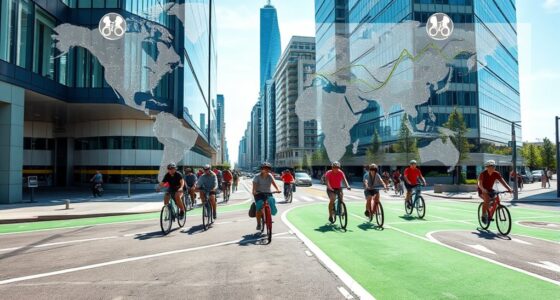
Around the world, cities are adopting 30 km/h zones and pedestrian-friendly designs to boost safety and livability. These measures include traffic calming features like raised crosswalks, curb extensions, and chicanes that naturally slow vehicles and create safer spaces for everyone. Lower speeds reduce accidents, encourage walking and cycling, and improve air quality. If you want to see how these strategies are shaping healthier, more inclusive urban environments, keep exploring the benefits of these innovative efforts.

Get sports gear delivered free with Prime
- Fast, free delivery on millions of items
- Prime Video, Amazon Music and more included
- Member-only deals all year
Key Takeaways
- Many cities worldwide are adopting 30 km/h zones to reduce vehicle speeds and enhance pedestrian safety.
- Traffic calming measures like raised crosswalks and curb extensions effectively promote safer driving behaviors.
- Pedestrian-only zones and urban redesign prioritize foot traffic, decreasing accidents and improving urban livability.
- Lower speed limits and street design encourage sustainable mobility, reducing emissions and congestion.
- Evidence supports that these strategies lead to healthier, more inclusive, and resilient communities globally.
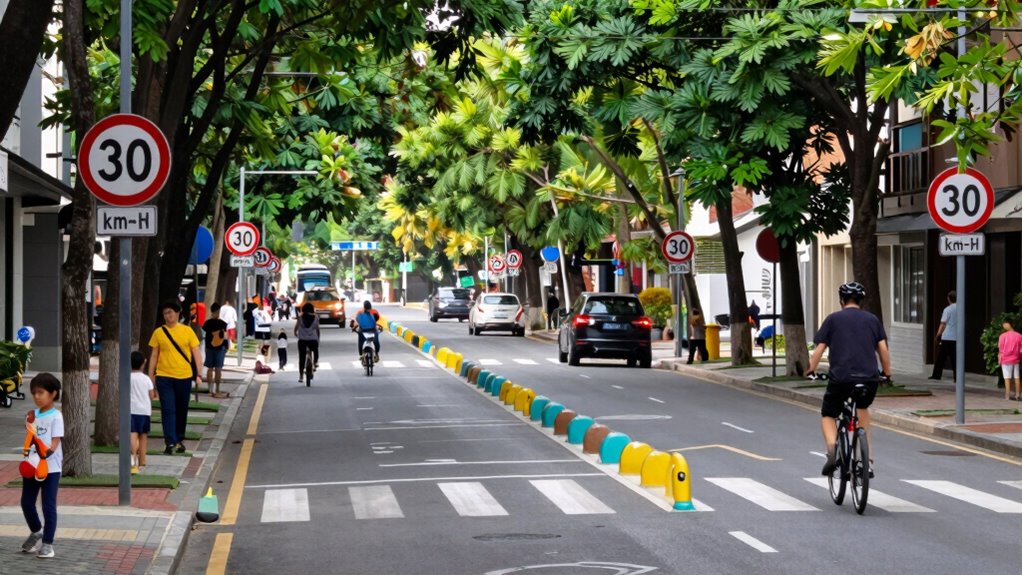
As cities worldwide recognize the urgent need to prioritize safety, many are implementing measures to reduce speed limits to 30 km/h, making streets safer for pedestrians, cyclists, and drivers alike. This shift focuses on traffic calming strategies that slow down vehicles and create more livable urban environments. When you walk through these redesigned streets, you notice how traffic calming features—like raised crosswalks, curb extensions, and chicanes—force drivers to reduce their speed naturally. These measures aren’t just about lowering speed; they’re about transforming streets into spaces where people feel safe and comfortable moving around without fear of accidents.
One of the most visible changes is the creation of pedestrian zones. These areas restrict vehicle access, prioritizing foot traffic and encouraging community interaction. As you step into a pedestrian zone, you experience a sense of calm that’s absent in busier streets. Cafés spill onto the sidewalks, children play freely, and cyclists navigate safely alongside pedestrians. These zones aren’t just about convenience—they’re about fostering vibrant, inclusive neighborhoods. By designating specific areas as pedestrian-only, cities reduce conflicts between vehicles and vulnerable road users, markedly decreasing the likelihood of accidents.
Pedestrian zones foster calm, vibrant neighborhoods where people can safely walk, play, and connect.
Implementing traffic calming and pedestrian zones sends a clear message: safety comes first. You’ll notice that drivers tend to respect lower speed limits more when streets are designed with traffic calming features. When roads are narrow, lined with greenery, or equipped with speed bumps, it becomes less tempting to accelerate. These measures make your journeys smoother and safer, whether you’re walking, cycling, or driving. They also help improve air quality and reduce noise pollution, contributing to healthier city environments. Additionally, these initiatives are supported by traffic calming strategies, which are proven to effectively reduce vehicle speeds and enhance overall safety. Incorporating urban design principles further promotes safer and more accessible streets for all users. Research shows that street redesign can significantly influence driver behavior and promote safer travel habits. Moreover, well-planned street layouts can encourage more sustainable urban mobility, leading to healthier and more resilient communities.
As more cities adopt these strategies, you’ll see a shift toward more sustainable urban mobility. People are more likely to walk or cycle when streets feel safer and more welcoming. This reduces reliance on cars, easing congestion and lowering emissions. When you’re in a city that prioritizes 30 km/h zones and pedestrian-friendly spaces, you experience a different pace of life—less hurried, more connected. It’s a move toward cities that value the safety and well-being of their residents, making urban living more enjoyable and inclusive for everyone.
As an affiliate, we earn on qualifying purchases.
Frequently Asked Questions
How Do 30 Km/H Speed Limits Affect Emergency Response Times?
Slowing down to 30 km/h can cause emergency delays, but it often enhances response efficiency in urban areas. You might experience slightly longer travel times, yet the reduced speed helps prevent accidents, allowing emergency vehicles to navigate more safely through traffic. Overall, the benefits of safer streets may outweigh minor delays, enabling quicker, safer responses while minimizing the risk of further incidents during emergency situations.
What Are the Main Challenges in Implementing 30 Km/H Zones Globally?
You face challenges like ensuring consistent traffic enforcement, which requires resources and political will. Public perception can also be a hurdle; some see 30 km/h zones as restrictive or unnecessary. Convincing communities of safety benefits takes effort, and local opposition may slow implementation. Balancing enforcement with education helps, but changing habits and attitudes remains a key challenge in rolling out these zones worldwide.
How Do Communities Respond to the Change in Street Speed Limits?
You might notice mixed reactions from your community when street speed limits change. Some residents welcome the safer environment, appreciating community engagement efforts that explain benefits. Others may resist, citing concerns about traffic flow or enforcement challenges. To guarantee smooth adoption, authorities need to focus on clear policy enforcement and ongoing communication. Engaging local stakeholders early helps build support, making compliance easier and fostering safer, more walkable neighborhoods.
What Technological Solutions Support Safer Street Designs at Lower Speeds?
Imagine the street as a gentle river, flowing smoothly and safely. Vehicle automation and smart traffic signals act as the guiding currents, orchestrating safe passage at lower speeds. These technological solutions help prevent accidents by coordinating vehicle movements and adapting signal timings in real-time. You, as a rider or pedestrian, feel the calm of a safer environment, where technology works behind the scenes to protect everyone and make streets more welcoming.
Are There Economic Benefits Linked to Reducing Street Speeds?
Reducing street speeds can boost economic growth and urban development by making areas safer and more attractive. Slower streets encourage more foot traffic, supporting local businesses and increasing property values. You’ll see neighborhoods become more vibrant and accessible, fostering community engagement. Additionally, safer streets lower accident costs, reduce healthcare expenses, and attract investments, all of which contribute to a healthier economy and more dynamic urban development.
Conclusion
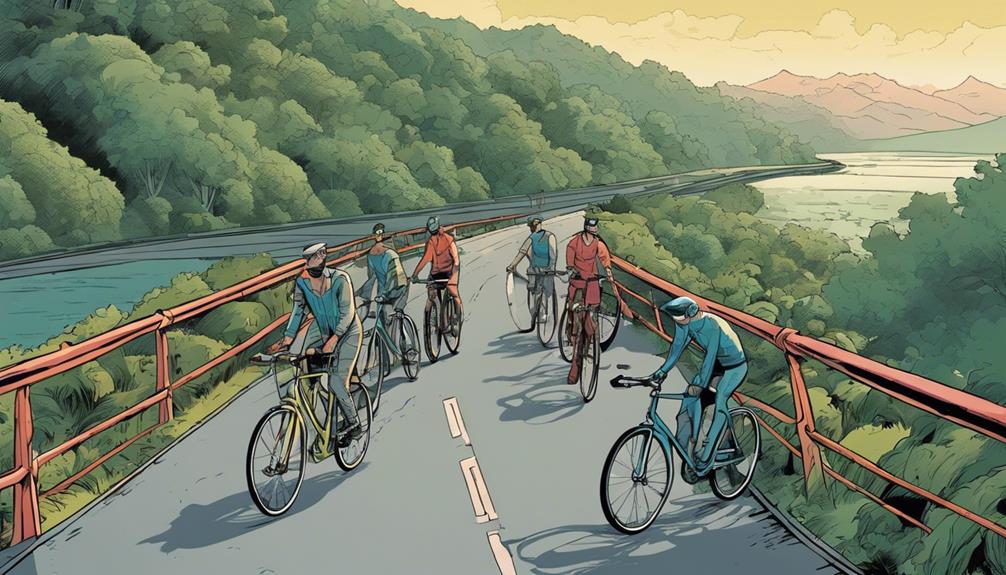
As cities embrace 30 km/h zones, think of streets transforming into gentle rivers, guiding cyclists safely along their flow. This movement isn’t just about slowing down; it’s about reclaiming our roads as spaces of safety and community. By embracing these changes, you become part of a wave that shields everyone—pedestrians, cyclists, and drivers alike. Together, you’re shaping a future where every ride feels like a peaceful sail, calm and secure on safer streets.
NFL season / tailgating Picks
team gear
As an affiliate, we earn on qualifying purchases.