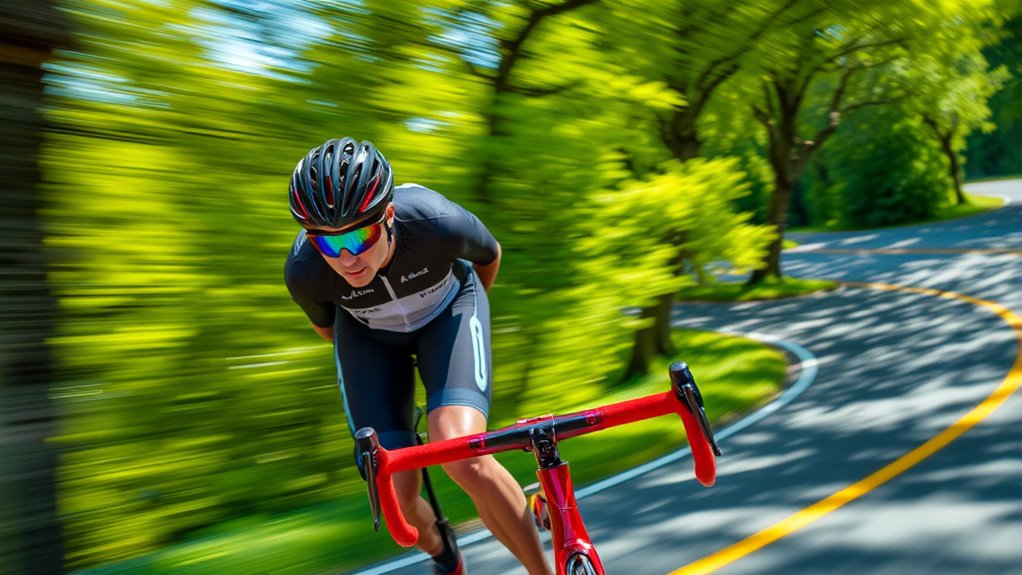

When you cycle with a streamlined posture, leaning forward and lowering your torso, you reduce wind resistance, making you feel faster. Visual cues like scenery blurring and road whizzing by enhance this sensation, tricking your brain into perceiving higher speeds. These effects are amplified when you ride aggressively, creating a sense of swift motion. If you want to discover more about how your body and environment influence this feeling, keep exploring the forces behind it.
Key Takeaways
- Leaning forward and lowering the torso reduces wind resistance, creating a sensation of increased speed.
- Visual cues like scenery blurring and road whizzing by enhance the perception of rapid movement.
- An aerodynamic posture allows for more efficient muscle use, making the ride feel faster with less effort.
- Feeling confident and in control amplifies adrenaline, heightening the sensation of speed.
- The combination of physical posture and environmental factors tricks the brain into perceiving higher velocity.
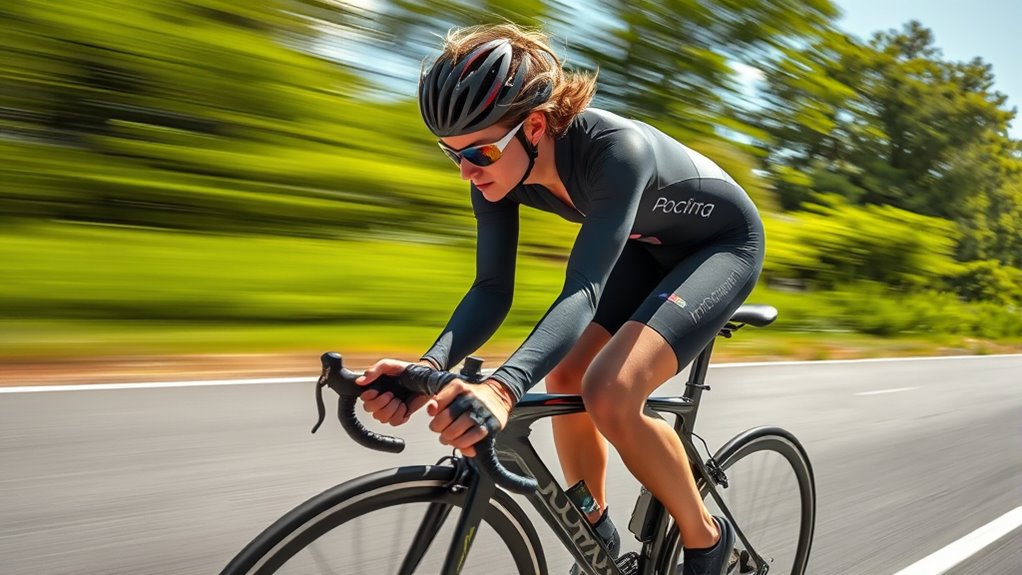
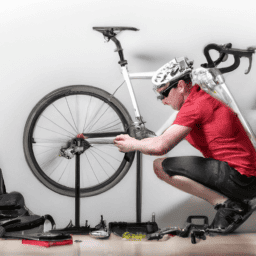
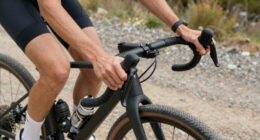
Cycling often feels faster than it looks, thanks to the way your body and mind perceive motion. When you’re on the bike, your sense of speed isn’t solely based on how fast your wheels are turning but also on how you position yourself and how your brain interprets that movement. One key factor influencing this perception is your aerodynamic posture. When you adopt a streamlined stance—leaning forward, lowering your torso, and tucking in your elbows—you reduce wind resistance and create a sense of swift motion. This posture makes you feel like you’re moving faster because your body aligns with the flow of air, cutting through it more efficiently. As a result, your brain registers this efficient, forward-leaning position as increased speed, even if your actual velocity isn’t notably higher.
Your perception of speed is also shaped by how your body responds physically to the effort and environment. When you’re in an aerodynamic posture, your muscles work more efficiently, and you experience less fatigue at higher speeds. This physical ease reinforces the sensation of moving quickly. Plus, when you’re riding in a low, aggressive position, the visual cues around you—such as the road whizzing past or the blur of scenery—are more intense, tricking your brain into believing you’re traveling faster than you really are. The combination of these factors leads to a perception that you’re flying down the road, even if your actual speed is moderate. Additionally, the reduction in air resistance can make your ride feel smoother and more controlled, further enhancing the perception of speed.
Riding low and aggressive heightens visual cues, making you feel faster even at moderate speeds.
Furthermore, your mind plays a vital role in how fast you think you’re going. The faster you feel you’re moving, the more adrenaline and excitement you experience, which can heighten your perception of speed. When you maintain an aerodynamic posture, you often feel more confident and in control, which amplifies this sensation. On the flip side, if you sit upright or adopt a less streamlined position, you might feel slower, even if your speed remains unchanged. Your brain associates the sleek, aggressive stance with high velocity, so changing your posture can alter how fast you think you’re going.
In essence, your perception of speed on a bike isn’t just about actual miles per hour but how your body, posture, and environment interact. An aerodynamic posture enhances speed perception by aligning your body with airflow, reducing drag, and providing visual cues that boost your confidence and excitement. That’s why, when you get into a crouched, streamlined position, cycling often feels faster—even if your speed stays the same. Your mind and body work together to create that exhilarating sensation, making every ride feel like you’re tearing through the wind. Understanding aerodynamics plays a crucial role in how you perceive and experience speed during your ride.
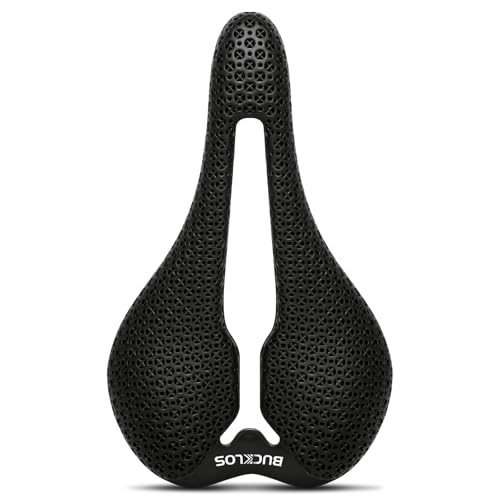
BUCKLOS S-PEFA S8200 3D Printed Bike Saddle Road Bike Mountain Bike Seat Cushion,Full Carbon Fiber Mountain Bike Bicycle Saddle – Support Road MTB BMX and Gravel Bike
3D PRINTING SURFACE: We use 3D printing technology to make the seat cushion fit your body better. This…
As an affiliate, we earn on qualifying purchases.
As an affiliate, we earn on qualifying purchases.
Frequently Asked Questions
How Does Aerodynamics Influence the Sensation of Speed While Cycling?
Aerodynamics greatly impacts how fast you feel while cycling by reducing aerodynamic drag and wind resistance. When your bike and body are streamlined, less air pushes against you, making you feel faster with less effort. You notice this especially at higher speeds, where even small improvements in aerodynamics can markedly decrease wind resistance, allowing you to accelerate more easily and experience that exhilarating sense of speed.
Why Do Some Riders Perceive Higher Speeds on Flat Terrain?
You perceive higher speeds on flat terrain because your body responds to the perceived effort and adrenaline rush. When you ride smoothly without hills, your muscles work efficiently, making you feel faster. The adrenaline heightens your awareness, amplifying the sensation of speed. Plus, the steady pace reduces fatigue, so you enjoy a heightened sense of momentum, making flat riding feel quicker than it actually is.
Does Mental Focus Affect the Perception of Cycling Speed?
Mental focus definitely influences how fast you feel you’re riding. When you concentrate with clarity, you create mental imagery of speed, making the ride seem swifter. On the flip side, adrenaline rushes boost your body’s response, amplifying sensations of velocity. So, staying sharp and engaged heightens your perception of speed, turning a simple ride into an exciting, exhilarating experience. Your mind’s mindfulness merges with physical motion, magnifying the moment.
How Does Bike Design Impact the Feeling of Fast Riding?
Your bike design influences how fast you feel by affecting frame stiffness and tire width. A stiffer frame transfers power efficiently and reduces flex, making your ride feel more responsive and swift. Narrower tires cut through the air more easily, enhancing speed perception, while wider tires provide comfort but may feel slightly slower. So, choosing a rigid frame and narrower tires can give you that exhilarating sense of fast riding.
Can Ambient Noise Levels Alter the Perception of Cycling Velocity?
Yes, ambient noise levels can alter how fast you feel you’re cycling. Sudden auditory illusions, like distant sirens or rushing wind, trick your brain into perceiving higher speeds. Sensory adaptation also plays a role; as noise levels change, your perception adjusts, making you feel faster or slower unexpectedly. So, next time you notice your speed sensation shifting, remember it’s your senses and their illusions at work, shaping your experience.

Wind-Blox Pro Noise Block Helmet Attachment, Noise Reduction Accessory, Wind Blocker Biking and Cycling Gear, Helmet Add-On with Adjustable Straps, Black
Blocks Wind-Related Noise – Our Pro helmet wind blocker attachment straps are specifically engineered to reduce turbulent wind…
As an affiliate, we earn on qualifying purchases.
As an affiliate, we earn on qualifying purchases.
Conclusion
As you pedal faster, the world blurs into a streak of colors, like a vibrant watercolor painting spilling across your vision. Your heartbeat pounds a steady drum, syncing with the wind rushing past. The road beneath becomes a ribbon unraveling ahead, pulling you into a thrilling dance with speed. When you cycle, you’re not just moving—you’re soaring through a fleeting moment where time stretches and snaps back, leaving you feeling alive, electric, and unstoppable.
road scenery blurring simulation for cycling
As an affiliate, we earn on qualifying purchases.
As an affiliate, we earn on qualifying purchases.

gesruny Polarized Sport Sunglasses for Men and Women, Lightweight TR90 Sun Glasses with UV Protection for Cycling Running
HD Polarized Lenses: Experience the outdoors in vivid clarity with Gesruny sunglasses. Polarized lenses with UV400 protection block…
As an affiliate, we earn on qualifying purchases.
As an affiliate, we earn on qualifying purchases.