
Power meters come in three main types: pedal, crank, and spider, each measuring your power output differently. Pedal meters are easy to swap between bikes and great for quick feedback, while crank meters are highly accurate and more durable, perfect for serious training. Spider meters attach to your crank and offer precise data without interfering with pedals. Choosing the right one depends on your budget and riding style—keep going to see which suits you best.
Key Takeaways
- Pedal meters measure power directly at the pedals, offering quick swaps and pedal stroke insights.
- Crank meters attach to the crank arm, providing high accuracy and durability with easier installation.
- Spider meters connect to the crank’s spider, measuring power at the chainring for precise data and bike fit.
- Pedal meters are versatile and affordable; crank and spider meters are more accurate but usually cost more.
- Choose based on your riding style, bike compatibility, and whether you prioritize simplicity or detailed data.

Magene P715 S Power Meter Pedals – ±1% Precision, 120h Battery Life, Seamless Bike Compatibility, ANT+ & Bluetooth for Cycling
±1% Consistent Power Accuracy, Record Your Every Effort Precisely
As an affiliate, we earn on qualifying purchases.
As an affiliate, we earn on qualifying purchases.
What Are Power Meters and Why Are They Important for Cyclists?
Ever wondered how some cyclists optimize their training and improve their performance? Power meters are essential tools that measure how much effort you’re putting into each pedal stroke, providing real-time data analysis. This data helps you identify strengths and weaknesses, allowing you to tailor your workouts effectively. When choosing a power meter, consider battery life, since longer-lasting batteries mean less downtime and more consistent training sessions. Accurate readings are crucial, and reliable power meters ensure you’re getting precise data to track progress over time. By integrating power meters into your routine, you gain valuable insights that keep you motivated and focused on your goals. In short, they’re vital for anyone serious about enhancing cycling performance through informed training.

Magene PES P505/P515 Power Meter Crankset – ±1% Accuracy, 625g Lightweight, 380H Battery, 110BCD, ANT+/Bluetooth, IPX7 Waterproof for Cycling
Unmatched Precision: Achieve ±1% power accuracy with advanced strain gauges, acceleration sensors, and intelligent temperature compensation, delivering reliable…
As an affiliate, we earn on qualifying purchases.
As an affiliate, we earn on qualifying purchases.
How Do Pedal-Based Power Meters Work and Are They Right for You?
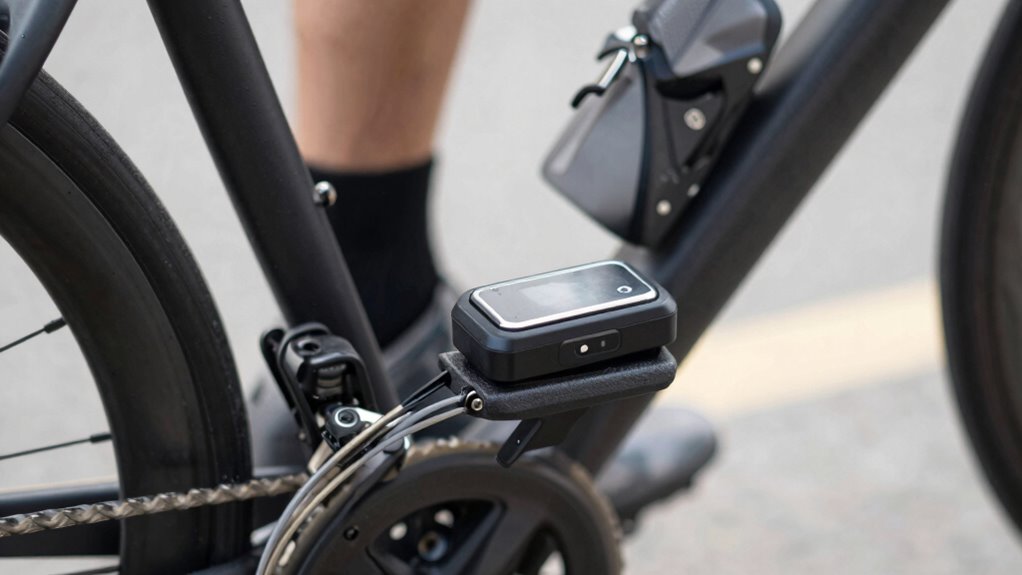
Pedal-based power meters measure your power output directly from the pedals, giving you precise data on your performance. They’re best suited for cyclists looking for accurate, consistent readings and easy installation. Consider if their compatibility and features match your riding style and goals before making a choice. Additionally, understanding power meter technology can help you select the best option for your needs. Since pedal-based systems often rely on strain gauge sensors, they can provide real-time feedback that is essential for targeted training. Being aware of European cloud innovation can also inform how you manage your cycling data securely and sustainably. Familiarity with cultural significance of different power meter types can further guide your decision-making process.
How Pedal Meters Operate
Have you ever wondered how pedal meters measure your power output during a ride? They use pedal sensors to monitor the force you apply and the cadence you maintain. These sensors are integrated into the pedal body, capturing data as you push down and pull up on the pedals. The sensors measure the torque generated during each pedal stroke, which is essential for accurate power transfer calculations. This data is then transmitted wirelessly to your cycling computer or app. Because pedal meters monitor each leg independently, they can detect asymmetries in your pedaling. This setup provides real-time insights into your performance, helping you optimize your efficiency. Overall, pedal meters work by translating your pedal movements into precise power measurements with minimal fuss.
Suitability for Cyclists
Understanding how pedal meters measure your power output helps you determine if they’re the right tool for your cycling needs. Pedal-based power meters are ideal if you want precise data on your pedal stroke and immediate feedback during rides. They’re compatible with most cycling apparel, making integration into your gear simple. If you follow structured training programs that focus on cadence and pedal efficiency, pedal meters can enhance your performance analysis. However, if you prefer a more straightforward setup or ride with specific bike frames, other types might suit you better. Consider your riding style, goals, and comfort with technology. Pedal meters are highly suitable for dedicated cyclists looking to optimize every pedal stroke, but they may be less necessary if you’re a casual rider or prioritize simplicity.

CooSpo S10 Power Meter Spider for Easton 110 BCD 4-Bolt Crankset, Dual-Sided Precision Power Meter, Bluetooth/ANT+ Compatible, Lightweight Cycling Spider for Road & Mountain Bikes
±1% Accuracy Real-Time Data Tracking – Monitor power output, cadence, and torque effectiveness in real time to optimize…
As an affiliate, we earn on qualifying purchases.
As an affiliate, we earn on qualifying purchases.
Crank-Based Power Meters: What They Are and When to Use Them
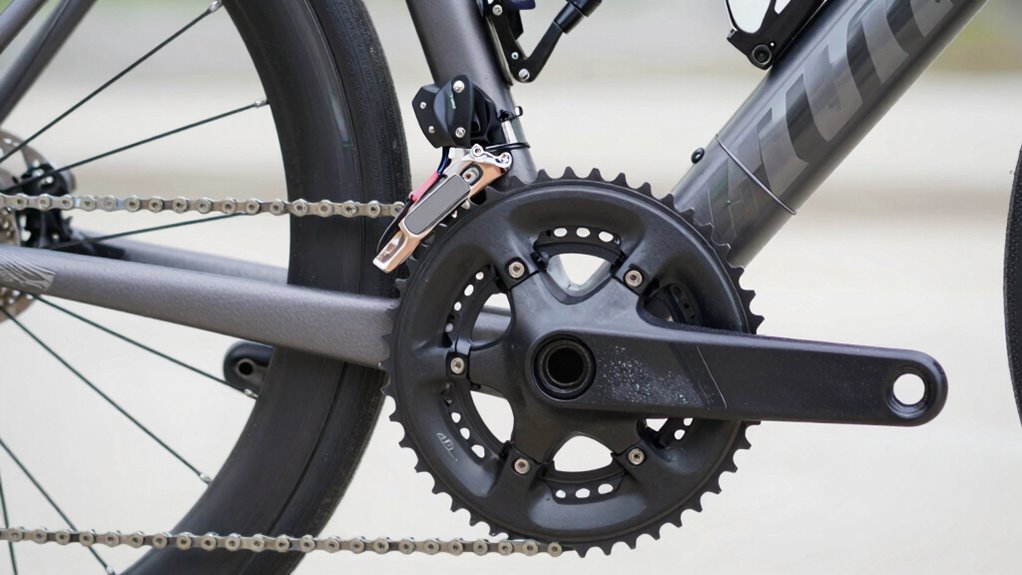
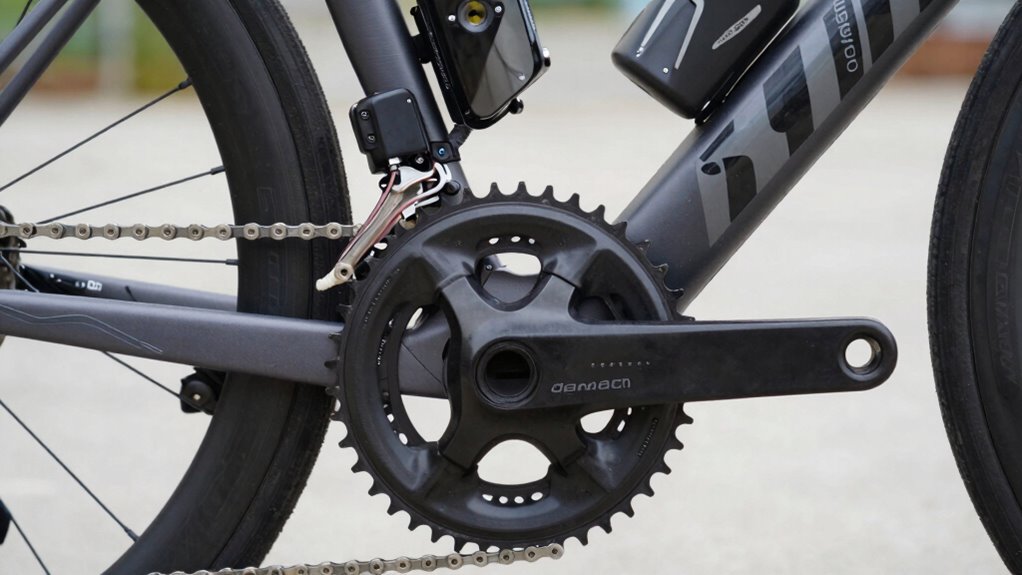
Crank-based power meters are popular for their accuracy and straightforward installation, but you’ll want to contemplate their compatibility with your bike. They often require more maintenance than other types, so understanding their upkeep is important. Knowing when to choose a crank-based meter helps you make the most of their benefits without surprises.
Compatibility and Installation Ease
Choosing the right crank-based power meter depends largely on how easily it can be installed and whether it’s compatible with your bike. Mount compatibility is key—some meters fit specific cranksets or bottom brackets, so you need to check if yours matches the device’s requirements. Installation complexity varies; some models are straightforward and can be swapped quickly, while others require more tools or professional help. If you prefer a DIY approach, look for power meters with simple mounting systems. Keep in mind that compatibility issues can lead to costly adjustments or replacements. If your bike has a unique or older crankset, ensure the power meter you choose is designed to work with it. Overall, selecting a model with high mount compatibility and low installation complexity makes setup easier and more hassle-free. Additionally, reviewing product specifications and compatibility charts can help ensure the power meter suits your specific bike setup.
Accuracy and Maintenance Needs
Crank-based power meters are known for delivering highly accurate measurements, making them a popular choice for cyclists seeking reliable data. To maintain this accuracy, you’ll need to monitor calibration frequency regularly, especially if you notice inconsistent readings. Calibration can be quick but is essential to guarantee precision. Durability concerns are common with crank-based models, as they face exposure to dirt, sweat, and impacts. Regular maintenance, like cleaning and inspecting for wear, extends their lifespan and keeps readings consistent. While they generally require less frequent calibration than pedal-based meters, staying attentive to calibration needs and addressing any signs of wear helps preserve their accuracy. Proper care ensures your crank-based power meter remains a dependable tool for your training.

CYCPLUS Bike Computer Set Include Speed Sensor and Mount, Wireless Bicycle Speedometer Odometer, IPX6 Waterproof ANT+ Bluetooth
【Dynamic GPS Positioning】Higher sensitivity, Higher accuracy, Faster positioning. The navigating chip is imported from Switzerland. The GPS signal…
As an affiliate, we earn on qualifying purchases.
As an affiliate, we earn on qualifying purchases.
What Are Spider Power Meters and How Do They Differ?

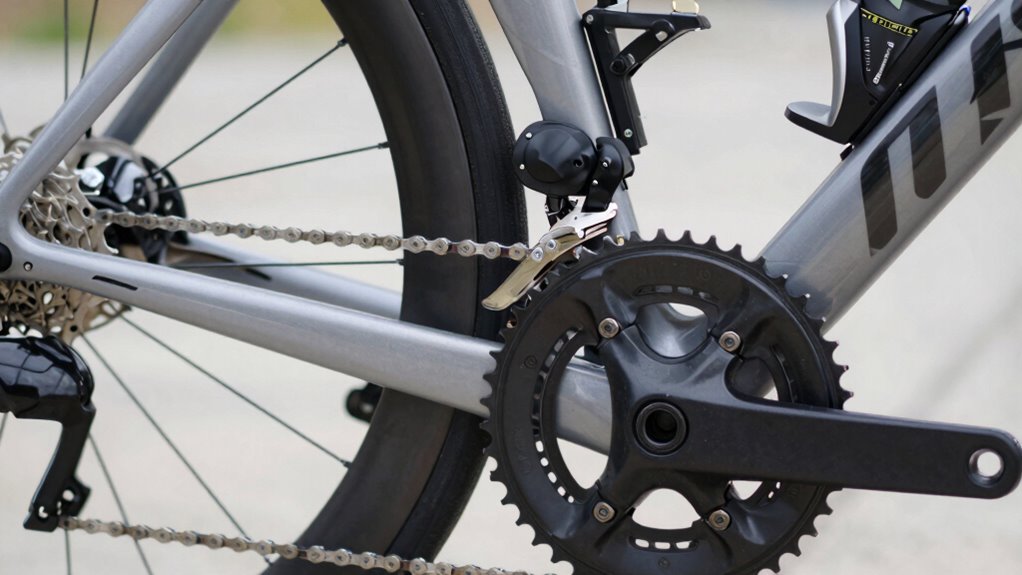
Spider power meters are specialized cycling devices designed to measure your power output directly from the crankset. They attach to the spider, the component connecting the crank arms to the chainring, providing precise data for your training. Unlike pedal or crank-based meters, spider power meters focus on the interface between the crank and chainring, which can influence your bike fit and pedaling efficiency. They typically offer benefits such as:
- Accurate power readings for detailed training strategies
- Compatibility with various crankset designs and bike fits
- Reduced interference with pedal-based systems
- Ease of installation and maintenance for consistent data
Because of their specific measurement point, spider power meters help you optimize your bike fit and refine training strategies, especially when aiming for precise power zones and performance improvements. Vibe coding techniques are also increasingly used to analyze and improve cycling performance effectively.
How to Choose the Best Power Meter for Your Cycling Goals
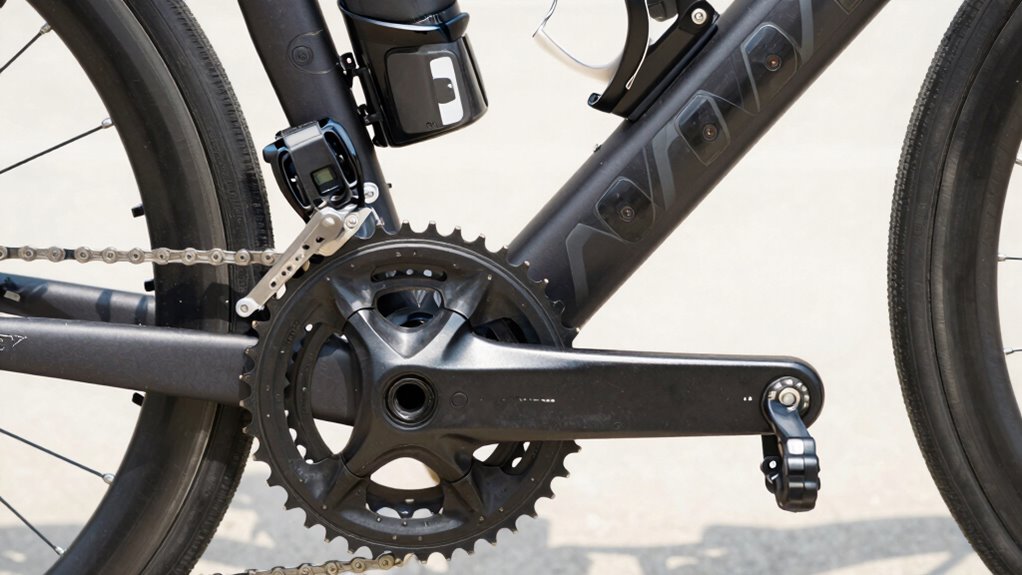
Selecting the right power meter depends on your cycling goals, riding style, and budget. If you’re focused on improving your cycling nutrition and optimizing training plans, accuracy and data consistency matter most. For beginners, a pedal-based power meter offers easy installation and straightforward data. If you train regularly and want detailed insights, a crank or spider power meter might suit you better, providing more precise measurements. Consider your riding environment—whether you’re racing, climbing, or on long endurance rides—and choose a model that integrates well with your cycling software. Budget also plays a role, so balance features with affordability. Ultimately, pick a power meter that aligns with your goals, helps you track progress, and fits seamlessly into your training routine.
Pros and Cons of Pedal, Crank, and Spider Power Meters
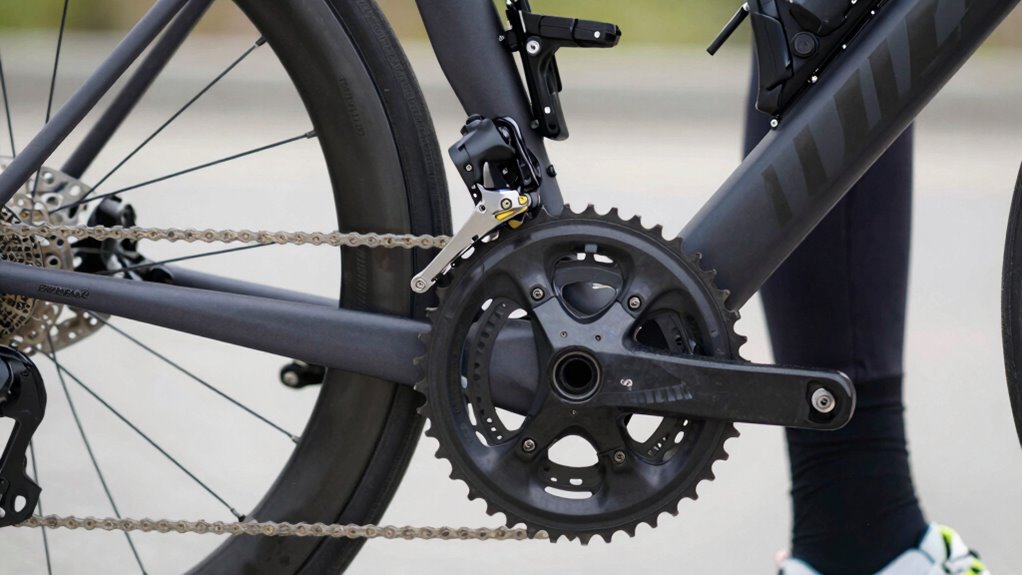
Pedal, crank, and spider power meters each offer distinct advantages and drawbacks, so understanding their pros and cons helps you choose the best fit for your cycling needs.
- Pedal meters excel in sensor compatibility and easy swapping between bikes but may face longer installation complexity.
- Crank meters provide broader compatibility with different bikes and tend to have straightforward installation.
- Spider meters often deliver precise data with minimal fuss but can be limited by compatibility issues.
- Overall, pedal systems might require more maintenance, while crank and spider options can be more durable, depending on your setup.
Choosing the right type depends on your priorities around sensor compatibility and installation complexity, ensuring you get accurate data without hassle.
Which Power Meter Type Fits Your Budget and Riding Style?
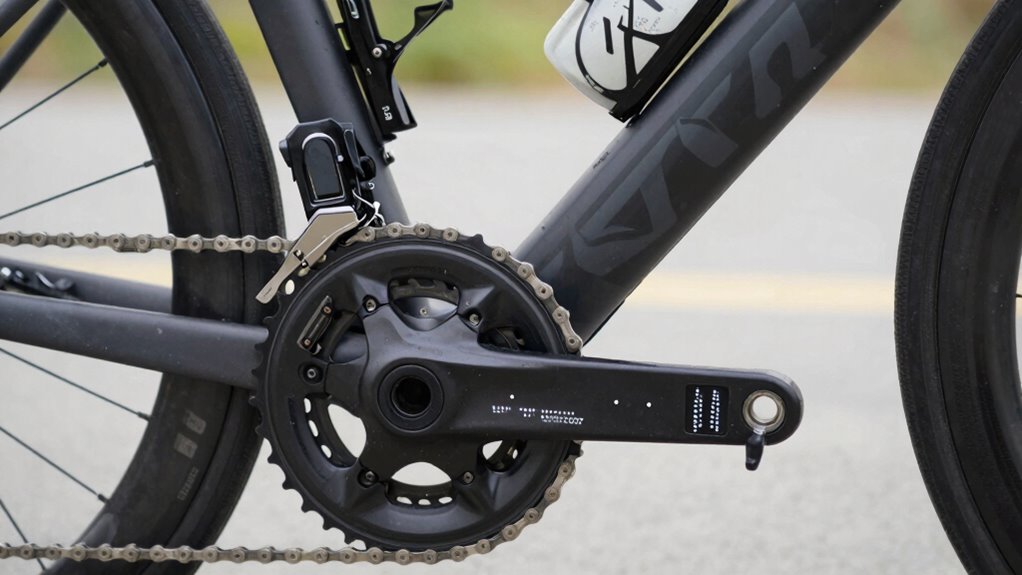
Choosing the right power meter depends heavily on your budget and how you ride. If you’re looking for a cost comparison, pedal-based meters tend to be more affordable and offer good versatility, especially if you already have compatible pedals. Crank and spider meters usually cost more but provide highly precise data, ideal for serious cyclists. Ease of installation varies: pedal meters are simple to swap between bikes, making them convenient, while crank and spider meters often require more time and tools to set up properly. Consider your riding style, whether you prefer quick swaps or a more integrated setup, and match that with your budget. This way, you’ll find a power meter that balances affordability with ease of use, helping you ride smarter without breaking the bank.
Frequently Asked Questions
How Accurate Are Different Power Meter Types?
You’ll find that all power meter types are fairly accurate, but calibration challenges and environmental impacts can influence their precision. Pedal, crank, and spider meters typically offer within 1-2% accuracy, yet extreme conditions like temperature fluctuations or dirt can cause errors. Regular calibration helps maintain accuracy, so you should check your device often. Understanding these factors ensures you get the most reliable data for your training.
Can I Upgrade My Existing Power Meter Later?
Sure, you can upgrade your power meter later—if you’re okay with the hassle and the potential expense. Many models offer upgrade options, but not all are future compatible. You might find yourself stuck with a system that’s hard to upgrade or incompatible with newer tech. So, think ahead when choosing, because upgrading isn’t always as simple as swapping out a part; it can be a bit of a gamble.
Do Power Meters Affect Bike Weight or Performance?
Power meters add minimal weight, so they usually don’t substantially affect your bike’s weight impact or performance. Some models may slightly influence aerodynamics, but this impact is often negligible for most riders. If you’re concerned about weight or speed, choose a lightweight, streamlined power meter. Overall, the performance benefits of accurate data and training insights outweigh any minor weight or aerodynamic effects.
Are Power Meters Compatible With All Cycling Computers?
You might think all cycling computers work with power meters, but compatibility varies. Some computers easily integrate with different bike setups, while others are more limited. Check your bike’s compatibility and consider how well your computer communicates with your power meter. Think of it like pairing a new gadget—sometimes they connect seamlessly, sometimes you need adapters or specific features. Do your research to guarantee smooth computer integration for accurate data.
How Maintenance-Intensive Are Each Power Meter Type?
You’ll find that pedal and crank power meters require regular calibration, roughly every 40-100 hours of riding, to maintain accuracy, while spiders are generally more durable but might need less frequent calibration. Pedals can be more maintenance-intensive due to wear on the cleats and contact points, whereas crank and spider meters tend to be more durable but may still need occasional checks for calibration and sensor integrity.
Conclusion
Choosing the right power meter is like finding the perfect gear in a vast toolbox—each type offers unique strengths tailored to your ride. Whether you prefer the seamless feel of pedals, the stability of the crank, or the compact spider design, your choice shapes your cycling journey. Think of it as planting a seed; with the right meter, you’ll nurture your skills and watch your performance blossom, riding towards your goals with clarity and confidence.