Finding the right bike computer for road cycling often involves balancing features like GPS accuracy, ease of use, screen visibility, and durability. The Garmin Edge 540 stands out as the best overall choice thanks to its reliable performance and comprehensive data tracking. For riders seeking a compact, budget-friendly option, the Garmin Edge 850 Compact offers excellent navigation without bulk, while the Wahoo ELEMNT Bolt V3 excels in user-friendly design and seamless app integration. These options highlight the key tradeoffs: higher-end models provide more advanced features and durability, but often come at a higher price, while budget options may lack some sophisticated functions. Keep reading for a detailed breakdown to find the best fit for your cycling needs.

Get sports gear delivered free with Prime
- Fast, free delivery on millions of items
- Prime Video, Amazon Music and more included
- Member-only deals all year
Complete the kit


Key Takeaways
- Top-performing models like the Garmin Edge 540 combine GPS precision with durable build quality suitable for serious road cyclists.
- Compact and budget-friendly options such as the Garmin Edge 850 Compact deliver essential navigation features without overwhelming size or cost.
- User experience varies significantly; models with touchscreens and simple interfaces tend to be more accessible for beginners.
- Waterproofing and battery life are often overlooked but crucial for long rides and unpredictable weather.
- Most high-end devices excel in connectivity options like Bluetooth and ANT+, enabling seamless sensor integration.
| Garmin Edge 540 GPS Cycling Computer | 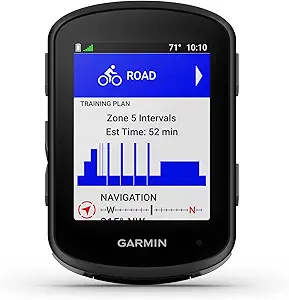 | Best Overall for Advanced Navigation and Performance | Battery life: up to 26 hours (demanding use), up to 42 hours (battery saver mode) | Navigation: Multi-band GNSS technology | Display: Button controls, ride type-specific maps | VIEW ON AMAZON | See Our Full Breakdown |
| Garmin Edge 850 Compact GPS Cycling Computer |  | Best for Long Rides with Advanced Features and Clear Display | Display: Vivid color touchscreen | Battery life: Up to 12 hours in demanding use, 36 hours in battery saver mode | Maps: Preloaded maps for road, gravel, and trails including Trailforks | VIEW ON AMAZON | See Our Full Breakdown |
| iGPSPORT BSC500 GPS Bike Computer, 3.3” Touch Screen with Voice Navigation |  | Best for Clear, Voice-Enhanced Navigation on a Large Screen | Screen Size: 3.3 inches | Operation: Touch and button | Satellite Support: GPS, Beidou, GLONASS, Galileo, QZSS | VIEW ON AMAZON | See Our Full Breakdown |
| Cateye Wired Bike Computer |  | Best for Beginners Seeking Reliable Basic Metrics | Display: Current, max, and average speed, total distance, trip distance, elapsed time, pace arrow, clock | Stop Detection: Automatic pause during stops | Battery Life: Up to three years | VIEW ON AMAZON | See Our Full Breakdown |
| Garmin Edge Explore 2 GPS Cycling Computer |  | Best for Casual Riders and Safety-Focused Navigation | Display: 3-inch high-resolution touchscreen | Navigation: Turn-by-turn, bike-specific maps | Connectivity: Smartphone, sensors, Varia devices | VIEW ON AMAZON | See Our Full Breakdown |
| CATEYE Urban Wireless Bike Computer |  | Best for Simplicity and Everyday Commuting | Display Metrics: Current, max, and average speed, total and trip distance, elapsed time, calorie consumption, pace arrow, clock | Odometer: Manual setting | Mounting: FlexTight Bracket for easy adjustment | VIEW ON AMAZON | See Our Full Breakdown |
| iGPSPORT BSC200S GPS Bike Computer, Wireless Route Navigation, 2.4” Screen, Bluetooth, ANT+, IPX7 Waterproof |  | Best for Route Planning and Connectivity | Display: 2.4-inch semi-reflective color screen | Battery Life: 25 hours | Battery Capacity: 600mAh | VIEW ON AMAZON | See Our Full Breakdown |
| Garmin Edge 1050 Premium Cycling Computer |  | Best for Advanced Performance and Navigation | Battery Life: Up to 20 hours (standard), up to 60 hours (battery saver mode) | Display: Vivid color touchscreen | Connectivity: Smartphone, Garmin Connect, Garmin Pay | VIEW ON AMAZON | See Our Full Breakdown |
| iGPSPORT BSC100S Wireless GPS Bike Computer with 2.6″ LCD, Waterproof, 40H Battery, Bluetooth & ANT+ |  | Best for Long Rides and Sensor Compatibility | Screen Size: 2.6 inches | Battery Life: 40 hours | Dimensions: 86.7x51x14.9mm | VIEW ON AMAZON | See Our Full Breakdown |
| COOSPO Color Touchscreen GPS Bike Computer CS600 |  | Best for Multi-Day and Performance Tracking | Display: 2.4-inch high-resolution color touchscreen | Waterproof: IPX7 | Battery Life: 36 hours | VIEW ON AMAZON | See Our Full Breakdown |
| COOSPO Bike Computer GPS Wireless, ANT+ Cycling Computer with Bluetooth, 2.4-inch LCD Screen, Auto Backlight, IP67 Waterproof |  | Best Overall | Display Size: 5.84 centimeters | Display: LCD | Battery Life: 80 hours | VIEW ON AMAZON | See Our Full Breakdown |
| CYCPLUS Wireless GPS Bike Computer G1 | 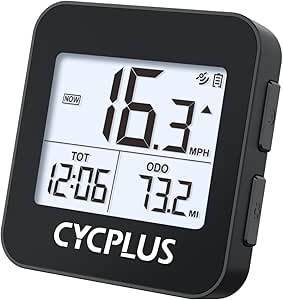 | Best for Long Battery Life | Weight: 70g | Screen Size: 2.0 inches | Waterproof Rating: IPX6 | VIEW ON AMAZON | See Our Full Breakdown |
| Wahoo ELEMNT Bolt V3 GPS Cycling/Bike Computer, Black |  | Best for Performance and Navigation | Display: 2.2 inch, 64 color screen | Memory: 16GB | Battery Life: 15 hours | VIEW ON AMAZON | See Our Full Breakdown |
| Garmin Edge 840, Compact GPS Cycling Computer |  | Best for Advanced Training | Battery life: up to 26 hours in demanding use | Display: Touchscreen and button control | Navigation: Multi-band GNSS | VIEW ON AMAZON | See Our Full Breakdown |
| VLOXO GPS Bike Computer with Headlight, 3-in-1 Wireless Bicycle Odometer |  | Best for Safety and Multi-Functionality | Display Size: 2.4 inches | Display: High-contrast LCD | Battery Life: Up to 90 hours | VIEW ON AMAZON | See Our Full Breakdown |
| bike computers for road cycling | Battery life | Display | Connectivity |
|---|---|---|---|
| Garmin Edge 540 GPS Cycling Co | up to 26 hours (demanding use), up to 42 hours (battery saver mode) | Button controls, ride type-specific maps | Smart connectivity with compatible devices |
| Garmin Edge 850 Compact GPS Cy | Up to 12 hours in demanding use, 36 hours in battery saver mode | Vivid color touchscreen | Smart alerts, Garmin Pay, in-ride messaging, incident detection |
| iGPSPORT BSC500 GPS Bike Compu | — | — | Supports route imports from apps like Strava and Komoot |
| Cateye Wired Bike Computer | Up to three years | Current, max, and average speed, total distance, trip distance, elapsed time, pace arrow, clock | — |
| Garmin Edge Explore 2 GPS Cycl | — | 3-inch high-resolution touchscreen | Smartphone, sensors, Varia devices |
| CATEYE Urban Wireless Bike Com | — | — | — |
| iGPSPORT BSC200S GPS Bike Comp | 25 hours | 2.4-inch semi-reflective color screen | Bluetooth, ANT+ |
| Garmin Edge 1050 Premium Cycli | Up to 20 hours (standard), up to 60 hours (battery saver mode) | Vivid color touchscreen | Smartphone, Garmin Connect, Garmin Pay |
| iGPSPORT BSC100S Wireless GPS | 40 hours | — | — |
| COOSPO Color Touchscreen GPS B | 36 hours | 2.4-inch high-resolution color touchscreen | — |
| COOSPO Bike Computer GPS Wirel | 80 hours | LCD | ANT+ and Bluetooth |
| CYCPLUS Wireless GPS Bike Comp | Over 55 hours | — | — |
| Wahoo ELEMNT Bolt V3 GPS Cycli | 15 hours | 2.2 inch, 64 color screen | Bluetooth Smart, ANT+, WiFi |
| Garmin Edge 840 | up to 26 hours in demanding use | Touchscreen and button control | — |
| VLOXO GPS Bike Computer with H | Up to 90 hours | High-contrast LCD | — |
More Details on Our Top Picks
Garmin Edge 540 GPS Cycling Computer
The Garmin Edge 540 stands out for its combination of detailed navigation, performance tracking, and personalized coaching, making it ideal for serious cyclists who want a comprehensive device. Compared with the Garmin Edge 850, it offers a slightly smaller form factor and longer battery life, but its advanced multi-band GNSS technology ensures precise positioning in challenging environments. The customizable ride-specific maps and training prompts help improve your rides, yet the extensive features come with a learning curve and a higher price point. This model is perfect for riders who prioritize accuracy and endurance, even if they need to invest time in setup and learning its full capabilities.
Pros:- Accurate multi-band GNSS positioning for challenging terrains
- Long battery life up to 42 hours in battery saver mode
- Personalized coaching and training prompts
- User-friendly button controls for all conditions
Cons:- Complex feature set may require a learning curve
- Higher price point for advanced features
Best for: Experienced cyclists seeking detailed navigation and training tools for long, demanding rides
Not ideal for: Casual riders or beginners who prefer simple, straightforward devices without a steep learning curve
- Battery life:up to 26 hours (demanding use), up to 42 hours (battery saver mode)
- Navigation:Multi-band GNSS technology
- Display:Button controls, ride type-specific maps
- Connectivity:Smart connectivity with compatible devices
- Training features:Suggested workouts, coaching, ClimbPro ascent planner, power guide, stamina insights
Our verdict“This device is best suited for serious cyclists who want precise navigation and training insights, accepting the complexity and cost.”
Garmin Edge 850 Compact GPS Cycling Computer
The Garmin Edge 850 makes a compelling choice for cyclists who want a vivid touchscreen and extensive features in a compact package. Its high-resolution color display is bright and easy to read, even in sunlight, surpassing the simpler Cateye Wired model, which lacks a touchscreen. The multi-band GPS with automatic 5 Hz recording ensures precise tracking across varied terrains like trails or gravel, while the long 36-hour battery life supports lengthy rides. Features like smart alerts, Garmin Pay, and incident detection add safety and convenience. However, the device’s complexity and premium price mean it’s best for riders willing to invest time in mastering its functions and who have compatible smartphones for full connectivity.
Pros:- Vivid color touchscreen for easy navigation
- Multi-band GPS with detailed mapping and high accuracy
- Long battery life up to 36 hours in power saver mode
- Smart connectivity including payments and incident detection
Cons:- Premium price requires a larger budget
- Learning curve for accessing all features
Best for: Advanced cyclists who do multi-hour rides and value a colorful, touch-enabled display with extensive connectivity
Not ideal for: Casual riders or those on a tight budget who need a simple, no-fuss computer
- Display:Vivid color touchscreen
- Battery life:Up to 12 hours in demanding use, 36 hours in battery saver mode
- Maps:Preloaded maps for road, gravel, and trails including Trailforks
- GPS accuracy:Multi-band GPS with automatic 5 Hz recording
- Connectivity:Smart alerts, Garmin Pay, in-ride messaging, incident detection
Our verdict“Ideal for riders who want a feature-rich, easy-to-read device for long, complex rides, and are comfortable with a bit of setup.”
iGPSPORT BSC500 GPS Bike Computer, 3.3” Touch Screen with Voice Navigation
The iGPSPORT BSC500 offers a large 3.3-inch touchscreen with voice navigation, making it ideal for cyclists who prioritize easy, glanceable maps and safety. Its support for multiple satellite systems—GPS, Beidou, GLONASS, Galileo, QZSS—ensures reliable positioning even in complex environments, outperforming simpler models like the Cateye Wired, which lacks advanced satellite support. The voice prompts help reduce the need to look at the screen constantly, enhancing safety. Route planning and the ability to import from apps like Strava or Komoot make it versatile. The main tradeoff is the setup complexity, which might challenge beginners, along with limited included accessories, meaning extra purchases may be needed.
Pros:- Large, clear 3.3-inch touchscreen display
- Supports multiple satellite systems for accurate navigation
- Voice alerts for safer riding
- Supports route import from popular apps
Cons:- Complex setup process can be daunting for beginners
- Limited accessories included in the package
Best for: Cyclists who want a large screen and voice navigation for safer, easier route following
Not ideal for: Beginners or riders seeking a plug-and-play device with minimal setup and fewer features
- Screen Size:3.3 inches
- Operation:Touch and button
- Satellite Support:GPS, Beidou, GLONASS, Galileo, QZSS
- Navigation Features:Route planning, turn reminder, yaw planning, voice navigation
- Connectivity:Supports route imports from apps like Strava and Komoot
Our verdict“Best suited for tech-savvy riders needing a large display with voice prompts for confident navigation, accepting a more involved setup.”
Cateye Wired Bike Computer
The Cateye Wired Bike Computer provides essential cycling metrics—speed, distance, and elapsed time—in a straightforward, reliable package. Its wired setup ensures consistent data without the interference issues wireless models might face, and its long-lasting battery can last up to three years, reducing maintenance. While it lacks advanced features like route planning or GPS, it’s perfect for new riders who want a simple device that records basic stats accurately. The wired connection may be less convenient, and it doesn’t offer the extensive data or smart features that more advanced units like the Garmin Edge 540 provide. Still, for riders focused on core metrics, it’s a dependable choice.
Pros:- Tracks multiple cycling metrics accurately
- Automatic stop detection improves data accuracy
- Battery lasts up to three years
- Ease of use for beginners
Cons:- Wired connection less convenient than wireless options
- Limited to basic metrics without advanced features
Best for: Beginner cyclists who want a simple, reliable device to track speed and distance
Not ideal for: Experienced riders or those wanting advanced navigation and training features
- Display:Current, max, and average speed, total distance, trip distance, elapsed time, pace arrow, clock
- Stop Detection:Automatic pause during stops
- Battery Life:Up to three years
- Intended Audience:Beginners
Our verdict“An excellent choice for newcomers who need a simple, durable device to track essential cycling stats without extra complexity.”
Garmin Edge Explore 2 GPS Cycling Computer
The Garmin Edge Explore 2 offers a user-friendly 3-inch high-resolution touchscreen designed for ease of use in all weather conditions. Its turn-by-turn, bike-specific maps highlight roads and trails, making it suitable for recreational cyclists and commuters alike. Safety features like incident detection and assistance alerts add peace of mind, while its compatibility with sensors and smartphones extends its versatility. Compared to the Garmin Edge 540 or 850, it trades some advanced training features for simplicity and better weather resistance. However, some safety features require a smartphone connection, and sensors and accessories are sold separately, which could add to the overall cost. It’s an excellent option for riders who want reliable, straightforward navigation with safety in mind.
Pros:- High-resolution, weather-resistant touchscreen
- Bike-specific maps with points of interest
- Safety features like incident detection
- Compatible with sensors and smartphones
Cons:- Some safety features need smartphone connection
- Sensors and Varia devices sold separately
- Advanced features can be complex for new users
Best for: Casual cyclists and commuters who prioritize simple, safe navigation and easy connectivity
Not ideal for: Competitive or long-distance riders needing detailed training metrics and extensive customization
- Display:3-inch high-resolution touchscreen
- Navigation:Turn-by-turn, bike-specific maps
- Connectivity:Smartphone, sensors, Varia devices
- Safety features:Incident detection, assistance alerts
- Indoor use:Yes, control music via paired smartphone
Our verdict“Ideal for casual riders who want an intuitive, weatherproof GPS with safety features and basic navigation, accepting some extra accessory costs.”
CATEYE Urban Wireless Bike Computer
The CATEYE Urban Wireless Bike Computer excels at delivering core cycling metrics without overwhelming features. Its straightforward interface and easy-to-mount FlexTight Bracket make it ideal for daily riders who want reliable data on speed, distance, and calories. Unlike the Garmin Edge 1050, which offers advanced navigation and smart connectivity, this model focuses on basic tracking, making it more accessible for casual cyclists. The automatic stop detection prevents data distortion from red lights or breaks, but it lacks GPS tracking and real-time location features, limiting its use for route planning. The manual odometer setting is simple but requires regular adjustment when resetting, which could be inconvenient for some. Overall, this pick makes the most sense for commuters seeking an uncomplicated, dependable device.
Pros:- Tracks comprehensive cycling stats including calories burned
- Easy to mount and adjust with FlexTight Bracket
- Automatically detects stops for accurate data
Cons:- Requires battery replacement for odometer reset
- Limited to basic metrics, no GPS or navigation features
Best for: Urban commuters and casual cyclists who need essential metrics with minimal fuss
Not ideal for: Serious riders or those wanting GPS navigation and advanced route features
- Display Metrics:Current, max, and average speed, total and trip distance, elapsed time, calorie consumption, pace arrow, clock
- Odometer:Manual setting
- Mounting:FlexTight Bracket for easy adjustment
- Stop Detection:Automatic stop during pauses
- Additional Features:Calories burned tracking
Our verdict“This bike computer is perfect for everyday riders who want reliable basic metrics without extra complexity.”
iGPSPORT BSC200S GPS Bike Computer, Wireless Route Navigation, 2.4” Screen, Bluetooth, ANT+, IPX7 Waterproof
The iGPSPORT BSC200S stands out for its robust GPS navigation capabilities and long battery life, making it suitable for riders who prioritize route customization and extended rides. Its 2.4-inch semi-reflective color screen offers clear visibility in sunlight, and it supports importing routes from apps like Strava and Komoot, unlike the simpler CATEYE model. While it lacks a touchscreen, its physical buttons are easy to use even when wearing gloves. The device’s 25-hour battery life surpasses many competitors, but full functionality depends on pairing with a smartphone app, which can be cumbersome for some users. Compared to the Garmin Edge 1050, it offers fewer advanced training features but provides excellent value for riders who want reliable GPS and connectivity without the high price.
Pros:- Supports route import and customization from multiple platforms
- Long battery life of up to 25 hours
- Connects with lights and radar for improved safety
- Clear display visible under sunlight
Cons:- Requires a smartphone app for full features
- Limited to a 2.4-inch screen without touchscreen
Best for: Long-distance cyclists and route enthusiasts who need detailed navigation and app integration
Not ideal for: Riders seeking a fully standalone device with touchscreen or advanced training tools
- Display:2.4-inch semi-reflective color screen
- Battery Life:25 hours
- Battery Capacity:600mAh
- Charging:Type-C port, 1.5 hours to full charge
- Waterproof:IPX7
- Connectivity:Bluetooth, ANT+
Our verdict“This device is ideal for riders who want dependable GPS navigation combined with long battery life and safety features.”
Garmin Edge 1050 Premium Cycling Computer
The Garmin Edge 1050 makes a compelling choice for serious cyclists seeking an all-in-one device. Its vivid color touchscreen offers intuitive control and detailed maps, rivaling the smaller Garmin Edge 850 but with even more features like incident detection, Garmin Pay, and customizable workouts. While its price is notably higher than the iGPSPORT models, the 20-hour battery life and extensive training tools justify the investment for dedicated riders. The complex interface, however, can be intimidating initially, and some may find it heavy during long rides. Compared with the simpler CATEYE, the Garmin’s advanced features cater to competitive cyclists or those who want detailed performance metrics integrated with route planning and safety alerts.
Pros:- High-resolution color touchscreen display
- Extensive navigation and performance tracking features
- Long battery life suitable for all-day rides
- Smart connectivity with messaging and payments
Cons:- Costlier than basic options like CATEYE
- Steep learning curve for new users
- Heavier weight can impact comfort during long rides
Best for: Performance-focused cyclists who want comprehensive navigation, training, and safety features
Not ideal for: Casual riders who prefer straightforward devices or have budget constraints
- Battery Life:Up to 20 hours (standard), up to 60 hours (battery saver mode)
- Display:Vivid color touchscreen
- Connectivity:Smartphone, Garmin Connect, Garmin Pay
- Features:Navigation, incident detection, live locations, coaching
Our verdict“This device is best for serious cyclists aiming for detailed analytics and advanced navigation, willing to navigate its complexity and higher price.”
iGPSPORT BSC100S Wireless GPS Bike Computer with 2.6″ LCD, Waterproof, 40H Battery, Bluetooth & ANT+
The iGPSPORT BSC100S offers a substantial 2.6-inch LCD and a 40-hour battery, making it a standout for endurance riders. Its support for multiple satellite systems ensures precise positioning, rivaling the Garmin Edge 1050’s navigation accuracy but with a more straightforward, physical button interface. While it doesn’t include sensors like heart rate or power, it supports Bluetooth and ANT+ sensors for comprehensive data collection, unlike the simpler CATEYE. Its waterproof design and long-lasting battery make it ideal for varied weather conditions and extended outings. However, the device’s reliance on external sensors and the absence of a touchscreen can be limiting for users wanting all-in-one, modern interfaces. Overall, it suits riders who prioritize long-distance tracking with sensor flexibility.
Pros:- Supports multiple satellite systems for accurate positioning
- Long battery life of up to 40 hours
- Waterproof and durable for all weather conditions
- Supports Bluetooth and ANT+ sensors for comprehensive data
Cons:- Limited to English language only
- No touchscreen, relies on physical buttons
Best for: Endurance cyclists and those who want extensive sensor support for detailed analytics
Not ideal for: Casual riders or gym cyclists who prefer a touchscreen or integrated sensor suite
- Screen Size:2.6 inches
- Battery Life:40 hours
- Dimensions:86.7x51x14.9mm
- Weight:67g
- Waterproof Grade:IPX7
- Compatible Sensors:speed, cadence, heart rate, power meter (BLE/ANT+)
Our verdict“This device is perfect for long-distance riders needing reliable GPS with extensive sensor compatibility and durability.”
COOSPO Color Touchscreen GPS Bike Computer CS600
The COOSPO CS600 stands out with its high-resolution 2.4-inch color touchscreen, offering a clear, auto-backlit display suitable for multi-day rides. Its built-in route navigation with breadcrumb trails helps riders stay on course, while the 36-hour battery life provides ample power for extended adventures. Unlike the Garmin Edge 1050, which offers advanced training tools, the CS600 focuses on stable GPS tracking and seamless wireless data sync with Bluetooth and ANT+. Its lack of included sensors means additional purchases are necessary for heart rate, cadence, or power data, which could be a drawback for performance-focused cyclists. Nevertheless, the device’s sturdy waterproof design and customizable displays make it an excellent choice for riders wanting detailed route info during multi-day trips.
Pros:- High-resolution color touchscreen with auto-backlight
- Accurate GPS and GLONONASS tracking
- Long 36-hour battery life for multi-day use
- Wireless data sync via Bluetooth and ANT+
Cons:- No included sensors for heart rate, cadence, or power
- Requires separate purchase for compatible sensors
Best for: Long-distance and multi-day cyclists who need reliable GPS and customizable data displays
Not ideal for: Riders seeking an all-in-one training device with built-in sensors or advanced training analytics
- Display:2.4-inch high-resolution color touchscreen
- Waterproof:IPX7
- Battery Life:36 hours
- Charging:2 hours via Type-C
- Navigation:Built-in route navigation with breadcrumb trail
- Compatibility:Pair with smart bike lights, radar, sensors (sold separately)
Our verdict“This GPS bike computer is best suited for multi-day riders wanting detailed route navigation and customizable data displays without added complexity.”
COOSPO Bike Computer GPS Wireless, ANT+ Cycling Computer with Bluetooth, 2.4-inch LCD Screen, Auto Backlight, IP67 Waterproof
The COOSPO Bike Computer GPS stands out for its comprehensive sensor support and reliable GPS accuracy, making it an excellent choice for serious cyclists who value detailed data and durability. Unlike the Wahoo ELEMNT Bolt V3, it offers dual GPS modes that enhance positioning reliability in varied environments, though it requires an initial 3-5 minute GPS lock, which can be inconvenient for quick starts. Its sunlight-readable LCD with auto backlight ensures visibility in bright conditions, and waterproofing means it’s ready for all weather. However, it doesn’t come with sensors or an out-front mount, so setup involves additional purchases. Compared to the Garmin Edge 840, it’s less feature-rich but offers great value for riders seeking core GPS functions without a steep learning curve. This model is perfect for cyclists who want dependable GPS tracking and sensor compatibility at a reasonable price.Pros:- Accurate GPS positioning with dual modes
- Supports multiple sensors via ANT+ and Bluetooth
- Sunlight-readable 2.4-inch LCD with auto backlight
- IP67 waterproof design for all weather conditions
Cons:- First-time GPS positioning may take 3-5 minutes
- Requires additional purchase for sensors and mount
Best for: Cyclists who need accurate, durable GPS data with sensor integration for training and performance tracking.
Not ideal for: Casual riders or newcomers who prefer a plug-and-play device without extra setup or sensor purchases.
- Display Size:5.84 centimeters
- Display:LCD
- Battery Life:80 hours
- Sensor Type:Cadence Sensor, GPS Sensor, Heart Rate Sensor, Speed Sensor
- Battery Type:Lithium Polymer
- Connectivity:ANT+ and Bluetooth
- Resolution:240×320
- Mounting Type:Handlebar Mount
- Item Weight:100 g
Our verdict“This model is best suited for serious cyclists who want reliable GPS and sensor support without the complexity of premium devices.”
CYCPLUS Wireless GPS Bike Computer G1
The CYCPLUS G1 excels in offering exceptional battery performance, making it ideal for long rides or multi-day trips where charging options are limited. Its 1200mAh battery provides over 55 hours of continuous use, surpassing many competitors like the VLOXO GPS Bike Computer, which has a 90-hour lifespan. The 2.0-inch screen, though smaller, features a glare-free backlight perfect for reading in bright sunlight. Its waterproof IPX6 rating ensures it withstands rain, but it’s limited to basic cycling metrics, lacking advanced navigation or sensor support. Setup can be a bit fiddly, especially for GPS connection, and it doesn’t support touchscreen controls. This device suits riders focused on ride data and safety, rather than detailed navigation or multi-sport activities.Pros:- Exceptional battery life over 55 hours
- Glare-free, high-contrast display
- Waterproof design suitable for rainy conditions
- Lightweight at only 70g
Cons:- Limited to basic cycling metrics
- No touchscreen functionality
- Setup for GPS can be time-consuming
Best for: Long-distance cyclists or adventure riders prioritizing extended battery life and weather resistance.
Not ideal for: Urban commuters or casual riders who need detailed maps or advanced navigation features.
- Weight:70g
- Screen Size:2.0 inches
- Waterproof Rating:IPX6
- Battery Capacity:1200mAh
- Battery Life:Over 55 hours
Our verdict“This pick is perfect for cyclists who need a reliable, long-lasting device focused on ride data and durability.”
Wahoo ELEMNT Bolt V3 GPS Cycling/Bike Computer, Black
The Wahoo ELEMNT Bolt V3 offers a vibrant 2.2-inch color screen and advanced navigation, making it a favorite among competitive cyclists. Its seamless integration with apps like Strava and Ride With GPS, combined with on-device turn-by-turn routing, facilitates detailed planning and real-time navigation. Compared to the Garmin Edge 840, it’s easier to operate for those who prefer a straightforward setup, although it lacks some of Garmin’s detailed training insights. The long 15-hour battery life supports full-day rides, but the device’s premium price could be a barrier for casual users. This unit is ideal for riders who prioritize navigation and data customization over multi-sport versatility, with some tradeoffs in complexity and cost.Pros:- Bright, color display with ambient light sensor
- Seamless connectivity with sensors and apps
- Long battery life suitable for all-day rides
- Advanced navigation with re-routing and map storage
Cons:- Complex setup process for beginners
- Premium price point
- Limited to cycling activities only
Best for: Performance-focused cyclists who want advanced navigation and seamless app connectivity.
Not ideal for: Beginner cyclists or those seeking a simple, budget-friendly device for casual rides.
- Display:2.2 inch, 64 color screen
- Memory:16GB
- Battery Life:15 hours
- Charging:USB-C
- Connectivity:Bluetooth Smart, ANT+, WiFi
Our verdict“This device is best for experienced cyclists who value detailed navigation and customizable data displays.”
Garmin Edge 840, Compact GPS Cycling Computer
The Garmin Edge 840 combines a compact form factor with powerful features like multi-band GNSS for precise positioning in challenging environments. Its detailed maps and personalized coaching make it stand out for serious training. The touchscreen with physical buttons offers flexible control, but the extensive feature set can be overwhelming for beginners. Battery life, up to 26 hours, is adequate for most rides, though demanding sessions may drain it faster. Compared with the Wahoo Bolt V3, it provides more detailed performance insights but at a higher complexity and price. It’s ideal for cyclists who want comprehensive training metrics and terrain analysis, even if it requires a learning curve.Pros:- Multi-band GNSS for reliable positioning in tough environments
- Personalized coaching and stamina insights
- Ride-specific maps and climb planning features
- Compact, easy-to-mount size
Cons:- Complex feature set may require learning time
- Battery life varies with usage
- Higher price point
Best for: Advanced cyclists seeking personalized training, detailed maps, and multi-band GNSS technology.
Not ideal for: Casual riders or those new to GPS cycling computers who prefer simpler devices.
- Battery life:up to 26 hours in demanding use
- Display:Touchscreen and button control
- Navigation:Multi-band GNSS
- Features:Personalized coaching, ClimbPro, ride prompts
Our verdict“This device suits skilled cyclists aiming for detailed training metrics and terrain insights, despite its complexity.”
VLOXO GPS Bike Computer with Headlight, 3-in-1 Wireless Bicycle Odometer
The VLOXO GPS Bike Computer integrates ride data, a front light, and an audible horn into a single wireless device, making it highly versatile for daily commuting and adventure rides. Its 2.4-inch high-contrast LCD ensures visibility, and the 90-hour battery supports extended outings. Compared to the COOSPO GPS, it offers more safety features but sacrifices some advanced performance metrics. Setup is straightforward, though GPS lock can take up to five minutes, especially outdoors. Its limited metrics make it less suitable for performance tracking, but the combo of safety and simplicity appeals to riders prioritizing everyday utility and safety features.Pros:- Accurate GPS with multi-constellation support
- Built-in front light and audible horn for safety
- Long-lasting 90-hour battery
- Wireless, handlebar mount design keeps setup clean
Cons:- GPS lock can take up to 5 minutes
- Limited to basic ride data metrics
- Requires outdoor environment for accurate GPS lock
Best for: Commuters and casual riders who want integrated safety features and basic ride data in a durable, easy-to-use device.
Not ideal for: Performance cyclists or those seeking detailed route mapping and advanced metrics.
- Display Size:2.4 inches
- Display:High-contrast LCD
- Battery Life:Up to 90 hours
- Sensor Type:GPS
- Battery Type:Lithium Metal
- Mounting:Handlebar mount
Our verdict“This device is ideal for safety-conscious riders who want a simple, multi-function gadget for daily cycling.”

How We Picked
I evaluated each bike computer based on critical criteria relevant to road cyclists, including GPS accuracy, display quality, ease of use, durability, battery life, and connectivity options. Devices were also assessed for value — how well their features match their price — and their versatility for different riding conditions. Rank order was determined by balancing these factors, prioritizing performance and usability for serious cyclists, while also considering options suitable for beginners or casual riders. This approach ensures the list highlights products that offer the best mix of features, durability, and value for different rider needs.Factors to Consider When Choosing Bike Computers For Road Cycling
Choosing the right bike computer involves understanding several key factors that directly impact your riding experience. Beyond basic GPS, features like display visibility, battery life, and connectivity can make or break your use case. Considering your riding style and budget helps narrow down options, avoiding unnecessary features that add cost without real benefit. Keep in mind that a more expensive device often offers better durability, faster updates, and more comprehensive data, but may be overkill for casual riders. Conversely, cheaper models can lack precision or durability, so assessing these tradeoffs ensures you get a product that truly matches your cycling habits.Performance & Accuracy
GPS accuracy and reliability are paramount for road cyclists who rely on precise navigation and performance metrics. Higher-end models like the Garmin Edge 540 offer multi-satellite support, ensuring consistent signal even in challenging environments. Cheaper devices may cut corners here, leading to inconsistent data. Consider your typical riding conditions: if you frequently ride in areas with poor signal, investing in a device with superior satellite support is wise. Accuracy also affects features like speed, distance, and elevation, which are essential for training and route planning.
Display & Usability
Clear, bright displays make a significant difference, especially during fast-paced rides or in bright sunlight. Touchscreens are generally more intuitive, but they can be less responsive in rain or with gloves. Physical buttons often provide more durability and reliability, but may take longer to navigate. Think about how you prefer to interact with your device and whether quick access to stats or navigation is more critical for your riding style. A user-friendly interface reduces distraction and allows you to focus on the road.
Battery Life & Durability
Long battery life is essential for extended rides, especially if you don’t want to carry a power bank or worry about recharging mid-ride. Most premium models provide 12-20 hours of operation, enough for multi-day trips. Durability encompasses water resistance, shockproof features, and build quality, which help the device withstand the rigors of road cycling. Devices rated IPX7 or higher are recommended if you often ride in wet conditions. Overlooking these factors can lead to device failure or data loss during critical rides.
Connectivity & Compatibility
Most cyclists benefit from devices that connect seamlessly with heart rate monitors, power meters, and cadence sensors via Bluetooth or ANT+. Compatibility with third-party apps and software updates also extend the device’s longevity. Devices like the Garmin Edge 1050 or Wahoo ELEMNT Bolt excel in this area, offering extensive sensor support and easy data sharing. Check your existing gear for compatibility before choosing a device, to avoid frustration or additional purchases later.
Price & Value
While premium models often deliver the most advanced features, they come with a higher price tag. It’s important to match your needs with your budget—if you’re a casual rider or just starting out, a mid-range device might suffice. Conversely, serious cyclists who rely on detailed analytics and durability should consider investing in higher-tier models. Avoid paying extra for features you won’t use, but be prepared to spend more if you want a device that lasts for years and handles all riding conditions.
Frequently Asked Questions
Do I really need a GPS bike computer for casual rides?
If you ride casually, a GPS bike computer can still add value by helping you track your routes, distances, and progress over time. However, you might find a basic wireless speed/cadence sensor sufficient if you mainly want to monitor your ride stats without detailed navigation. Budget models without GPS can save you money while still providing useful data, but they won’t offer route planning or turn-by-turn navigation. Your choice depends on how much data or navigation features you want to incorporate into your cycling routine.
How important is screen size and visibility in a bike computer?
Screen size and visibility significantly influence how easily you can read data while riding. Larger, high-contrast displays with anti-glare coatings are easier to see in bright sunlight, reducing distraction. Touchscreens offer quick interaction but can be less responsive in rain or when wearing gloves. Smaller screens are more compact but may require frequent zooming or scrolling to view data. Prioritizing visibility ensures you stay focused on your ride rather than squinting or fumbling with your device.
Can I upgrade my bike computer later if I need more features?
Yes, many bike computers are compatible with additional sensors and software updates, allowing for feature upgrades over time. Devices with open ecosystems, like Garmin or Wahoo, typically support a wide range of accessories and app integrations. However, upgrading often involves buying a new device if your current model lacks compatibility or hardware capabilities for advanced features. Planning ahead based on your long-term needs can prevent unnecessary expenses and ensure your device remains useful for years to come.
What’s the benefit of a wireless bike computer over wired models?
Wireless bike computers generally offer easier installation and less clutter on your handlebars, making them more appealing for most riders. They reduce the risk of cable damage and simplify maintenance. However, wired models can sometimes provide more consistent data transmission and are less prone to interference in areas with many wireless signals. For road cycling, wireless options tend to be more popular due to convenience, but consider your environment and durability needs when choosing between the two.
Is spent money on premium models justified for casual riders?
For casual riders, investing in a premium model may not be necessary unless you value advanced features like detailed navigation, longer battery life, or robust durability. Many mid-range devices provide accurate data and reliable performance at a more accessible price point. Premium models often include additional sensors, mapping, and connectivity options that benefit serious cyclists or those seeking comprehensive analytics. Carefully evaluate your riding habits and whether those extras align with your cycling goals before making a higher-end purchase.
Conclusion
For dedicated road cyclists who prioritize accuracy, durability, and advanced features, the Garmin Edge 540 remains the best overall pick. Riders seeking a balance of value and solid performance should consider the Garmin Edge 850 Compact, especially if space or budget are concerns. The Wahoo ELEMNT Bolt V3 is ideal for those who want seamless app integration and a user-friendly experience. Beginners or casual riders will find the Cateye Wired Bike Computer or CATEYE Urban Wireless Bike Computer to be straightforward and affordable options. Ultimately, your choice depends on your riding style, required features, and budget, but understanding these priorities will lead you to the right device for your cycling journey.