Protected school routes are making it easier for your family to walk or bike safely to school. Community engagement helps design routes that address safety concerns, while infrastructure upgrades like crosswalks, bike lanes, and better lighting increase visibility and security. These changes encourage more active travel, reduce traffic congestion, and promote independence for children. If you want to discover how these updates are shaping safer, healthier neighborhoods, keep exploring what’s happening around you.
Key Takeaways
- Protected routes increase parents’ confidence in children walking or biking independently to school.
- Infrastructure improvements like crosswalks and bike lanes make routes safer and more accessible.
- Community engagement ensures routes meet families’ safety concerns, boosting usage and acceptance.
- Safer routes encourage active transportation, reducing traffic congestion around schools.
- Long-term safety and health benefits promote greater family mobility and neighborhood connectivity.
Ensuring safe school routes is essential for helping families feel confident about their children’s daily commutes. When routes are designed with safety in mind, you’re more likely to see increased walking and biking, which benefits both health and the environment. One of the key factors in creating these protected routes is community engagement. As a parent or caregiver, your input matters. Local governments and schools often hold meetings, surveys, and forums to gather ideas, concerns, and feedback from families like yours. This collaborative approach ensures that the actual needs and safety worries of the community are addressed directly in planning. When families are involved in the process, they feel more empowered and invested in the solutions, leading to higher acceptance and use of safe routes.
Community input is vital for designing safe, effective school routes that families trust and support.
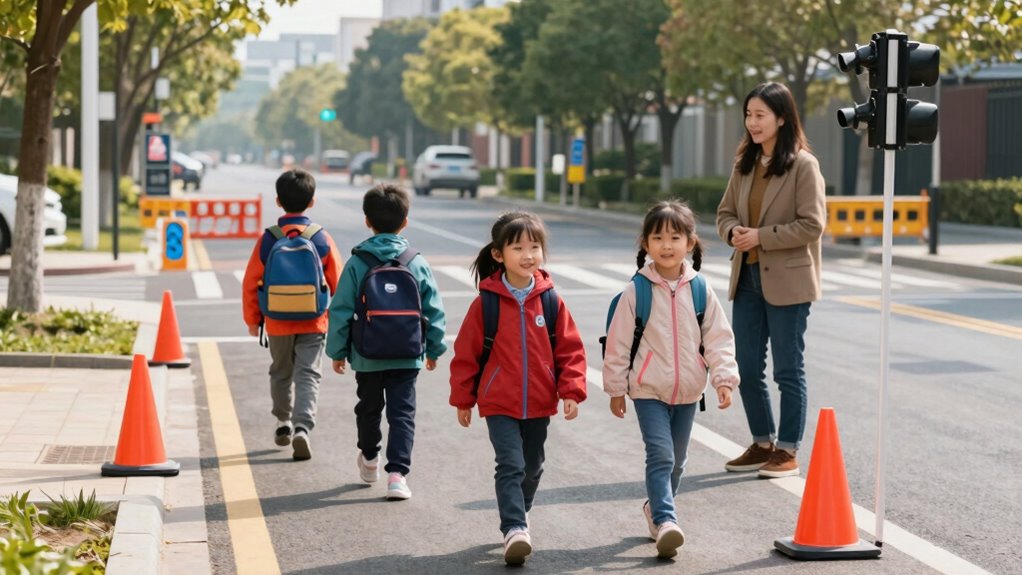
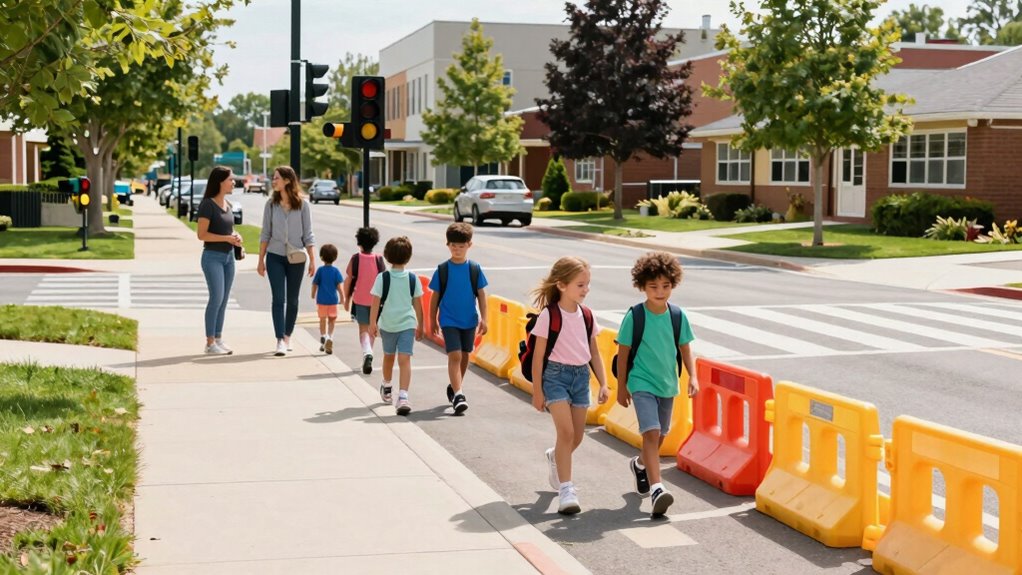
Alongside community engagement, infrastructure improvements play a vital role in transforming school routes into safer pathways. These upgrades can include installing crosswalks with clear signage, adding traffic-calming measures like speed bumps, and creating dedicated bike lanes separated from vehicle traffic. Such enhancements reduce the risk of accidents and make the routes more inviting for children and parents alike. Better lighting along sidewalks and crossings also increases visibility, especially during early mornings or late afternoons. When you see these physical improvements, it reassures you that the community prioritizes safety, encouraging more families to walk or bike rather than rely solely on cars. Promoting bicycle infrastructure and pedestrian-friendly design is crucial in supporting these efforts. Incorporating traffic-calming measures effectively can significantly decrease vehicle speeds and improve overall safety. Additionally, implementing traffic management strategies can further optimize the flow of vehicles and pedestrians, making the routes safer and more efficient. Recognizing the importance of community involvement in planning processes can lead to more tailored and effective safety solutions. Furthermore, adopting an inclusive planning approach ensures that diverse community needs and perspectives are considered, fostering broader support and success.
The combination of community engagement and infrastructure improvements doesn’t just make routes safer—it also encourages a cultural shift. You’re more likely to view walking or biking as viable options, which can reduce traffic congestion around schools and promote healthier lifestyles. When families feel confident that routes are protected, they’re more willing to let their kids walk or bike independently, fostering independence and confidence in children. Schools that actively involve families in planning tend to see higher participation rates in walking programs, which can lead to a stronger community spirit.
Ultimately, protected school routes are changing family mobility by creating an environment where safety and community input go hand in hand. When infrastructure improvements are paired with ongoing community engagement, families gain trust and peace of mind. This shift not only makes daily commutes safer but also supports long-term benefits like healthier children, reduced traffic, and more connected neighborhoods. As you witness these changes, you’ll naturally become more supportive and involved, helping to shape a safer, more active way for children to get to school.

BURSUN Kids Bike Helmet Ventilation & Adjustable Toddler Helmet for Ages 2-3-5-8 Kids Boys Girls Multi-Sport Helmet for Bicycle Skate Scooter, 5 Colors
- Suitable for Ages 2-8: Fits 18.9-21.3 inches head circumference
- Multiple Color Options: Black, Blue, Pink, Red, Green
- Multi-Sport Use: Bicycle, Skate, Scooter, more
As an affiliate, we earn on qualifying purchases.
As an affiliate, we earn on qualifying purchases.
Frequently Asked Questions
How Do Protected School Routes Impact Local Traffic Congestion?
Protected school routes ease local traffic congestion by promoting safer, more organized traffic flow during school hours. You’ll notice less chaos on neighborhood streets as these routes reduce the need for parents to drive multiple trips or park unpredictably. This system improves neighborhood safety, cuts down on congestion, and creates a calmer environment for everyone. Overall, it helps streamline traffic and makes walking or biking to school a safer, more appealing option.
Are There Any Cost Implications for Implementing Protected Routes?
They say “you get what you pay for,” and implementing protected routes does have cost implications. You’ll need a thorough cost analysis to understand expenses for infrastructure, signage, and safety features. Funding opportunities, like government grants or community programs, can help offset these costs. While initial investments might be high, the safety benefits and potential long-term savings on traffic management make protected routes a worthwhile consideration for your community.
How Do Protected Routes Affect Students With Disabilities?
Protected routes improve accessibility for students with disabilities by reducing accessibility barriers and promoting inclusive design. You’ll notice these routes create safer, more navigable pathways, allowing students with mobility challenges to travel independently and confidently. By prioritizing inclusive design, you guarantee all students, regardless of abilities, can access schools comfortably. This approach fosters equality, encourages participation, and helps create a more welcoming environment for every student.
What Community Involvement Is Needed for Route Planning?
You need to prioritize community engagement and safety education when planning protected school routes. Involve parents, students, and local organizations early to gather feedback and identify safety concerns. Hosting workshops and meetings helps build trust and awareness. Educate families and students on route safety, ensuring everyone understands the features designed to protect them. This collaborative approach creates a safer, more inclusive environment that encourages active participation and shared responsibility.
How Are School Routes Adapted for Changing Urban Landscapes?
Imagine a river shifting course, shaping new paths for its flow—that’s how school routes adapt in evolving urban landscapes. Urban planning now emphasizes flexible, pedestrian-safe routes that weave through changing cityscapes. By prioritizing pedestrian safety and integrating updated infrastructure, these routes stay resilient amid development. You’ll find that thoughtful adjustments guarantee kids stay protected, even as cities grow and landscapes transform, keeping their journey to school safe and steady.
Conclusion
As school routes become safer and more protected, you’ll find your family’s mobility blossoming like a well-tended garden. No longer do you have to worry about every shadow on the sidewalk or every crossing without a guard. These changes act as a sturdy bridge, guiding your children safely toward independence. With each step forward, you’re planting seeds of confidence and freedom, transforming the journey to school into a path of promise rather than peril.