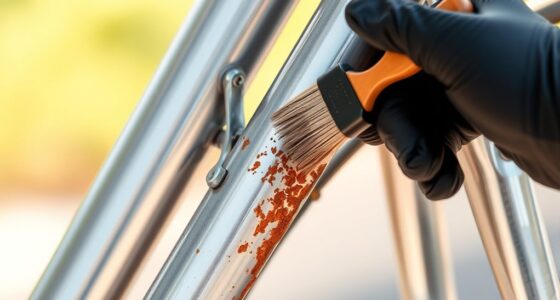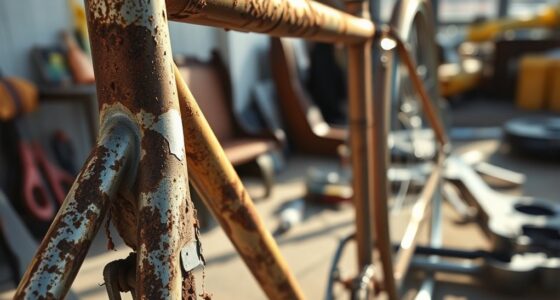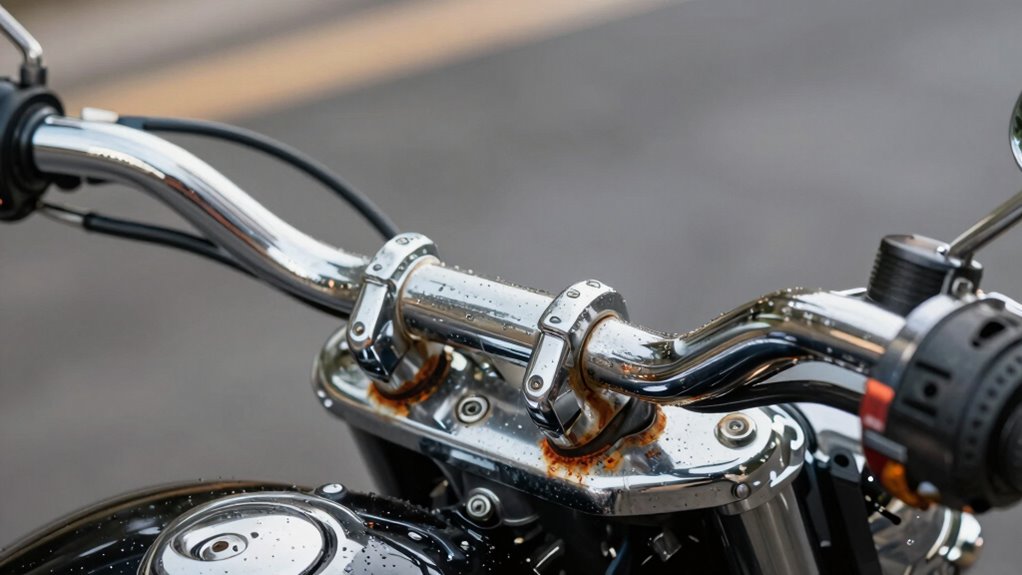

Chrome parts can rust under the shine when their protective surface gets scratched or damaged, exposing the metal underneath to moisture, oxygen, and environmental factors. Water, dirt, salt, and pollutants accelerate rust formation, especially if the chrome’s protective layer wears down over time. Regular cleaning and inspecting for damage are key to preventing rust spread. If you want to understand how to keep your chrome looking its best and avoid corrosion, keep exploring.
Key Takeaways
- The chrome layer is protective but can develop scratches or chips, exposing the underlying metal to rust.
- Moisture, oxygen, and pollutants can penetrate damaged chrome, leading to corrosion beneath the surface.
- Environmental factors like humidity and salt accelerate rust formation on the metal core.
- Wear and aging cause the protective coating to crack or peel, increasing vulnerability to rust.
- Regular maintenance and protective coatings are essential to prevent rust from developing under the shine.

Chrome parts often catch your eye with their shiny, reflective surface, but that glossy appearance can be deceiving. Beneath that mirror-like finish, corrosion causes can stealthily eat away at the metal, leading to rust over time. Many people assume that chrome is impervious to rust, but that isn’t entirely true. The shiny exterior is usually a layer of chromium plating, which provides a sleek look and some corrosion resistance. Still, if this coating gets damaged or wears down, the underlying metal becomes susceptible to moisture, oxygen, and other corrosive elements. When these elements reach the metal surface, rust begins to form, compromising both appearance and integrity.
Chrome’s shiny surface hides vulnerabilities; damage can expose metal to rust and corrosion over time.
Understanding corrosion causes is key to protecting your chrome parts. Water, especially when combined with dirt, salt, or pollutants, creates an ideal environment for rust to develop. Even microscopic scratches or chips in the chrome layer can expose the base metal, accelerating corrosion. That’s why regular cleaning and maintenance are essential. If you neglect to remove corrosive substances or fail to address scratches, you increase the risk of rust formation beneath the shiny surface. The environment also plays a role—areas with high humidity, salty air, or road salt during winter can considerably speed up corrosion causes. Recognizing these factors helps you take proactive steps to preserve your chrome parts. Additionally, understanding corrosion causes can help you better prevent rust from developing in the first place. Regular inspections and proper maintenance are vital aspects of protecting against environmental factors that contribute to rust. Being aware of metal vulnerabilities can guide you in choosing appropriate protective measures.
Protective coatings are crucial in preventing corrosion and extending the lifespan of chrome components. These coatings act as barriers, shielding the metal from moisture and contaminants. Most chrome plating is itself a protective coating, but it’s not invincible. Over time, the protective layer can crack, peel, or wear down, especially if subjected to harsh conditions or physical damage. Applying additional protective treatments, like wax or specialized sprays, can provide an extra layer of defense. Clear protective coatings or sealants are also available, which can be applied over chrome to enhance corrosion resistance and prolong the shiny finish. Regularly inspecting your chrome parts for signs of damage and reapplying protective coatings when needed can make a noteworthy difference in preventing rust. Neglecting these protective measures can significantly reduce the durability and appearance of your chrome items over time.
In the end, the shiny allure of chrome can mask the vulnerabilities beneath. Corrosion causes, such as exposure to moisture and environmental elements, can lead to rust if protective coatings aren’t maintained. Taking care of your chrome parts by keeping them clean, addressing any damage promptly, and applying suitable protective coatings helps ensure they stay looking their best and functioning properly for years to come. Remember, a little effort now can save you from costly repairs or replacements down the line, keeping your chrome parts gleaming and rust-free.

Rust-Oleum Stops Rust Bright Coat Metallic Spray Paint, Chrome
- Versatile for various surfaces: Suitable for metal, wood, concrete, masonry
- Bright metallic finish: Creates shiny chrome appearance
- Durable and chip resistant: Maintains color and finish over time
As an affiliate, we earn on qualifying purchases.
As an affiliate, we earn on qualifying purchases.
Frequently Asked Questions
Can Rust on Chrome Parts Be Completely Removed?
Yes, rust on chrome parts can be completely removed if you act quickly and use proper cleaning techniques. You should start by gently scrubbing the rust with a mixture of baking soda and water or a commercial chrome cleaner. For stubborn oxidation, a fine-grade steel wool or a specialized chrome polish can be effective. Regular maintenance and protective coatings can prevent future chrome oxidation and keep your parts shining brightly.
How Long Does Chrome Plating Typically Last?
Chrome plating typically lasts 5 to 10 years, but don’t get too comfy—your shiny parts need regular care. With proper chrome maintenance and rust prevention, you can extend that lifespan, keeping rust at bay and your sparkle intact. Neglect it, and your once-glamorous gleam might turn into an unintentional rust museum. So, treat your chrome like royalty, and it’ll reward you with years of corrosion-free shine.
Is Rust on Chrome Dangerous to Health?
Rust on chrome isn’t usually dangerous to your health, but it can affect environmental impact and aesthetic appeal. Rust particles can flake off, contaminating soil and water, which isn’t good for the environment. Aesthetically, rust makes chrome look dull and unattractive, diminishing its shine. While it’s not a direct health risk, it’s best to remove rust promptly to maintain both the look and minimize environmental impact.
Can I Restore Heavily Rusted Chrome Parts?
Yes, you can restore heavily rusted chrome parts with proper chrome maintenance and rust repair techniques. Start by thoroughly cleaning the surface, removing loose rust with a wire brush or sandpaper. Use a rust converter or remover to treat stubborn spots. Once the rust is addressed, polish and reapply a chrome protective coating. For best results, consider professional restoration to guarantee your chrome looks shiny and is well-protected against future rust.
What Are the Best Ways to Prevent Chrome Rusting?
To prevent chrome rusting, you should prioritize proper chrome maintenance and regular cleaning. Use a gentle, non-abrasive cleaner to remove dirt and moisture that can cause rust. Apply a protective wax or sealant designed for chrome surfaces, and always dry the parts thoroughly after washing. Keep your chrome parts in a dry, sheltered environment whenever possible, and inspect them regularly for early signs of rust to address issues promptly.
Conclusion
Even though chrome dazzles with its brilliant shine, remember that beneath that mirror-like surface, rust can quietly take hold if you’re not careful. Like a thief in the night, corrosion can sneak past your defenses, turning beauty into blemish. So, stay vigilant—regular cleaning and proper maintenance are your best armor. Keep your chrome sparkling, and don’t let rust steal the show. After all, isn’t it worth protecting that gleam that catches every eye?