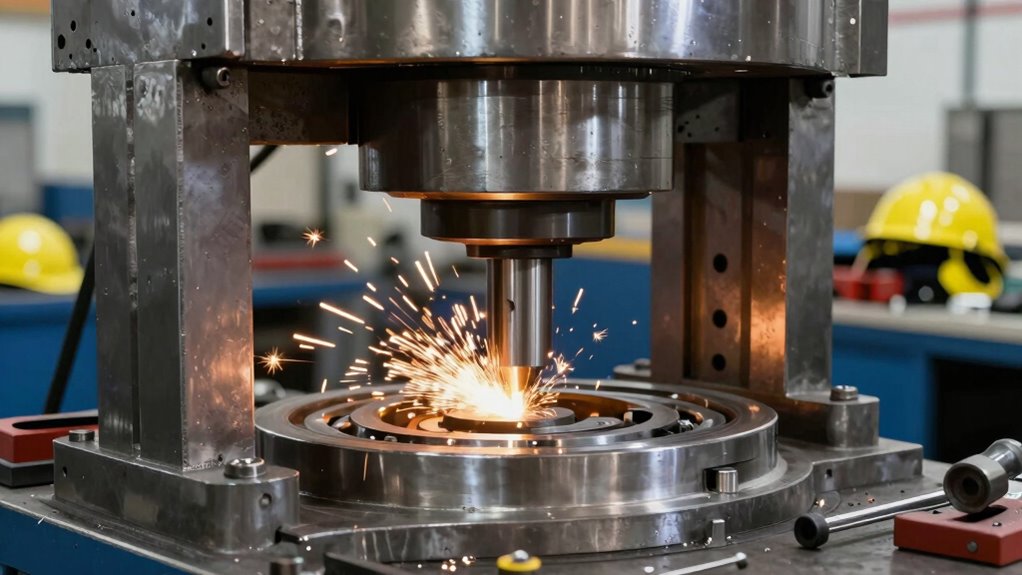
If you use too much force during a bearing press, you risk damaging the bearing or the equipment, which can lead to costly repairs and safety issues. Rushing or applying extra pressure without proper alignment or lubrication can deform or break system parts, making it worse. A gradual, measured approach is safer and more effective. Keep in mind that understanding the process helps you avoid mistakes—click on the next step to learn more about preventing these problems.
Key Takeaways
- Excessive force can deform or damage bearings and press components, leading to costly repairs.
- Rushing with extra force increases the risk of equipment failure and personal injury.
- Improper alignment or insufficient lubrication under force can cause bearing seating issues.
- Using unmaintained or improperly calibrated presses heightens the chance of pressing errors.
- Applying force too quickly without gradual pressure can result in bearing damage and safety hazards.
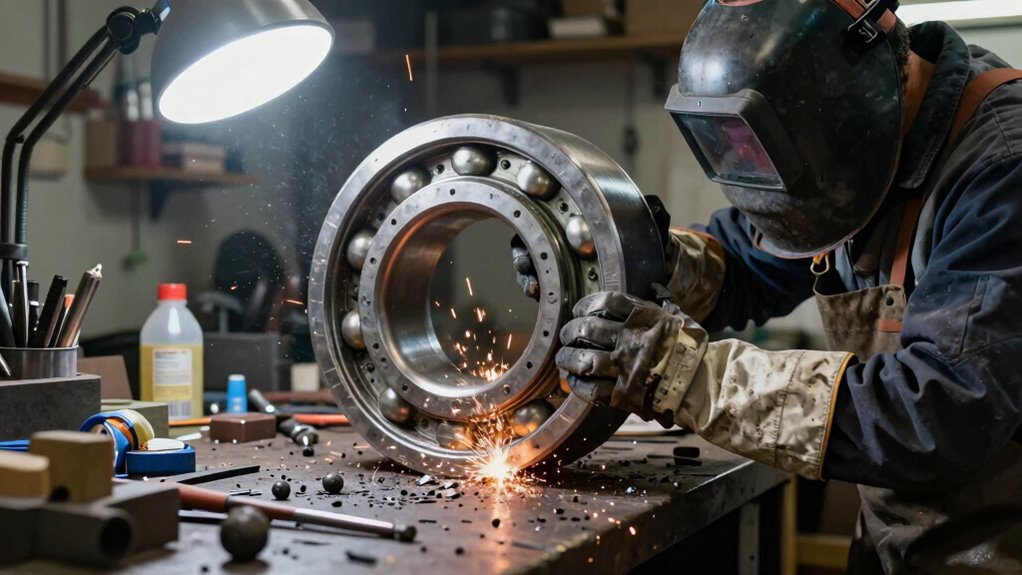
When using a bearing press, applying just the right amount of force is essential, but sometimes, a simple mistake can lead to disaster. You might be tempted to push harder to speed up the process or to ensure the bearing slides in, but excessive force can cause serious damage. To avoid mishaps, understanding proper lubrication techniques is crucial. Lubricating the bearing and the press components reduces friction, making the process smoother and less forceful. Use the right type of lubricant—usually a high-quality grease or oil suited for your specific bearing—and apply it evenly to prevent sticking or uneven seating. Proper lubrication not only makes pressing easier but also prolongs the lifespan of both the bearing and the press. Additionally, applying appropriate force levels is vital to ensure the bearing seats correctly without causing damage.
Applying the correct force is also essential for preventing equipment damage, which can occur from overexertion. Equally important are safety precautions. Before starting, make sure your workspace is clear of unnecessary clutter, and wear safety gear such as gloves and eye protection. When you begin pressing, keep a firm grip on the equipment and ensure your hands and body are positioned safely away from moving parts. Never underestimate the power of the press; applying force gradually is safer than forcing it all at once. If the bearing refuses to seat, don’t be tempted to use brute force to force it in. Instead, reassess the setup, check alignment, and apply more lubricant if needed. Forcing a bearing into place with too much pressure risks damaging the bearing, the press, or even causing injury if the part slips or breaks.
Being aware of safe operating practices helps prevent accidents and equipment failure. Pay attention to the sound and resistance during the pressing operation. If you notice unusual resistance or noise, stop immediately. Excessive force can cause the bearing or press components to deform or break, creating a hazardous situation. Regularly inspecting your press and ensuring it’s well-maintained is also part of good safety precautions. Worn or damaged equipment is more likely to malfunction under pressure, so replace any defective parts before continuing. Moreover, understanding the pressing process thoroughly can help in troubleshooting issues and avoiding unnecessary force. Remember, patience and precision are key. Rushing the job with extra force might seem faster in the moment, but it often leads to costly mistakes or injuries. Proper training and understanding of the pressing process can further minimize risks and improve results.
bearing press tool
As an affiliate, we earn on qualifying purchases.
As an affiliate, we earn on qualifying purchases.
Frequently Asked Questions
What Safety Precautions Should Be Taken During Bearing Press Operations?
During bearing press operations, you should always wear appropriate PPE, like gloves and safety glasses, to protect against injuries. Follow proper lubrication techniques to reduce friction and prevent sudden failures. Make sure the work area is clear of obstructions, and use the correct tools for the job. Never apply excessive force, and stay alert for signs of equipment strain. These precautions help keep you safe and ensure smooth, successful pressing tasks.
How Can I Prevent Over-Application of Force in Bearing Pressing?
Ironically, over-application of force can often be avoided by relying on proper lubrication techniques and ensuring alignment accuracy. You should use a calibrated press or force gauge to monitor pressure closely, preventing excessive force. Regularly inspect and adjust your setup, and avoid rushing the process. Maintaining correct lubrication reduces friction, minimizing the temptation to apply brute force, which ultimately protects both the bearing and your equipment from damage.
What Tools Are Recommended for Safely Pressing Bearings?
You should use a hydraulic or arbor press with adjustable force settings to safely press bearings. Proper lubrication techniques, like applying grease or oil, reduce friction and prevent damage. Make certain bearing alignment before pressing by carefully positioning the bearing and using alignment tools if needed. These steps minimize the risk of over-application of force, ensuring a smooth, safe installation process and extending bearing life.
How Do I Identify Signs of Bearing Damage After a Press Mishap?
Did you know that nearly 70% of bearing failures are due to improper installation or damage? After a press mishap, you should check for uneven wear, scoring, or discoloration, which indicate damage. Conduct a lubrication inspection to spot any lack of lubrication or contamination. Also, verify bearing alignment, as misalignment can cause early failure. Address these signs promptly to prevent further damage and guarantee peak performance.
What Are the Common Causes of Bearing Press Failures?
You often face bearing press failures caused by lubrication issues and alignment errors. Insufficient or contaminated lubrication increases friction, leading to overheating and wear. Misalignment during pressing causes uneven load distribution, stressing the bearing. Regular maintenance, proper lubrication, and precise alignment help prevent these failures. Always double-check the setup and verify lubrication is adequate to avoid costly downtime and damage during bearing pressing operations.
hydraulic bearing press
As an affiliate, we earn on qualifying purchases.
As an affiliate, we earn on qualifying purchases.
Conclusion
So, next time you’re working with a bearing press, remember that adding extra force is like trying to squeeze toothpaste from the wrong end—things can quickly go awry. Stay patient, use the right tools, and follow proper procedures. Just like a delicate dance, every move counts. If you rush or force it, you risk damaging parts or causing accidents. Keep calm, be precise, and your job will go smoothly, like a well-oiled machine.
bearing installation kit
As an affiliate, we earn on qualifying purchases.
As an affiliate, we earn on qualifying purchases.
bearing press with lubrication
As an affiliate, we earn on qualifying purchases.
As an affiliate, we earn on qualifying purchases.