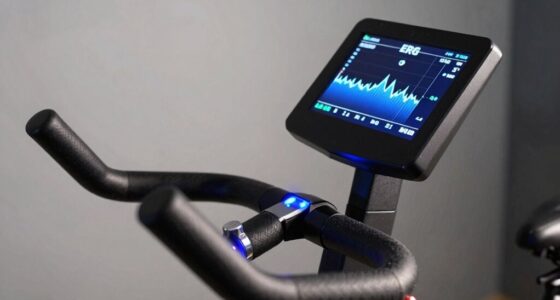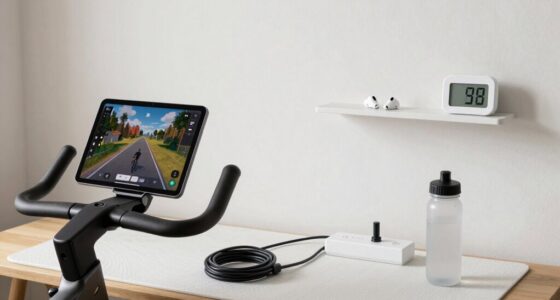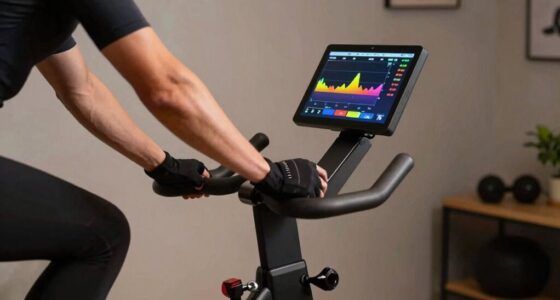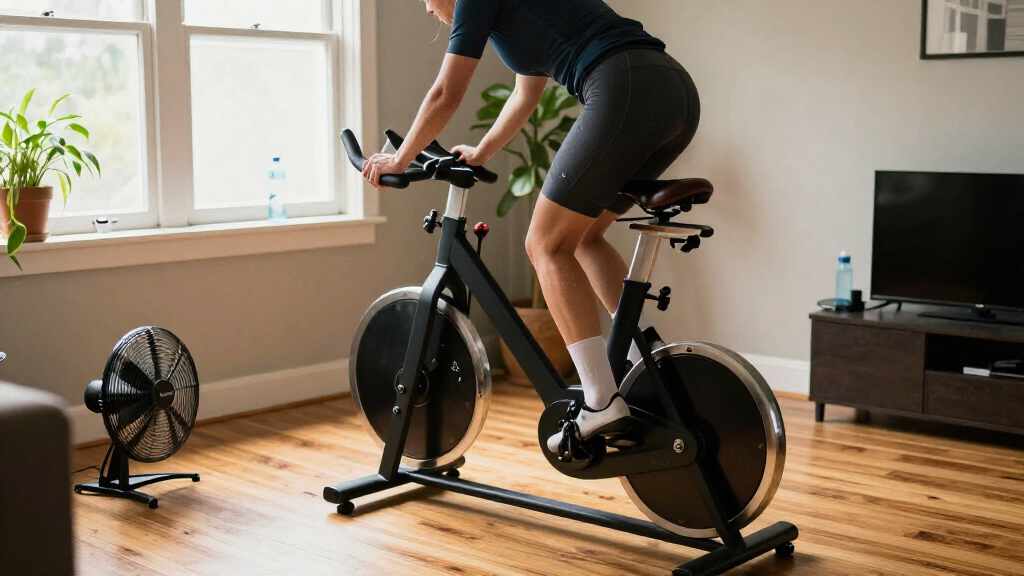

Choosing a compact indoor cycling trainer is less about finding the smallest frame and more about deciding how much indoor riding you want it to support. A folding magnetic wheel-on trainer uses your existing bike’s rear tire against a resistance roller; a compact smart direct-drive trainer replaces the rear wheel and connects to training apps, usually adjusting resistance as a workout changes. Both can be stored when they are not in use, but they serve different budgets and routines.

Get sports gear delivered free — and shop member deals
- Fast, free delivery on millions of items
- Access to Prime Big Deal Days deals on October 6–7
- Prime Video, Amazon Music and more included
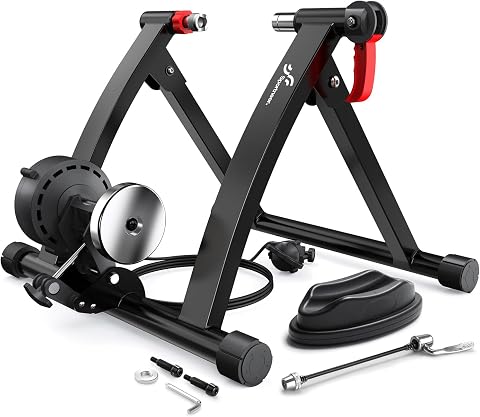
Sportneer Magnetic Indoor Bike Trainer Stand for 26–28-Inch and 700C Wheels
- ✔ Brand: Sportneer
- ✔ Model: TY-JS007-C
- ✔ Resistance: Six magnetic resistance levels with handlebar remote
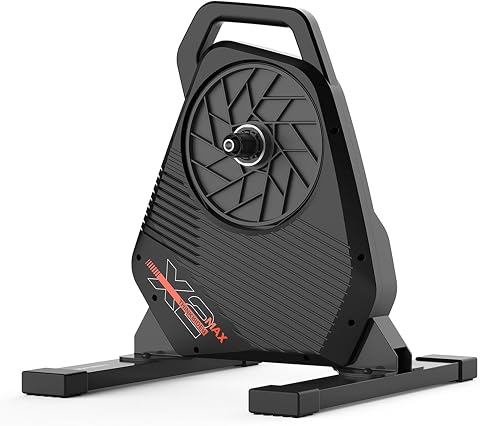
ThinkRider X2Max Smart Bike Trainer
- ✔ Maximum power: 2,000 W
- ✔ Power accuracy: ±2%
- ✔ Maximum simulated gradient: Up to 18%

ThinkRider XXPRO Smart Bike Trainer, 2500 W, 25% Gradient, ANT+ and Bluetooth
- ✔ Drive type: Direct drive
- ✔ Data accuracy: ±1%
- ✔ Calibration: Not required
The magnetic trainer is the sensible starting point for occasional rides, basic fitness, or a tight budget. The direct-drive option is the stronger choice for frequent sessions, structured training, and a quieter setup—provided its added cost and extra setup work make sense for your household. The central tradeoff is straightforward: pay less and accept a more basic, tire-dependent ride, or spend more for better app integration, smoother resistance control, and less tire noise.
At a Glance
| Criteria | Compact Folding Magnetic Wheel-On Trainer | Compact Smart Direct-Drive Trainer | Winner |
|---|---|---|---|
| Upfront cost and value | Usually the lower-cost choice; enough for basic fitness and casual riding. | Costs substantially more, but the extra spend buys connected training and a more refined ride. | A |
| Storage footprint | Folds into a relatively small package, though the bike and trainer still take space together. | Trainer unit can be compact, but a cassette, mat, power supply, and bike storage add to the full setup. | A |
| Setup and bike compatibility | Quick to attach, but depends on rear-wheel fit, axle compatibility, tire condition, and correct roller pressure. | Requires removing the rear wheel and matching cassette or freehub and axle standards; once configured, mounting is straightforward. | A |
| Noise and ride feel | Noise and vibration vary with tire type, roller contact, speed, and floor; ride feel is comparatively basic. | Usually quieter at the tire contact point and smoother under load, though drivetrain and room noise remain. | B |
| Resistance and workout control | Resistance is typically adjusted manually or through a limited built-in range; no automatic workout control. | Can offer electronically controlled resistance and more realistic changes in effort, depending on model and app. | B |
| App connectivity | Usually limited or absent; some models may offer basic speed or cadence data, but features vary. | Typically connects to compatible training apps and sensors; confirm protocols and included features before buying. | B |
| Maintenance and ownership | Rear tire and roller contact wear over time; fewer electronic parts to configure or troubleshoot. | No trainer-roller tire wear, but cassette, drivetrain, firmware, power, and connectivity need occasional attention. | Depends |
Sportneer Magnetic Indoor Bike Trainer Stand for 26–28-Inch and 700C Wheels
For riders who want an indoor trainer without making an app the center of every workout, the Sportneer Magnetic Trainer is the most approachable choice in this group. Its six resistance levels are adjusted from a handlebar remote, so we can change effort while riding instead of reaching down to the stand. The package also includes a front-wheel riser block and skewer, reducing the number of separate setup pieces a buyer has to source. It supports specified 26–28-inch and 700C wheels, making it the clearest option here for riders who want to keep using their own compatible bike and rear tire.Compared with the smart ThinkRider models, the Sportneer trades software-driven workouts and automatic gradient changes for manual, direct resistance control. That keeps the riding routine simpler, but it also means resistance is not described in watts and will not automatically react to a virtual route. Its 19.3-pound listed weight and wide base may help establish a steady riding position, while adjustable anti-slip feet can accommodate some unevenness in the floor. We should not mistake those details for proof that it folds particularly small: no folded dimensions are supplied.The important compromise is sound. This is a tire-on-roller magnetic stand, and noise varies with tire material and tread; slick road tires are recommended for quieter operation. That matters in shared homes or apartments, where a trainer’s noise can limit when we ride. Buyers should also confirm rear axle compatibility, listed as 4.92–6.57 inches, before ordering. We would choose the Sportneer over the X2Max when app-free simplicity matters more than connected training, but choose one of the ThinkRiders if structured software control is central to the plan.
Pros:
- Six resistance levels can be adjusted from the handlebar remote.
- Includes a front-wheel block, skewer, and quick-release lever for setup.
- Adjustable anti-slip feet and a wide base support a stable riding position.
- Works with specified 26–28-inch and 700C wheels.
Cons:
- Noise can vary with tire material and tread; slick tires are recommended for quieter riding.
- Resistance is manually controlled rather than automatically matched to a virtual route.
- No power accuracy, software connectivity, or folded dimensions are specified.
Best for: Riders who want a comparatively simple indoor setup with handlebar-controlled resistance, included setup accessories, and a compatible 26–28-inch or 700C bike.
Not ideal for: Riders who need app-controlled workouts, automatic gradient simulation, stated power data, or especially quiet operation with a treaded tire.
Bottom line: We recommend the Sportneer for riders who want the least software-dependent route to indoor cycling and can accept tire-related noise and manual resistance changes.
“We recommend the Sportneer for riders who want the least software-dependent route to indoor cycling and can accept tire-related noise and manual resistance changes.”
ThinkRider X2Max Smart Bike Trainer
The X2Max is the middle ground for riders who want a trainer to respond to connected workouts rather than rely on a manual resistance remote. With ANT+ and BLE connectivity, it can work with cycling software such as Zwift, and it is specified to adjust resistance automatically to match simulated gradients. That changes the nature of an indoor session: instead of selecting one of six fixed levels as on the Sportneer, we can let compatible software shape the effort as a route rises and falls.Its stated limits—up to 2,000 W and gradients up to 18%—make it a capable option for riders who want demanding virtual climbs without moving to the XXPRO’s higher stated figures. The X2Max also lists ±2% power accuracy, giving connected workouts a defined measurement specification. That is less precise on paper than the XXPRO’s ±1% claim, but the difference may matter less to a casual rider than the practical question of whether they will use smart training features at all. The supplied information describes an I-beam triangular structure intended to support balance and stability, though it does not give dimensions or a storage footprint.Smart functionality brings dependencies the Sportneer avoids. Automatic gradient matching requires compatible cycling software, and wireless connection alone does not make a trainer’s resistance change to suit a route. Its noise is listed at about 58 dB at 30 km/h, a useful benchmark but not a guarantee of quiet operation in every room or at every speed. The drive type and complete bike-fit details are not specified in the information provided, so we would verify those points for a particular bike and setup rather than assume. Compared with the XXPRO, the X2Max suits buyers who want virtual rides but do not need the higher stated power and gradient ceiling.
Pros:
- Supports ANT+ and BLE connections and works with cycling software such as Zwift.
- Automatically adjusts resistance to match simulated gradients when used with compatible software.
- Specifies up to 2,000 W of power and gradients up to 18%.
- Lists ±2% power accuracy and an I-beam triangular structure designed for balance.
Cons:
- Automatic gradient matching depends on compatible cycling software.
- Noise is specified at about 58 dB at 30 km/h, which may matter in shared living spaces.
- Drive type, product weight, and folded dimensions are not specified here.
Best for: Riders who plan to use compatible indoor cycling software and want wireless connectivity plus automatic resistance changes for virtual gradients.
Not ideal for: Riders who prefer a fully manual, app-free stand, need the XXPRO’s higher stated accuracy or gradient range, or require a precisely documented storage footprint.
Bottom line: The X2Max is our connected-training pick for riders who want virtual route resistance without needing the XXPRO’s more advanced stated performance figures.
“The X2Max is our connected-training pick for riders who want virtual route resistance without needing the XXPRO’s more advanced stated performance figures.”
ThinkRider XXPRO Smart Bike Trainer, 2500 W, 25% Gradient, ANT+ and Bluetooth
The XXPRO is the most ambitious option in this comparison, built for cyclists who want a connected trainer with strong stated performance and less routine setup around calibration. It uses a direct-drive design, reports ±1% data accuracy, and requires no calibration according to its specifications. That combination is a clear step beyond the Sportneer’s tire-on-roller format, which uses manually selected resistance and does not specify power measurement. For riders following structured workouts or tracking training data, the XXPRO offers the most detailed performance case in this lineup.Its stated ceiling reaches 2,500 W and a 25% simulated gradient, exceeding the X2Max’s 2,000 W and 18% figures. The difference makes the XXPRO better suited on paper to harder efforts and steeper virtual climbs, though many casual riders may never need that headroom. Bluetooth and ANT+ connect it to bike GPS devices, PCs, and Zwift. It also simulates downhill riding based on map slopes, extending virtual-route behavior beyond the uphill resistance changes described for the X2Max. The trainer generates its own power, so it does not require a power adapter—a useful reduction in cables around a compact indoor station.Those capabilities do not automatically make it the best choice for everyone. It is the most feature-rich and demanding option, and buyers who only want occasional steady rides may get more practical value from the simpler Sportneer. Unlike the Sportneer, the XXPRO’s direct-drive format does not use the rear tire against a roller, but we should confirm bike and cassette compatibility before purchase; those details are not included in the supplied specifications. Product weight, folded dimensions, noise level, and warranty are also unspecified, so we cannot rank its physical storage convenience or sound performance against the other two. Choose it for its stated smart-training strengths, not on an assumption that it is the smallest or quietest.
Pros:
- Direct-drive construction with stated ±1% data accuracy and no calibration required.
- Supports up to 2,500 W and simulated gradients up to 25%.
- Connects through Bluetooth and ANT+ to bike GPS devices, PCs, and Zwift.
- Self-generates power, so a power adapter is not required.
- Can simulate downhill riding based on map slopes.
Cons:
- Its advanced connected-training features may be unnecessary for casual steady rides.
- Bike and cassette compatibility details are not specified here and should be confirmed.
- Noise level, product weight, folded dimensions, and warranty are not supplied.
Best for: Committed indoor cyclists who use structured workouts or virtual routes and want a direct-drive trainer with stated ±1% accuracy, broad connectivity, and steep gradient simulation.
Not ideal for: Occasional riders who want a low-complexity stand, buyers who need confirmed storage dimensions or noise figures, and anyone who has not checked bike and cassette compatibility.
Bottom line: We favor the XXPRO for serious virtual and structured training, while buyers prioritizing simple setup or documented storage details should look first at the Sportneer or verify the fit carefully.
“We favor the XXPRO for serious virtual and structured training, while buyers prioritizing simple setup or documented storage details should look first at the Sportneer or verify the fit carefully.”
As an Amazon Associate we earn from qualifying purchases.
Key Differences
The biggest practical difference is how much the trainer shapes a workout. A basic magnetic unit supplies resistance, but the rider generally changes it by shifting gears, adjusting a lever, or selecting among fixed settings. That works for steady rides and simple intervals. A smart direct-drive unit can communicate with supported software and change resistance to follow a workout or virtual route. If you ride to a plan several times each week, that automation can make sessions easier to follow and more engaging. For an occasional spin, it may be an expensive feature that goes unused.
Storage is not as simple as comparing folded dimensions. The wheel-on trainer often folds neatly, but it remains attached to a full bike during a ride, and the bike must still be parked somewhere afterward. Direct-drive units can be compact on their own, yet may need a cassette, a stable mat, power access, and room to remove and store the bike’s rear wheel. The better fit depends on the complete setup and how often you intend to put it away, not just the trainer frame.
Cost follows the same use-case divide. The magnetic trainer is better value for straightforward exercise because it avoids paying for sensors and app control. The direct-drive unit earns its premium for riders who value smoother resistance, lower tire-contact noise, and structured or app-based workouts. Neither is automatically quieter than every alternative in every room: drivetrain noise, flooring, tires, and building construction still matter. Check compatibility and sound expectations before paying extra.
Detailed Comparison
Upfront cost and value (Compact Folding Magnetic Wheel-On Trainer wins — major)
The folding magnetic trainer wins on purchase price; the gap is major. It provides a basic way to ride indoors without paying for electronic resistance or extensive connectivity. That makes it the better value for occasional use, warm-ups, or general fitness. The direct-drive trainer costs more, and its value depends on whether its app features and ride refinement will change how often or how effectively you train. Pay the premium for regular structured use, not simply because a smart trainer sounds more advanced.
Storage footprint (Compact Folding Magnetic Wheel-On Trainer wins — moderate)
The folding magnetic trainer has a small advantage, with a moderate gap. Its frame folds and often needs little dedicated storage. However, a complete setup includes the bike, so it is not a truly small all-in-one solution. A direct-drive trainer may also fold or stand compactly, but the cassette and detached rear wheel add handling and storage needs. Choose based on where the bike will live between rides, not the folded trainer alone.
Setup and bike compatibility (Compact Folding Magnetic Wheel-On Trainer wins — moderate)
The wheel-on trainer is easier for quick setup; the difference is moderate. It generally clamps the bike and brings a resistance roller into contact with the rear tire. Correct fit and pressure matter, and some bikes or axles may need adapters. Direct-drive setup means removing the rear wheel and checking axle, cassette, and freehub compatibility. After the first installation it can be routine, but it is less convenient if you regularly switch between indoor and outdoor riding or share the trainer across bikes.
Noise and ride feel (Compact Smart Direct-Drive Trainer wins — moderate)
The direct-drive trainer usually wins, with a moderate-to-major practical gap. It eliminates the tire spinning against a roller, which can reduce one common source of noise and avoid roller-related tire wear. Its resistance also tends to feel smoother. It is not silent: the bike’s chain and gears still make sound, and vibrations can travel through floors. The magnetic option can be acceptable for daytime or occasional sessions, particularly with a suitable tire and mat, but it is less attractive for frequent late-night riding in a shared home.
Resistance and workout control (Compact Smart Direct-Drive Trainer wins — major)
The smart direct-drive trainer wins decisively for controlled sessions. A basic magnetic model typically relies on manual settings and bicycle gears, which are enough for steady effort and self-directed intervals. A compatible smart trainer can adjust resistance as workout targets or virtual terrain change. That makes following a structured plan more convenient, although precise features differ by model. If you mostly want to pedal at a comfortable pace, the extra control is unlikely to justify the price.
App connectivity (Compact Smart Direct-Drive Trainer wins — major)
The direct-drive smart trainer wins by a wide margin. It is built to connect with compatible cycling software and can provide data or resistance control depending on its specifications. The wheel-on trainer may have no connectivity or only limited sensor support, so do not assume that any magnetic trainer will work as a smart trainer. Riders who want virtual routes, app-led workouts, or training records should verify the trainer’s supported connections and the app’s requirements before purchase.
Maintenance and ownership (minor difference)
This is a close tradeoff rather than a clear win. The wheel-on model has fewer electronic features to set up, but the rear tire contacts a roller and can wear; tire choice and pressure can affect noise and performance. Direct-drive models avoid that contact but involve the drivetrain and cassette, and smart functions can bring firmware or connection troubleshooting. For buyers who want basic mechanical simplicity, A is preferable. For riders who already maintain a bike and want frequent app-based use, B’s upkeep is manageable.
Compact Folding Magnetic Wheel-On Trainer: Pros and Cons
Pros:
- Lower purchase cost for basic indoor fitness.
- Folding frame is straightforward to store.
- Usually quick to attach without removing the rear wheel.
- Few electronic features to configure or troubleshoot.
Cons:
- Less suitable for app-controlled or structured workouts.
- Roller contact can create tire noise, vibration, and wear.
- Ride feel and resistance control are generally more basic.
- Bike fit, axle design, tire choice, and roller pressure still matter.
Compact Smart Direct-Drive Trainer: Pros and Cons
Pros:
- App connectivity and resistance control support structured training.
- No rear tire rubbing against a resistance roller.
- Often offers a smoother, quieter ride than a wheel-on design.
- Better suited to riders who train indoors frequently.
Cons:
- Higher upfront cost that may not pay off for casual riders.
- Requires rear-wheel removal and cassette or freehub compatibility.
- Needs space for the trainer, bike, and removed wheel or accessories.
- Connectivity and electronic features add setup and troubleshooting.
Who Should Choose What
Choose Compact Folding Magnetic Wheel-On Trainer if:
- You want an affordable way to ride indoors occasionally or maintain general fitness.
- You value quick setup and a foldable frame more than app-led training.
- You already own a compatible bike and do not need automatic resistance changes.
- You are comfortable using gears and manual settings to control effort.
Choose Compact Smart Direct-Drive Trainer if:
- You plan to ride indoors several times a week and will use training apps or structured workouts.
- Lower tire-contact noise and a smoother ride are worth paying more for.
- You want resistance to respond automatically to workout targets or virtual routes.
- You can confirm cassette, axle, and app compatibility before buying.
Skip both if: Neither fits if you need a truly self-contained, very small exercise machine with no compatible bike, or if your available space cannot accommodate both a bike and a trainer while in use.
Value for Money
For most occasional riders, the folding magnetic trainer is the better value: it covers the basic need to pedal indoors without charging for features that may sit unused. Its lower price is not a false economy if steady rides and simple intervals are enough. Budget for a suitable mat or tire if noise and floor protection matter, and check that the trainer fits your bike before buying.
Pay more for the smart direct-drive trainer when app connectivity, automatic resistance, and quieter tire-free operation will support a regular routine. Those features can make indoor sessions easier to follow and more pleasant, which matters if the alternative is avoiding the trainer altogether. If you ride only now and then, the premium is hard to justify. If you train consistently and will use its connected features, the higher initial cost buys a meaningfully different experience rather than just a more elaborate frame.
Final Verdict
Choose the Compact Folding Magnetic Wheel-On Trainer if price, uncomplicated setup, and occasional exercise matter most. It is the clear budget recommendation, as long as you accept a more basic ride and check tire and bike compatibility. Choose the Compact Smart Direct-Drive Trainer if indoor riding is a regular part of your week and you will use app-based workouts or controlled resistance. Its higher price is justified for that user through better workout control and a more refined ride.
The biggest deciding factor is not folded size: it is whether smart training will change your routine. If the answer is no, buy the magnetic trainer and keep the money. If the answer is yes—and your bike and software are compatible—the direct-drive trainer is the stronger long-term choice. Skip both if your space cannot hold a bike and trainer together or you need a bike-free, self-contained machine.
Frequently Asked Questions
Is a direct-drive trainer always quieter than a wheel-on trainer?
No trainer is silent. Direct-drive models remove noise from a tire pressing against a roller and are often quieter in that respect, but chain noise, vibration, the floor, and the room still affect what others hear. Check product specifications and household noise limits rather than assuming a particular model will be inaudible.
Can a basic magnetic trainer connect to training apps?
Some models support sensors or limited data connections, but a standard magnetic trainer does not automatically provide smart control. Confirm whether it can send the data your chosen app needs and whether it can change resistance electronically. If app-controlled workouts are central to your plan, a compatible smart trainer is the safer choice.
Which trainer is easier to store in a small apartment?
The folding wheel-on trainer often has the simpler storage story, but it does not make the bike disappear. Compare the trainer’s folded dimensions with the space needed for your bike, a mat, and any accessories. A compact direct-drive unit can still work in a small home if there is a practical place for the bike and removed rear wheel.
Is the smart direct-drive trainer worth the extra cost for a beginner?
It can be, if the beginner expects to ride often and finds guided workouts or virtual routes motivating. If the goal is only occasional indoor pedaling, the lower-cost magnetic trainer is usually better value. Choose based on likely use, not on the assumption that a more advanced trainer will by itself create a regular habit.
NFL season / tailgating Picks
team gear
As an affiliate, we earn on qualifying purchases.