To align disc calipers and eliminate rubbing, start by removing the wheel and caliper for easy access. Retract the piston carefully using a piston tool or C-clamp, ensuring it moves smoothly without damage. Reinstall the caliper and make sure it sits flush against the rotor without gaps. Tighten everything securely, then take the vehicle for a gentle test. If you still experience issues, there are specific adjustments you can make—learn more to perfect your brake setup.
Key Takeaways
- Properly retract and adjust caliper pistons to ensure even pad contact with the rotor.
- Confirm caliper mounting is level and securely tightened to prevent tilt or misalignment.
- Use shims or brackets if needed to achieve correct caliper positioning against the rotor.
- Check brake pad condition; replace worn or uneven pads to promote proper alignment.
- Test brake function and fine-tune caliper position if rubbing or noise persists.
Properly aligning disc calipers is essential to guarantee your brake system works effectively and safely. When your calipers aren’t aligned correctly, you might experience uneven brake pad wear, which can lead to a squealing sound or, worse, brake failure. To prevent this, you need to focus on proper brake pad maintenance and caliper piston adjustment. These steps ensure that your brake pads sit evenly against the rotor, eliminating any contact that causes rubbing or noise.
Proper caliper alignment prevents uneven brake wear and ensures safe, quiet stopping.
Start by inspecting your brake pads regularly. Worn or uneven brake pads can throw off the caliper’s alignment, leading to a misfit that causes rubbing. When you notice uneven wear, it’s time to replace them and check the caliper pistons. Caliper piston adjustment is a critical step to ensure the piston moves freely within the caliper housing and presses evenly against the brake pad. If the piston is stuck or sluggish, it can cause uneven pressure, resulting in the caliper leaning or dragging against the rotor.
To perform caliper piston adjustment, remove the wheel and caliper, then carefully retract the piston using a piston tool or C-clamp. Be gentle to avoid damaging the piston or seals. As you do this, make sure the piston moves smoothly. If it doesn’t, you might need to replace or service the caliper. After adjusting the piston, reassemble the caliper and ensure it’s mounted correctly, with no tilt or misalignment.
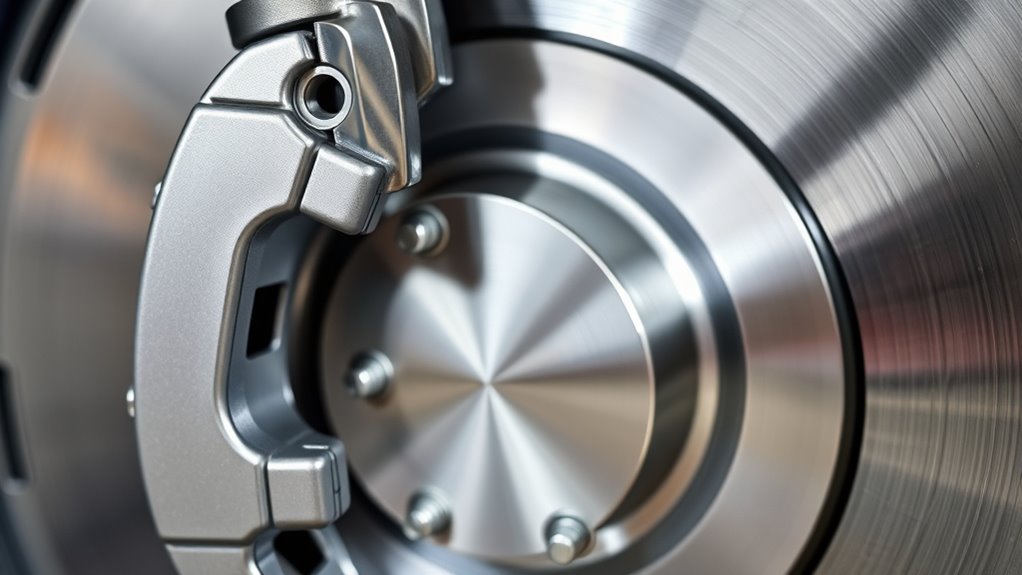
Once the piston is properly adjusted, you need to ensure the caliper is aligned properly on the rotor. If your caliper is misaligned, it can cause uneven contact with the rotor, generating noise and reducing braking efficiency. To fix this, you may need to loosen the mounting bolts, realign the caliper, and then tighten the bolts securely. Sometimes, shims or mounting brackets are used to fine-tune the position. Always double-check that the caliper is sitting flush against the rotor without any tilt or gaps.
Additionally, using quality brake components can help maintain proper caliper alignment over time, reducing the need for frequent adjustments. Finally, test your brake system by gently pressing the brake pedal and observing the caliper’s behavior. Make sure the brake pads contact the rotor evenly and that there’s no rubbing noise. If you still hear squealing or feel a drag, revisit the alignment and piston adjustment steps. Proper brake pad maintenance combined with precise caliper piston adjustment ensures your disc brakes operate quietly and efficiently, providing safe stopping power every time.
Frequently Asked Questions
How Often Should Disc Calipers Be Realigned?
You should check your disc calipers during regular maintenance, ideally every 6 to 12 months, or if you notice any uneven brake wear or noise. During caliper maintenance, perform proper alignment procedures to guarantee they function smoothly and avoid rubbing. Regular inspection helps catch alignment issues early, preventing damage and maintaining peak braking performance. Always follow manufacturer guidelines for specific maintenance intervals and procedures.
Can Improper Alignment Cause Brake Failure?
Imagine your brakes as a drama queen throwing a tantrum—improper alignment can definitely cause brake failure. You’ll notice brake noise and uneven wear, like a spoiled child refusing to share. Misaligned calipers strain the brake system, risking failure when you need stopping power most. So, if you want reliable brakes and a peaceful ride, keep those calipers aligned and avoid turning your vehicle into a squealing, uneven-worn mess.
What Tools Are Best for Align Disc Calipers?
To align disc calipers properly, you need specific tools like a caliper alignment tool or a brake piston rewind tool. These help guarantee the calipers are positioned correctly, preventing uneven brake pad wear and rotor scoring. You should also use a dial indicator for precise measurements. Proper alignment minimizes brake noise and ensures even pad wear, extending the life of your brake system and maintaining maximum braking performance.
Does Caliper Alignment Affect Brake Pad Lifespan?
Yes, caliper alignment directly impacts brake pad lifespan. If your calipers are misaligned, it can cause caliper corrosion and uneven pad wear, leading to premature replacement. Proper alignment guarantees even pressure distribution across the pads, reducing wear and corrosion. Regular checks and adjustments help maintain ideal brake performance, extending the life of both your calipers and brake pads. Ignoring alignment issues can considerably shorten their lifespan.
Are There Specific Signs Indicating Caliper Misalignment?
You’ll notice caliper misalignment if you hear persistent caliper noise or see uneven brake wear—these signs are as obvious as a neon sign in the dark. When your brakes squeal, grind, or if the pad wear isn’t even across the rotor, it indicates a problem. Addressing these issues early can prevent further damage, ensuring your brakes work smoothly and last longer. Don’t ignore these warning signs; they’re your car’s way of saying something’s off.
Conclusion
Aligning your disc calipers ensures smooth braking and prevents unwanted rubbing. When done correctly, you’ll enjoy quieter rides and extend your brake pad life. Did you know that properly aligned calipers can improve braking efficiency by up to 15%? Taking just a few minutes to check and align them can make a huge difference in your bike’s performance and safety. So, keep your calipers in check and ride confidently every time.