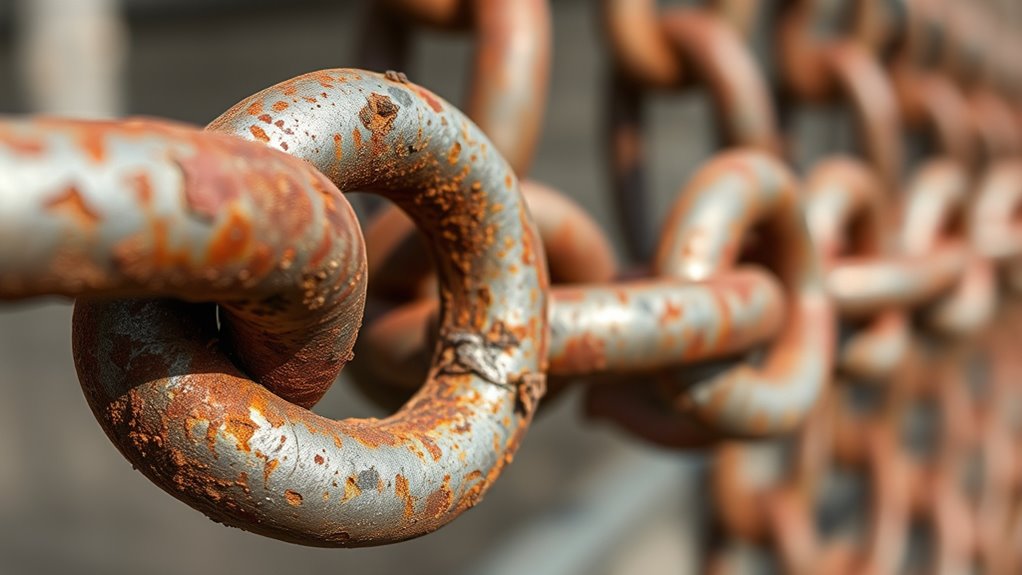

Rust on your bike chain forms when moisture and oxygen react with the metal, especially if you neglect lubrication or ride in wet conditions. Lack of proper lubrication makes your chain more vulnerable, allowing rust to develop and build up over time. To fix surface rust, you can use a wire brush or steel wool, then apply fresh lubricant to protect the chain. Keep your chain clean, lubricated, and stored properly for better performance—discover more tips ahead.
Key Takeaways
- Rust forms when moisture and oxygen react with unlubricated metal chains.
- Proper lubrication creates a barrier that prevents moisture contact and rust formation.
- Storing bikes in dry, sheltered areas and cleaning chains before storage reduces rust risk.
- Surface rust can be removed with a wire brush or steel wool, then re-lubricated to prevent recurrence.
- Regular maintenance, including lubrication and proper storage, extends chain lifespan and prevents rust.
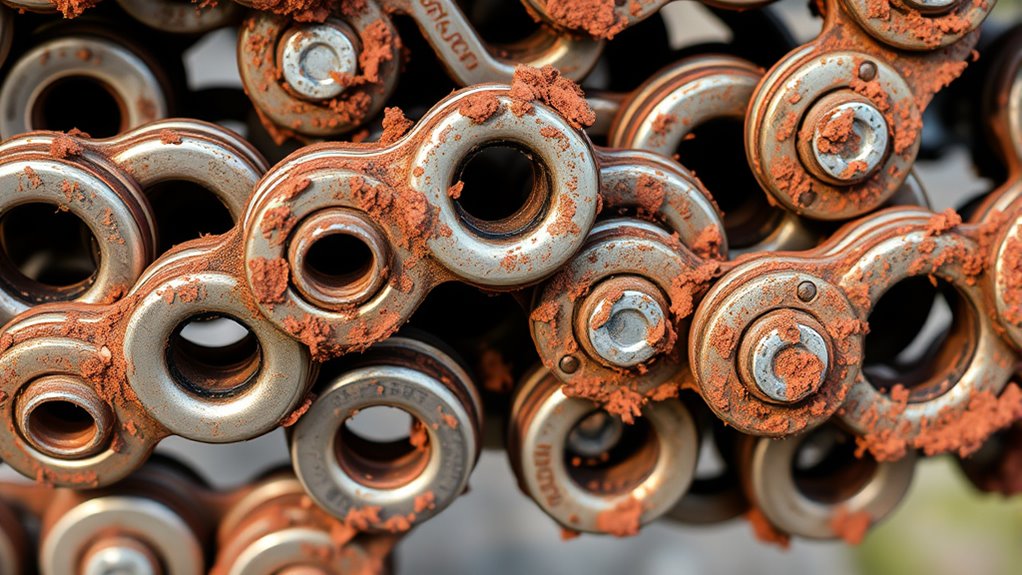
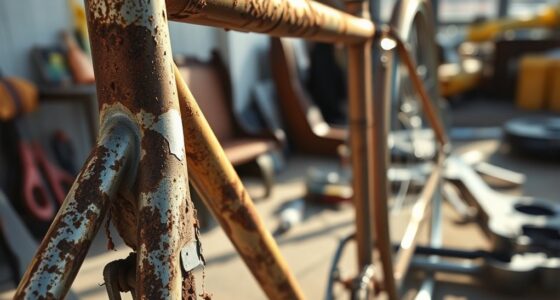
Have you ever noticed that chains often develop an ugly, reddish-brown coating over time? That’s rust, and it’s a common problem that can compromise your chain’s performance and lifespan. Rust forms when metal reacts with moisture and oxygen, leading to corrosion that weakens the chain’s links. One of the main culprits behind rust is lubrication issues. When your chain isn’t properly lubricated, it becomes more vulnerable to moisture buildup. Without a good layer of lubricant, water can settle on the metal surface, accelerating rust formation. Regular lubrication not only helps your chain move smoothly but also acts as a protective barrier against the elements. If you neglect this step, the chain is more likely to develop rust sooner, especially if you ride in wet or humid conditions frequently.
Another key factor in preventing rust is how you store your bike or equipment. Proper storage tips can make a significant difference in maintaining your chain’s integrity. If you leave your bike outdoors or in damp areas, you’re inviting moisture to settle on the chain, increasing the risk of rust. Make sure to store your bike in a dry, sheltered location whenever possible. Before putting it away, clean off any dirt, mud, or grime that can trap moisture against the metal. Applying a light coat of lubricant before storing the bike also helps create a protective barrier, reducing the chances of rust forming during periods of inactivity. Additionally, consider covering your bike with a breathable cover if it’s stored outside; this prevents rain and dew from settling directly on the chain while still allowing airflow to prevent condensation. Using proper storage techniques can significantly extend the lifespan of your chain and keep it rust-free.
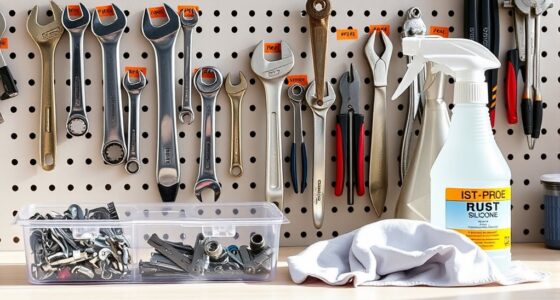
If your chain has already started to rust, don’t panic. You can often remove surface rust with some simple tools like a wire brush or steel wool. After cleaning, apply a fresh layer of lubricant to protect the metal from future moisture exposure. In more severe cases, replacing the chain might be necessary, as deep rust can compromise its strength. To prevent this from happening again, stay consistent with lubrication routines and follow storage tips diligently. Regular maintenance, including cleaning and lubricating, will ensure your chain remains smooth and corrosion-free longer. In the end, paying attention to lubrication issues and proper storage practices will save you money and hassle while keeping your ride safe and efficient.
Frequently Asked Questions
How Long Does It Take for Rust to Significantly Damage a Chain?
It can take just a few weeks to months for rust to substantially damage your chain, especially if you neglect proper chain maintenance and rust prevention. Regular cleaning, lubrication, and storing your bike properly help slow rust formation. If you notice rust early, removing it promptly prevents corrosion from worsening. Without proper care, rust weakens the chain’s structure over time, leading to potential breakage and costly repairs.
Can Rust-Resistant Coatings Completely Prevent Chain Rust?
While rust-resistant coatings substantially slow down corrosion, they can’t completely prevent rust over time. Think of it like a shield—coating durability varies and depends on the quality of rust resistant materials used. Regular maintenance and reapplication are essential, especially in harsh environments. No coating is foolproof, but choosing high-quality, well-applied rust-resistant materials can prolong your chain’s lifespan and keep rust at bay longer.
What Are the Environmental Effects of Using Rust Removers?
Using rust removers can harm the environment by releasing chemicals that pollute water and soil. These chemicals may affect wildlife and aquatic life if not disposed of properly. To reduce this impact, you should choose eco-friendly alternatives like vinegar, baking soda, or commercial products labeled as biodegradable. Always follow disposal instructions carefully to minimize your environmental footprint and protect ecosystems from harmful chemical exposure.
Is It Safe to Reuse a Rusted Chain After Cleaning?
Yes, you can safely reuse a rusted chain after cleaning, but only if you properly inspect and re-lubricate it. Don’t skip chain lubrication, as it helps prevent future rust. If the chain shows signs of significant damage or weakened links, replace it instead. Regular rust prevention measures, like keeping the chain dry and applying protective coatings, also extend its lifespan and guarantee safe reuse.
How Often Should I Inspect My Chain for Rust?
You should inspect your chain for rust at least once a month as part of your maintenance schedule. Regular checks help catch early rust development, allowing you to apply rust prevention techniques like lubrication and drying after rides. If you notice rust forming, address it promptly to prevent damage. Consistent inspection keeps your chain in good shape, extending its lifespan and ensuring smooth riding.
Conclusion
Don’t let rust take over your chain like a silent invader. With a little care and regular maintenance, you can keep your bike’s heart beating strong and free from corrosion. Think of your chain as a trusted companion on every ride—resilient and smooth. By catching rust early and giving it some love, you guarantee your journey stays seamless and vibrant. Keep your chain shining bright, and it’ll keep you moving forward, mile after mile.