
When sharing a path, always be mindful of others by signaling your intentions clearly with a bell or voice, especially before passing. Slow down and give plenty of space in crowded or narrow areas, and look ahead to anticipate others’ movements. Staying patient and respectful helps create a safe, calm environment for everyone. Keep an eye out for pedestrians, children, or seniors, and adjust your pace accordingly. Want to learn more about proper shared path manners?
Key Takeaways
- Always signal your intentions clearly and wait for a safe opportunity to pass others.
- Reduce speed and give extra space near pedestrians, children, and seniors.
- Use audible signals like a bell or voice to alert others before overtaking or changing direction.
- Be patient, courteous, and avoid rushing, especially in crowded or narrow sections.
- Prioritize safety and mutual respect to foster a calm, comfortable shared path environment.
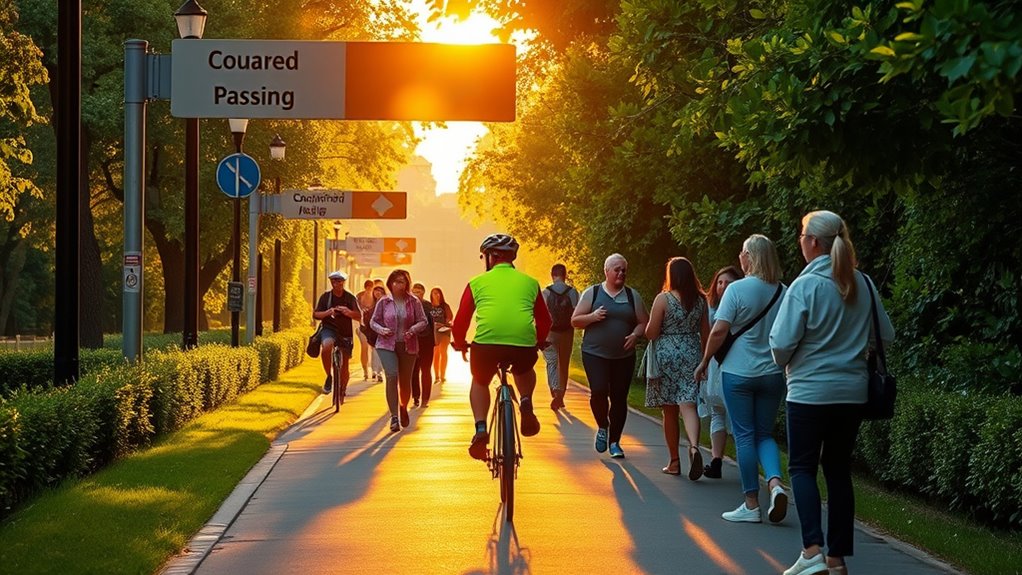
Sharing pathways with pedestrians, cyclists, and other users requires awareness and respect to guarantee everyone stays safe and comfortable. When you’re traversing a shared path, understanding passing etiquette is crucial. Always look ahead and signal your intentions clearly before overtaking someone. Use your bell or call out politely to alert others you plan to pass, and wait for an appropriate space where you won’t startle or endanger anyone. Remember, patience is key—don’t rush past someone who’s slower or appears unsure. Maintain a safe distance as you pass, giving others plenty of room to feel secure. If the path is crowded or narrow, consider slowing down and waiting for a wider stretch to pass safely, rather than squeezing by uncomfortably close. Respectful passing isn’t just about your convenience; it’s about ensuring the safety and comfort of everyone on the trail.
Cyclist awareness plays a fundamental role in shared path etiquette. As a cyclist, you should be attentive to your surroundings at all times. Scan ahead for pedestrians, joggers, or other cyclists, and adapt your speed accordingly. When approaching others, reduce your velocity well in advance, allowing you to pass smoothly and politely. Remember that not everyone on the trail has the same level of awareness or agility, so giving extra space and time is always wise. Be especially cautious around children, seniors, or those who seem unsure of their surroundings—they might unexpectedly change direction or slow down. Use your voice or a gentle bell to communicate your presence, especially when overtaking. Cyclist awareness isn’t just about observing others; it’s about anticipating their actions and adjusting your behavior to prevent accidents or discomfort. This proactive attitude fosters a safer environment for everyone. Additionally, supporting mental health awareness and fostering patience can greatly enhance shared path experiences by reducing stress and promoting a calm, respectful atmosphere.

Premium Bike Bell for Urban Commuting & Shared Paths, Loud & Polite, Easy Mount for Road/Commuter/MTB Bikes, Safety & Courtesy Alert for Cyclists and Pedestrians
Clear & Polite Alert: Alerts pedestrians effectively without shouting. Perfect for urban commuting & shared paths.
As an affiliate, we earn on qualifying purchases.
As an affiliate, we earn on qualifying purchases.
Frequently Asked Questions
Are There Specific Rules for Passing Pedestrians or Cyclists?
When passing pedestrians or cyclists, you should follow proper passing etiquette to guarantee safe cyclist-pedestrian interactions. Slow down, give ample space, and use a clear signal or verbal alert if needed. Always pass on the left, and avoid startling others by approaching too quickly. Be patient and respectful, especially in crowded areas. Remember, courteous passing helps prevent accidents and keeps shared paths safe and enjoyable for everyone.
How Should I Signal My Intentions to Others?
Think of your intentions as a lighthouse guiding others safely. You should use clear hand signals, like extending your arm to indicate a turn, and verbal cues, such as calling out “passing on your left,” to communicate. These signals act as your beacon, ensuring everyone on the shared path understands your moves, preventing surprises and keeping the flow smooth and safe for all.
What Should I Do if I Encounter an Obstacle?
When you encounter an obstacle, you should first slow down and assess the situation. Proper yielding is essential; give way to others if needed. If safe to do so, signal your intentions clearly before overtaking the obstacle, ensuring safe overtaking by checking for oncoming pedestrians or cyclists. Always prioritize safety, and if unsure, wait until the path is clear to proceed.
Are There Different Etiquette Rules for Night Use?
Guiding a shared path at night is like steering through a moonlit river. You should follow lighting guidelines, ensuring your bike or footpath is visible to others. Keep noise considerations in mind—avoid loud sounds that could startle or disturb others. Use a headlamp or reflectors, and stay alert. Respect the quiet ambiance, helping everyone enjoy a safe, peaceful journey under the stars.
How Do I Handle Disagreements or Conflicts on the Path?
When disagreements happen on the path, address them with respectful communication. Stay calm, avoid raising your voice, and listen carefully to the other person’s perspective. Use conflict resolution techniques like finding common ground or suggesting a compromise. Keep your tone friendly and non-confrontational, and if needed, politely step aside to give space. Handling conflicts this way helps maintain a safe, friendly environment for everyone sharing the path.
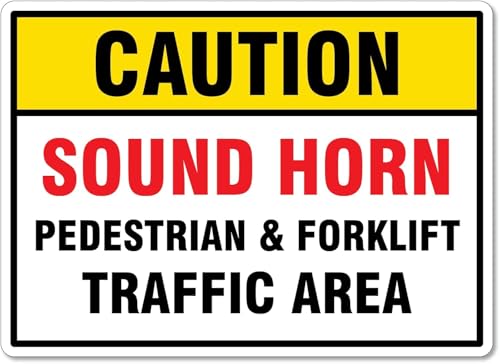
Caution Sound Horn Pedestrian and Forklift Traffic Area Warning Sign, Forklift Warning Metal Tin Sign, 8×12 Inch, Warehouse Industrial Work Zones Use, Pedestrian-Forklift Conflict Alert
This vintage aluminum sign isn’t just decor—it delivers clear safety reminders while adding fun, one-of-a-kind personality to your…
As an affiliate, we earn on qualifying purchases.
As an affiliate, we earn on qualifying purchases.
Conclusion
Remember, the shared path is like a river flowing with many currents. Your respect and patience act as gentle oars, guiding everyone smoothly forward. When you yield and share, you’re weaving a tapestry of kindness, each act a vibrant thread. Keep your eyes open and your heart respectful. Together, you create a harmonious journey, a dance of movement where everyone’s presence is valued. Embrace the flow, and let courtesy be your guiding star.

Take A Look Cycling Mirror – Low-Tech Rearview Mirror for Bikes – Fits Helmet & Sunglasses – Shatter-Resistant Polycarbonate Lens, Anti-Vibration Stainless-Steel & Brass, Always On (Left-Side)
LEFT SIDE WEAR – Optimized for your left eye, giving an unobstructed view behind you. Right-side version available.
As an affiliate, we earn on qualifying purchases.
As an affiliate, we earn on qualifying purchases.
shared path signaling device
As an affiliate, we earn on qualifying purchases.
As an affiliate, we earn on qualifying purchases.