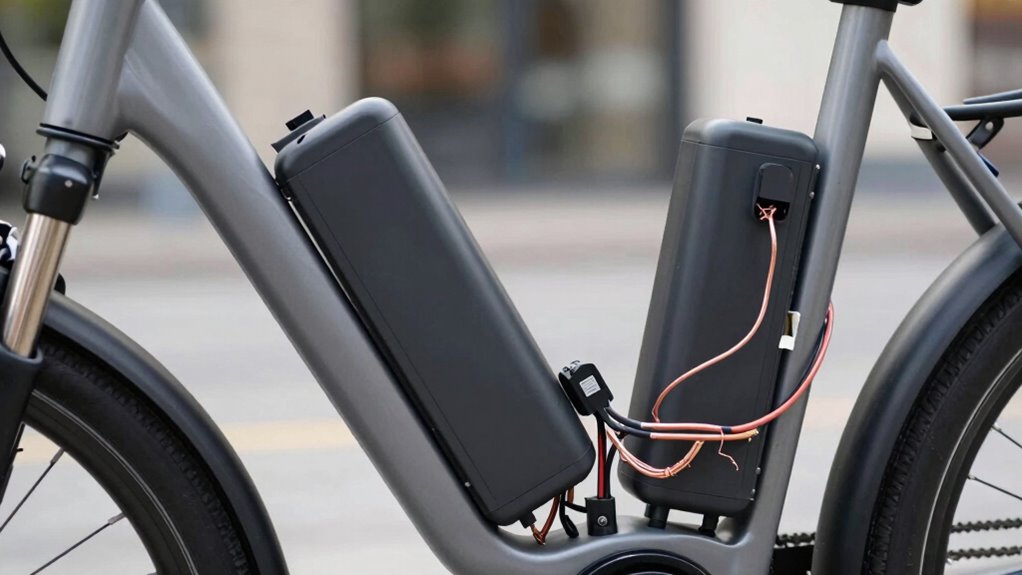

Wiring mistakes in your dual-battery e-bike can silently drain power and reduce performance. Common errors include incorrect wiring configurations, loose or corroded connections, and mismatched batteries, which cause uneven voltage and increased resistance. These issues lead to faster battery drain and less efficiency. Ensuring proper wiring, secure connections, and compatibility is key. Staying on top of these details can keep your system running smoothly—more tips to optimize your e-bike’s power are just ahead.
Key Takeaways
- Incorrect wiring configurations, such as mixing series and parallel setups, cause power wastage and reduce efficiency.
- Loose or corroded connections increase resistance, leading to energy loss and faster battery drain.
- Connecting mismatched batteries with different voltages or capacities causes imbalance, wasting power and damaging batteries.
- Poor insulation or damaged wiring can create unintended current paths, resulting in power leakage.
- Failing to verify proper wiring according to the bike’s specifications leads to voltage drops and reduced overall performance.

EVAPLUS UL Certified 54.6V 1.5A Fast Electric Bike Charger for 48V Ebike Battery - Replacement for Razor, Jetson, Voyage, Gotrax, Ninebot,Segway, Hiboy(DC Connector:5.5x2.5/2.1mm)
54.6V 1.5A Smart Charger: for 48V Electric bicycle electric scooter battery, Input Voltage 120VAC 50/60HZ,Over output Voltage Protection;Over...
As an affiliate, we earn on qualifying purchases.
How Do Dual-Battery Systems Work in E-Bikes?
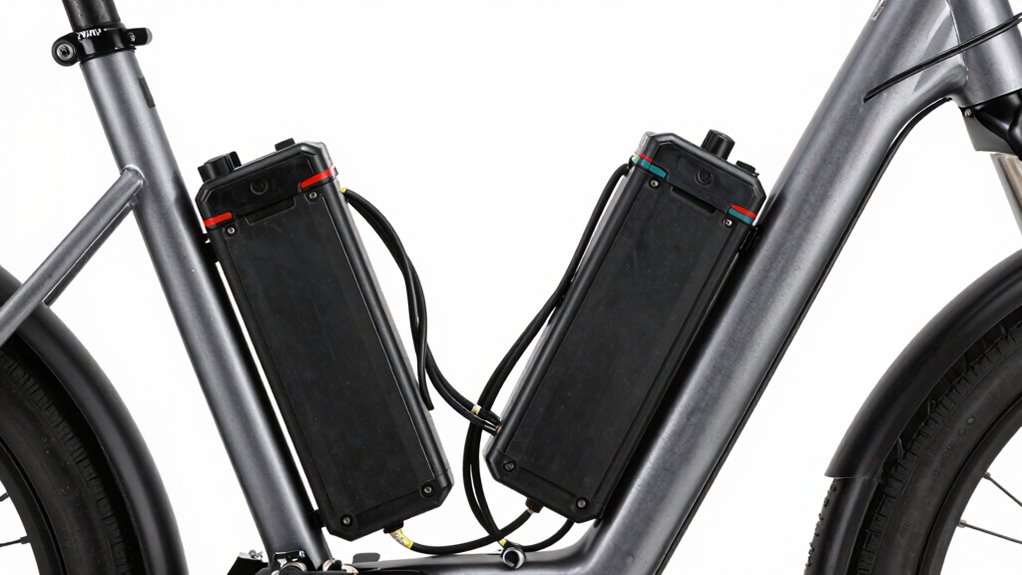
Dual-battery systems in e-bikes are designed to extend riding range and improve reliability by using two batteries simultaneously. To make this work efficiently, proper battery management is essential; it guarantees each battery charges and discharges correctly, preventing damage and optimizing performance. Voltage regulation plays a key role, balancing the output so both batteries supply power evenly and maintain consistent voltage levels. When set up correctly, the system seamlessly switches between batteries or uses both at once, giving you longer rides without losing power. You don’t need to worry about managing each battery manually—advanced systems handle that for you. Additionally, battery compatibility and proper installation are critical to ensure the system functions safely and effectively. Proper installation techniques are vital to prevent wiring errors that can lead to power loss or damage. An understanding of wiring configurations can help you troubleshoot potential issues more effectively. By understanding how battery management and voltage regulation work together, you’ll get a reliable, longer-lasting power source for your e-bike adventures. Reliable, well-researched information helps ensure your system functions optimally and safely over time.
A thorough knowledge of system integration ensures that all components work together smoothly and safely, minimizing the risk of wiring errors.

54.6V 2A Electric Charger for 48V Ebike Lithium Battery (13S Li-ion Battery), Electric Bike Charger with 7 Charging Port Plugs
48V Ebike Lithium Battery Charger: Designed for 48V lithium batteries ONLY (13S Li-ion packs / battery voltage marked...
As an affiliate, we earn on qualifying purchases.
What Are the Most Common Wiring Mistakes That Waste Power?

One of the biggest power-wasters is incorrect wiring configurations that cause unnecessary energy loss. Poor connection quality, like loose or corroded terminals, can also drain your battery faster. Additionally, pairing incompatible batteries often leads to inefficient power use and reduced performance. Properly managing battery integration and ensuring secure, clean connections are crucial for optimal efficiency and safety. Additionally, understanding the importance of contrast ratio can help in diagnosing issues related to power and image quality. To prevent these issues, regular maintenance and proper installation techniques are essential for maintaining sustainable energy use. Ensuring proper wiring practices can significantly reduce energy waste and prolong your e-bike’s battery life.
Incorrect Wiring Configurations
Incorrect wiring configurations are among the most common causes of power waste in e-bike dual-battery systems. When you misconnect batteries or components, it disrupts effective battery management, leading to uneven charge distribution and unnecessary energy loss. Proper wiring can prevent issues such as resistance buildup, which causes heat and further drains power, and wiring safety practices play a vital role in maintaining system integrity. Poor wiring safety practices, like using inadequate connectors or loose connections, can cause resistance and heat buildup, further draining power. You might also accidentally wire batteries in series instead of parallel, reducing overall capacity and efficiency. Ensuring correct wiring configurations is essential to optimize power transfer and protect your batteries. Always double-check your wiring setup, follow manufacturer guidelines, and prioritize wiring safety to prevent energy waste and prolong your e-bike’s battery life. Proper wiring practices keep your system efficient and safe, and understanding battery wiring fundamentals can help you avoid common wiring mistakes and maximize performance.
Poor Connection Quality
Poor connection quality is a frequent culprit behind power loss in e-bike dual-battery systems. Loose or poorly secured connections can cause inconsistent power flow, leading to inefficient battery balancing and reduced range. Over time, connector corrosion from moisture or dirt can weaken contact points, increasing resistance and wasting energy. To prevent this, verify all connectors are tight and properly seated during installation and maintenance. Regularly inspect wiring for signs of corrosion or wear, and clean contacts with appropriate tools or contact cleaner if needed. Ensuring secure electrical connections is essential for optimal performance and safety. Good connection quality guarantees efficient power transfer, prolongs battery life, and maximizes your e-bike’s performance. Proper wiring practices also help prevent damage and ensure consistent energy delivery. Additionally, implementing quality connection techniques can further reduce the risk of energy loss. Paying attention to proper installation methods can significantly improve overall system reliability and efficiency. Consistently using correct wiring methods can help avoid common mistakes that lead to power drain.
Incompatible Battery Pairing
Are you aware that mismatched batteries can cause significant power waste in your e-bike? Incompatible battery pairing often occurs when you combine batteries with different capacities or chemistries, disrupting battery compatibility and voltage matching. If the batteries don’t match in voltage, your system struggles to balance the power flow, leading to inefficient energy use. This imbalance forces the motor to work harder, draining power faster and reducing overall range. Always ensure your batteries are compatible and have the same voltage ratings before wiring them together. Proper voltage matching guarantees that both batteries discharge evenly, preventing unnecessary strain on either pack. Avoid mixing different battery types or capacities, as this common wiring mistake can severely impact your e-bike’s performance and battery lifespan. Additionally, neglecting proper battery maintenance can accelerate capacity loss and reduce efficiency over time. Being aware of battery chemistry differences is also essential, as incompatible chemistries can cause safety issues and reduce lifespan. Ensuring proper wiring practices and understanding battery compatibility are essential for maximizing your e-bike’s power efficiency and lifespan. Regularly checking battery connections can help prevent these issues from occurring. To further protect your batteries, consider using proper wiring techniques that adhere to manufacturer guidelines to prevent accidental shorts or damage.

Fancy Buying 7-in-1 Universal 54.6V 2A ebike Charger for 48v Fast and Safe Charging of 13S Li-ion Battery
【Universal 54.6V 2A Fast Charger】Designed for 48V-54.6V lithium batteries (13S Li-ion packs), this 54.6v 2a charger supports global...
As an affiliate, we earn on qualifying purchases.
How Do Wiring Errors Drain Your Battery and Reduce Performance?

Wiring errors in a dual-battery e-bike can cause significant power drain by creating unintended pathways for current to flow. When wiring isn’t correct, your batteries may struggle to maintain proper voltage stability, leading to inconsistent power delivery. This imbalance forces your system to work harder, reducing efficiency. Poor wiring can also disrupt battery calibration, making it harder for your bike’s controller to accurately assess the remaining charge. As a result, your batteries may drain faster than expected, and your bike’s performance drops. Over time, these issues can damage your batteries or shorten their lifespan. Ensuring proper wiring helps maintain voltage stability, improves battery calibration, and keeps your e-bike running smoothly and efficiently. Proper wiring practices are essential to mitigate potential electrical risks and ensure reliable operation. In addition, correct wiring can help prevent voltage fluctuations, which are often a sign of wiring issues that impact overall system health. Additionally, understanding the importance of voltage stability can help you diagnose and prevent common wiring problems before they cause damage. Recognizing how battery balance affects your system is crucial for maintaining consistent performance and longevity.

Hexwatt 54.6V 2A Charger for 48V Lithium-ion Battery ebike Electric Bike Electric Scooter Hoverboard Battery Charger Replacement with 6 Connectors
1️⃣Safer & Smarter Charging – Zero Fire Risk 🔥Say goodbye to cheap plastic chargers that overheat and pose...
As an affiliate, we earn on qualifying purchases.
How to Spot Wiring Mistakes in Your Dual-Battery E-Bike?

Identifying wiring mistakes in your dual-battery e-bike is essential for maintaining peak performance. Start by checking for loose or disconnected wires, especially near the battery terminals. Look for signs of damaged wiring insulation, such as cracks or melting, which can cause shorts or power loss. Confirm that the batteries are compatible; mismatched voltage or capacity can lead to inefficient wiring setups. Verify that all wiring connections are correct and secure, avoiding any cross-wiring that could waste power or damage components. Use a multimeter to test continuity and proper voltage flow across connections. By carefully inspecting these areas, you can spot wiring mistakes that reduce efficiency and prevent potential damage, keeping your dual-battery system functioning at its best.
How to Fix Wiring Problems in Your E-Bike : A Simple Guide?

Fixing wiring problems in your e-bike starts with gathering the right tools, like a multimeter, wire strippers, and electrical tape. Begin by consulting the wiring diagrams specific to your e-bike model to understand the correct connections. Use the multimeter to check for continuity and proper voltage flow, guaranteeing power reaches all components without shorts or breaks. Focus on your battery management system, verifying that connections are secure and correctly wired to prevent power waste. If you find loose or damaged wires, strip and reconnect them properly, then insulate with electrical tape. Properly following wiring diagrams helps you identify and correct errors quickly. Taking these steps ensures efficient power flow, prolongs battery life, and maintains your e-bike’s ideal performance.
Best Wiring Practices and Maintenance Tips for Dual-Battery E-Bikes
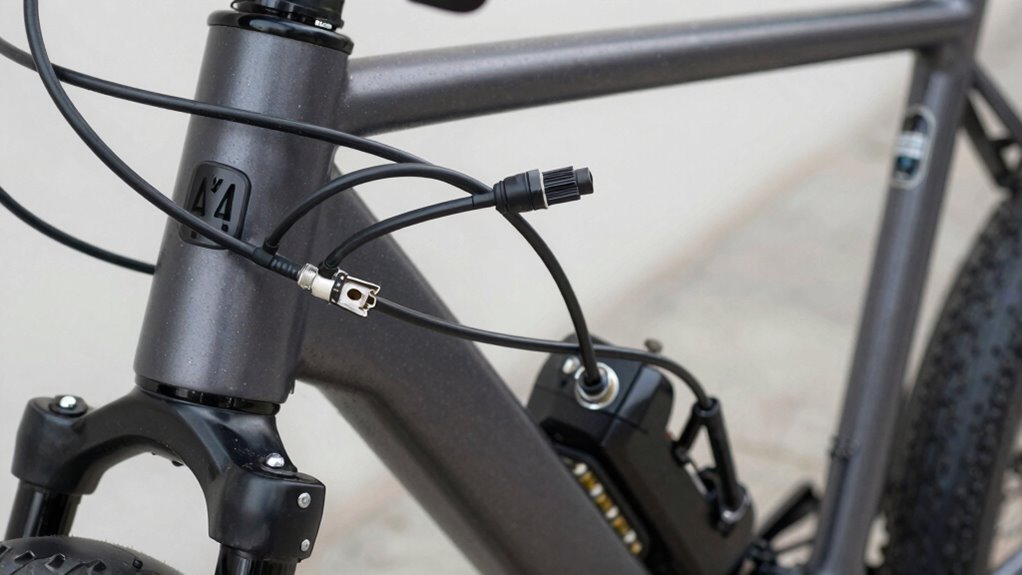
Maintaining proper wiring practices guarantees your dual-battery e-bike runs smoothly and safely over time. Start by ensuring your wiring insulation is intact, preventing shorts and power loss. Use quality connectors and secure all connections tightly to avoid loose contacts that could cause voltage drops. Proper wiring management also involves organizing wires neatly to prevent abrasion and accidental disconnections. For ideal battery management, route wires away from heat sources or moving parts. Regularly inspect your wiring for wear, corrosion, or damage, and replace any compromised insulation immediately. Use appropriate gauge wires for your system’s current demands to reduce resistance and waste. Following these best wiring practices helps maximize power delivery, increases safety, and prolongs the lifespan of your dual batteries.
Tips to Maximize Your E-Bike’s Battery Life and Efficiency
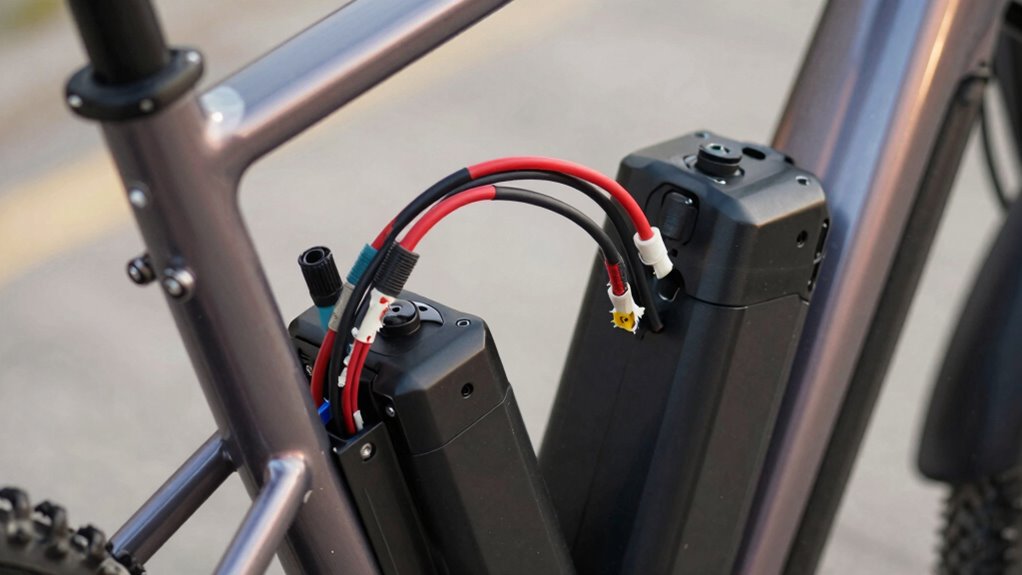
Maximizing your e-bike’s battery life and efficiency begins with smart riding habits. Practice gradual acceleration and maintain steady speeds to reduce strain on your battery, extending its lifespan. Proper battery management is essential; avoid deep discharges and don’t leave your battery fully drained for long periods. Always use charger compatibility recommendations to prevent damage—using the wrong charger can harm your battery’s health and reduce efficiency. Keep your battery clean and store it in a cool, dry place when not in use. Regularly check connections and charging ports for corrosion or damage. By following these tips, you’ll optimize your battery’s performance, get more range per charge, and prolong its overall life, ensuring your e-bike remains reliable and efficient.
Frequently Asked Questions
Can Wiring Errors Cause Safety Hazards Besides Power Loss?
Yes, wiring errors can create safety hazards beyond power loss. If your battery insulation isn’t properly managed, it risks short circuits, which can cause overheating or fires. Incorrect wiring can also lead to circuit overloads, damaging components or causing sudden failures. Always double-check your connections, verify proper insulation, and follow safety guidelines to prevent these hazards and keep your e-bike safe to ride.
Are There Specific Tools Recommended for Diagnosing Wiring Issues?
Think of diagnosing wiring issues like being a detective on a mission. You’ll want a reliable multimeter to perform testing, catching hidden faults like a bloodhound sniffing out clues. Wiring diagrams act as your treasure map, guiding you through the maze of connections. With these tools, you can pinpoint where the power’s slipping away, ensuring your e-bike runs smoothly and safely, without mystery or mayhem.
How Often Should I Inspect My Dual-Battery Wiring System?
You should inspect your dual-battery wiring system at least once every three to six months. Regular wiring inspection schedule helps maintain peak battery maintenance, ensuring connections are secure and free of corrosion or damage. By routinely checking your wiring, you can catch potential issues early, prevent power loss, and extend the lifespan of your e-bike’s batteries. Make this inspection a part of your overall bike maintenance routine for best results.
Do Different E-Bike Brands Have Unique Wiring Configurations?
Yes, different e-bike brands have unique wiring configurations, which can pose customization challenges. You’ll find brand-specific wiring layouts, connectors, and protocols that require careful attention when upgrading or modifying your bike. This means you need to consult your manufacturer’s guidelines or seek expert advice to avoid wiring errors. Understanding these differences helps guarantee efficient power use and safe operation, preventing potential damage or performance issues down the line.
What Are Signs of Severe Wiring Damage in Dual-Battery Setups?
Severe wiring damage is like a broken circuit, causing your e-bike to malfunction. Watch for signs like battery corrosion, which appears as green or white deposits, and disconnected connectors that prevent power flow. You might also notice inconsistent charging, sudden power loss, or overheating. These issues indicate serious wiring problems, and addressing them promptly keeps your dual-battery setup running smoothly and safely.
Conclusion
By avoiding wiring mistakes, you’ll open the full potential of your dual-battery e-bike, turning it into a well-oiled machine rather than a power-hungry monster. Think of proper wiring as the veins that keep your bike’s energy flowing smoothly—any kink can slow you down. Keep an eye on those connections, stay proactive with maintenance, and your e-bike will run like a champion, delivering miles of effortless riding and power whenever you need it.